Ready to conquer a 3 mile run? Our guide offers beginner training plans, pacing charts, and tips to help you run 3 miles confidently. Start your journey today!
You’re probably here because 3 miles feels oddly specific. It’s not a marathon, not a casual walk, and not so short that you can fake your way through it. It’s long enough to expose your pacing, fitness, and recovery habits. It’s also short enough to fit into a real life that includes work, family, and inconsistent energy.
That’s exactly why I like the 3 mile run as a training target.
For beginners, it’s a manageable first benchmark. For returning runners, it’s a clean way to rebuild endurance without turning every week into a high-mileage project. For experienced runners, it’s one of the best distances for testing whether your easy runs, tempo work, and pacing discipline are paying off. When you train it well, you learn a lot about your body fast.
Why Your First 3 Miles Matter Most
The struggle isn’t usually because 3 miles is impossible. It’s because the run is treated like a pass-fail test instead of a skill.
A 3 mile run sits in the sweet spot for general fitness. It’s long enough to challenge your heart and lungs, but short enough that you can practice it consistently. That matters more than people think. A workout you can repeat beats an ambitious plan you abandon after one rough week.
Running 3 miles consistently can strengthen the heart, reduce blood pressure, and burn about 300 to 400 calories per session depending on weight and pace, according to BetterMe’s overview of 3-mile running benefits. For busy professionals, that’s one reason this distance works so well. A moderate 3-mile jog often lands in a practical training window instead of taking over your day.

Why this distance works in real life
The biggest win isn’t just calorie burn or cardio benefit. It’s repeatability.
If you can carve out enough time for a warm-up, a 3 mile run, and a short cooldown, you can build a serious habit. BetterMe notes that a daily 30 to 36 minute jog can meet the American Heart Association’s recommendation of 150 minutes of moderate aerobic activity per week in a very practical way. That’s why I often point newer runners toward this distance before they ever think about longer goals.
It also creates structure. You start noticing what shoes feel best. Which pace lets you finish strong. How sleep changes your effort. Whether stress shows up in your breathing. Those lessons matter more than a flashy first-day finish time.
Practical rule: Your first goal isn’t to run 3 miles impressively. Your first goal is to make 3 miles feel repeatable.
The payoff goes beyond the run
A consistent 3 mile run routine usually improves more than fitness. People often feel sharper after the session, especially when the run is controlled instead of desperate. That mental reset is one reason cardio sticks when strength plans don’t.
If you’re rebuilding general fitness, pairing running with a basic understanding of cardio training fundamentals makes the process less confusing. You don’t need to chase exhaustion. You need enough effort to create adaptation and enough restraint to come back tomorrow.
That’s the trade-off many runners miss. Going too hard feels productive in the moment. Sustainable training is what changes you.
Defining Your 3 Mile Run Goal and Finding Your Pace
A good goal for a 3 mile run should feel honest, not flattering.
Too many runners pick a finish time based on what sounds respectable. That usually leads to one fast first mile, one survival mile, and one miserable final stretch. A better approach is to start with benchmarks, then adjust based on your current fitness and how the pace feels in your body.
According to Running Level’s 3 mile time data, the average 3-mile time across all runners is 23:06, and a good 3-mile time for a male runner is around 21:43. For beginners, a pace of 9:30 to 11:00 per mile is a common starting point. That range is useful because it gives you permission to begin where you are.
Use benchmarks without letting them define you
Benchmarks are guides, not judgments.
If you’re brand new, your first goal might be finishing the full distance with controlled breathing. If you’re returning after time off, your first good target might be running evenly without fading. If you already have some base fitness, you can start choosing a finish time and training toward it.
Here’s a simple pacing chart to make that concrete.
3 Mile Run Pacing Chart
| Goal Finish Time | Pace per Mile (min:sec) | Pace per Kilometer (min:sec) |
|---|---|---|
| 36:00 | 12:00 | 7:27 |
| 33:00 | 11:00 | 6:50 |
| 30:00 | 10:00 | 6:13 |
| 29:00 | 9:40 | 6:01 |
| 28:00 | 9:20 | 5:48 |
| 27:00 | 9:00 | 5:36 |
| 26:00 | 8:40 | 5:23 |
| 25:00 | 8:20 | 5:11 |
| 24:00 | 8:00 | 4:58 |
| 23:06 | 7:42 | 4:47 |
| 22:00 | 7:20 | 4:33 |
| 21:43 | 7:14 | 4:30 |
| 21:00 | 7:00 | 4:21 |
Use the chart backward. Pick the easiest finish time that still feels meaningful. Then train to make that pace feel controlled.
Find your true starting pace with the talk test
If you don’t know what pace fits you yet, use the talk test.
Go out for an easy run and speak a full sentence out loud. If you can speak in short phrases without gasping, you’re probably in the right range for an aerobic effort. If every few words feel interrupted by breathing, you’re going too fast for most training runs.
That sounds simple because it is. It also works.
A lot of runners get distracted by watch data too early. Cadence, split alerts, and live pace can help, but they’re only useful if the effort matches the day. If you want to understand that side of running better, this guide to running cadence is worth reading, especially if you tend to shuffle when tired or overstride when chasing speed.
Your best starting pace is the one that lets you finish wanting one more mile, not the one that impresses your watch in the first five minutes.
Three ways to choose the right goal
Finish-first goal
If you’ve never done it before, aim to complete 3 miles comfortably. Don’t attach ego to pace yet.Consistency goal
If you can already cover the distance, aim to run all 3 miles at roughly the same effort. This is often the biggest breakthrough.Time goal
If you’ve got a base, choose a finish time from the chart and build your workouts around it.
The mistake is skipping straight to the third option when you haven’t earned the first two. Pace matters. But honest pacing matters more.
Your 4-8 Week Training Plan to Conquer 3 Miles
The best 3 mile run plan depends on what you need right now, not what looked good in someone else’s screenshot.
For true beginners, the goal is simple. Build enough aerobic fitness and confidence to cover the distance without blowing up halfway through. For runners with some base, the work shifts toward pacing, sustained effort, and a small dose of speed. Those are different jobs, so they need different plans.
The most reliable starting method for beginners is the run/walk approach. According to Chalk Talk Sports’ beginner pacing guide, the run/walk method helps manage heart rate and reduce fatigue, often preventing the common crash late in the run. Starting with 2 minutes running and 1 minute walking is a practical structure, and many new runners can complete 3 miles in 30 to 45 minutes and build toward a sustainable jogging pace within 4 to 6 weeks.

The 4 week first finish plan
This plan works well if you’re starting from scratch, coming back after a long layoff, or managing old aches that flare when you do too much too soon.
Week 1
Run 2 minutes, walk 1 minute, and repeat until you cover the distance or your planned session ends. Keep the running segments relaxed enough that you could still talk. Your only job this week is learning restraint.
Week 2
Keep the same structure on your first session. On the next session, stretch one or two run intervals slightly longer if you finish feeling in control. Don’t rush this. Early success comes from finishing fresh, not heroic.
Week 3
Start reducing the walk breaks a little or making them less frequent. You’re teaching your body to hold steady effort longer. Many runners make their first mistake here by turning every run into a test. Don’t.
Week 4
Aim to connect longer running segments and use walking only as needed. If you finish all 3 miles with a few brief resets, that still counts as success. A lot of first-time runners finish better by staying patient than by trying to eliminate every walk break too soon.
Coach’s note: Walk breaks are not failure. For beginners, they’re often the fastest path to consistent running.
The 8 week pace improver plan
This plan is for runners who can already finish 3 miles but want to do it with more control or a better time.
Weeks 1 and 2
Keep three running days.
- Day one: easy run
- Day two: short intervals, controlled not frantic
- Day three: longer steady run
Your interval day might be short repeats by feel, while your steady run teaches rhythm. The easy day is what allows the other two to work.
Weeks 3 and 4
Extend the steady work.
Turn one session into a comfortably hard effort where you hold focus without straining. On another day, keep some shorter repetitions to sharpen form and turnover. The mistake here is making both hard. One should feel sustained. The other should feel snappy.
If you’re not sure what to eat before these sessions, especially early mornings, a practical primer on what to eat before running can help you avoid the all-too-common mistake of going out underfueled and mistaking it for poor fitness.
Weeks 5 and 6
Push the distance of your quality work, not just the speed.
Pacing starts to improve. You should begin noticing that your breathing settles faster and your middle mile feels less chaotic. If fatigue lingers for more than a day or two, cut the next hard session down. Fitness grows during recovery, not during stubbornness.
Weeks 7 and 8
Practice race-specific effort.
Run segments that feel close to your intended 3 mile pace, but stop before form falls apart. The final week should sharpen, not crush you. You want to arrive at your 3 mile effort feeling eager, not stale.
How to adapt the plan without losing the point
Adaptive training matters most on the weeks when life gets messy.
You might sleep badly. Work might spike. An old calf issue might whisper. That doesn’t mean the plan failed. It means the plan should bend a little.
Use these adjustments:
- If fatigue is high, shorten the workout but keep the rhythm of the session.
- If soreness feels sharp or changes your stride, replace the run with a walk or easy cross-training day.
- If you feel unusually good, don’t double the workload. Keep the plan and take the win.
For busy professionals and runners managing old injuries, this is often the difference between a month of progress and another stop-start cycle. The best plan isn’t the hardest one. It’s the one you can keep following when your week doesn’t look perfect.
Key Workouts and Techniques for a Faster Finish
Once you can cover the distance, the question changes. It’s no longer “Can I finish?” It becomes “How do I finish stronger?”
That answer usually isn’t “run harder from the start.” In fact, that’s one of the biggest mistakes I see. Most runners lose time in the first mile by chasing a pace they haven’t settled into yet, then paying for it late.

Data from 50,000 amateur runners showed that runners who mastered negative splits, meaning the second half was faster than the first, improved their 3-mile times 18% faster than runners who started hard and faded, according to the source summary tied to this pacing discussion on YouTube. That lines up with research on the 3-mile run showing that consistent pacing, not repeated sprinting, accounts for most of the performance pattern.
The three workouts that matter most
A faster 3 mile run usually comes from a simple mix.
Easy runs
Easy runs build the base that supports everything else. They should feel controlled enough that you finish better than you started. Many runners sabotage progress by making these too quick.
Intervals
Intervals improve your ability to hold pace under stress. Shorter repeats help with rhythm and running economy. The key is finishing the session with your mechanics intact.
Tempo or steady efforts
These teach you how to stay composed at a demanding but sustainable effort. For the 3 mile run, this matters more than people think. A lot of mid-race success comes from being comfortable just below panic.
A strong 3 mile runner doesn’t just get faster. They get better at staying smooth when discomfort shows up.
Use the 3 mile run as a fitness test
A 3 mile effort is also useful as a field test.
Research involving 109 college-aged males found a moderate correlation of -0.58 between 3-mile run time and VO2peak, with an average run time of 21 minutes 50 seconds in that group, according to the PubMed abstract on 3-mile run validity. That matters in practical coaching terms. The test isn’t perfect for predicting every detail of aerobic capacity, but it is very good for tracking whether your training is moving in the right direction.
If you want to understand the aerobic side of that better, reviewing a VO2 max training plan can help you connect your workouts to the engine they’re trying to build.
A simple method works well:
- Run a controlled 3 mile test.
- Record your splits and how each mile felt.
- Compare the next attempt after a training block.
If your time improves and your pacing gets smoother, that’s meaningful progress.
What smarter pacing looks like
Most runners should aim for one of two patterns:
- Even split, where each mile is very similar
- Negative split, where the last part of the run is your strongest
That doesn’t mean jogging the first mile. It means staying under control long enough to let your actual fitness show up.
A short visual can help if you want to see pacing and effort cues in action:
When runners stop treating the first mile like a dare, their full 3 mile run usually improves fast.
Staying Healthy with Warm-Ups Cool-Downs and Injury Prevention
If you want a better 3 mile run, protect your ability to train next week.
That sounds obvious, but many runners still skip the small things that keep them durable. They head out stiff, hit race pace too soon, finish, sit down, and wonder why their calves or hips tighten later that day. Injury prevention usually doesn’t fail in one dramatic moment. It fails through a string of rushed decisions.

A cited source summary notes that a 2025 study on hybrid training found novice runners using adapted plans with form feedback and managed intensity reduced injury risk by 35% compared with standard non-adaptive programs, as described in the referenced Lemon8 post. Whatever you think about platforms, the practical message is solid. Managed intensity and individualized adjustments matter.
Warm up before you ask your body for speed
A proper warm-up doesn’t need to be fancy. It needs to raise temperature, loosen range of motion, and prepare your stride.
Use a short sequence like this before harder runs:
- Brisk walk or easy jog: Start easy and give your body a few minutes to wake up.
- Leg swings and hip circles: Open the hips before asking for stride length.
- Ankle rolls and calf pulses: Especially useful if you sit a lot during the day.
- A few short strides: Gradually build speed without sprinting.
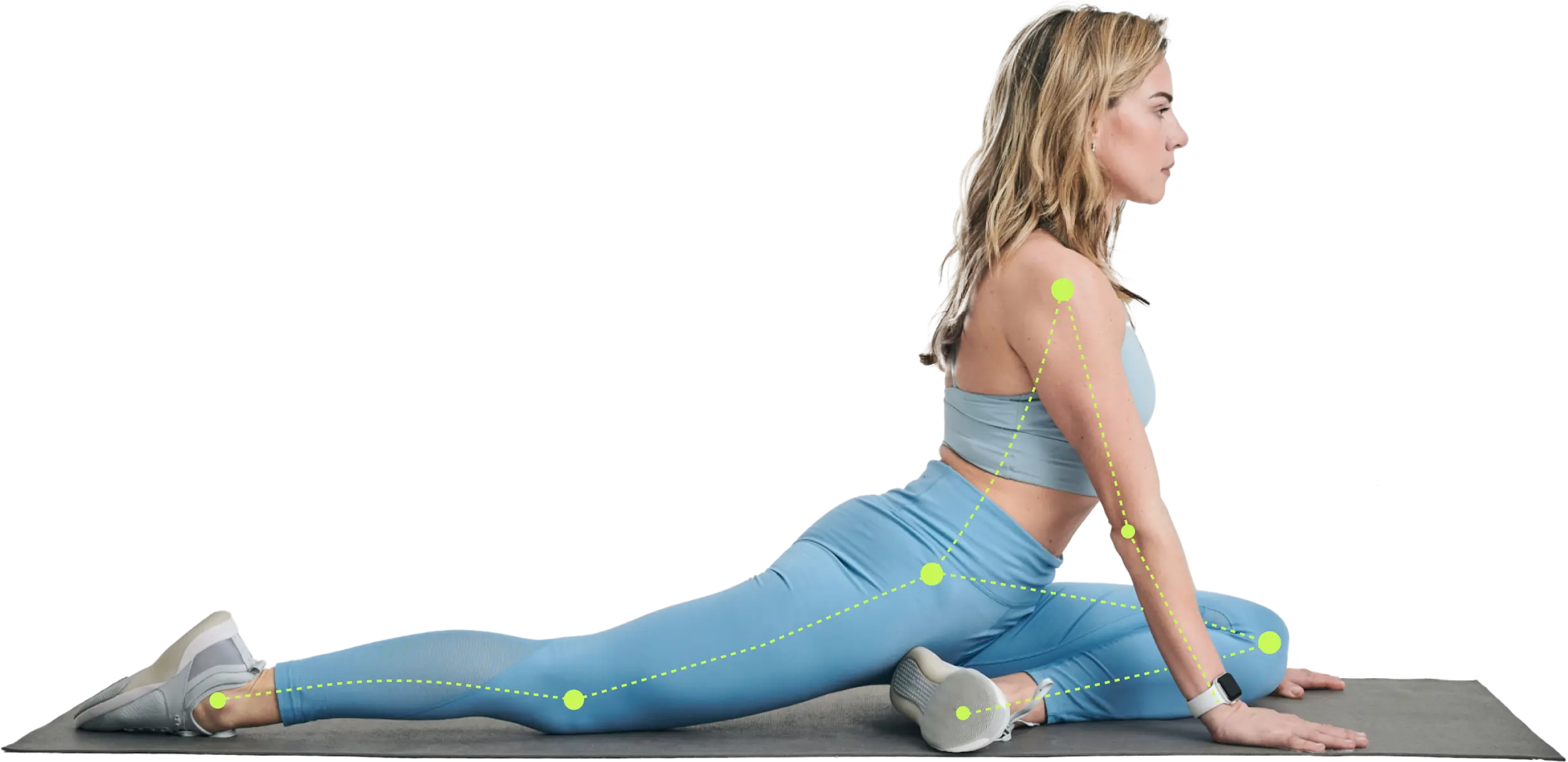
For runners who want a simple mobility option, this runner’s stretch sequence is a practical add-on before or after training.
Cool down so you recover better
The cooldown is where you tell your nervous system the hard work is done.
Walk for a few minutes after the run. Then use gentle static stretching for the calves, hamstrings, hip flexors, and glutes. Don’t force range. The goal is to settle the body, not win a flexibility contest.
Good soreness feels broad and fades as you move. Bad pain changes your stride, sharpens with impact, or sticks around when you warm up.
What to watch if you’ve had injuries before
If you’ve had recurring tightness, don’t wait until it becomes a problem again.
Three practical rules help:
Respect pain that alters mechanics
If you limp, shorten stride, or brace during foot strike, stop and reassess.Rotate effort days with easier ones
Hard day after hard day works until it doesn’t.Get hands-on support when needed
If tissue tightness keeps returning, it can help to look into finding qualified sports massage therapy from Stillwaters Healing & Massage as part of a broader recovery approach.
Shoes matter too, but not in a magical way. Pick a pair that feels stable, suits your gait, and doesn’t create new hot spots. Comfort and consistency beat hype every time.
Conclusion Your Journey to 3 Miles Starts Now
A strong 3 mile run is rarely about toughness alone. It comes from a few fundamentals done well and done repeatedly.
Set a goal that fits your current reality. Learn your pace instead of forcing one. Build with a plan that matches your experience level. Use easy runs, steady efforts, and controlled speed work for different purposes. Warm up, cool down, and adjust when your body gives you useful feedback. That’s what sustainable progress looks like.
The distance itself is approachable. What makes it powerful is how much it teaches you. A 3 mile run can show you whether your pacing is honest, whether your recovery is enough, and whether your training is built around your life or constantly fighting it.
If you’ve been waiting until you felt more ready, this is your reminder that readiness usually comes after you begin. Start where you are. Keep the effort controlled. Let consistency do the heavy lifting.
If you want a training partner that adjusts to your schedule, fitness level, recovery, and progress without forcing you into a generic running plan, Zing Coach is a smart next step. It uses your fitness data, body metrics, and training feedback to personalize your plan so your 3 mile run gets better in a way that’s realistic, safe, and easier to stick with.
Share this article


Authors