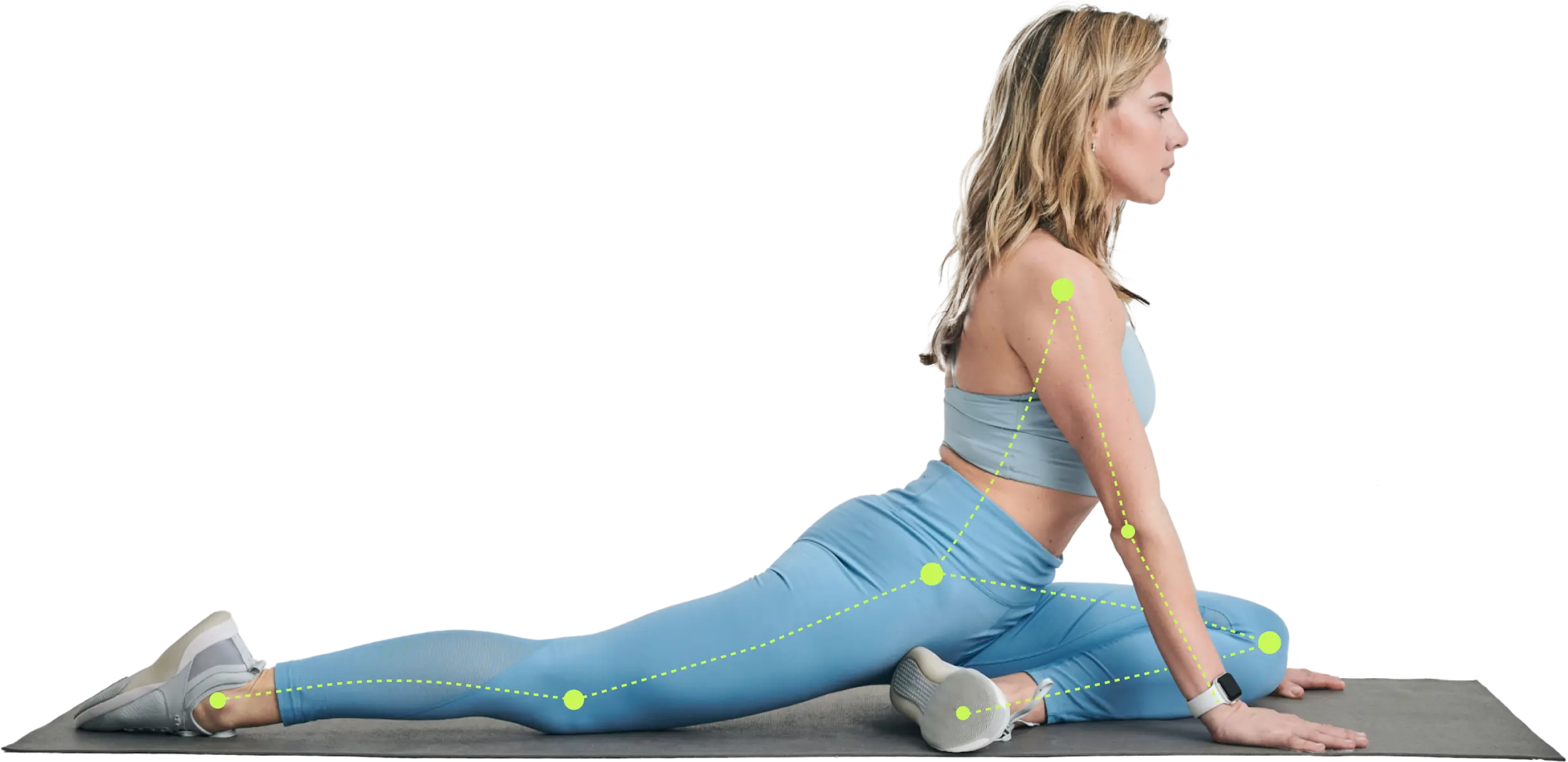
Master alternating leg raises with our 2026 guide. Learn proper form, target muscles, avoid mistakes, and build a stronger core. Ideal for beginners.
You might be doing crunches, planks, and random ab circuits and still feel your core give out when you squat, carry groceries, or try to keep your back comfortable through the day. That usually isn't a “more effort” problem. It's a control problem.
Alternating leg raises look simple, but they expose whether you can move your hips without letting your pelvis tip and your lower back take over. That skill carries into almost every other lift. If you can keep your trunk steady while one leg moves, you build the kind of core stability that supports better mechanics everywhere else.
What Are Alternating Leg Raises and Why They Matter
Alternating leg raises are a floor-based core exercise where you lower one leg at a time while keeping your trunk still. The goal isn't just to move your legs up and down. The primary objective is to hold pelvic position while the legs create resistance against your core.

This is why the exercise shows up so often in beginner programs, home workouts, and return-to-training plans. Coaching references describe it as a useful drill for building abdominal control, hip strength, and movement confidence without equipment, and they note that it's often programmed in 20 to 60 second intervals to improve pelvic stabilization in Catalyst Athletics' alternating lying leg raise guide.
The muscles doing the work
The main players are:
- Rectus abdominis keeps the ribcage and pelvis from drifting apart.
- Obliques help resist twisting and unwanted shifting.
- Hip flexors, especially the front-of-hip muscles, move the leg while the trunk stays organized.
- Deep trunk stabilizers help you hold position instead of wobbling through the rep.
That mix matters. A lot of people think “core” means only abs you can see. In practice, your core's job is to transfer force and prevent energy leaks. Alternating leg raises train that job well.
Practical rule: If your leg is moving but your pelvis is rolling, your abs aren't controlling the exercise. Your lower back is negotiating with it.
Why this basic drill helps bigger lifts
When you deadlift, squat, run, or even walk quickly uphill, your trunk has to stay stable while your hips move. Alternating leg raises rehearse that pattern in a low-risk setting. You're on the floor, unloaded, and forced to earn each inch of range with control.
That's why I like them as a bridge between rehab-style core work and more demanding training. They sit in the same useful family as dead bug variations and other trunk-control drills. If you want a broader menu of core exercise options, this pattern belongs near the top of the list.
A stable trunk also helps you clean up posture and reduce compensation patterns in other areas. If you're pairing core work with upper-body and posterior-chain training, this roundup of best exercises for a strong back is worth reviewing too.
How to Perform Alternating Leg Raises with Perfect Form
Good alternating leg raises feel controlled, almost quiet. The rep shouldn't look dramatic. If it does, you're probably moving too far or too fast.
Starting position
Lie on your back with both legs up. Place your arms by your sides or lightly under your glutes if that helps you find a better starting position. Then do the part often overlooked. Gently flatten your lower back into the floor.
That small adjustment is everything. You're aiming for a neutral to slightly tucked pelvis, not a big forceful crunch.

Use these setup cues:
- Brace lightly: Tighten your midsection as if you're preparing for a gentle tap to the stomach.
- Keep ribs down: Don't let the chest flare up.
- Lengthen the neck: Relax your shoulders and jaw.
- Own the floor: Your low back should feel connected to the mat before the first rep starts.
The movement
Lower one leg slowly toward the floor while the other leg stays in place. Stop before your pelvis shifts or your lower back starts to arch. Then return that leg and switch sides.
Think of the lowering phase as the true rep. Anyone can drop a leg. The skill is lowering it without losing shape.
A useful visual is to move like your leg is pushing through water. Smooth on the way down, smooth on the way up, no swing at the bottom.
For a quick visual demo, this short video can help you match the feel of the movement to the right body position:
If you want to compare this pattern with similar variations, this page on leg raises is a useful reference.
Breathing and tempo
Breathing can clean up your form fast. Exhale as you lower the leg. That usually helps people keep the ribs down and maintain abdominal tension. Inhale as you bring the leg back up and reset for the other side.
Lower only as far as you can keep your back connected to the floor. Your best range is the one you can control.
Tempo matters more than rep speed on paper. Slow reps force your trunk to work continuously. Fast reps usually turn into hip flexor yanking with the abs trying to catch up.
A clean rep should feel like this:
- Set the trunk first and press the lower back into the floor.
- Lower one leg with control until the heel hovers, or until just before position breaks.
- Return smoothly without snapping the leg back up.
- Alternate sides and keep both hips level.
If your lower back starts talking to you before your abs do, shorten the range immediately. That isn't a toughness issue. It's feedback.
Common Mistakes and How to Correct Them
Alternating leg raises are often performed incorrectly, not because of weakness, but because range is chased instead of control.
Arching the lower back
This is the big one. As soon as the lower back peels off the floor, the exercise stops being a clean core drill and starts becoming a compensation pattern. You'll usually feel the front of the hips or low back more than the abs.
The fix is simple. Lower the leg less. If that's still hard, bend the knee slightly and work in a shorter range until you can hold pelvic position.
Letting the heel touch down
Touching the floor usually means the tension disappeared before the rep ended. Coaching guidance for the exercise emphasizes keeping the heel hovering and maintaining pelvic control, and beginner benchmarks are commonly around 2 sets of 10 to 15 reps with 2 to 3 minutes rest, or 10 reps per side before progressing in Hybrid Calisthenics' alternating leg raises guide.
That hover matters. It keeps the trunk working through the whole rep instead of giving you a built-in rest at the bottom.
Moving too fast
Momentum makes weak control look stronger than it is. If the legs swing, the pelvis usually follows. The rep may look athletic, but it isn't training the quality you want.
Try this correction checklist:
- Slow the lowering phase: Make the descent deliberate.
- Pause before switching sides: Even a brief reset can improve control.
- Shorten the range: Don't force depth you can't own.
- Reduce total reps: End the set when technique fades, not when your pride says keep going.
Fast reps hide mistakes. Slow reps expose them and fix them.
Pulling with the neck and shoulders
Some people tense everything except the right muscles. Their chin juts forward, shoulders creep up, and the whole movement turns into strain.
Keep your head heavy, neck long, and face relaxed. If your upper body is clenching, your trunk probably isn't organized well enough yet.
How to Modify Alternating Leg Raises for Any Level
The best version of alternating leg raises is the one that lets you keep your back position and feel your abs doing the job. That version changes as you get stronger.

Easier options
If you're new to core training, coming back after time off, or dealing with a sensitive lower back, reduce the lever length first.
- Bent-knee alternating leg raises are the easiest place to start. A bent knee shortens the lever, which reduces how hard your trunk has to work.
- Heel taps let you practice the same pelvic control with less demand. You lower one foot toward the floor, tap lightly if appropriate, and return without losing your setup.
- Partial-range straight-leg reps keep the shape of the full movement but stop well before the point where your back wants to arch.
A dead bug is another excellent regression because it teaches the same skill of moving the limbs while keeping the trunk steady. If that pattern suits you better, try this dead bug variation guide.
Harder options
Once you can control full reps, make the exercise harder by increasing demand, not by making it sloppy.
- Slower lowering increases time under tension and makes every inch more honest.
- Longer hover at the bottom removes the easy transition.
- Double leg raises increase the load on the trunk, but only after you've earned them.
- Ankle weights add challenge, though they're only useful if you can keep the same clean mechanics.
Progress when the movement still looks boring. Clean, boring reps beat messy “advanced” reps every time.
Alternating leg raise modifications
| Variation | Difficulty | Best For |
|---|---|---|
| Bent-knee alternating leg raises | Beginner | Learning pelvic control and reducing back strain |
| Heel taps | Beginner | Building confidence with low-impact core work |
| Straight-leg partial range | Intermediate | Practicing control without forcing full depth |
| Full-range straight-leg alternating leg raises | Intermediate to advanced | Strong core control and better hip-trunk coordination |
| Slowed tempo or ankle-weight version | Advanced | Increasing challenge without changing the basic pattern |
Sample Sets Reps and Workout Integration
Alternating leg raises fit well because they're flexible. They can be used for skill, endurance, or as a controlled core finisher. Programming references commonly place them at 3 to 4 sets of 10 to 50 reps or timed sets of 20 to 60 seconds in Catalyst Athletics' video guide.
Three practical ways to use them
- As a warm-up drill: Use a short, crisp set before lower-body work to wake up the trunk and hip flexors. Keep the reps smooth and stop before fatigue changes your position.
- At the end of a strength session: This works well when you want extra core volume without loading the spine. Controlled reps after squats, deadlifts, or split squats can reinforce better pelvic awareness.
- Inside a core circuit: Pair them with planks, bird-dogs, or side planks when your goal is movement quality and trunk endurance.
Here's a simple framework:
- Warm-up use for low fatigue and crisp control.
- Main workout accessory when you want focused core practice.
- Finisher or circuit slot when you want endurance under control.
If you're building a routine from scratch, a beginner strength training program can help you place core work where it supports the rest of your training.
Food timing matters too. If you train early or need something light before a session, these optimal pre-workout snack ideas can help you choose something practical.
Track Your Progress with Zing Coach
Core exercises often stall because people track the wrong thing. They count reps but ignore whether the reps stayed clean. With alternating leg raises, progress comes from better control first, then more range, then more total work.
A good training log should capture a few simple details:
- Reps completed with solid form
- Whether the lower back stayed down
- How much range you controlled
- How hard the set felt

That matters because alternating leg raises don't always progress in a straight line. Some days you'll own more range. Other days the win is keeping your pelvis steadier for the same reps. Both count.
If you want a better system for measuring those changes over time, this guide on how to track fitness progress is a smart place to start. The more specific your tracking is, the easier it becomes to tell the difference between real progress and just doing more work.
The people who improve fastest usually don't rush to harder exercises. They repeat the basics until the basics are sharp.
If you want help turning exercises like alternating leg raises into a plan you can follow, Zing Coach gives you personalized workouts, tracks your progress, and adjusts your training as you improve so you keep building strength with better form and less guesswork.
Share this article


Authors