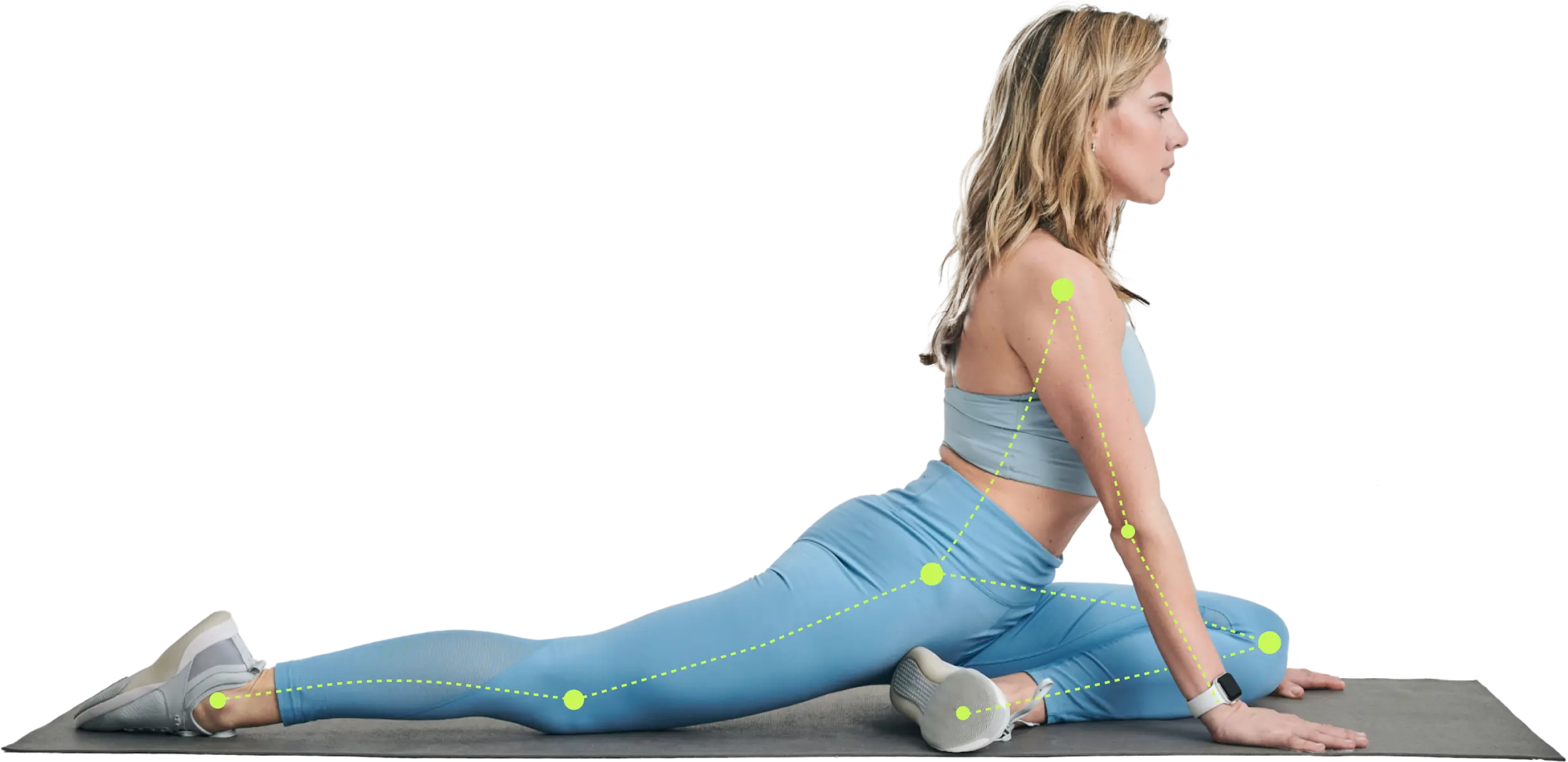
Seeking a goblet squat alternative? Discover 7 effective exercises like dumbbell and landmine squats to build strength, avoid pain, and crush your goals in
The goblet squat gets recommended so often that many lifters stop asking a basic question. What do you do when the squat pattern is fine, but the goblet hold isn't?
That's where most advice falls short. The goblet squat is beginner-friendly because the weight sits at chest height and can be done with a dumbbell or kettlebell, but that same setup can become awkward when your wrists, shoulders, upper back, or available load become the limiting factor. In practice, a good goblet squat alternative should keep the parts that matter most: a controlled squat pattern, a position you can brace well, and a progression path you can stick with.
If your goal is strength, you need room to add load. If your goal is comfort, you need a version that doesn't force a painful front hold. If your goal is consistency, you need something that fits your equipment and skill level. That is the essential standard.
The seven options below are the ones I'd use to solve those problems. Some are better for beginners. Some are better for strength. Some are safer when balance or pain is part of the picture. If you're also trying to improve body composition and metabolic rate, choosing the right lower-body pattern matters because the best program is the one you can repeat, recover from, and progress.
1. Dumbbell Squat
For many people, the simplest goblet squat alternative is just changing where the dumbbells sit. Instead of cradling one weight under your chin, hold two dumbbells at shoulder height in a front-loaded position, or let them hang at your sides. You keep the squat pattern, but you remove the cramped goblet grip that often irritates wrists and elbows.

This is a strong choice for home gyms. A pair of adjustable dumbbells gives you far more progression options than one kettlebell, and you can choose the setup that matches your mobility. Front-loaded dumbbell squats feel closer to the goblet squat. Suitcase-style dumbbell squats usually feel easier on the upper body.
Why it works
A chest-loaded squat is useful because the load stays close to your center of mass, which can make it easier to hold posture and brace compared with a rear-loaded squat. That's one reason front-loaded substitutions are so practical for beginners, people returning after time off, and home-gym users building toward barbell work, as noted in this front-loaded squat discussion.
Practical rule: If the goblet squat feels good but tops out too early, move to two dumbbells before you abandon front-loaded squats entirely.
A dumbbell front squat also teaches the same habits you want from a goblet squat. Elbows stay up, ribs stay down, and the torso stays tall. If your torso folds forward, the dumbbells tell on you immediately.
Best use cases
- Home training: Adjustable dumbbells make this one easy to load and easy to repeat.
- Return to lifting: It's less intimidating than a barbell and easier to bail out of safely.
- Bridge exercise: It pairs well with hinge work like dumbbell deadlifts if you're rebuilding full lower-body strength.
What doesn't work well is jumping too heavy too soon. Once the dumbbells start dragging your chest down or your elbows drop, you're no longer getting the clean squat pattern that made the goblet useful in the first place.
2. Leg Press Machine
If balance is the problem, don't force balance work into your main strength slot. Use the leg press.
This isn't the closest movement match to a goblet squat, but it's one of the most practical alternatives when someone needs stable, repeatable lower-body training without worrying about front-rack discomfort, coordination, or fatigue from holding weights. In busy commercial gyms, it's often the cleanest way to keep leg training moving.
Where the leg press beats the goblet squat
The leg press lets you focus on driving with the legs instead of managing the load position. That matters for people who are coming back from injury, older beginners, or anyone who gets more limited by posture or confidence than by leg strength.
Keep your feet around shoulder width on the platform, control the lowering phase, and keep your lower back glued to the pad. Don't chase a range of motion that pulls your pelvis off the seat. That usually turns a useful machine into a low-back irritation machine.
The leg press is often the right answer when the question isn't “what's the most functional squat?” but “what can I train hard and safely today?”
Who should choose it
- Beginners with low confidence: The setup feels secure and predictable.
- People managing knee-friendly volume: It's easy to combine with other work, especially if you're also using knee-friendly leg exercises.
- Lifters training around upper-body limitations: No front hold. No rack position. No wrist stress.
The trade-off is obvious. You don't get the same trunk demand, balance challenge, or movement skill as a squat variation done on your feet. That's fine if you know why you're using it. The leg press is a tool for loading the legs efficiently, not a badge of athletic purity.
3. Bulgarian Split Squat
When one leg is doing more work than the other in your goblet squat, the Bulgarian split squat usually exposes it fast. It's humbling, but that's part of its value.
This variation trains each side separately, which makes it one of the best goblet squat alternatives for balance, asymmetry, and building legs with limited equipment. In a small apartment gym, one bench and two dumbbells can get you a lot of training effect.

Why coaches keep coming back to it
A split squat gives you more load per leg without needing a heavy barbell. It also solves the common goblet-squat problem of running out of weight too early. If all you have is moderate dumbbells, unilateral work stretches that equipment much further.
Independent exercise guidance also notes that split-squat style goblet variations are commonly programmed for 2 to 3 sets of 10 to 15 reps with 30 to 60 seconds rest, using a load that leaves 1 rep in reserve. That's a practical benchmark when you want progression without grinding every set.
How to make it work
Start with bodyweight if your balance is shaky. A common mistake involves placing the rear foot too high and standing too narrow, which turns the movement into a wobble drill instead of a strength exercise. A modest bench or box works better than trying to copy an extreme setup from social media.
- Front shin check: Let the knee travel naturally, but keep pressure through the full front foot.
- Torso position: A slight forward lean is fine. Collapsing into the hip isn't.
- Programming fit: This is one of the best choices if your goal is quad and glute work. It also fits well with focused glute work such as this guide on how to build glutes.
What doesn't work is forcing heavy dumbbells before you own the path of the movement. Build control first. Load second.
4. Belt Squat
If the goblet hold is the problem, the belt squat is one of the best fixes in the gym. The load sits at the hips instead of the chest, so your wrists, shoulders, and upper back get a break while your legs still do serious work.
This is a strong option for lifters who can squat but can't tolerate front loading well. It also makes sense for people who want hard leg training with less spinal loading than a barbell squat usually brings. In practice, that includes a lot of people with cranky backs, tired shoulders, or a long history of making every leg day more complicated than it needs to be.
Where it shines
The belt squat keeps the torso relatively upright and lets many lifters train deep and hard without the bottleneck of a goblet hold. In a commercial gym, it's one of the rare machine options that still feels like a real squat instead of just a leg press variation.
This is also where I like it for return-to-training phases. Someone who's lost barbell tolerance can often build leg strength here without spending weeks fighting rack position discomfort or low-back fatigue.
Coach's note: If your legs still have more to give but your upper body is what quits first, move the load off the torso and onto the hips.
What to watch
Keep the belt centered at hip level, stand tall before each rep, and descend under control. Don't turn it into a bouncing partial. The machine supports loading, but it doesn't excuse sloppy depth or rushed reps.
The downside is access. Not every gym has a good belt squat setup. Some machines feel smooth and natural. Others feel awkward at the bottom or force a stance that won't suit everyone. When the setup is good, though, this is one of the safest and most effective upgrades from a goblet squat.
5. Smith Machine Squat
The Smith machine gets dismissed too quickly. For some lifters, it's exactly the right goblet squat alternative because it removes balance as the main challenge and lets them focus on squatting with control.
If someone is new, deconditioned, or nervous under free weights, I'd rather see a clean Smith machine squat than a messy goblet squat with the chest caving and heels popping up. Good training starts with repeatable positions.
When the fixed path helps
The fixed bar path gives beginners a clearer groove. That can be useful when someone is still learning how to sit into a squat, keep the knees tracking well, and finish the rep without losing posture. It also helps people who want to push leg effort without worrying as much about dumping a free weight.
Your foot position matters here more than people think. If the feet are too close under the bar, many lifters get jammed up. A slightly adjusted stance often lets the hips and knees move more naturally.
Best practical applications
- Beginner strength work: You can learn basic squat control in a stable setup.
- Accessory volume after free weights: It's easy to keep the legs working even when balance is gone.
- Commercial gym convenience: Almost every chain gym has one, and many people already know how to set the safeties.
For exercise variety, it also fits naturally into a broader machine-based lower-body day with other Smith machine exercises.
The limitation is that the machine decides part of the movement path for you. That can be helpful, but it also means not every body will love it. If your knees, hips, or back feel worse with every set, don't force the fit just because the setup looks simple.
6. Landmine Squat
The landmine squat is one of the smartest upgrades from a goblet squat. You keep the upright squat feel, but you gain a different loading tool and a smoother path for many lifters.
Modern coaching roundups regularly group landmine squats with front squats, overhead squats, and split-squat variations as major alternatives when goblet squats start to feel too easy or stale, as described in this goblet squat alternatives roundup. That lines up with what happens in real gyms. Once lifters outgrow one dumbbell, the landmine often becomes the next useful stop.

Why it feels better for many people
The angled bar path can make the squat feel more guided without fully locking you into a machine. That's especially helpful for beginners who need help staying upright or for lifters whose ankles and hips don't love a pure vertical squat pattern.
It's also a practical compromise between free weight and machine work. You still need to stabilize. You still need to brace. But the setup often feels friendlier than a front squat or a classic goblet hold.
Good uses and bad uses
- Good for teaching: It helps many lifters learn depth and posture.
- Good for moderate loading: It extends the life of the squat pattern when goblets are getting too light.
- Less ideal for crowded gyms: If the landmine station is always taken, this isn't a dependable main lift.
One caution matters here. If the issue is severe wrist or shoulder irritation from any front-held position, even a landmine may not solve it completely. It often feels better, but not always. In that case, belt squats or leg press work may be the cleaner solution.
7. Hex Bar Deadlift
Strictly speaking, this isn't a squat. But it absolutely belongs on a goblet squat alternative list because many people don't need another squat variation. They need another lower-body strength pattern that's easier to load and easier to tolerate.
The hex bar deadlift sits right in that overlap between squat and hinge. You stand inside the bar, the load stays close to you, and many lifters can keep a more upright torso than they can with a straight-bar deadlift. That makes it a strong option when goblet squats are no longer challenging enough but barbell squats aren't the right fit.
Why it earns a place here
One of the biggest gaps in typical goblet squat advice is failing to separate the squat pattern from the goblet hold itself. Expert coverage points out that many alternatives answer “what is another squat?” but not “what should you use when front loading is the problem?” This BarBend discussion of goblet squat variations gets closer to that issue by highlighting substitutions like front squats, landmine squats, split squats, and trap-bar front-racked options.
The hex bar deadlift solves a different problem. Your hands sit beside the torso, not in front of it. For a lot of lifters, that changes the limiting factor from upper-body discomfort to leg and hip strength.
Who should use it
- Strength-focused lifters: It's easier to progress than a goblet squat.
- People with front-rack limitations: The grip is simpler and less demanding.
- Busy lifters who want one big lower-body move: It trains a lot with minimal setup and pairs well with questions like whether to squat or deadlift first.
What doesn't work is treating it like a copy of a squat. It's a different pattern. Use it when you want a practical replacement for lower-body loading, not when you specifically need the motor pattern of a squat.
7 Goblet Squat Alternatives Compared
| Exercise | Implementation complexity | Resource requirements | Expected outcomes | Ideal use cases | Key advantages |
|---|---|---|---|---|---|
| Dumbbell Squat | Low–Moderate, simple pattern, focus on form | Pair of dumbbells, open floor space | Quadriceps/glute strength; scalable absolute load; moderate core | Strength phases, home gyms, returning lifters | Easy progressive loading; less wrist/shoulder demand; familiar movement |
| Leg Press Machine | Low, guided, minimal technique risk | Leg press machine (gym only) | Quad/glute hypertrophy with minimal stabilization | Rehab, beginners, injury management, time‑efficient sessions | Very safe under load; high weight capacity; low balance need |
| Bulgarian Split Squat | Moderate–High, balance and unilateral control required | Bench/chair and optional dumbbells | Single‑leg strength, balance, corrects imbalances | Single‑leg training, functional work, limited equipment home use | Targets imbalances; high glute activation; minimal equipment |
| Belt Squat | Low–Moderate, machine setup with simple mechanics | Belt squat machine (specialized) | Heavy lower‑body strength with minimal spinal compression | Back‑sensitive lifters, heavy loading while protecting spine | Allows large loads without axial spine load; upright position |
| Smith Machine Squat | Low, fixed path reduces technical demand | Smith machine (gym or home model) | Muscular strength with low stability requirement | Beginners, time‑efficient gym/home setups, confidence building | Safety catches; easy incremental loading; beginner‑friendly |
| Landmine Squat | Low–Moderate, straightforward but needs apparatus | Barbell and landmine anchor or corner setup | Upright squat mechanics, core engagement, scalable load | Functional/ CrossFit gyms, home setups with landmine | Encourages upright posture; reduced spine stress; barbell loading |
| Hex Bar Deadlift | Moderate, full‑body coordination, technical cueing useful | Trap/hex bar | Posterior chain and quad strength; functional carryover; high loads | Athletic conditioning, functional strength, heavy but safer lifting | More upright torso than conventional deadlift; lower back stress reduced |
How to Choose Your Best Goblet Squat Alternative
The best goblet squat alternative depends on what is limiting you. If the goblet hold hurts your wrists, shoulders, or upper back, stop trying to solve that with more stubbornness. Pick a movement that removes the hold itself, such as a belt squat, leg press, Smith machine squat, or hex bar deadlift. If the issue is that the goblet squat has become too light, move to dumbbell front squats, landmine squats, or unilateral work like Bulgarian split squats.
Front-loaded options still matter. They're often easier to brace and easier to keep upright than rear-loaded squats. That's why they remain useful for beginners and for people rebuilding technique after time away from training. But there's a point where one dumbbell stops being enough, and that's usually when lifters need a real decision, not another generic list of exercises.
Choose based on your real goal:
- For strength progression: Dumbbell squat, landmine squat, or hex bar deadlift
- For less spinal or upper-body strain: Belt squat or leg press
- For balance and side-to-side control: Bulgarian split squat
- For a safer beginner setup: Smith machine or leg press
- For limited home equipment: Dumbbell squat or Bulgarian split squat
Zing Coach can help with that decision if you want a plan that adapts to your equipment, current level, and recovery. The app builds personalized training plans, uses computer vision for real-time form feedback, and adjusts training based on factors like fatigue and available equipment. For a movement category like squat substitutions, that kind of structure is useful because the right answer often changes as your mobility, strength, and confidence improve.
The big mistake is picking the most advanced exercise instead of the most repeatable one. Progress comes from a movement you can perform well, load over time, and recover from week after week. That's the standard. If an alternative helps you train hard without pain, awkward loading, or constant form breakdown, it's doing its job.
If you want help choosing the right goblet squat alternative for your body and setup, Zing Coach can build a personalized plan around your goals, equipment, and current fitness level, then adjust it as you get stronger.
Share this article


Authors