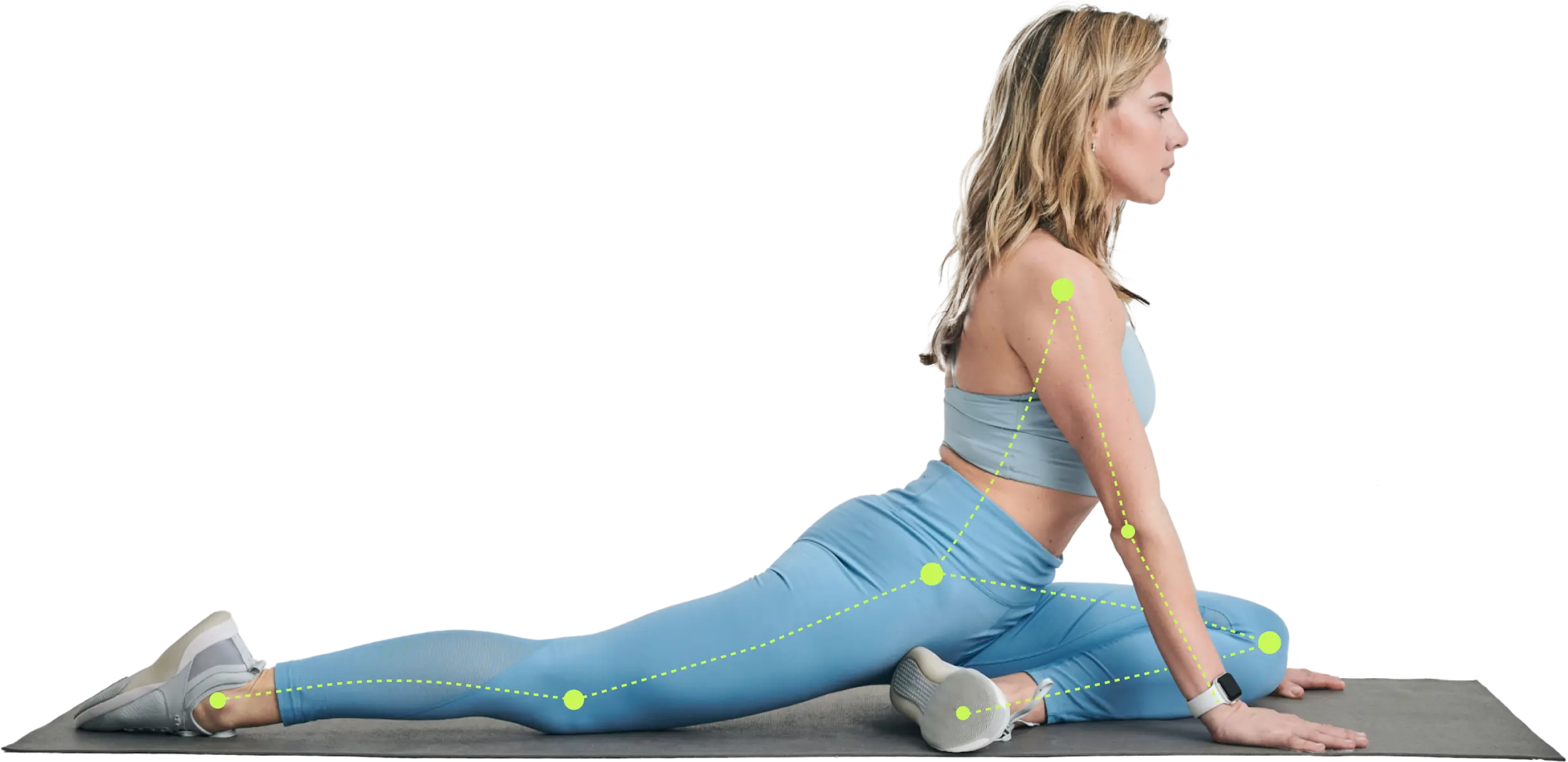
Learn how to build glutes with science-backed exercises and training plans. Our guide covers nutrition, form, and workouts for strength and size.
If you want to build stronger, more powerful glutes, you have to start by understanding exactly what you're training. This isn't just about aesthetics; your glutes are the engine behind explosive movements, a stable core, and even injury prevention. Getting to know the anatomy is the foundation for every single rep you'll ever do.
Understanding the Anatomy of Your Glutes
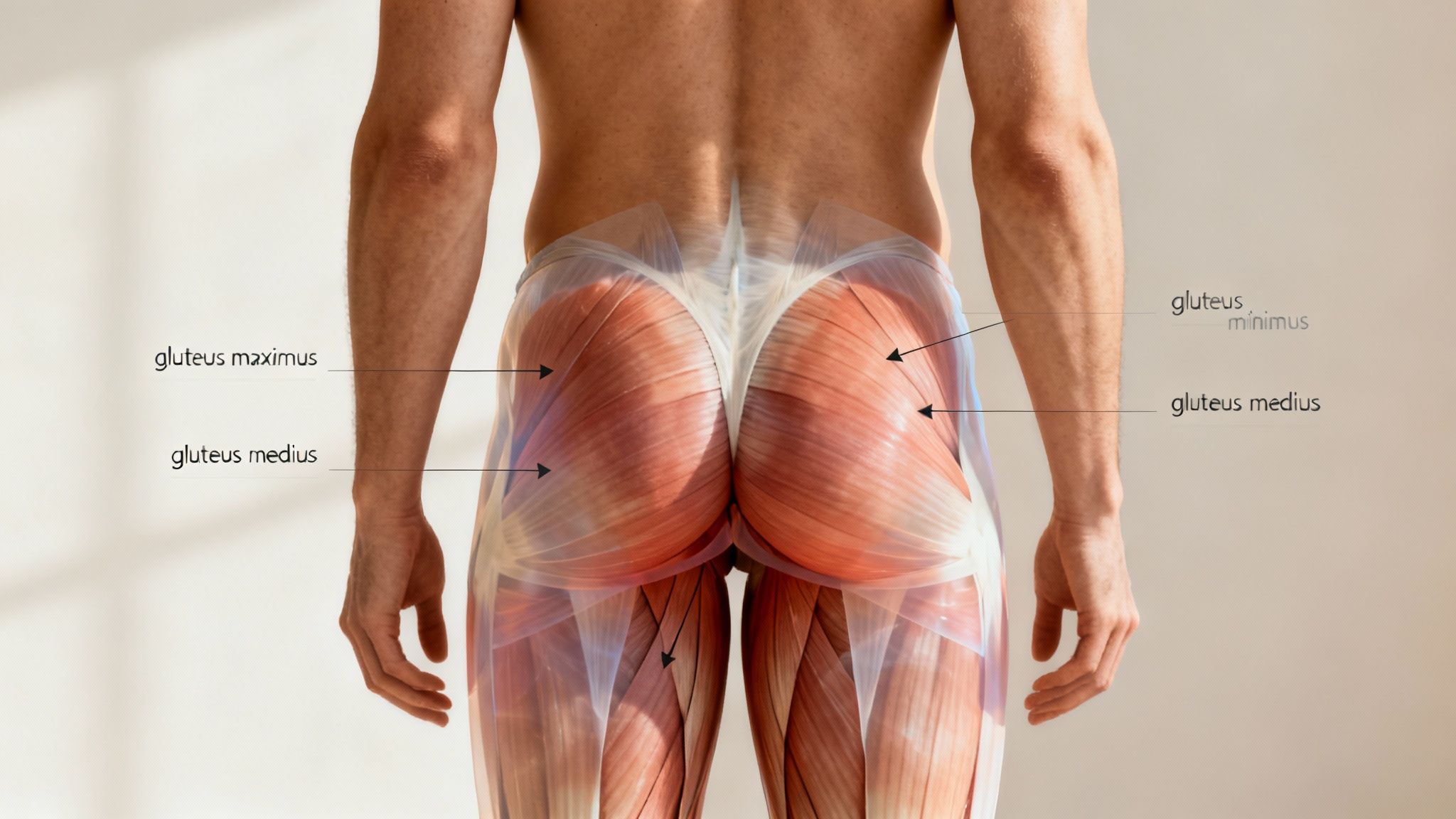
To really build your glutes, you need to know what you’re working with. The glutes aren’t just one big muscle; they're a group of three distinct muscles, and each one has a very specific job.
Simply spamming squats and lunges won't cut it if you're after balanced, well-rounded development. Each muscle in this group responds best to different movements. Understanding this trio is the first real step toward a smarter, more effective training plan. It’s what separates just going through the motions from making every single rep count.
The Three Key Glute Muscles
Your glutes are a team made up of the gluteus maximus, medius, and minimus. Each one plays a unique and critical role in how your hips move and stay stable.
To make it simple, here’s a quick breakdown of the gluteal muscles, what they do, and how to hit them in the gym.
Your Guide to the Three Glute Muscles
| Glute Muscle | Primary Function | Example Exercises |
|---|---|---|
| Gluteus Maximus | Hip Extension (pushing hips forward) | Glute Bridges, Hip Thrusts, Deadlifts, Squats |
| Gluteus Medius | Hip Abduction (moving leg out to the side) & Pelvic Stability | Lateral Band Walks, Clamshells, Side-Lying Hip Raises |
| Gluteus Minimus | Assists with Hip Abduction & Stabilization | Cable Abduction, Fire Hydrants, Single-Leg Squats |
As you can see, hitting all three muscles requires a smart mix of movements. You need exercises that focus on hip extension, abduction (moving your leg away from your body's midline), and rotation to build functional strength and a well-developed physique. For more ideas, you can explore a wide variety of effective glute exercises that hit each of these muscles.
A well-rounded glute program isn't just about size; it's about building a foundation of strength that supports the entire body. Focusing on all three gluteal muscles improves performance, enhances posture, and dramatically reduces injury risk.
Why Anatomy Matters for Results
Knowing your anatomy is the key to building a stronger mind-muscle connection. It's a game-changer.
When you're doing a lateral band walk, you can actually visualize your gluteus medius firing up to pull your leg outward. During a heavy hip thrust, you can focus intently on squeezing the gluteus maximus at the very top of the movement. This kind of intentional focus makes every single exercise more effective. You're not just lifting a weight; you're contracting a specific muscle with purpose.
Over the last decade, the fitness world has really woken up to the importance of glute strength, moving it from a niche goal to a top priority for everyone. We now know that strong glutes are directly linked to better athletic performance and a huge reduction in chronic lower back pain. It’s a cornerstone of modern, intelligent training.
Mastering the Core Glute-Building Movements
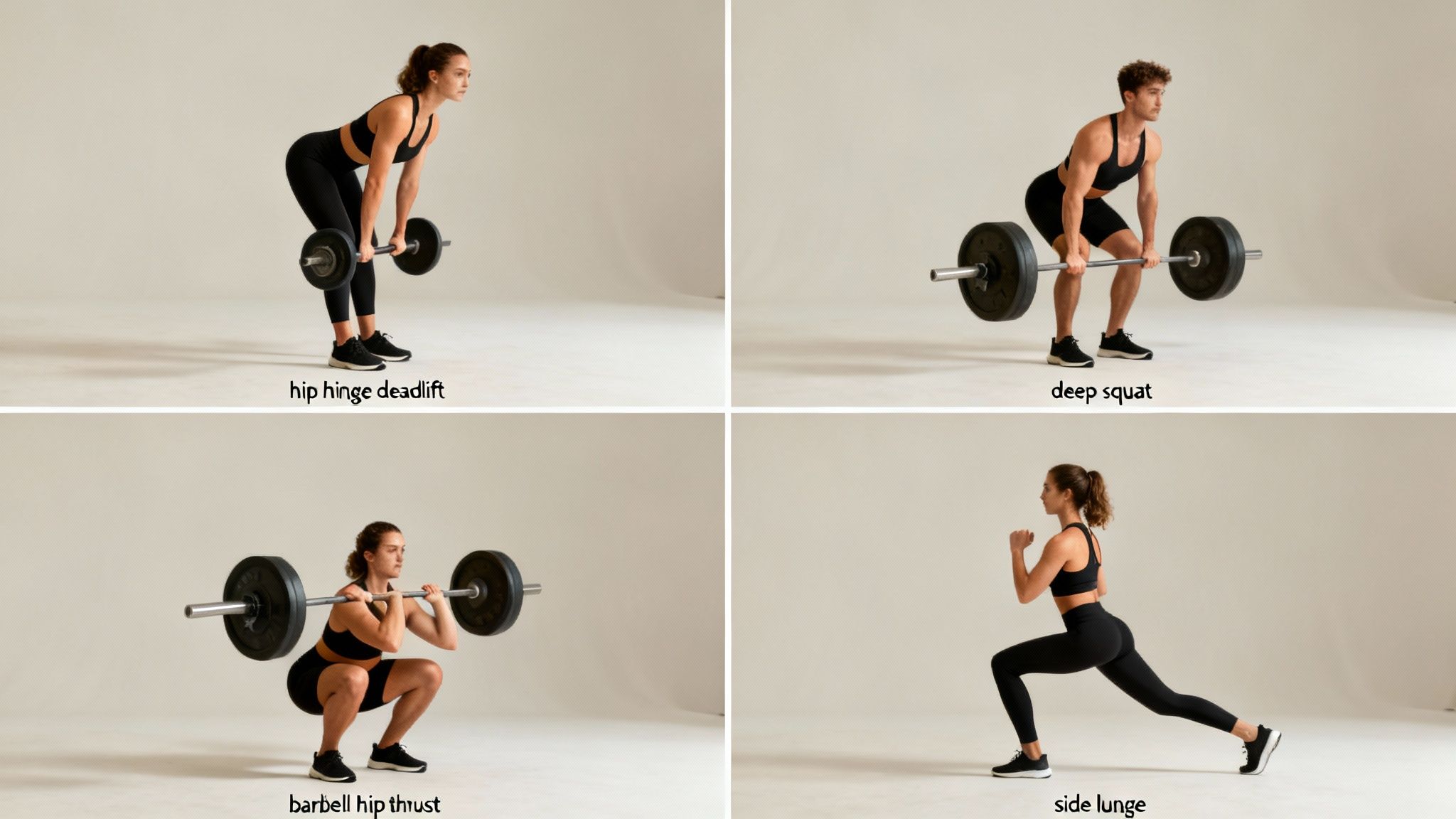
Knowing the anatomy is your map, but now you need the right vehicles to get to your destination. When it comes to building your glutes, you have to get picky. Not all exercises are created equal, and focusing your energy on the right movement patterns is the only way to make sure your hard work actually translates into growth.
We're going to zero in on four foundational movement patterns. Think of these less as individual exercises and more as non-negotiable categories. If you're serious about building a stronger, more powerful posterior chain, you need to master them.
The Mighty Hip Hinge
The hip hinge is, without a doubt, the king of all posterior chain movements. It’s a simple concept: push your hips back, then drive them forward. This motion puts the lion's share of the load directly onto your glutes and hamstrings. This is the fundamental pattern behind heavy hitters like deadlifts and good mornings.
Think about how you’d lift a heavy box off the floor. You don't just squat straight down; you instinctively push your hips back to tap into your body's strongest muscles. That's a hip hinge in the wild.
A classic mistake is turning the hinge into a squat by bending the knees too much, or letting the lower back round. The trick is to maintain a mostly straight leg (just a soft bend in the knees is fine) and let your hips do all the traveling.
Pro-Tip: Imagine a wall is just behind you. As you start the movement, try to touch the wall with your butt. This simple cue forces you to initiate from the hips, not from your knees or back.
Deep Knee-Dominant Movements
While most people think "quads" when they hear squats and lunges, these knee-dominant exercises are phenomenal for the gluteus maximus—if you focus on depth. Sinking deep into a squat puts a massive stretch on your glutes, and that stretch is a powerful trigger for muscle growth.
The key here is full range of motion. Doing partial reps will keep the tension squarely on your quads. To really light up your glutes, you have to break parallel, which means your hip crease needs to drop below the top of your knees.
Watch out for these common glute-sabotaging mistakes:
- Knee Valgus: This is when your knees cave inward as you squat. It’s a fast track to knee pain and takes all the work away from your glutes. Fix it by actively thinking about pushing your knees out.
- Lifting Your Heels: This usually points to poor ankle mobility or just letting your quads take over. Keep your entire foot glued to the floor and focus on driving through your heels to power back up.
Targeted Hip Extension and Bridging
If you want to isolate the gluteus maximus, nothing comes close to bridging movements. These exercises have you lie on your back and drive your hips up against resistance, which forces your glutes into their most powerful position: full hip extension. The undisputed champion in this category is the barbell hip thrust.
Unlike squats or deadlifts where a lot of other muscles jump in to help, the hip thrust lets you load the glutes directly with some serious weight. It’s an absolute staple for anyone looking to add size and strength back there. If you want to really nail the technique, our detailed guide on mastering the barbell hip thrust covers every little detail.
The real magic of the hip thrust happens at the top. You're looking for that powerful peak contraction where your body forms a straight line from shoulders to knees. Pause for a solid second and squeeze your glutes as hard as you can before lowering the weight with control.
Crucial Abduction Work
Remember the gluteus medius and minimus? These are your "side glutes," and their main job is hip abduction—moving your leg away from the center of your body. These muscles are what create that rounded, "shelf" look and are absolutely critical for hip stability. If you've been doing squats and deadlifts for ages but still don't have well-rounded glutes, this is probably the missing piece.
You need to hit them with exercises that specifically focus on that lateral, side-to-side movement.
Effective Abduction Exercises:
- Lateral Band Walks: Pop a resistance band around your knees or ankles, get into a slight squat, and take steps to the side. Your glute medius will be screaming to keep your pelvis stable.
- Cable Hip Abductions: Using a cable machine with an ankle strap is fantastic because it keeps constant tension on the muscle through the entire movement.
- Side-Lying Hip Raises: A simple but brutally effective bodyweight (or banded) move that targets the side glutes directly.
The goal with these isn't to lift a ton of weight. Instead, the focus should be on slow, controlled movements and really feeling that burn on the outside of your hips. That mind-muscle connection is everything for waking up these often-neglected muscles.
By making sure all four of these movement patterns are in your routine, you're guaranteed to be hitting your glutes from every angle. This is how you build balanced strength, functional power, and the aesthetic results you're after.
Designing Your Weekly Glute Training Program
Knowing the best exercises is one thing, but the real magic happens when you organize them into a smart, consistent weekly plan. A great program isn't just a random collection of movements; it's a blueprint designed to push your muscles just enough to adapt and grow, week after week. This is where you’ll see real, lasting change.
The single most important concept you need to burn into your brain is progressive overload. It’s the absolute cornerstone of all muscle growth. Put simply, it means you have to consistently make your workouts a little bit harder over time. If you lift the same weights for the same reps forever, your body has no reason to change.
The Core of Glute Growth: Progressive Overload
Think of progressive overload as your roadmap to results. It’s what keeps you moving forward instead of just spinning your wheels in the gym.
The most obvious way to do this is by increasing the weight. Once you can comfortably hit your target rep range on an exercise, it's time to add a little more iron. Even a small jump of 2.5 to 5 pounds is enough to force your muscles to work harder and adapt by getting stronger.
But adding weight isn't the only tool in your toolbox. Here are a few other effective ways to progress:
- Increase Reps: Can't add more weight just yet? No problem. Try squeezing out more reps with the same weight. Pushing from 8 reps to 10 is a clear sign of progress.
- Add Sets: Performing one extra set of a key exercise increases your total training volume—another powerful signal for your muscles to grow.
- Improve Your Form: This one is underrated. Slowing down the eccentric (lowering) part of a lift or pausing where you feel the squeeze the most increases the muscle's time under tension. This makes the exercise much more challenging without adding a single pound.
The goal isn't just to lift heavier; it's to lift better. Every week, find a way to beat your previous performance, whether it's one more rep, slightly cleaner form, or a bit more weight on the bar.
Structuring Your Training Week
So, how often should you actually train your glutes? For most people, hitting them 2-3 times per week is the sweet spot. This gives you enough stimulus to spark growth while allowing for the crucial 48-72 hours of recovery your muscles need to repair and come back stronger.
Here are two popular and highly effective ways to map out your week.
Option 1: The Twice-a-Week Split
This is a fantastic setup if you're busy or want to balance your glute training with other fitness goals. You get plenty of work in without living in the gym.
- Day 1 (Strength Focus): Kick things off with a heavy compound lift like a Barbell Hip Thrust or Romanian Deadlift. You'll work in a lower rep range, say 4-6 reps, to build that raw, foundational strength. Follow it up with accessory work in the classic 8-12 rep range.
- Day 2 (Hypertrophy Focus): Later in the week, you'll shift the focus to volume and getting a good pump. This means using moderate weights for higher reps (10-15 reps) and maybe throwing in techniques like supersets to really fatigue the muscle fibers.
Option 2: The Three-Times-a-Week Split
If building killer glutes is your absolute top priority, this approach is for you. It provides maximum stimulus for growth by dedicating two main lower body days and a third, lighter day to the cause.
- Day 1: Heavy hip thrusts, squats, and abduction work.
- Day 2: Rest or upper body training.
- Day 3: Deadlift variations, lunges, and more glute isolation.
- Day 4: Rest or upper body.
- Day 5: A lighter, high-rep, "pump-focused" day. Think banded glute bridges, kickbacks, and bodyweight movements to flush the muscles with blood.
Getting the right number of exercises is also a huge piece of the puzzle. To learn more, check out our guide on how many exercises per muscle group you should be doing.
Assembling a Complete Glute Workout
Once you’ve picked your weekly split, it’s time to build out each individual workout. A well-designed session follows a logical flow to get the most out of your body while keeping you safe.
Here’s a simple structure that just works:
- Activation (5-10 mins): Don't just jump into heavy lifting. Start with light, targeted movements to wake up your glutes. Things like banded glute bridges, clamshells, and lateral band walks are perfect for this. It's all about building that mind-muscle connection.
- Primary Strength Movement (15-20 mins): This is your main event—the heaviest, most demanding exercise of the day. It should be a major compound lift like a Barbell Hip Thrust, Deadlift, or Squat. Go heavy, but keep your form tight.
- Secondary Compound Movement (10-15 mins): Follow up with another multi-joint exercise. This is a great place for single-leg work like Bulgarian Split Squats or a Single-Leg RDL to address any imbalances and keep building strength.
- Isolation and Finisher (10 mins): Wrap up the session with targeted isolation exercises. This is where you hit the smaller glute muscles and chase that final muscle pump. Cable kickbacks, hip abductions, or a high-rep bodyweight glute bridge burnout are perfect finishers.
This sequence ensures your glutes are properly primed, seriously challenged, and completely fatigued by the end—the perfect recipe for growth.
Recently, data-driven programming has started to change the game. This approach helps solve common problems like inconsistent training volume, sloppy technique, and not getting enough recovery. Some systems use computer vision to spot bad form in squats or hip hinges, while apps can automatically adjust your sets and weight based on your performance. Platforms like Zing Coach even use data from wearables, health apps, and fitness tests to create a glute plan that is both challenging and perfectly sustainable for you. You can discover more about these emerging fitness trends on totalgymshop.co.uk.
Adapting Glute Workouts for Any Environment
Your progress shouldn't stall just because you don't have access to a fully-equipped gym. The real secret to building stronger glutes is consistency, and that means your plan has to work for you, no matter where you are or what gear you've got. Life happens—travel, busy schedules, or maybe you just prefer training at home.
The key is to remove the equipment barrier so you can stay on track. Below, I’ve laid out three powerful, glute-focused sessions designed for different settings. Whether you're surrounded by power racks, working with a single pair of dumbbells, or have nothing but your own body weight, there's an effective workout here for you.
Sample Glute Workouts for Different Settings
To make this crystal clear, here’s a side-by-side look at how a killer glute workout can be structured with different levels of equipment. Notice how the core movement patterns stay the same, but the exercise selection and rep ranges are adjusted to create the right stimulus.
| Full Gym Workout (Barbells, Machines) | Home Workout (Dumbbells, Bands) | Bodyweight Only Workout |
|---|---|---|
| Barbell Hip Thrusts: 3 sets of 6–8 reps | Single-Leg Hip Thrusts: 3 sets of 10–15 reps per leg | Single-Leg Glute Bridges: 3 sets to failure per leg |
| Romanian Deadlifts (RDLs): 3 sets of 8–10 reps | Dumbbell RDLs: 4 sets of 12–15 reps | Reverse Lunges: 3 sets of 15–20 reps per leg |
| Leg Press (High/Wide Feet): 3 sets of 10–12 reps | Dumbbell Goblet Squats: 4 sets of 12–15 reps | Side-Lying Hip Raises: 3 sets of 20–25 reps per side |
| Cable Hip Abduction: 3 sets of 15–20 reps per leg | Banded Lateral Walks: 3 sets of 20 steps each way | Frog Pumps: 2 sets to failure |
Each of these routines is designed to challenge your glutes effectively. The gym version focuses on heavy load, the home version uses higher reps and unilateral work, and the bodyweight version maximizes volume and time under tension to get the job done.
Gym Power Routine: Maximum Load
When you have a full gym at your fingertips, you can go all-in on heavy loads and specialized machines to maximize mechanical tension—a primary driver of muscle growth. This routine is built around big, powerful movements that let you really push the weight.
- Barbell Hip Thrusts: 3 sets of 6–8 reps. This is your main strength-builder. Focus on moving heavy weight with perfect form.
- Romanian Deadlifts (RDLs): 3 sets of 8–10 reps. An incredible hinge movement for the entire posterior chain, hitting the glutes and hamstrings hard.
- Leg Press (High and Wide Foot Placement): 3 sets of 10–12 reps. By putting your feet high and wide on the platform, you shift the emphasis away from your quads and right onto your glutes.
- Cable Hip Abduction: 3 sets of 15–20 reps per leg. This isolates the gluteus medius and minimus, helping to build that rounded, "shelf" look.
The infographic below nails the core principles that make any glute program work, regardless of where you're training.
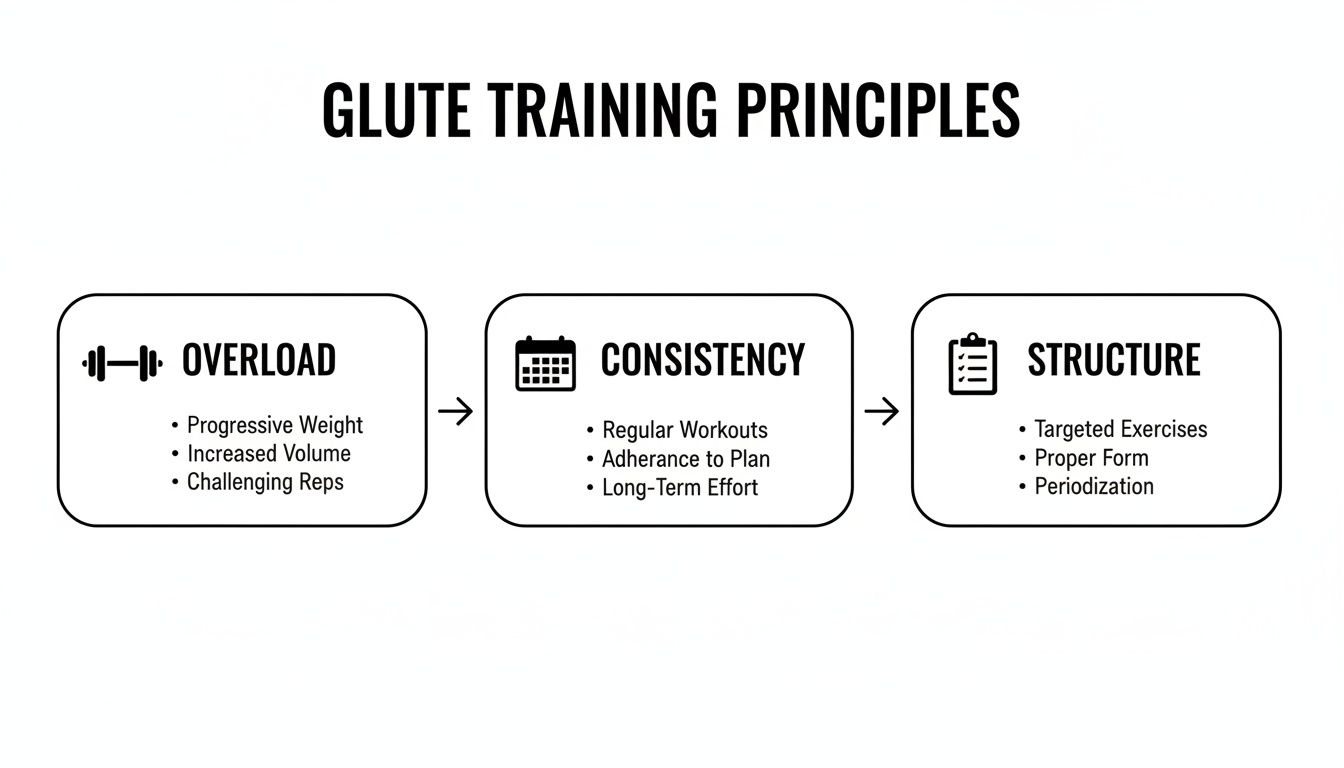
This visual is a great reminder that consistent effort, smart planning, and always pushing for more are the non-negotiables for building strong glutes.
Minimalist Home Setup: Dumbbells and Bands
You absolutely do not need a gym membership to build impressive glutes. With just a pair of dumbbells and some resistance bands, you can create an intensely challenging workout that sparks serious growth. Here, the focus shifts a bit—we're talking higher reps, controlled tempos, and single-leg moves to crank up the intensity.
If you're all about getting strong without a gym, our comprehensive guide details exactly how to build muscle at home.
- Dumbbell Goblet Squats: 4 sets of 12–15 reps. Go as deep as your mobility allows to really stretch and activate the glutes.
- Single-Leg Hip Thrusts: 3 sets of 10–15 reps per leg. Just elevate your back on a couch or bench. This one is deceptively tough and amazing for isolating each glute.
- Dumbbell RDLs: 4 sets of 12–15 reps. Concentrate on a slow, controlled lowering phase (the eccentric portion) to maximize time under tension.
- Banded Lateral Walks: 3 sets of 20 steps in each direction. A classic finisher to completely burn out the glute medius.
Bodyweight Only Routine: No Equipment Needed
Even when you're working with zero equipment, you can still get a killer glute workout. The trick is to use high volume, play with leverage, and focus intently on that mind-muscle connection. This routine is perfect for travel or days when you're really short on time.
Don't ever underestimate what you can do with just your body weight. By zeroing in on unilateral movements and squeezing every last rep, you can create a significant stimulus for muscle growth without picking up a single weight.
- Bodyweight Single-Leg Glute Bridges: 3 sets to failure per leg. Lie on your back, stick one leg out, and drive through the heel of your planted foot. Squeeze hard at the top of every rep.
- Reverse Lunges: 3 sets of 15–20 reps per leg. Stepping backward instead of forward naturally places more of a load on the glute of your front leg.
- Side-Lying Hip Raises: 3 sets of 20–25 reps per side. This directly targets the gluteus medius, which is crucial for stability and shape.
- Frog Pumps: 2 sets to failure. Lie on your back, press the soles of your feet together, and perform small, fast hip thrusts. It's a fantastic way to finish off the glutes.
Fueling Your Glutes with Smart Nutrition and Recovery
What you do outside the gym matters just as much as what you do inside. Maybe even more.
True muscle growth doesn’t happen while you're grinding out reps; it kicks in when you rest, recover, and feed your body the right building blocks. Skipping out on solid nutrition and recovery is like trying to build a house without bricks or mortar—all that hard work in the gym just won't stick.
Think of your glute workouts as flipping the "on" switch for growth. You’re strategically breaking down muscle fibers. Nutrition and rest are what repair those fibers, building them back bigger and stronger than before. This is where you cash in on all that effort.
The Non-Negotiables of Muscle-Building Nutrition
To build bigger glutes—or any muscle, for that matter—you need to fuel the process correctly. This isn’t about some crazy restrictive diet, but it does demand a focus on a few key things. The absolute most important factor? Eating enough calories to support growth, paired with plenty of protein.
One of the biggest mistakes I see people make is simply not eating enough. If you're in a big calorie deficit, your body is in survival mode. It's going to prioritize energy for essential functions, not for building new muscle tissue. To give your body the extra energy it needs for muscle synthesis, you need to be in at least a slight caloric surplus.
For muscle hypertrophy (growth) to happen, your body needs to be in a state of positive nitrogen balance. That’s a fancy way of saying protein synthesis has to be greater than protein breakdown. This is only possible with enough calories and protein.
Getting a handle on your energy needs is the first step. You can get a solid estimate by exploring a guide on how to calculate daily calorie needs, which takes a lot of the guesswork out of the equation.
Prioritizing Protein for Peak Repair
Protein is the absolute cornerstone of muscle repair. Period. Its amino acids are the raw materials your body uses to rebuild those damaged muscle fibers after a tough glute session. Without enough of it, your recovery will drag, and your results will be disappointing.
A great rule of thumb for active people trying to build muscle is to shoot for 1.6 to 2.2 grams of protein per kilogram of body weight each day.
- Lean Meats: Chicken breast, turkey, and lean cuts of beef are fantastic sources.
- Fish: Salmon and tuna deliver high-quality protein and healthy omega-3s.
- Dairy: Greek yogurt, cottage cheese, and milk are protein powerhouses.
- Plant-Based Options: Don't sleep on lentils, chickpeas, tofu, and edamame.
When you're really dialed in on muscle growth, the topic of supplements often comes up. It's worth understanding the interplay between exercise and supplements to make smart choices that actually support your goals.
The Science of Smart Recovery
Recovery is way more than just taking a day off. It's an active process that helps your body adapt and come back stronger.
Sleep is your most powerful recovery tool, hands down. During deep sleep, your body releases human growth hormone (HGH), which is absolutely critical for muscle repair. Consistently getting 7-9 hours of quality sleep a night can make a night-and-day difference in your results.
Active recovery can also be a game-changer. On your "off" days, think about light activities that get blood flowing to your tired muscles without causing more stress. This can help flush out metabolic waste and ease soreness.
- Gentle Mobility Work: Think hip circles, leg swings, and cat-cow stretches.
- Light Cardio: A 20-30 minute walk or an easy spin on a bike does wonders.
- Foam Rolling: Hitting the glutes, hamstrings, and quads can help release muscle tightness.
When you pair dedicated training with smart nutrition and intentional recovery, you create a 24/7 environment for growth. This is the complete approach that truly builds stronger, more developed glutes.
Common Questions About Building Glutes
Let's clear up some of the most common questions that pop up on the glute-building journey. When you're just learning how to build your glutes, it's totally normal to wonder about timelines, what's realistic, and if you're even on the right track.
Getting the facts on these points can be the difference between spinning your wheels and seeing real, rewarding progress.
How Long Does It Realistically Take to See Glute Growth?
This is the big one, isn't it? While everyone's body is different due to genetics, diet, and consistency, most people start to feel a real difference in strength and muscle firmness within 4 to 8 weeks.
As for more visible changes in size and shape, those usually become apparent after about 8 to 12 weeks of dedicated work. Just remember, building quality muscle is a marathon, not a sprint. Consistency is what gets you lasting results, so trust the process.
Can I Really Build Glutes with Just Home Workouts?
Absolutely. Heavy barbells are a fantastic tool, but they are far from the only way to get your glutes to grow. When you're training at home, the game is all about finding other ways to create progressive overload.
You can spark some serious growth by focusing on:
- High Volume: Simply doing more sets and reps increases the total workload on the muscles.
- Mastering Your Form: Using a full range of motion with a slow, controlled tempo is a killer way to increase time under tension.
- Adding Resistance: Don't underestimate tools like heavy-duty resistance bands. They can add a surprising amount of tension to exercises like hip thrusts and squats.
Think about it—moves like single-leg hip thrusts and Bulgarian split squats create an incredible challenge, forcing your glutes to work overtime for stabilization, no gym membership required.
"A lot of people get discouraged if they don't see massive changes in a month. But significant glute development can take 3 to 6 months or even more. The most important ingredients are consistency, progressive overload, and proper nutrition."
How Do I Know If I'm Actually Using My Glutes?
This is a critical hurdle for so many people. It’s way too easy for dominant muscles like your quads, hamstrings, or even your lower back to take over the show, especially if your glutes are a bit "sleepy." The fix is all about improving your mind-muscle connection.
Try starting your workouts with specific activation drills like glute bridges and clamshells. While you do them, literally place your hands on your glutes to feel them contract. When you move on to your main lifts, consciously think about squeezing your glutes to initiate the movement. If you're feeling an exercise mostly in your lower back, that's a huge red flag to drop the weight and dial in your form.
What Is the Best Training Frequency for Glutes?
For the best results, hitting your glutes 2-3 times per week seems to be the sweet spot for most people. This frequency provides enough of a stimulus to keep muscle growth going without running you into the ground.
This schedule also gives your muscles the crucial 48 to 72 hours they need to recover, repair, and grow stronger between sessions. It's a much smarter and more effective strategy than trying to cram everything into one exhaustive "glute day" each week.
Ready to stop guessing and start building a personalized plan that actually works? The Zing Coach AI takes your goals, equipment, and current fitness level to build workouts that adapt as you get stronger. Let us handle the science so you can focus on the reps. Download the app and start your journey today!
Share this article


Authors