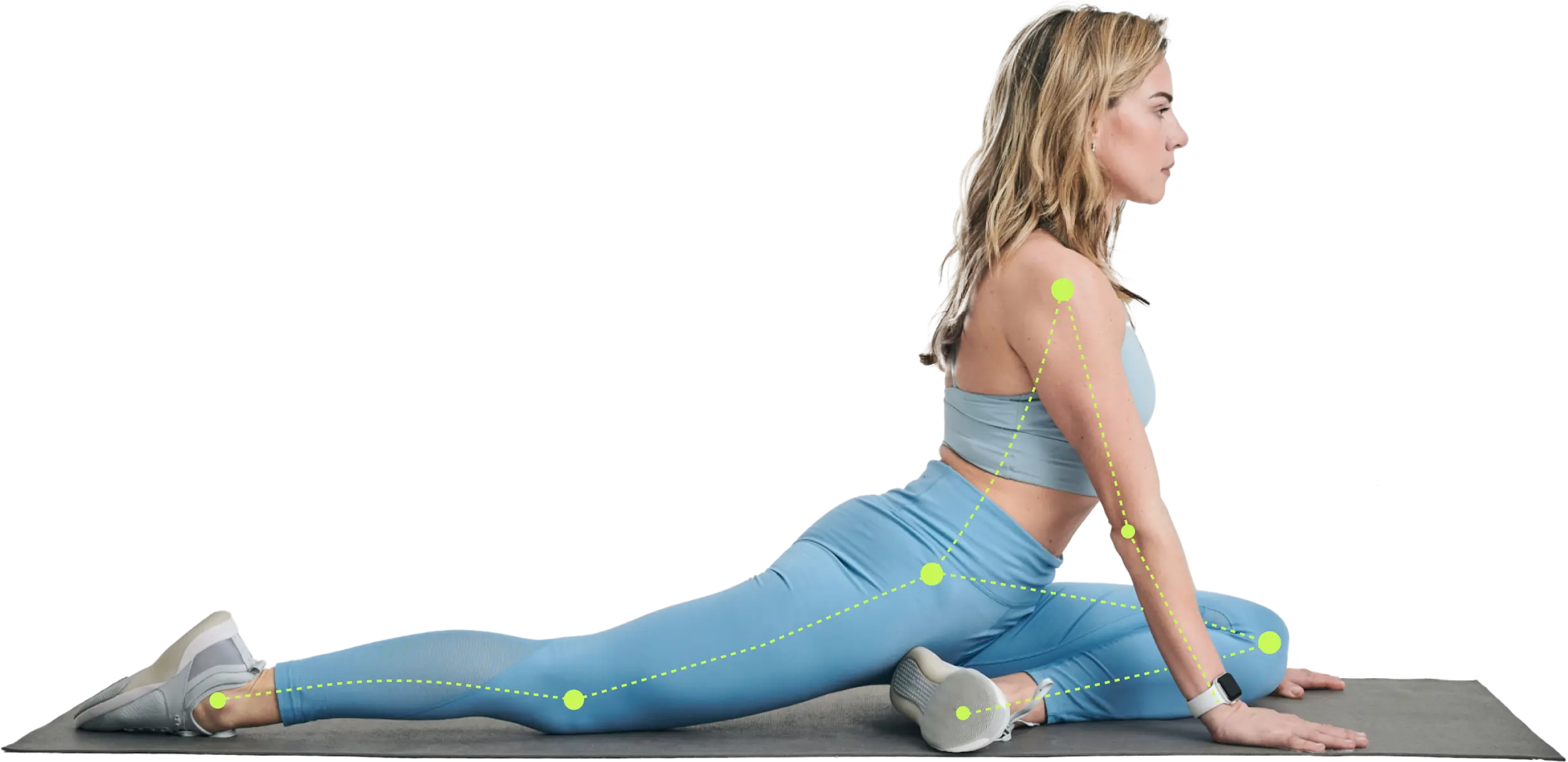
Discover the best exercises for lower back pain with expert-guided routines. Learn safe, effective movements to build core strength and ease discomfort.
When you're struggling with lower back pain, the first instinct might be to stretch it out aggressively. But the real path to relief starts with specific, gentle movements. I’ve seen it time and time again with clients: targeted exercises for lower back pain are some of the most powerful tools you have for managing discomfort and getting your life back.
The secret isn't just about stretching. It’s about building a strong, stable foundation to support your spine.
Your First Steps to Easing Lower Back Pain
The journey to a healthier back isn't a sprint; it's about taking small, intentional actions. Think of it as creating a natural "corset" of muscle to protect your lumbar spine, not gritting your teeth and pushing through the pain. This means a smart blend of stabilization, mobility, and core engagement exercises.

As you get started, exploring how to relieve lower back pain naturally with proven stretches and exercises can give you some great initial ideas. The main goal here is to re-establish a healthy mind-body connection and teach your body how to move safely again.
What Actually Works?
While millions of people deal with lower back pain, a groundbreaking 2025 meta-analysis finally confirmed what many of us in the field have seen for years: certain types of exercise can dramatically cut down pain and improve function.
So, what were the top performers? For pure pain relief, the winners were tai chi, walking, and Pilates. When it came to improving your ability to do daily activities, walking led the pack, with Pilates and yoga close behind. The big takeaway is that consistent, low-impact movement is a cornerstone of recovery.
The most effective approach isn't a single "magic" exercise. Instead, it's about consistently practicing movements that build a strong foundation, enhance mobility, and support your spine.
This is exactly why a multi-faceted strategy works best. When you combine different types of exercise, you address all the different pieces of the back health puzzle at once.
Finding the Right Exercise for You
To help you figure out where to begin, I've put together a quick look at the most effective exercise types for managing lower back pain, based on the latest evidence. Each one brings something unique to the table, so you can find what fits your body and your lifestyle.
Here's a quick summary of the most effective types of exercise for managing lower back pain, all backed by solid scientific evidence.
Top Exercise Modalities for Lower Back Pain Relief
| Exercise Type | Primary Benefit | Best For |
|---|---|---|
| Pilates | Core strength & spinal stability | Building deep abdominal control and body awareness. |
| Yoga | Flexibility & gentle strengthening | Improving mobility and reducing muscle tension. |
| Walking | Low-impact cardiovascular health | Increasing blood flow and daily functional fitness. |
| Tai Chi | Balance & mindful movement | Gentle, flowing motions that reduce stress and improve posture. |
Ultimately, the best exercise is the one you can stick with consistently and without making the pain worse.
Don’t be afraid to experiment to find what feels good for your body. For more ideas, you might want to check out our guide on foundational lower back stretches. The most important thing is to just start moving—safely and with intention.
Why Movement Is Your Best Medicine
When your back is screaming at you, the last thing you probably want to do is move. I get it. Your instinct is to curl up and protect the area. But for most cases of non-specific lower back pain, gentle, intentional movement is precisely what your body needs to start healing. Think of it as a proactive strategy, not just a temporary fix.

Your spine isn't just a stack of bones. It’s supported by a deep, intricate network of muscles that function like a natural, internal weight belt. When these crucial support muscles get weak, other parts of your back have to pick up the slack, which often leads to strain and pain.
Building Your Natural Back Brace
The real stars of this internal support system are your deep core muscles, especially the transverse abdominis (TVA) and the multifidus.
- Transverse Abdominis (TVA): This is your deepest abdominal muscle. It wraps around your midsection like a corset, and when you engage it properly, it cinches in to create powerful stability for your lumbar spine.
- Multifidus: These are small but mighty muscles running along your spine, connecting one vertebra to the next. They provide fine-tuned control and stability with every single move you make.
A sedentary lifestyle, poor posture, or old injuries can cause these muscles to become inactive or essentially "switch off." The right exercises for lower back pain are all about waking them up, teaching them to fire correctly, and rebuilding your body's innate support structure.
This isn’t just theory; the evidence is compelling. A major Cochrane review updated in 2021 confirmed that exercise provides a clinically important improvement in pain compared to no treatment. The review found exercise delivered a mean difference of -15.2 points on a 100-point pain scale, proving it’s a powerful tool with very few side effects. You can explore the full findings of this exercise research on PubMed.
More Than Just Muscle
Strengthening your core is a huge piece of the puzzle, but movement delivers several other critical benefits for a healthier, more resilient back.
For one, it directly nourishes your spinal discs. These cushions between your vertebrae don't have a great blood supply. Instead, they get their nutrients through a process called imbibition—basically a pumping action created by movement. Gentle motion draws in fluid and nutrients, keeping the discs healthy and hydrated.
Motion is lotion for your joints. A lack of movement means your spinal discs are effectively starved of the nutrients they need to stay plump and functional, making them more susceptible to injury.
On top of that, consistent physical activity helps reduce systemic inflammation, a common contributor to chronic pain. It also triggers your brain to release endorphins, which are powerful, natural painkillers.
So when you engage in the right kinds of exercises, you aren't just masking the symptoms. You're fundamentally changing the environment in and around your spine, making it stronger, better nourished, and less prone to future flare-ups. If you're just starting out, our guide to low-impact strength training exercises is a fantastic resource.
Alright, let's get into the nitty-gritty. Now that you know why movement is medicine for your back, it's time to put that knowledge into action. Think of this as your hands-on playbook for building a strong, resilient back from the ground up.
The goal here is precision and control, not speed or brute force. Each exercise has been hand-picked for its ability to fire up key muscles, sharpen your body's control system, and build stability that actually lasts.
I won’t just throw a list of exercises at you. For every single one, I'll break down the why behind it, give you specific cues so you feel the right muscles working, and point out the common mistakes I see all the time. This way, you’re not just going through the motions—you're actively re-teaching your body how to move with strength and confidence.
1. The Bird-Dog
The Bird-Dog is a true cornerstone of core stabilization. It teaches your body to hold a solid, neutral spine while your arms and legs are in motion. This is a fundamental skill you use in almost every daily activity, from walking down the street to lifting a bag of groceries.
Why It Works: This move directly fires up the deep multifidus muscles running along your spine and trains your core to fight off twisting forces. It also sharpens your proprioception—your brain's sense of where your body is in space—and builds incredible endurance in the very muscles that hold your lower back steady.
How to Do It:
- Get on all fours in a tabletop position. Your hands should be right under your shoulders and your knees directly under your hips.
- Brace your core. Imagine you're gently tightening a corset around your middle. Your back should be flat—no sagging, no arching.
- Slowly and with complete control, extend your right arm straight forward and your left leg straight back.
- The aim is to create a perfectly straight line from your fingertips to your heel, all while keeping your hips and shoulders square to the floor. A great mental cue is to imagine you have a glass of water balanced on your lower back. Don't spill it!
- Hold for a brief moment, then slowly return to the start. Repeat on the other side (left arm, right leg). That’s one rep.
Common Mistake: The number one error I see is people arching their lower back or twisting their hips just to lift the leg higher. The height is irrelevant. Keeping your torso locked in and stable is the entire point of the exercise.
If you really want to nail this movement, check out our detailed guide on Bird-Dogs. It's packed with extra visuals and tips to help you master the form.
2. The Glute Bridge
A lot of people with nagging lower back pain have what I call "sleepy" glutes. The Glute Bridge is the perfect alarm clock to wake them up and get them doing their job, which takes a massive amount of strain off your lumbar spine.
Why It Works: It isolates and strengthens your gluteus maximus and hamstrings, which are your body's main engines for extending your hips. Strong glutes provide a powerful support system for your pelvis and lower back, taking the burden off smaller, more vulnerable muscles.
How to Do It:
- Lie on your back, knees bent, feet flat on the floor about hip-width apart. Let your arms rest by your sides.
- Squeeze your glutes and push through your heels to lift your hips off the floor. Your body should form a straight line from your shoulders to your knees.
- At the top, you should feel the work in your glutes, not your low back. A big mistake is hyperextending or arching the back to get higher.
- Hold that top position for 2-3 seconds, giving your glutes an extra squeeze, then slowly lower your hips back down.
Pro Tip: If you feel this mostly in your hamstrings, try moving your feet a bit closer to your butt. If you feel it in your lower back, you're probably lifting your hips too high. Focus on a powerful glute squeeze to drive the movement.
3. The Dead Bug
Don't let the goofy name throw you off. The Dead Bug is a phenomenal exercise for forging deep core stability without putting a single ounce of unwanted stress on your back.
Why It Works: It challenges your core to stay rigid while your limbs are moving, much like the Bird-Dog. But because you’re on your back, it completely takes spinal compression out of the equation. This makes it an incredibly safe and effective choice, especially if your back is feeling sensitive or you're in the middle of a flare-up. It's particularly good for strengthening the transverse abdominis—your body's natural weightlifting belt.
How to Do It:
- Lie on your back with your arms pointing straight up to the ceiling. Bring your knees up so they're bent at a 90-degree angle over your hips (this is called the "tabletop" position).
- Gently press your lower back into the floor. You want to keep this connection throughout the entire movement.
- Slowly lower your right arm and left leg toward the floor at the same time. Only go as low as you can without your lower back arching up.
- Return to the start with control, then repeat with your left arm and right leg.
4. The Cat-Cow Stretch
This one is less about building raw strength and more about gentle, healthy movement. Think of it as lubrication for your spine. It's perfect for relieving tension and getting in tune with your spinal position.
Why It Works: The Cat-Cow takes your spine through a full, gentle range of flexion and extension, from your tailbone all the way up to your neck. This simple motion helps boost circulation to the discs in your back and can be a lifesaver for undoing the stiffness that comes from sitting too long.
How to Do It:
- Start in that same all-fours tabletop position.
- Cow Pose: Breathe in as you let your belly drop towards the floor. Lift your chest and tailbone, looking slightly ahead without cranking your neck.
- Cat Pose: Breathe out as you press the floor away, rounding your spine up towards the ceiling. Tuck your chin to your chest and think about pulling your belly button in towards your spine.
- Flow smoothly between these two poses. The key is to link your breath to the movement.
5. The Plank
The plank is a classic for a reason. It's an isometric hold that builds incredible endurance through your entire core, teaching all the muscles of your torso to work as a team to protect and support your spine.
Why It Works: Planks build strength in your abs (rectus abdominis, transverse abdominis) and your obliques, not to mention the muscles in your back, hips, and shoulders. This full-body tension creates a rock-solid, stable trunk.
How to Do It:
- Lie on your stomach, then prop yourself up on your forearms. Your elbows should be directly under your shoulders.
- Lift your hips off the floor, squeezing your core and glutes to make a straight line from your head to your heels.
- Don't let your hips sag toward the floor or pike up to the ceiling. Keep your gaze on the floor just ahead of your hands to keep your neck in a neutral line.
- Hold for your target time. Focus on staying tight and breathing steadily.
Modification: If a full forearm plank feels like too much right now, drop to your knees. This shortens the lever, making the exercise more approachable while still building that foundational core strength.
These first five exercises are a powerful starting point for better back health. The secret isn't just doing them, but doing them with intention and perfect form. It's not just me saying this; a 2017 systematic review found that a mix of strengthening and stretching, done just two to three times a week, can slash the risk of getting lower back pain by an incredible 33%. Other studies focusing on core stability exercises showed they can cut pain by 6 points and disability by 32 points on key scales after only 10 sessions. The proof is in the pudding.
6. Side Plank
The regular plank is fantastic, but the Side Plank is its specialist cousin. It laser-targets the obliques (your side abs) and the quadratus lumborum (QL)—a deep lower back muscle that's often a major player in one-sided back pain.
Why It Works: Building strength in the sides of your trunk is crucial for preventing side-to-side shearing forces on the spine. This is the kind of stress that happens when you do something like carry a heavy bag on just one shoulder.
How to Do It:
- Lie on your side with your legs straight. Prop yourself up on one forearm, making sure your elbow is directly under your shoulder.
- Tighten your core and lift your hips until your body is a straight line from your head to your feet.
- Hold it! Fight the urge to let your hips sag.
- Regression: To make it easier, perform the movement from your knees instead of your feet.
7. Pelvic Tilts
This is a super subtle movement, but it's incredibly important. It's all about re-establishing that mind-muscle connection with your deep core and the small muscles around your lumbar spine.
Why It Works: Pelvic tilts teach you how to move your pelvis on its own, without your rib cage getting involved. This helps wake up the deep abdominal muscles and gently mobilizes the lower back.
How to Do It:
- Lie on your back with your knees bent and feet flat, just like you're setting up for a Glute Bridge.
- Without lifting your butt off the floor, gently flatten your lower back against the ground. Think about using your lower abs to pull your pubic bone up toward your belly button.
- Then, reverse the motion and gently arch your lower back, creating a small tunnel between your back and the floor.
- Rock slowly and smoothly between these two positions.
8. Lying Knee-to-Chest
This is a gentle stretch that feels amazing, especially at the end of a routine. It’s perfect for releasing built-up tension in the lower back muscles and glutes.
Why It Works: By pulling your knee toward your chest, you gently lengthen the gluteus maximus and the lower erector spinae muscles, both of which can get tight and sore from daily life.
How to Do It:
- Lie on your back.
- Gently hug one knee in toward your chest, using both hands to guide it.
- Hold for 20-30 seconds, breathing deeply into the stretch. You should feel a comfortable pull in your lower back and hip.
- Repeat on the other side.
9. Partial Crunches
Forget the old-school, full sit-ups you did in gym class. Those can put a ton of strain on your spine. Partial Crunches are a much smarter, safer, and more effective way to strengthen your abs.
Why It Works: This small movement strengthens the rectus abdominis (the "six-pack" muscle) while your lower back stays safely supported on the floor, which minimizes stressful spinal bending.
How to Do It:
- Lie on your back with your knees bent and feet flat. Place your hands behind your head to support its weight, but don't yank on your neck.
- Tighten your abs and lift your head and shoulders just a few inches off the floor.
- Hold for a second at the top, then slowly lower back down.
10. Wall Sits
Wall Sits are a fantastic isometric exercise for building serious endurance in your glutes, quads, and core, all without any impact or movement through the spine.
Why It Works: By making your legs and glutes stronger in this static position, you improve their ability to support you during daily activities. This takes a significant amount of pressure and strain off your lower back.
How to Do It:
- Stand with your back flat against a sturdy wall.
- Walk your feet out while sliding your back down the wall until your knees are bent at a 90-degree angle, like you're sitting in an invisible chair.
- Check your form: your knees should be directly above your ankles, not drifting past them.
- Hold for 30-60 seconds. Keep your core tight and don't forget to breathe
Building Your Weekly Back-Care Routine
Knowing which exercises to do for lower back pain is one thing. Actually weaving them into a consistent routine that fits your real life? That's the part that really matters. This is where theory becomes practice, and where you start building long-term resilience against back pain.
The goal isn't to spend hours in the gym. It's all about smart, consistent effort. For beginners, this could be as simple as 15–20 minutes of focused movement, 3–4 times a week. The priority is mastering the form and waking up the right muscles, not chasing exhaustion.
Starting Your Journey: A Beginner’s Plan
When you’re first starting out, simplicity is your best friend. A beginner's routine should focus on foundational movements that build stability and body awareness without causing any strain. Your mission is to create a habit and teach your body what correct, pain-free movement feels like.
This is a great, simple flow to start with.

As you can see, it's a natural progression: stabilizing with the Bird-Dog, mobilizing with Cat-Cow, and then strengthening with the Glute Bridge. It's a fantastic, well-rounded mini-session.
Here’s what a typical beginner’s week could look like:
- Frequency: 3 days per week (e.g., Monday, Wednesday, Friday).
- Duration: 15–20 minutes per session.
- Focus: Perfect form and slow, controlled movements. Listen to your body above all else.
- Sample Workout:
- Cat-Cow: 10–12 cycles
- Pelvic Tilts: 15 reps
- Glute Bridges: 2 sets of 12 reps
- Bird-Dogs: 2 sets of 8 reps per side
- Dead Bugs: 2 sets of 6 reps per side
This schedule provides crucial rest days for your muscles to recover and adapt, which is just as important as the exercise itself.
Leveling Up: The Intermediate Approach
Once you feel confident with the basics and your back feels stronger, you can start to introduce more of a challenge. An intermediate plan might increase the volume slightly or incorporate progressions to keep your muscles adapting.
The key here is gradual change. You might add another exercise, increase your hold times, or add an extra set.
The most common mistake I see people make when progressing is doing too much, too soon. A successful progression is one you can maintain without any flare-ups. Quality of movement will always trump quantity of reps.
An intermediate week might look something like this:
- Frequency: 3–4 days per week.
- Duration: 20–25 minutes per session.
- Focus: Increasing endurance and introducing more challenging variations.
- Sample Workout:
- Glute Bridges: 3 sets of 15 reps (consider adding a 2-second hold at the top).
- Bird-Dogs: 3 sets of 10 reps per side (focus on a 3-second hold at full extension).
- Plank: 3 sets, holding for 30–45 seconds.
- Side Plank: 3 sets, holding for 20–30 seconds per side.
This structure allows you to build upon the solid foundation you've already established. If you're looking for more ideas on how to organize your workouts, our guide to creating an at-home strength training program offers some excellent next steps.
A Sample 4-Week Progression
Visualizing your progress can be incredibly motivating. This table shows how you could gradually increase the difficulty of an exercise like the Glute Bridge over the course of a month.
Sample 4-Week Progression Plan
| Week | Focus | Example Set/Rep Scheme (for Glute Bridge) | Frequency |
|---|---|---|---|
| Week 1 | Form Mastery | 2 sets of 12 reps | 3x per week |
| Week 2 | Volume Increase | 3 sets of 12 reps | 3x per week |
| Week 3 | Intensity Boost | 3 sets of 15 reps | 3–4x per week |
| Week 4 | Add a Hold | 3 sets of 15 reps with a 2-second hold at the top | 3–4x per week |
This kind of structured approach takes the guesswork out of getting stronger.
For those who want this process automated, the Zing Coach app can be a game-changer. It builds a personalized plan based on your feedback and fitness level, automatically adjusting your workouts to ensure you're always progressing safely and effectively.
Knowing When to See a Doctor
The right exercises can work wonders for those everyday, garden-variety lower back aches. But it's just as important to know when self-care isn't enough.
Certain symptoms are your body's way of waving a red flag, signaling that something more serious might be going on. Learning to listen to your body is a skill. You need to know the difference between the "good burn" of a muscle working hard and a genuine warning sign that tells you to stop. Pushing through the wrong kind of pain can turn a small problem into a big one.
Red Flag Symptoms You Should Never Ignore
Think of these as your non-negotiables. If you experience any of them, it’s time to pause your exercise routine and get professional medical advice right away. These symptoms could point to a more serious underlying issue that needs a proper diagnosis from a clinician, like a major nerve problem, an infection, or another condition that exercises alone can't fix.
Don't hesitate to call a doctor or visit an urgent care facility if your back pain comes with any of the following:
- Loss of Bowel or Bladder Control: This is a medical emergency and can be a sign of a serious condition called cauda equina syndrome.
- Fever or Chills: When paired with back pain, a fever might indicate a spinal infection.
- Sudden, Unexplained Weight Loss: If you're losing weight without changes to your diet or exercise, it can be a symptom of a more significant health issue.
- Numbness, Tingling, or Weakness: Pay close attention if these sensations travel down one or both of your legs, especially if they go past the knee. This often points to significant nerve irritation.
If your pain is severe, relentless, getting worse every day, or started with a major trauma like a car accident or a bad fall, it’s time to see a pro. Smart movement is the goal, and that includes knowing when to hit pause and get an expert opinion.
Differentiating Good Soreness from Bad Pain
It's also critical to distinguish between normal post-workout soreness and pain that signals an injury. We’ve all been there. That dull, general ache in the muscles you just trained is what we call Delayed Onset Muscle Soreness (DOMS). It usually shows up 24-48 hours after your workout and then fades away.
Pain from an injury, on the other hand, feels different. It's often sharp, stabbing, or located in one specific spot. You might feel it during the exercise, and it doesn't get better with a bit of rest. If an exercise causes a sharp pain, stop immediately. Understanding this difference is key to training safely, and learning how to know if you're overtraining can give you more insight into your body's recovery signals.
Frequently Asked Questions
Starting a new exercise routine for your lower back is a smart move, but it's totally normal to have questions pop up along the way. Getting solid answers helps build confidence and keeps you on track long enough to see and feel the changes you're working for.
Let's get into some of the most common things people ask.
How Long Until I Feel Relief?
This is usually the first thing on everyone's mind, and the answer really boils down to consistency. While you might feel some immediate relief after a session of gentle movement, significant and lasting improvement doesn't just happen overnight.
For most people, it takes several weeks of consistent exercise—think 3-4 times per week—to build enough foundational strength and stability for your back to feel genuinely better. The real goal here is long-term resilience, which is a gradual process. So, think in terms of weeks and months, not days.
Should I Exercise if My Back Hurts Right Now?
This one is tricky, and it's crucial to learn the difference between two very different sensations:
- Good Soreness: This is that dull, general ache in the muscles you've been working. It's a normal sign that your muscles are adapting and getting stronger.
- Bad Pain: This is a sharp, stabbing, or radiating pain. This is your body's warning signal to stop what you're doing immediately.
If you're in the middle of a severe, acute flare-up where even simple movements hurt, your best bet is to rest. Focus on very gentle mobility, like pelvic tilts. Pushing through sharp pain is a big no-no. Once that acute phase calms down, you can slowly and carefully reintroduce your strengthening exercises.
A core principle of successful back rehab is listening to your body. Never force a movement that causes sharp or increasing pain. The mantra is to "challenge, not threaten" your back.
Is Walking Good for Lower Back Pain?
Absolutely. In fact, walking is one of the most recommended and research-backed activities for managing lower back pain. It’s a low-impact exercise that gets blood flowing to the muscles and spinal structures, which helps promote healing and reduce stiffness.
On top of that, regular walking strengthens the muscles in your feet, legs, and core—all of which play a role in supporting your lower back. It's a fantastic, accessible way to stay active without putting a ton of strain on your spine.
What Exercises Should I Avoid?
Knowing what not to do is just as important as knowing what to do. Certain movements can put a lot of unhelpful stress on the lumbar spine and might do more harm than good, especially when your back is already vulnerable.
Here are a few common exercises to either avoid or modify:
- Traditional Sit-Ups: These can create way too much spinal flexion (rounding) and put significant pressure on your spinal discs. A partial crunch is a much safer alternative.
- Unsupported Toe Touches: Bending all the way over with locked-out, straight legs can overstretch your hamstrings and strain the lower back. It’s far better to focus on controlled hip hinging movements.
- Double Leg Lifts: Lifting both legs at the same time while lying on your back often causes the lower back to arch excessively, putting it in a weak and vulnerable position. The Dead Bug exercise is a much smarter and more effective alternative for core work.
Beyond the questions we've covered here, you can find more common queries and expert answers in our broader collection of Frequently Asked Questions.
Ready to stop guessing and start building a stronger back with a plan designed for you? The Zing Coach app uses AI to create a personalized workout routine that adapts to your body, goals, and feedback. It takes the guesswork out of your fitness journey, so you can move with confidence and get the results you want. Download Zing Coach today and feel the difference a truly personal plan can make.
Share this article


Authors