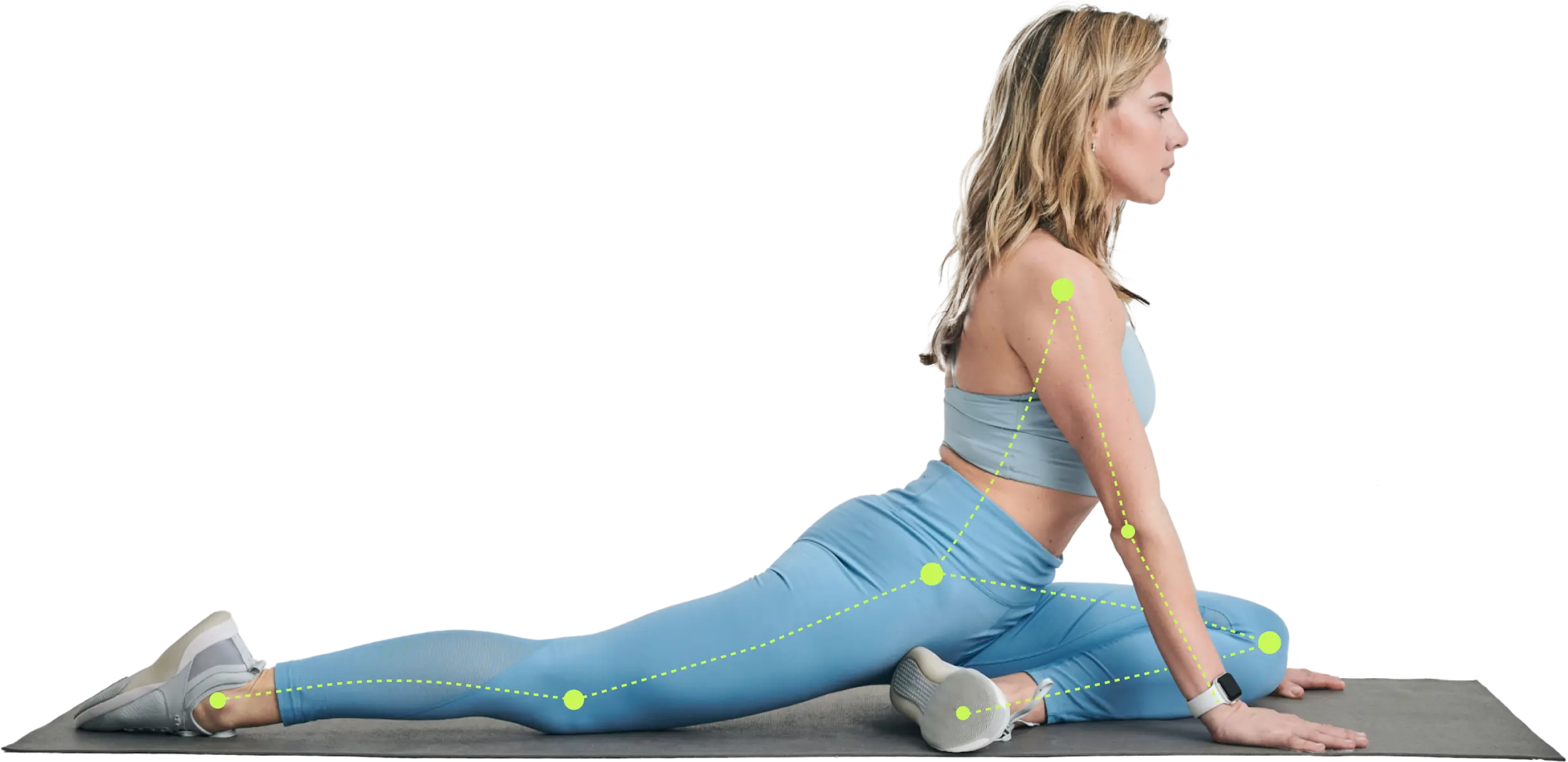
Build a powerful at home strength training program that delivers real results. Get expert guidance on exercise selection, progression, and sustainable routines.
Building an effective at-home strength training program is the single most reliable way to hit your fitness goals. Why? It systematically dismantles all the usual roadblocks, from travel time and gym fees to feeling self-conscious. At its core, a great plan is simple: it’s built on clear goals, smart exercise choices, and a commitment to consistently challenging yourself.
Why Home Strength Training Actually Works
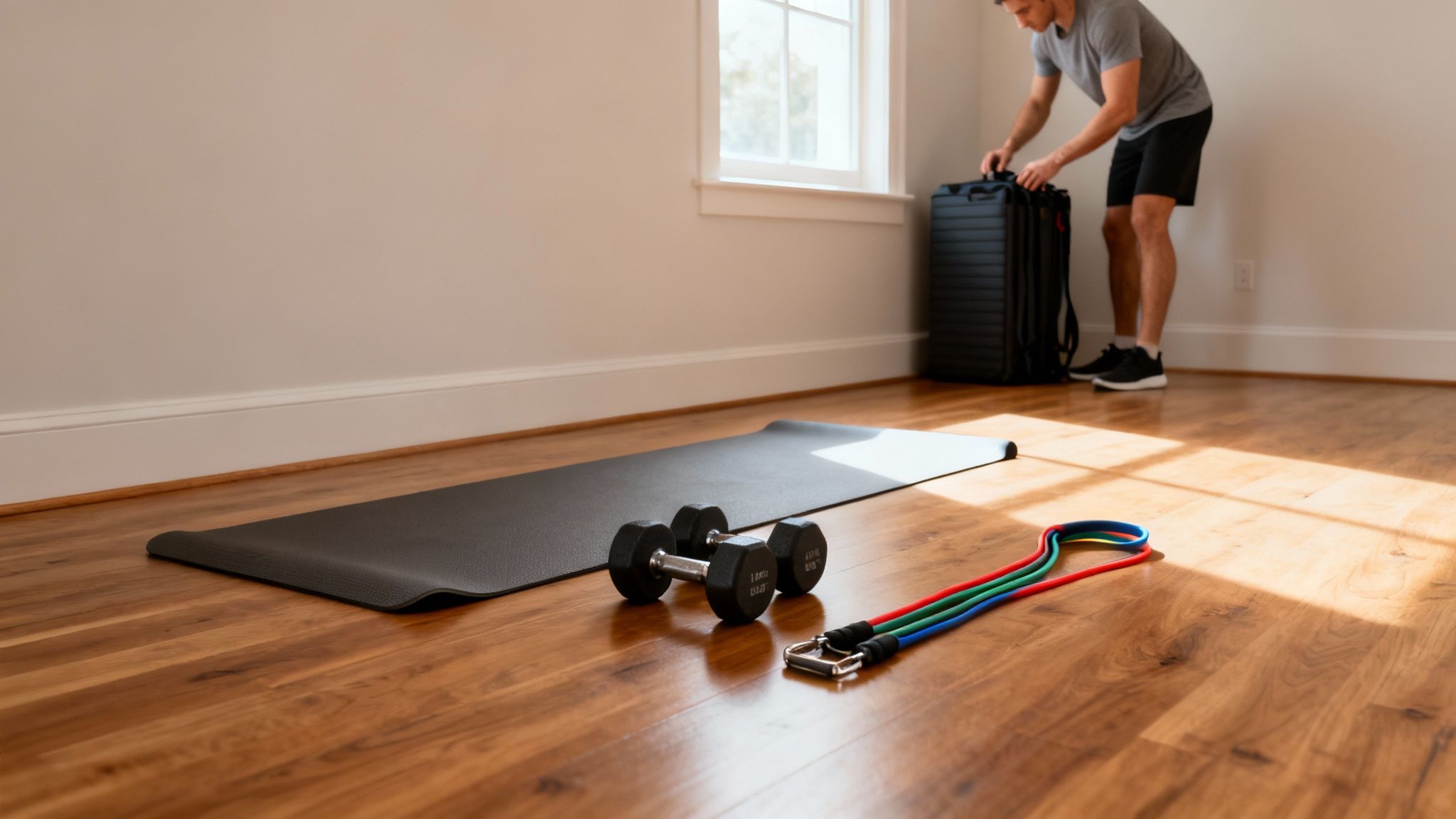
Forgetting about crowded weight rooms and rush-hour commutes is a nice perk, but it's not the real magic. The true power of an at-home program is its built-in consistency. When your workout is waiting just a few steps away, the excuses that typically derail progress—bad weather, a packed schedule, gym intimidation—just don't have the same bite.
This isn't just a fleeting trend. The numbers show a massive shift, with the home gym equipment market expected to jump from USD 12.4 billion in 2025 to a massive USD 19.6 billion by 2035. It’s a clear signal that people everywhere are craving convenient, personalized fitness that fits into their real lives.
The Psychological Edge of Your Personal Space
Working out at home gives you a judgment-free zone. If you're just starting, this eliminates the fear of being watched or feeling like you're doing an exercise wrong. For seasoned lifters, it means pure, uninterrupted focus. You control the music, the climate, and the flow, creating an environment perfectly dialed in for your success.
That level of control has a direct impact on your ability to listen to your body and reduce injury risk. You aren't rushing to finish a set because someone's hovering over you for the squat rack. You can take your time and put every ounce of focus into your form and effort.
The Building Blocks of a Solid Program
A successful plan isn’t a random collection of exercises. It’s built on a few non-negotiable pillars that guarantee you're always moving forward. Getting these right from the start is the key to building a routine that actually gets you results.
Before we dive deep into each component, here's a quick look at the core pillars that hold up any effective home strength plan.
Core Pillars of an Effective Home Strength Program
| Component | Why It Matters | Zing Coach App Feature |
|---|---|---|
| Clear Goals | Gives your training direction and purpose. Knowing what you're working toward is the ultimate motivator. | Personalized Goal Setting |
| Smart Exercise Selection | Ensures every move is safe, effective, and perfectly matched to your goals, ability, and available equipment. | AI-Driven Exercise Recommendations |
| Progressive Overload | The fundamental principle of getting stronger. It means constantly challenging your muscles just enough to adapt and grow. | Automated Progression Adjustments |
These are the concepts we'll be unpacking throughout this guide to help you build a program that evolves right along with you.
The real advantage of training at home is ownership. You're not just a guest in someone else's gym; you are the architect of your own fitness journey, with the power to mold your program to your life—not the other way around.
Of course, you don’t have to manage all this on your own. Modern tools like the AI-powered Zing Coach app can handle the heavy lifting for you. It assesses your current fitness level, picks the right exercises, and automatically applies progressive overload based on your performance. It's like having a personal trainer who ensures your home program is always pushing you forward.
Mastering consistency is often the biggest hurdle, and our guide on how to stay consistent with exercise is packed with practical strategies to help you lock it in.
Setting Your Goals and Finding Your Starting Line
Before you even think about picking up a weight, you need a map. A truly great at home strength training program isn't just a random collection of workouts; it's a carefully plotted course based on where you are right now and exactly where you want to go. Without that clarity, you're just exercising—not training.
The first move is to get past vague wishes like "I want to get stronger" or "I need to tone up." While these are fine places to start, they're too fuzzy to build a real plan around. To be effective, your goals have to be something you can actually measure and put on a calendar.
From Vague Ideas to Actionable Goals
Let's make this practical. Instead of "get stronger," what does strength actually look like for you? Maybe it's nailing 10 full push-ups without stopping. It could be adding 20 pounds to your dumbbell squat over the next three months.
Here’s how you can turn a general idea into a powerful, measurable goal:
- Vague: "I want to have more energy."
- Specific: "I'm going to complete three 30-minute strength workouts a week for the next 8 weeks to boost my stamina."
- Vague: "I want to lose some weight."
- Specific: "My goal is to lose 5 pounds of body fat in 12 weeks by pairing my strength program with a solid nutrition plan."
Setting clear targets gives every single workout a purpose. For a deeper dive into crafting objectives that get you results, check out this guide on how to set fitness goals.
Taking an Honest Look in the Mirror
Once you have your goal locked in, it’s time for a reality check. This isn't about being hard on yourself; it's about gathering the data you need to build a program that's both safe and effective. You need to know your current fitness level, what gear you've got, and the space you're working with.
Think of it as a personal audit. Here's what to look at:
- Your Fitness Level: Are you a total beginner who hasn't worked out in years? Or an experienced lifter getting back into the swing of things? A simple baseline test can be revealing—see how many bodyweight squats or push-ups (on knees or toes) you can manage with good form before you fatigue.
- Your Equipment: Do you have a full rack of dumbbells and a collection of resistance bands? Or are you starting out with just a yoga mat? Make a quick inventory of everything you have on hand, because this list will dictate your exercise choices.
- Your Space: Are you training in a spacious garage or a tight apartment living room? Knowing your available floor space is key to making sure you can do exercises like lunges or planks without crashing into the coffee table.
A workout plan that ignores your reality is a plan that's destined to fail. The most successful at home strength training program is one built for your body, your home, and your life—not someone else's.
This self-assessment ensures your program is realistic from day one. You won't be jumping into advanced moves your body isn't ready for, and you won't be frustrated by a plan that calls for equipment you don't have. This simple alignment is the secret to avoiding frustration and setting yourself up for long-term success.
Building Your Workout With the Right Exercises
Okay, you’ve got your goals locked in and you know your starting point. Now for the fun part: picking the actual exercises that will make up your at home strength training program.
This isn't about scrolling through Instagram for random, flashy movements. A truly solid plan is built on the foundation of fundamental human movement patterns. This approach ensures you build balanced, functional strength that actually helps you in your daily life. It’s the difference between just having “gym muscles” and being genuinely strong.
Focusing on these core patterns helps you sidestep a classic mistake: hammering the "mirror muscles" like your chest and biceps while your back and glutes get left behind. That kind of lopsided training is a fast track to muscle imbalances and, eventually, injury. When you train the way your body is designed to move, you build a routine that’s not just effective, but safe and sustainable for the long haul.
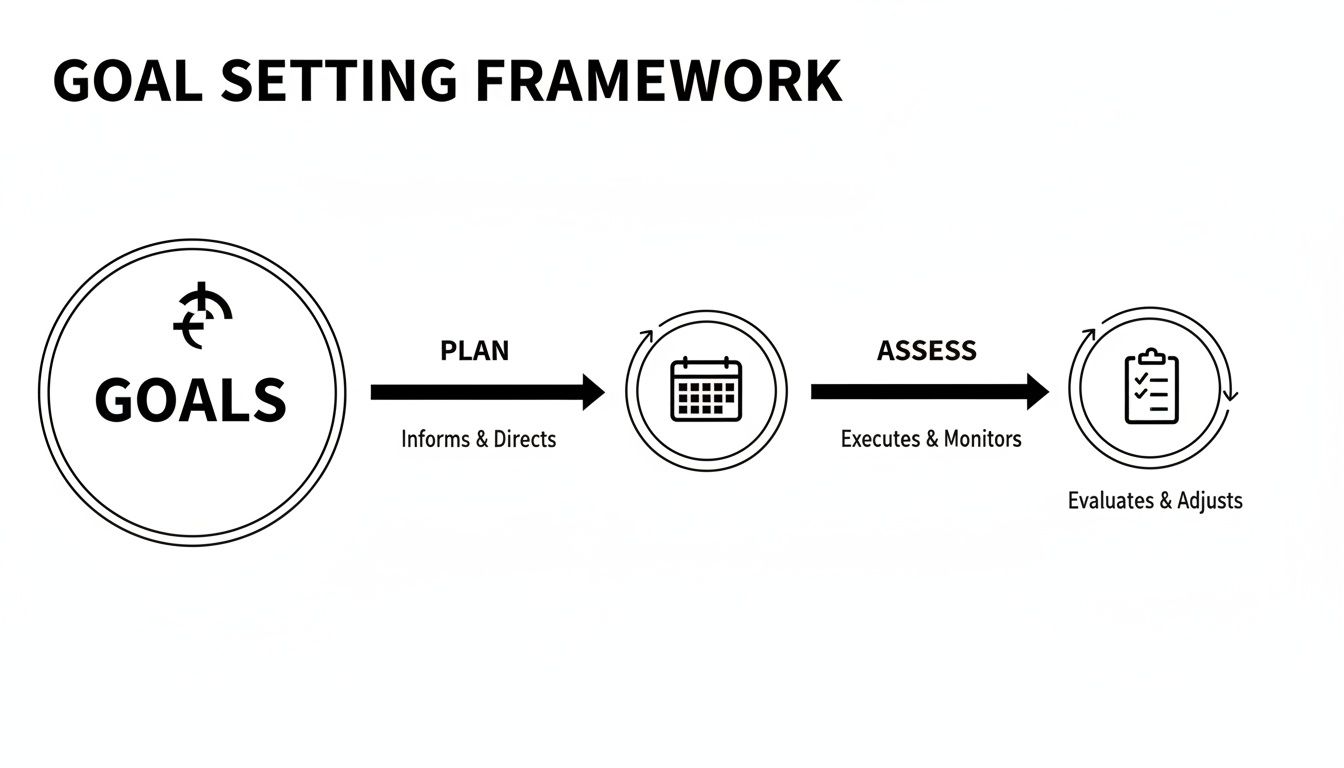
This whole process really starts before you even think about your first push-up. It begins with getting crystal clear on what you want to achieve.
The Five Pillars of Movement
Think of these five core movement patterns as the essential food groups of your fitness diet. A well-rounded strength plan needs a little bit of each to be complete.
- Squat: Any time you bend your knees and hips to lower your body, like getting into a chair. This is your ticket to powerful legs and a rock-solid core.
- Hinge: Bending at your hips while keeping your back relatively straight. Picture picking up a heavy box from the floor. This is non-negotiable for strong glutes, hamstrings, and a healthy lower back.
- Push: Pushing something away from your body, whether it's horizontal (like a push-up) or vertical (like an overhead press).
- Pull: Pulling something toward you. This is the key to building a strong back and fixing that "desk posture."
- Carry: Simply picking up something heavy and walking with it. This develops total-body stability, killer grip strength, and core endurance all at once.
By making sure you have an exercise from each category in your weekly plan, you’re guaranteeing a balanced workout that hits every major muscle group without you having to overthink it.
The real win isn't just looking strong—it's being functionally strong. A program built on these five movements prepares your body for real life, from hauling groceries to lifting your kids.
Your Exercise Menu From Bodyweight to Barbells
Now, let's turn those patterns into actual exercises. The best part about an at home strength training program is how adaptable it is. For every single movement pattern, there's a whole spectrum of exercises you can do—starting with just your bodyweight, adding simple tools like dumbbells or bands, and eventually moving on to more advanced stuff.
This "menu" approach means your workout grows with you. As you get stronger, you don't need a whole new program; you just level up the exercise.
Your Exercise Menu Based on Movement Patterns
Here’s a quick-glance table showing how you can progress within each movement pattern. Think of it as your roadmap—start where you feel comfortable and stable, and move to the next column when you're ready for a new challenge.
| Movement Pattern | Bodyweight Option (Beginner) | Dumbbell/Band Option (Intermediate) | Advanced Progression |
|---|---|---|---|
| Squat | Bodyweight Squats | Dumbbell Goblet Squats | Pistol Squats (one-legged) |
| Hinge | Glute Bridges | Dumbbell Romanian Deadlifts | Single-Leg Romanian Deadlifts |
| Push | Incline or Knee Push-ups | Dumbbell Bench Press / Overhead Press | Handstand Push-ups / Decline Push-ups |
| Pull | Doorway Rows / Superman | Bent-Over Dumbbell Rows / Band Pull-Aparts | Pull-ups / Inverted Rows |
| Carry | No direct bodyweight equivalent | Farmer's Walks (holding dumbbells) | Suitcase Carries (one-sided) |
This is how real, sustainable progress happens. You start with bodyweight squats to nail the form. Once you can comfortably hit 15-20 reps, maybe you grab a dumbbell for goblet squats. That's progressive overload in its simplest, most effective form.
The Rise of Smart Home Gyms
This exact idea—personalized exercise selection and logical progression—is fueling a massive shift in the fitness world. The strength training equipment market is set to explode from USD 18.01 billion in 2025 to a staggering USD 30.62 billion by 2035.
What’s really interesting is that home gyms are growing faster than commercial ones. People are investing in smart, space-saving gear that cuts down on floor space needs by 30-40%, making it way easier to squeeze effective training into a busy life.
Making It Effortless With Technology
Let's be honest: manually picking exercises and figuring out when to progress can feel like a full-time job, especially when you're just starting out. This is where AI-powered fitness apps like Zing Coach are a game-changer.
Instead of leaving you to figure it all out, the app does the heavy lifting for you.
Based on your goals, equipment, and how you're feeling, the AI builds your workout with the right exercises at the perfect intensity. As you log workouts and give feedback, it learns and adapts, automatically bumping you from knee push-ups to full push-ups the moment you're ready. It completely removes the guesswork.
And if you just want to get some new ideas, you can always browse a comprehensive library of exercises to see different variations and find new movements you enjoy. It’s all about building a program that works for you.
Structuring Your Program for Continuous Progress
Alright, you've picked out your exercises. That's a great start. But a list of exercises isn't a plan. The real magic happens when you arrange them into a smart, effective program that keeps you moving forward, week after week. This is where we get into the nuts and bolts of programming—things like sets, reps, and workout frequency—to make sure every session builds on the last.
Think of these variables as the dials on a sound system. Tweaking each one—how many times you lift (reps), how many rounds you do (sets), and how long you rest—changes the final output. Nailing this combination is the secret to unlocking consistent progress.
Decoding Sets, Reps, and Rest
These terms are the basic language of strength training. Get comfortable with them, and you'll not only be able to follow a plan but also know how to adjust it as you get stronger.
- Reps (Repetitions): One complete motion of an exercise. A single squat is one rep.
- Sets: A group of reps performed back-to-back. Doing 10 squats before taking a break is one set of 10 reps.
- Rest: The downtime between sets. This gives your muscles a chance to recover just enough to hit the next set with good form and intensity.
The mix of these elements directly shapes your results. For example, lower reps (like 3-6) with heavier weight and longer rest periods are fantastic for building raw strength. On the other hand, higher reps (10-15) with lighter weight and shorter rest are typically used to build muscle endurance.
The secret isn't finding a single perfect number of reps or sets. It's about choosing the right combo for your goal and then systematically challenging those numbers over time.
Choosing Your Weekly Workout Split
So, how often should you train? The right answer depends entirely on your schedule, how well you recover, and what you're trying to achieve. The good news? You don’t need to live in your home gym to see incredible results.
For most people, consistency will always trump complexity. Here are two of the most popular and effective ways to lay out your week:
- Full-Body Workouts (3 days/week): This is the perfect starting point for most people. You'll train every major muscle group in each session, usually on non-consecutive days like Monday, Wednesday, and Friday. It’s incredibly efficient and maximizes your recovery time.
- Upper/Lower Split (4 days/week): As you get more comfortable, you might split things up. A common approach is training your upper body on Monday and Thursday, and your lower body on Tuesday and Friday. This lets you increase the total work for each muscle group, which can be a great way to bust through plateaus.
The Engine of Progress: Progressive Overload
If you only take one concept away from this guide, make it progressive overload. It is the absolute cornerstone of getting stronger and building muscle. The idea is simple: for your body to adapt, you have to continually increase the demands you place on it. If you lift the same weight for the same reps every single time, your body has no reason to change.
But this doesn’t just mean piling on more weight. In an at home strength training program, you have several ways to apply progressive overload:
- More Reps: Did 8 reps of goblet squats last week? Shoot for 9 or 10 this week with the same weight.
- More Sets: Once you can hit your target reps for all sets, add an extra set to the exercise.
- More Weight: When you can comfortably nail all your sets and reps with solid form, it’s time to grab a heavier dumbbell.
- Less Rest: Cutting your rest time between sets from 90 seconds to 75 makes the whole workout tougher.
- Better Form: Squatting deeper or performing a push-up with more control is a totally valid form of progress.
This principle is what keeps your body guessing and prevents you from hitting a wall. It’s a constant cycle of challenge, adaptation, and new challenges. To make this work, you have to track what you're doing. A dedicated workout journal is a simple but powerful tool for logging your lifts and watching your progress unfold.
The Growing Market for Home Fitness
This laser focus on structured, progressive home workouts has fueled a massive industry. The global market for home fitness equipment is valued at around USD 12.88 billion in 2025 and is projected to skyrocket to USD 19.79 billion by 2032. Mass-market gear, making up over 71% of sales, is making it easier than ever for families to build effective home gyms without breaking the bank. You can discover more about these trends from Fortune Business Insights.
Bringing It All Together: A Sample Plan
Let's look at a simple 4-week progression for a beginner doing a full-body routine to see how these variables play out in the real world.
| Week | Exercise | Sets x Reps | Rest | Progressive Overload Strategy |
|---|---|---|---|---|
| Week 1 | Goblet Squat | 3 x 8 | 90 sec | Establish a baseline with perfect form. |
| Week 2 | Goblet Squat | 3 x 10 | 90 sec | Add reps. Aim for two more reps per set. |
| Week 3 | Goblet Squat | 3 x 12 | 75 sec | Add reps & decrease rest. Push endurance. |
| Week 4 | Goblet Squat | 3 x 8 | 90 sec | Increase weight. Use a heavier dumbbell. |
This systematic approach takes all the guesswork out of your training. If you're looking for more guidance on setting up your schedule, our guide on how to create a workout plan for beginners is a fantastic place to start.
Of course, juggling all these variables can feel like a lot. This is exactly where an AI-powered app like Zing Coach shines. It automatically adjusts your sets, reps, and exercises based on your performance, ensuring you're always applying progressive overload without you having to think about it. It’s like having a personal trainer in your pocket, managing your program to make sure you never plateau and keep making steady gains.
Fueling Your Body for Strength and Recovery
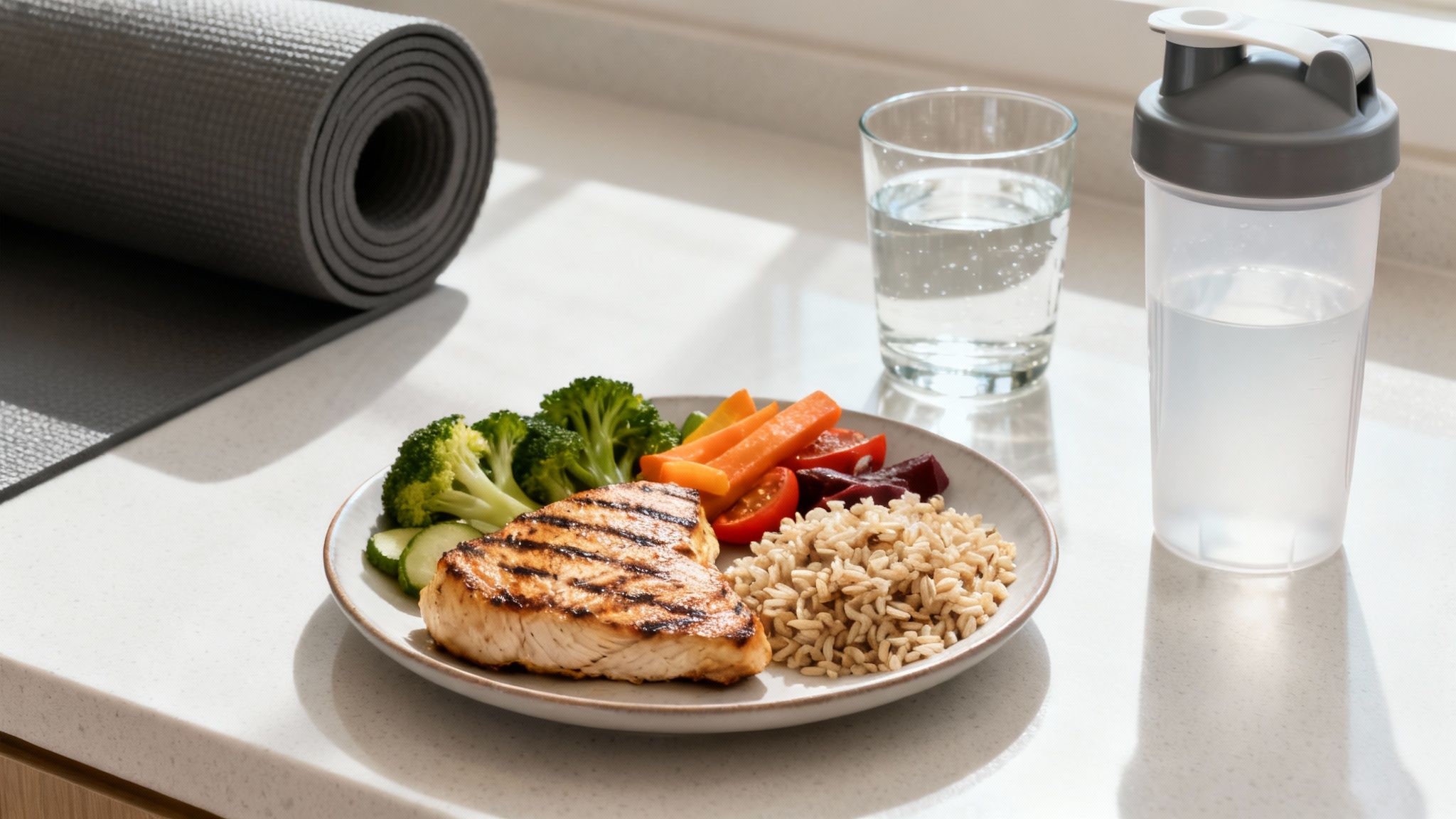
Here’s something a lot of people miss: your progress doesn't stop when you put the weights down. In fact, that's when the real work of getting stronger actually begins. The sweat and effort during your sessions are the stimulus for change, but your recovery habits are what turn that effort into real, measurable results.
Skipping this part is like planting a seed and forgetting to water it. You did the hard part, but you won't see any growth.
The two biggest pillars supporting your recovery are smart movement and smart nutrition. A good warm-up primes your muscles for action, and a solid cool-down helps manage soreness. Even more critical is the food you eat. It provides the essential building blocks your body needs to repair muscle tissue and come back stronger for the next session.
Priming Your Body for Performance
Before you even think about your first set, a dynamic warm-up is completely non-negotiable. This isn't about holding static stretches for minutes on end. We're talking about active movements that get your blood flowing, raise your core temperature, and prepare your joints for the work ahead.
A simple five-minute routine can make a world of difference:
- Jumping Jacks: Hit these for 30-60 seconds just to get your heart rate up.
- Bodyweight Squats: Do 10-15 reps to get your glutes and quads firing.
- Arm Circles: Go for 10 forward and 10 backward to mobilize those shoulder joints.
- Cat-Cow Stretches: A set of 10 reps is perfect for warming up your spine.
On the flip side, a cool-down helps your body transition from high gear back to rest. After your last set, take 5-10 minutes for some light static stretching, holding each stretch for about 20-30 seconds. Focus on the muscles you just trained, like your chest, hamstrings, and quads. This simple habit can seriously help improve flexibility and take the edge off next-day soreness.
Nutrition: The Fuel for Your Results
You could follow the best at home strength training program on the planet, but if your nutrition isn't dialed in, your progress will eventually stall out. It's that simple. Your body needs energy (calories) and raw materials (protein) to rebuild the muscle fibers you broke down during training.
A solid starting point is making sure you’re getting enough protein. Aiming for around 0.7-1.0 grams of protein per pound of your target body weight is a great rule of thumb for anyone looking to build muscle. For a 150-pound person, that means shooting for 105-150 grams of protein daily, spread out over a few meals.
Your fork is just as powerful as your dumbbells. Nutrition doesn't just support your training; it unlocks the results you're working so hard to achieve.
Figuring out your specific calorie and macro needs can feel like a chore. Our guide on how to count macros for beginners is a great resource that breaks it all down without the confusion. And if you really want to maximize your gains, it helps to understand the role of key micronutrients, which is where learning about the best vitamins for muscle growth comes in handy.
Of course, this is where technology can step in to take the guesswork out of the equation. An app like Zing Coach calculates personalized nutrition targets for you based on your goals and activity levels. It gives you clear, actionable numbers for calories and macros that line up perfectly with your training, making sure your body always has the fuel it needs to recover, adapt, and grow stronger.
Answering Your At-Home Strength Training Questions
Diving into an at-home strength training program is a big step, and it's totally normal to have a bunch of questions bubble up. You might be worried about your form, unsure how to keep the motivation going, or just want to make sure you’re actually making progress. Getting clear answers is the key to building confidence and, more importantly, sticking with it. Let's tackle some of the most common hurdles right now.
One of the first things people always ask about is equipment. The good news? You don't need a garage that looks like a commercial gym to get incredible results. You can build serious strength and muscle with nothing more than your own body.
Do I Need a Ton of Equipment to Start?
Absolutely not. A great program is built on two things: consistency and progressive overload. It has nothing to do with how many dumbbells you can cram into your living room. You can lay a fantastic strength foundation with fundamental bodyweight exercises like squats, push-ups, and planks.
As you get stronger, a few simple and affordable tools can open up a world of new options:
- Resistance Bands: These are perfect for adding a little extra challenge to exercises like glute bridges or even helping you out with moves like pull-ups.
- A Single Kettlebell or Dumbbell: Just one of these unlocks dozens of new exercises, from goblet squats and swings to single-arm rows and overhead presses.
The most important piece of equipment you'll ever own is your own body. Master the basics with perfect form first, then start adding tools to keep things interesting as you progress.
How Do I Know if My Form Is Right Without a Trainer?
This is a huge, and very valid, concern. Good form is everything—it keeps you safe and makes sure you're actually getting stronger. When you don't have a trainer watching you, you just have to be a bit more proactive. Start by watching reliable video demos of any new exercise you’re trying.
Focus on feeling the movement in the right muscles. During a squat, for example, you should feel your glutes and quads firing up, not a weird strain in your lower back. Another game-changing tool is your phone. Record yourself doing a set and then compare it side-by-side with a video from a pro. You'll spot the big differences right away.
This is also where technology can give you a massive leg up. An AI-powered app like Zing Coach uses your phone's camera to analyze your movements in real-time. It gives you instant feedback and counts your reps, basically acting as a virtual spotter to make sure you're doing things safely and effectively.
How Long Until I Actually See Results?
Patience, my friend. While you might feel stronger and have more energy within just a few weeks, visible changes like more muscle definition usually take a bit longer. Most people start noticing real, measurable changes in their strength and physique after about 6 to 8 weeks of consistent training, which typically means hitting your workouts 3 to 4 times a week.
But remember, "results" aren't just about what you see in the mirror. Pay attention to all the other signs of progress:
- Being able to squeeze out more reps than you could last week.
- Lifting a slightly heavier weight with good form.
- Feeling less gassed during your workouts.
- Noticing daily stuff, like carrying groceries, feels way easier.
Tracking these little wins is one of the best ways to stay motivated.
What if I Miss a Workout?
Life happens. Don't let a missed workout completely derail your week or make you feel like a failure. One missed session has practically zero impact on your long-term progress. The real secret is not letting one missed day snowball into a missed week.
Just get back on track with your next scheduled workout. There's no need to punish yourself or try to cram two workouts into one day—that's a quick recipe for burnout and injury. Consistency over months and years is what builds a strong body, not being perfect every single day. Any solid at-home strength training program has to be flexible enough to bend with real life.
Ready to stop guessing and start training with a plan that actually adapts to you? The Zing Coach AI builds your workouts, tracks your progress, and gives you real-time form feedback to make sure you get the best results from every single session. Start your personalized fitness journey today at https://zing.coach.
Share this article


Authors