Worried about the question, does cardio make you lose muscle? Get the science-backed answer on how to burn fat while building strength and keeping your gains.
Let's settle this old-school gym debate once and for all. Does all that time on the treadmill actually eat away at your hard-earned muscle?
The short answer is no—at least, not when you do it right. In reality, smart cardio can be one of the best things you do for your muscle-building goals. It's the common mistakes people make that are the real culprit behind any unwanted muscle loss.
The Final Verdict On Cardio And Muscle Loss
For decades, this fear has haunted weight rooms everywhere: the idea that one cardio session could undo weeks of heavy lifting. This myth has led countless people to treat cardio like the enemy of gains, creating a totally false choice between building strength and having a healthy heart.
But modern fitness science has thankfully moved past this outdated thinking.
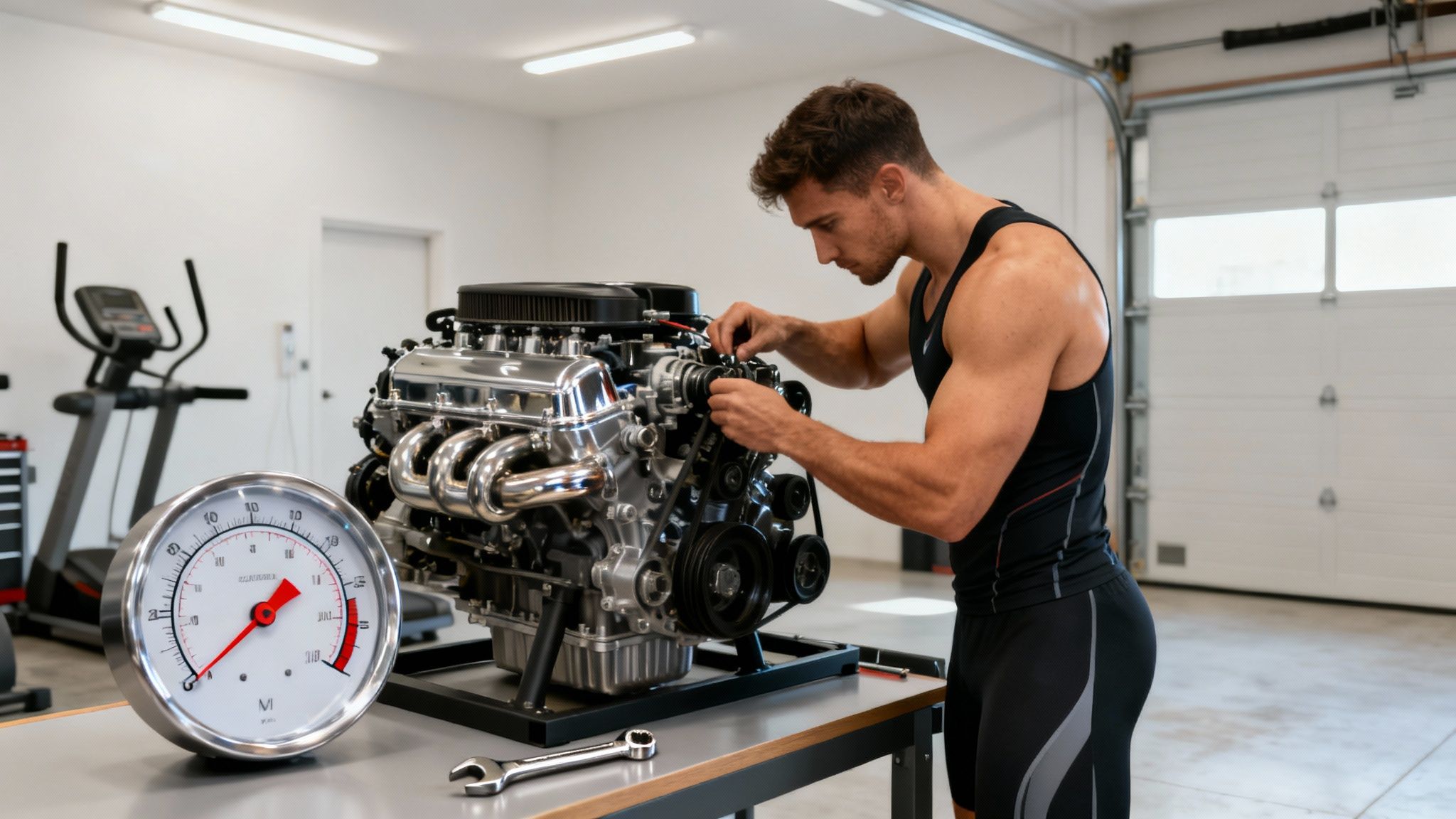
The real problem isn't cardio itself, but the context surrounding it. Think of your body as a high-performance car engine. Done correctly, cardio is like a fine-tuning service—it boosts your engine's efficiency, increases its power, and even helps it recover faster between drives. But misguided cardio is like redlining the engine for hours without the right fuel or maintenance. A breakdown is inevitable.
Smart Cardio vs Cardio Mistakes
Here’s the key: muscle loss is triggered by very specific conditions, not by the simple act of getting your heart rate up. These conditions almost always stem from poor planning and nutrition, which can turn a powerful tool into a counterproductive one.
The fear of losing muscle shouldn't be a reason to skip cardio. A strong cardiovascular system lets you push harder and longer during your strength workouts. We're talking more sets, more reps, and shorter rest periods—all key drivers for muscle growth.
So, does cardio make you lose muscle? Only when it’s paired with these classic blunders:
- Excessive Volume: Spending endless hours pounding the pavement can create a huge catabolic (breakdown) state that your body just can't recover from.
- Extreme Calorie Deficits: If you're not eating enough to fuel both your lifting and your cardio, your body will start looking for energy elsewhere—and your muscle tissue is an easy target.
- Inadequate Protein Intake: Protein is non-negotiable. It provides the building blocks to repair and rebuild muscle. Without enough, your body simply can't keep up.
- Poor Programming: Always doing grueling cardio sessions right before you lift, or skipping strength training altogether, is a surefire way to sabotage your performance and recovery.
This guide will give you a clear roadmap to make cardio work for you, not against you. Once you learn how to manage these variables, you can confidently add cardio into your routine to build a stronger, leaner, and more resilient physique.
If you're new to aerobic training or just want a refresher on the fundamentals, you can learn more about everything about cardio in our detailed guide.
First, let's break down the two approaches side-by-side.
Muscle-Preserving Cardio Vs Muscle-Wasting Cardio At A Glance
This table gives you a quick snapshot of the good, the bad, and the ugly when it comes to combining cardio with your strength goals. On one side, you have a smart, sustainable approach. On the other, a recipe for spinning your wheels.
| Factor | Muscle-Preserving Approach (Smart Cardio) | Muscle-Wasting Approach (Cardio Mistakes) |
|---|---|---|
| Calorie Intake | Slight deficit or maintenance to support muscle repair. | Severe deficit, forcing the body to use muscle for fuel. |
| Protein Intake | High intake (1.6-2.2g per kg of body weight) to maximize recovery. | Insufficient protein, hindering muscle repair and growth. |
| Training Volume | Moderate (e.g., 2-3 sessions of 30-45 mins per week). | Excessive volume and frequency without adequate recovery. |
| Workout Timing | Strength training prioritized first, or cardio done on separate days. | High-intensity cardio performed immediately before lifting weights. |
| Cardio Type | Focus on low-impact, steady-state (LISS) options like incline walking. | Over-reliance on high-impact, exhaustive sessions like long-distance running. |
As you can see, the difference is all in the details. It’s not about if you do cardio, but how you program it around your nutrition, recovery, and strength work.
Don't let the outdated wisdom echoing through old-school gyms fool you. Smart cardio is one of the most powerful allies you have in your mission to build a stronger physique. The idea that any amount of aerobic exercise automatically eats away at your hard-earned muscle is a myth that needs busting.
When you program it correctly, cardio can actually create an internal environment that supports and even enhances muscle growth. This isn't just wishful thinking; it's grounded in how your body produces energy and recovers from stress. Let's reframe cardio from a potential threat into a strategic tool for better gains.
Upgrading Your Muscle’s Power Plants
Think of each muscle cell as a factory powered by tiny generators called mitochondria. These little powerhouses are responsible for producing ATP—the chemical energy that fuels every single muscle contraction, from lifting a heavy dumbbell to just climbing a flight of stairs. The more efficient your generators are, the more work your factory can do.
Cardio, especially steady-state aerobic exercise, is like a massive upgrade to your factory's entire power grid. It signals your body to increase both the number and the efficiency of these mitochondria within your muscle cells. This process, known as increasing mitochondrial density, has a profound impact on your strength training.
With a more robust energy system, your muscles become far more resistant to fatigue. This translates directly to what you can do in the weight room.
Key Takeaway: An improved mitochondrial network means you can recover faster not just between workouts, but also between heavy sets. This enhanced work capacity allows you to handle more total training volume—more sets and reps over time—which is a primary driver of muscle hypertrophy.
Better Blood Flow Delivers More Building Blocks
Beyond just energy production, cardio also revamps your entire circulatory system. It strengthens your heart, allowing it to pump more oxygen-rich blood with each beat, and enhances the network of tiny capillaries that deliver that blood directly to your muscle tissues.
This is like upgrading the delivery routes to your muscle-building construction site. Better blood flow means a more efficient supply chain. Your body can rush essential nutrients like amino acids (from protein) and glycogen (from carbs) to your muscles more effectively, right when they're needed for repair and growth.
At the same time, this improved circulation acts as a high-speed waste removal service. It efficiently clears out metabolic byproducts like lactate that accumulate during intense lifting, which can help dial down muscle soreness and speed up your recovery between sessions.
The Science Supporting Cardio for Muscle Growth
This isn't just theory—the science is catching up. Research is increasingly showing that the right kind of aerobic exercise can directly contribute to building muscle, not destroying it. A landmark study demonstrated this powerfully.
After just 12 weeks of moderate-intensity cycling, participants showed significant muscle growth. Older women saw a 16% increase in the size of their primary quad muscle fibers, while men experienced a boost of around 20%. Even more impressive, the study found that cardio training actively reduced muscle breakdown markers by as much as 49%. It effectively flipped the body's switch from a catabolic (breakdown) state to an anabolic (building) one. You can read more about the benefits of aerobic exercise for muscle growth yourself.
This evidence flies in the face of the old fear that cardio kills gains, showing it can be a valuable partner in your fitness journey. When your goal is to add lean mass, every tool that enhances recovery and work capacity is a huge asset.
If you're looking for structured routines to get started, our guide on how to build muscle at home provides actionable plans that can perfectly complement your cardio work. Ultimately, a strong cardiovascular system builds a more resilient, capable, and muscular body.
Identifying The Real Causes Of Muscle Loss
If cardio isn’t the muscle-destroying villain everyone makes it out to be, then what is? The whole "does cardio make you lose muscle" debate often misses the point. Muscle loss isn't some random side effect of getting your heart rate up; it's a predictable outcome of specific, controllable factors.
It's time to shift the blame from the treadmill to the true culprits. Once you understand these core issues, you can protect your hard-earned muscle while still getting all the health benefits of a strong heart. Let's break down the four real reasons your body might start sacrificing lean tissue.
Excessive Training Volume and the Interference Effect
Your body has a limited capacity to recover. Think of it like a daily energy budget. Both intense lifting and grueling cardio draw from this same account. When you do too much of both without enough rest, you create an overwhelming demand that your body simply can't meet.
This is where the interference effect comes into play. It’s a term researchers use to describe how the signals from high-volume endurance training can sometimes drown out the signals for muscle growth from your strength work. Hitting the squat rack hard and then running for hours is like asking your body to sprint in two different directions at once. It gets confusing.
The key is balance. Your body can absolutely handle both strength and cardio, but not an unlimited amount of each. Signs you're overdoing it include:
- Persistent fatigue and soreness that never seems to go away.
- Stalled or declining strength in your main lifts.
- Poor sleep quality and an elevated resting heart rate.
- Increased irritability or a total lack of motivation to train.
A Severe Calorie Deficit
Your body's number one priority is survival, not looking good at the beach. To lose fat, you have to be in a calorie deficit—burning more calories than you eat. But if that deficit becomes too aggressive, your body panics and thinks a famine is coming.
Imagine your daily calories as a financial budget. A small, controlled deficit is like smart saving for a goal. A massive deficit, on the other hand, is a full-blown financial crisis where you start selling off valuable assets just to stay afloat. In this case, that asset is your metabolically active muscle tissue.
When it's starved for energy, your body will break down muscle protein into amino acids, which it can convert into glucose for fuel. This process is called gluconeogenesis. Since cardio revs up your calorie burn, combining it with a crash diet creates the perfect storm for muscle loss.
A sustainable deficit for fat loss without torching your muscle is typically around 300-500 calories below your daily maintenance level. Anything more aggressive puts your gains at risk.
Nailing your energy intake is the foundation of preserving muscle. If you're unsure where to start, you can learn how to calculate daily calorie needs with our comprehensive guide.
This simple flowchart helps visualize whether your cardio is actually helping or hurting your goals.
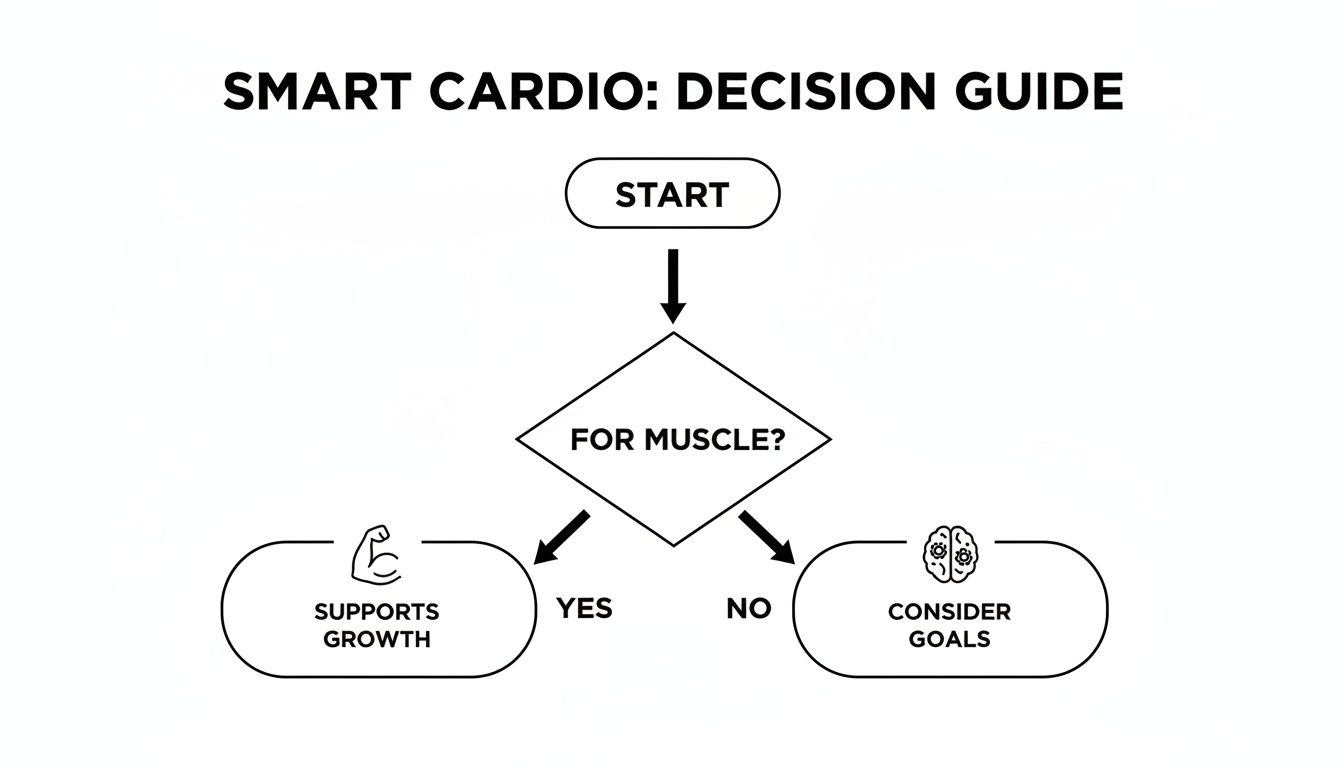
The takeaway? When muscle is your main goal, cardio should be programmed as a tool to support that objective, not compete with it.
Inadequate Protein Intake
If calories are the fuel, protein is the raw material—the building blocks for your muscles. Every single workout, whether it's lifting or cardio, creates microscopic tears in your muscle fibers. Protein is what your body uses to patch up this damage and rebuild the fibers even stronger.
Without enough protein, your body is like a construction crew that shows up to a job site with no bricks or mortar. The damage from the workout is done, but the repair process stalls. Over time, this leads to a net loss of muscle tissue, as natural breakdown starts to outpace repair.
Your protein needs go way up when you're in a calorie deficit and doing regular cardio. Your body becomes more likely to raid its amino acid stores for energy, so you need to provide plenty through your diet to protect your muscles. A solid, science-backed target is 1.6 to 2.2 grams of protein per kilogram of body weight for active people looking to keep or build muscle.
Neglecting Strength Training
Finally, the most direct way to lose muscle is to stop giving your body a reason to keep it around. Strength training is the single most powerful signal you can send to your body to hold onto—and even build—lean mass. Every time you lift weights, you're telling your muscles, "Hey, we need you to be strong to handle this!"
Cardio, on its own, just doesn't provide that same powerful muscle-building stimulus. If you start swapping your lifting sessions for more time on the elliptical, your body will adapt. Since it no longer needs to generate the force to lift heavy loads, it will begin to shed that "expensive" muscle tissue it no longer sees as necessary.
Strength training is simply non-negotiable. It's the anchor that keeps your muscle securely in place while cardio works on your heart health and helps you burn fat.
To tie it all together, here's a quick summary of the real risks to your muscle mass and how to manage them.
| Muscle Loss Risk Factors And Prevention Strategies | ||
|---|---|---|
| Risk Factor | What It Means | Prevention Strategy with Zing Coach |
| Excessive Volume | Doing too much cardio and lifting without enough rest, leading to the "interference effect." | Zing's adaptive workouts manage your weekly volume, preventing overtraining by adjusting based on your progress and feedback. |
| Severe Calorie Deficit | Cutting calories too aggressively, forcing your body to burn muscle for energy. | Set a sustainable deficit. Zing Coach integrates with your nutrition data to ensure your workout intensity aligns with a safe calorie target. |
| Inadequate Protein | Not eating enough protein to repair muscle damage from workouts, especially in a deficit. | Aim for 1.6-2.2g of protein per kg of body weight. Zing's educational content helps you understand and hit your macros. |
| No Strength Training | Removing the primary stimulus for muscle maintenance and growth. | Prioritize lifting. Zing builds personalized strength programs that are the foundation of your plan, with cardio as a smart supplement. |
By sidestepping these four common mistakes, you can successfully weave cardio into your routine to build a physique that's both strong and conditioned.
Your Blueprint For Combining Cardio And Strength
Understanding the why is a great start, but the how is where you'll see real results. This is your game plan for weaving cardio into your routine to fire up fat loss and boost your health—all without sacrificing an ounce of hard-earned muscle.
Getting it right comes down to juggling three key variables: Type, Timing, and Intensity. Make smart moves in these three areas, and you can ditch the "interference effect" for good, letting your cardio and strength work together in perfect harmony.
Let's build your perfect week.
Choosing The Right Type Of Cardio
Not all cardio is created equal, especially when keeping your muscle is the name of the game. The best options are the ones that don't leave you feeling totally wiped out, saving your energy for the all-important lifting sessions.
Low-Impact Steady-State (LISS) cardio should be your go-to. Think of activities like:
- Incline walking on a treadmill
- Hopping on a stationary bike
- Using the elliptical machine
- Swimming at a chill, moderate pace
These get your heart rate up and torch calories without the constant pounding of high-impact exercises like long-distance running. This means less stress on your joints and nervous system, leaving more in the tank for muscle repair and growth. For runners looking to prevent injuries while combining cardio and strength, incorporating these essential strength training exercises for runners is a fantastic strategy.
Nailing The Timing Of Your Workouts
When you do your cardio can be just as important as what you do. For anyone focused on building or keeping muscle, the golden rule is simple: lift weights first.
Hitting the weights when you're fresh ensures you can give it your all—maximum intensity and focus. That's the primary signal your body needs to grow stronger. If you do a grueling cardio session beforehand, you risk draining your glycogen stores (your muscles' main fuel source), leaving you too gassed to perform your best on big lifts like squats and deadlifts.
Here are your best scheduling options:
- Lift First, Cardio Second: Finish your entire strength workout, then tack on a 20-30 minute LISS session right after.
- Separate Days: Dedicate different days to strength and cardio. This is the absolute best-case scenario for recovery if your schedule allows for it.
- Separate Times: If you have to do both on the same day, try splitting them up. You could lift in the morning and do a light cardio session in the evening.
Structuring your week this way ensures the muscle-building signals from lifting aren't drowned out by the endurance signals from cardio. If you need some ideas on how to lay out your week, our guide on how to balance cardio and strength training has some detailed weekly splits.
Managing Intensity And Volume
The final piece of the puzzle is controlling how hard and how long you go. This is where a lot of people trip up, falling into the "more is always better" trap.
A huge 2021 research review that pooled data from 43 studies found that doing aerobic and resistance training together does not get in the way of muscle growth or strength. For those short on time, even a moderate amount of cardio—like the 150 minutes weekly recommended by the WHO—can seriously shrink your waistline and body fat without touching your lean mass.
When it comes to intensity, let's break it down into two main players:
- LISS (Low-Intensity Steady-State): This is your muscle-preserving workhorse. It's all about maintaining a steady, moderate pace for 30-45 minutes—a level where you could still hold a conversation (around 60-70% of your max heart rate). Aim for 2-3 LISS sessions per week.
- HIIT (High-Intensity Interval Training): This involves short, all-out sprints followed by quick recovery periods. It's incredibly effective for fat loss but also very demanding on your body. Keep HIIT to just one session of 15-20 minutes a week, and never do it the day before a heavy leg day.
By prioritizing low-impact LISS, lifting before your cardio, and keeping the total volume in check, you create a system where cardio becomes your ally—improving heart health and burning fat—without ever making you wonder if it's costing you gains.
How To Fuel Your Body To Prevent Muscle Breakdown
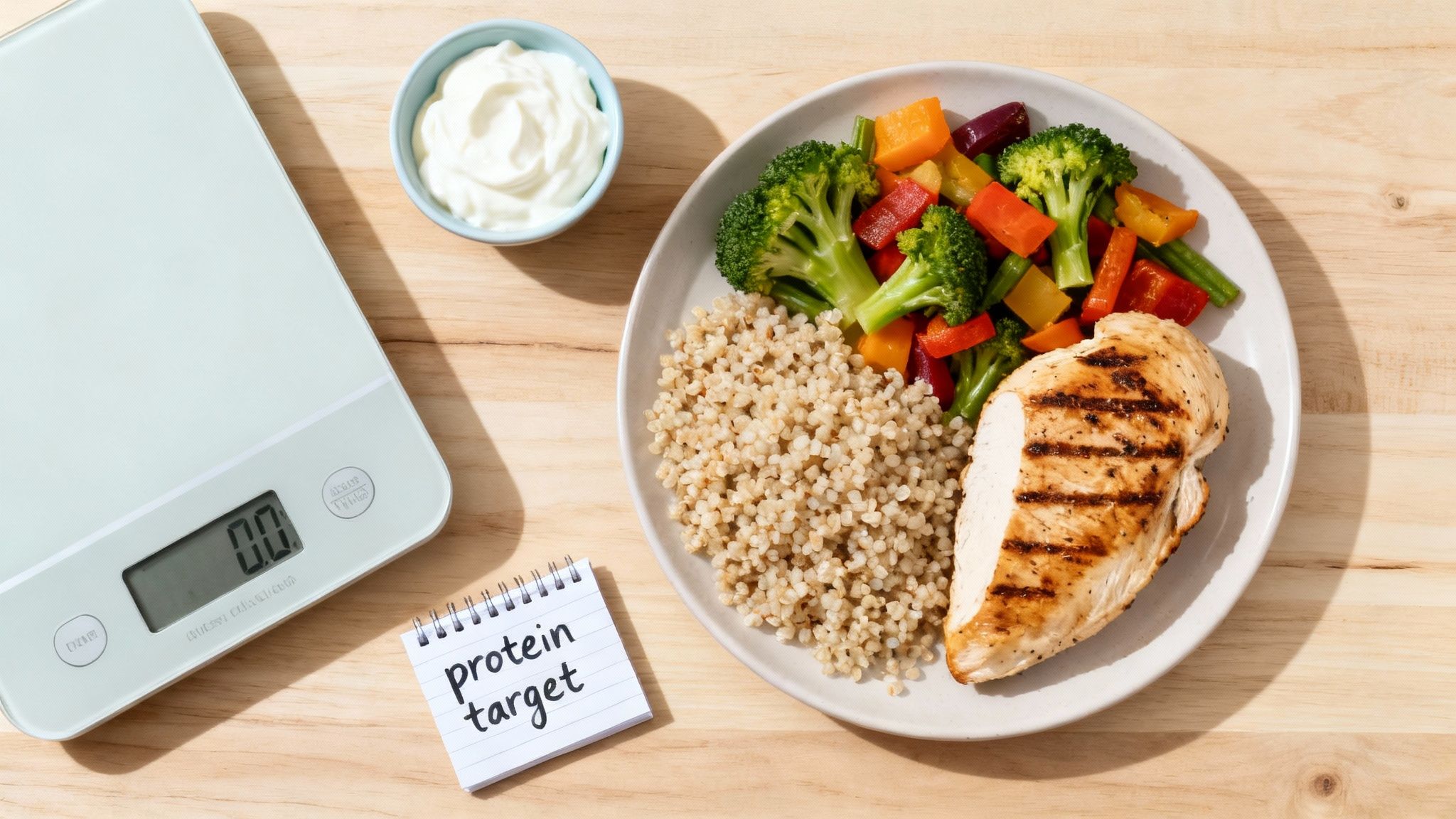
Your hard work in the gym is only ever half the battle. If you want to protect your hard-earned muscle, your nutrition has to be just as dialed in as your training.
Think of your diet as the dedicated repair crew that swoops in to rebuild and refuel your body after every single workout. Without that support, even the most perfect training plan will leave you spinning your wheels. The two absolute non-negotiables for preserving muscle are calories and protein. Getting these right is the bedrock of all your progress.
Establish A Smart Calorie Deficit
You have to be in a calorie deficit to lose fat—that’s a given. The problem is, an overly aggressive deficit is the fastest way to signal your body to start cannibalizing muscle for energy.
Instead of a drastic, all-out cut, aim for a moderate and sustainable deficit of around 300–500 calories below your daily maintenance level. This smaller gap gently nudges your body to burn stored fat for fuel, sparing your precious lean tissue. It’s the difference between strategically trimming a budget and frantically selling off your most valuable assets. A controlled deficit is your best friend for revealing the muscle you've built, not destroying it.
Prioritize Your Protein Intake
When it comes to muscle repair and growth, protein is the single most important player on the field. Every time you train, you create tiny micro-tears in your muscle fibers. Protein provides the amino acids—the literal building blocks—your body uses to patch up that damage and rebuild everything stronger than before.
This becomes even more critical in a calorie deficit, when your body is more tempted to break down muscle for fuel. A high protein intake acts like a protective shield.
For active people looking to keep or build muscle, the science-backed gold standard is a daily protein target of 1.6 to 2.2 grams per kilogram of body weight. If your goal is to get stronger and leaner, hitting this number is non-negotiable.
Meeting this target ensures your personal "repair crew" has all the raw materials it needs to keep up with the demands of your training. If you’re just getting started with tracking your food, our guide on how to count macros for beginners can make the whole process much less intimidating.
Leverage Nutrient Timing
While your total daily calorie and protein numbers matter most, when you eat can give you a nice little performance edge. Grabbing a meal or shake with both protein and carbs around your workouts can make a real difference in your performance and recovery.
- Pre-Workout: Eating some carbs 60–90 minutes before you train tops off your muscle glycogen stores, giving you the immediate fuel to push harder. A bit of protein alongside it helps prevent muscle breakdown from kicking in mid-session.
- Post-Workout: A meal with protein and carbs right after your workout kick-starts the recovery process. The protein gets to work repairing muscle damage right away, while the carbs start replenishing the energy you just torched.
This doesn't have to be complicated. Something as simple as Greek yogurt with berries before you head to the gym or a bowl of chicken and rice afterward is all it takes to give your body exactly what it needs, right when it needs it.
Ultimately, your nutrition is what settles the whole "does cardio kill gains" debate. A well-fueled body is a resilient one, fully capable of building strength and boosting endurance at the same time.
Why Preserving Muscle Is Key To Long-Term Health

The whole debate over whether cardio kills your gains goes way beyond just looking good in the mirror. At its heart, this is a conversation about protecting your health, mobility, and independence for decades to come.
Think of your muscle as your body’s metabolic furnace. The more lean mass you have, the more calories you burn just sitting around, which is a massive advantage for managing your weight. But its real value becomes crystal clear as you get older.
The Fight Against Sarcopenia
Once we hit our 30s, we all start losing muscle mass and strength. It's a natural process called sarcopenia, and it’s one of the biggest drivers of age-related decline. This isn't just about aesthetics; it's about function.
Losing muscle makes everyday activities—like hauling groceries, climbing stairs, or playing with your grandkids—feel a lot harder. It also seriously increases the risk of falls and fractures, which can drastically change your quality of life.
This decline can pick up speed if you're not actively fighting it. After age 40, you can lose 8-10% of your strength per decade. By the time you hit 80, you could have lost up to 30% of your peak muscle and a staggering 50% of your strength.
A huge 2023 meta-analysis covering over 878,000 adults drove this point home. It found that significant muscle loss was tied to a 36% higher risk of dying from any cause and a 29% higher risk of cardiovascular disease. You can dig into the study's findings on muscle loss and health risks for yourself.
Suddenly, every smart strength session and well-planned cardio workout feels less like a chore and more like an investment in your future self.
Your Best Defense for a Longer Life
Hanging onto your muscle is one of the most powerful things you can do for healthy aging. Here’s a quick rundown of why it’s so important:
- Metabolic Health: Muscle tissue is a major consumer of blood sugar. It literally pulls glucose out of your bloodstream, which helps regulate your insulin sensitivity and lowers your risk of type 2 diabetes.
- Bone Density: When you lift weights, the mechanical stress tells your body to build stronger, denser bones. It's your best defense against osteoporosis.
- Resilience and Recovery: A stronger body is simply a more resilient one. It’s better equipped to handle illness, bounce back from injuries, and recover faster from surgery.
At the end of the day, finding the right balance between strength training and cardio isn't just about your physique. It's about building a capable, robust body that will carry you through a long, active, and healthy life.
Your Top Questions About Cardio and Muscle Loss, Answered
When you're trying to balance cardio with lifting, a lot of practical questions pop up. Let's tackle some of the most common ones so you can build a routine that protects your hard-earned muscle while still delivering results.
Think of this as fine-tuning your training plan, making sure every piece works together perfectly.
How Much Cardio Is Too Much For Muscle Growth?
There’s no single magic number here. A solid starting point for most people is to cap dedicated cardio at 2-3 moderate-intensity sessions of 30-45 minutes each week. But the real answer isn't on paper—it's in your performance.
You have to listen to your body. Are your numbers in the squat rack stalling? Do you feel run-down all the time? These are tell-tale signs that it's time to dial back the cardio. Treat it as a supplement to your strength work, not the main event.
Should I Do Cardio On An Empty Stomach?
This is a classic debate. While fasted cardio might burn a bit more fat during the actual workout, the research is pretty clear: it doesn't lead to more overall fat loss across a 24-hour period when compared to doing cardio after eating.
From a muscle preservation standpoint, going in fasted slightly increases the risk of your body breaking down precious protein for fuel. If keeping every ounce of muscle is your top priority, having a small, easily digestible meal with some protein and carbs 60–90 minutes beforehand is a much safer play.
Here's the bottom line: your total daily calorie deficit is what drives fat loss, not whether you skipped breakfast before your morning walk. Fuel your body to protect your muscle.
What Is The Best Type Of Cardio To Avoid Muscle Loss?
When it comes to preserving muscle mass, Low-Impact Steady-State (LISS) cardio is the undisputed champ. Think incline walking on a treadmill, hopping on an exercise bike, or gliding on an elliptical.
These methods are fantastic because they burn a good number of calories and boost your cardiovascular health with very little systemic fatigue. That means they won't sabotage your recovery or drain the energy you desperately need for your heavy lifting days. It's the best of both worlds.
Ready to stop guessing and start building a balanced routine that works for you? The Zing Coach app uses AI to create personalized training plans that intelligently integrate cardio and strength based on your goals, equipment, and progress. Take the guesswork out of your fitness journey and let technology build the perfect plan for you at https://zing.coach.
Share this article


Authors