Learn how to balance cardio and strength training with actionable weekly plans, sequencing tips, and recovery nutrition for lasting results.

Balance cardio and strength without overthinking: target 150 minutes of moderate aerobic activity alongside 30–60 minutes of resistance work each week. In real life, that could mean three 25-minute runs paired with two 30-minute lifting sessions—easy to slot into a busy schedule.
Quick Answer To Balancing Cardio And Strength Training
Here’s a simple plan that weathers hectic weeks and keeps you progressing.
Weekly Workout Summary
Here’s a recommended weekly distribution of cardio and strength training, including why each matters and how often to hit it.
| Modality | Weekly Duration | Sessions Per Week | Key Benefit |
|---|---|---|---|
| Cardio | 150 minutes | 3× 50 minutes | Heart health |
| Strength Training | 30–60 minutes | 2× 30 minutes | Muscle gain |
This setup delivers balanced gains in both cardiovascular health and muscle strength throughout your week.
A large meta-analysis shows that combining 150 minutes of aerobic work with 30–60 minutes of resistance training each week can cut all-cause mortality by around ≈17% and cardiovascular events by roughly ≈18%. Read more here.
If you want to dig deeper into different cardio options, check out our guide: Everything About Cardio.
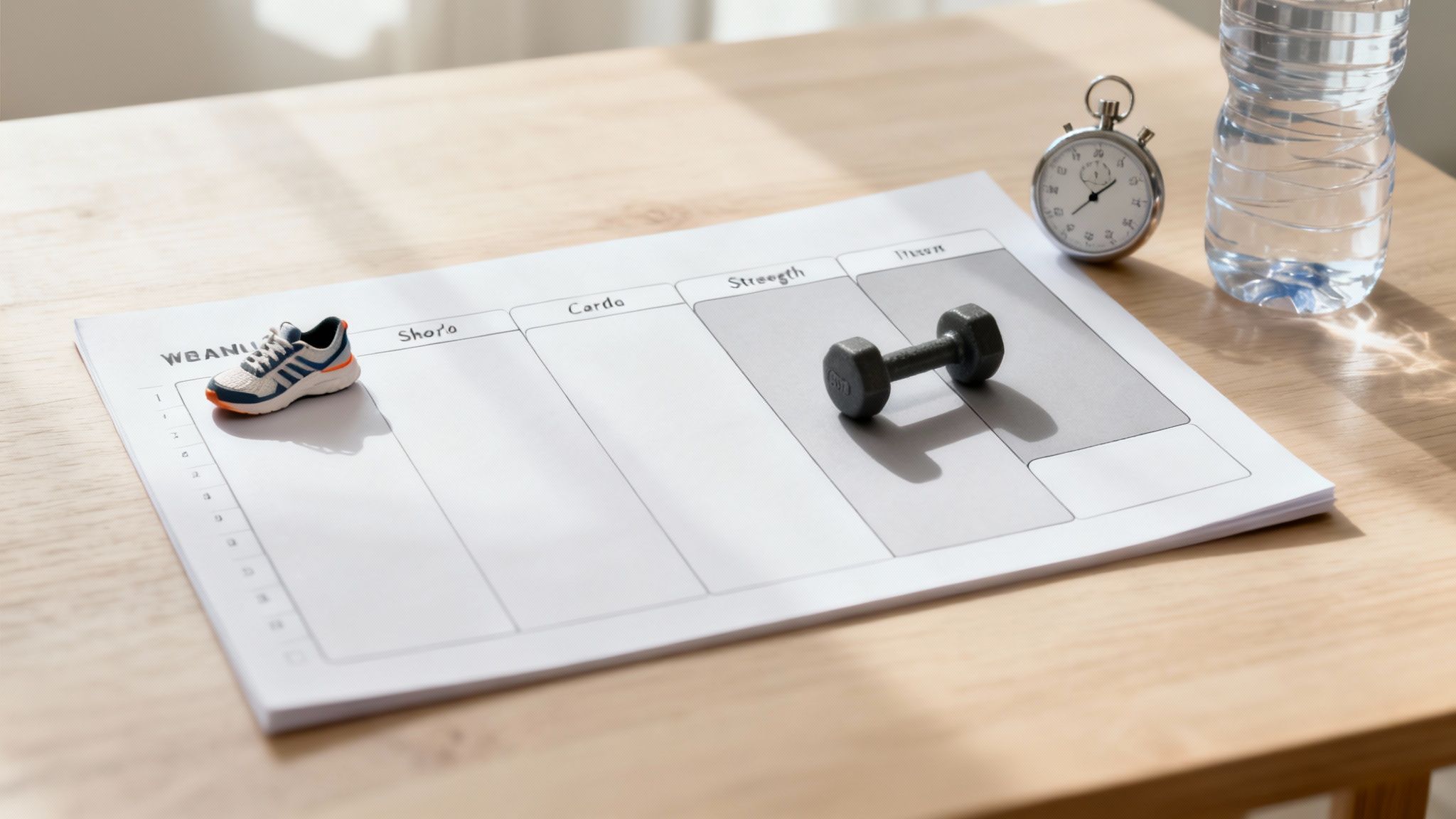
That snapshot highlights how endurance sessions and strength work complement each other to build well-rounded fitness.
- Cardiovascular health
- Enhanced muscle growth
- Better weight management
- Increased longevity
- Overall wellness
Assessing Your Fitness Goals And Current Ability
Clarify Your Primary Objective
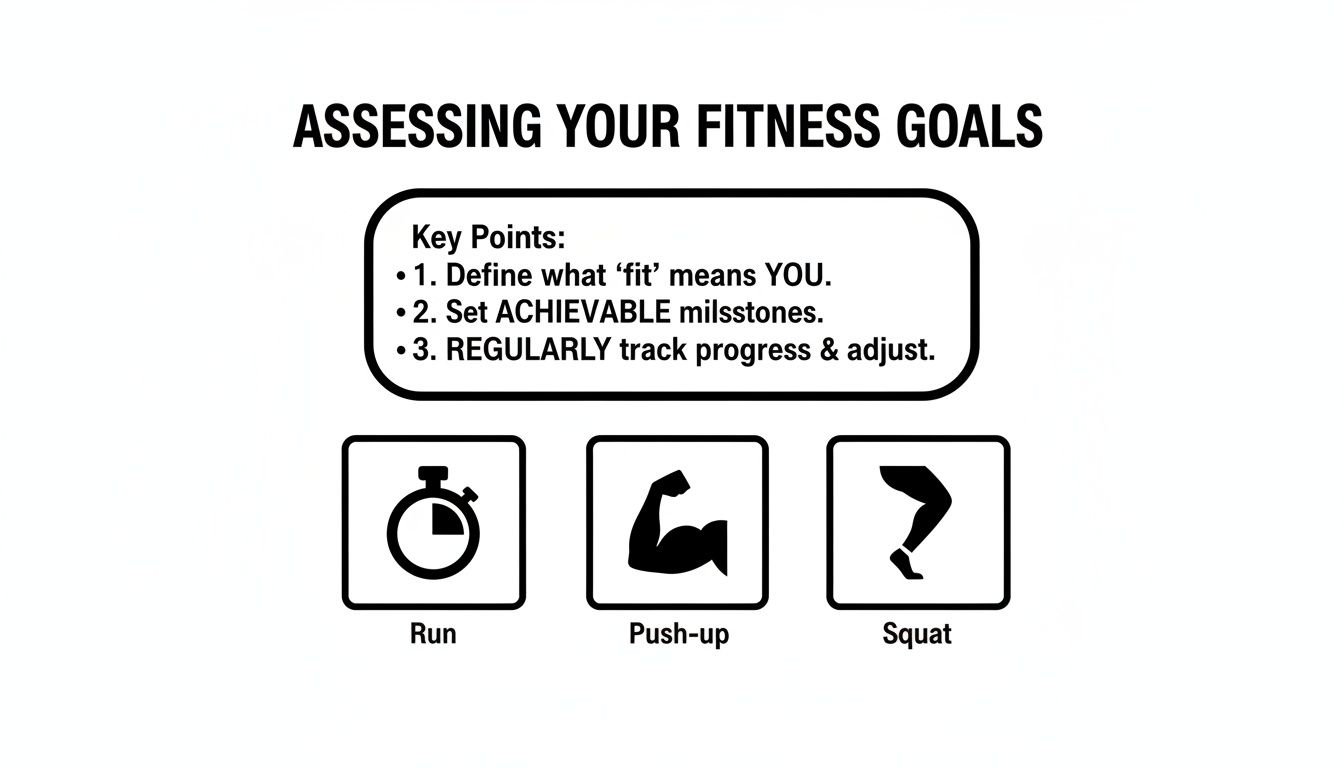
Before jumping into workouts, decide what matters most. Are you chasing a faster 5K time, aiming to pack on lean muscle, or focused on trimming body fat? Pinning down this priority will guide every decision you make.
Establish Your Baseline
Getting a clear snapshot of where you stand today makes progress tangible tomorrow. Try:
- A timed 1-mile run or brisk walk to gauge cardiovascular fitness
- Maximum push-ups in 60 seconds for upper-body endurance
- Bodyweight squats to failure to assess lower-body stamina
Interpret Your Metrics
Only 24.2% of adults meet both aerobic and strength benchmarks, while 47% cover cardio alone. That gap highlights why it’s risky to ignore either side of the equation.
Balanced benchmarks keep you progressing across all fitness domains without overloading one system.
Digging into these numbers helps you sequence workouts smarter and plan recovery more effectively. For a closer look at the research, check out this detailed study: PMC Article.
Adjust Your Cardio-To-Strength Balance
Your prioritized goal will determine how you split training time. For muscle gain, tilt the scale toward strength sessions and sprinkle in shorter, moderate-pace runs. If endurance is king, flip that ratio—longer runs plus maintenance lifts.
Next Steps
Armed with your goals and baseline data, it’s time to set targets that keep you motivated. For a deep dive into crafting goals that stick, explore our guide on setting strong fitness goals.
Designing A Balanced Weekly Workout Plan
Building a routine that blends cardio and strength isn’t guesswork—it starts by tuning into real-life rhythms. For someone squeezing workouts between meetings, a quick midday jog followed by a weight circuit can be surprisingly effective. It’s less about marathon sessions and more about consistent, focused efforts.
Rather than slugging out long runs then powerlifting in the same breath, try splitting priorities. Mornings devoted to intervals, afternoons to heavy lifts—or vice versa—keep both systems fresh. Even a 1:1 ratio (say, 30 minutes of running and 30 minutes of resistance work) drives progress without burnout.
If muscle growth is your headline, dial up the volume on strength days and carve out 48-hour recovery windows before hitting intense cardio. That extra rest often unlocks bigger lifts and sharper conditioning.
Sample Profiles
Every athlete comes with a unique story—and your weekly plan should reflect that.
In a 12-month trial with overweight adults, researchers found that three supervised one-hour sessions per week—mixing aerobic drills with resistance exercises—delivered both cardiovascular risk reductions and strength gains on par with single-focus programs. You can explore the full study at PWCVA.
Need a straightforward framework? Our guide on the 3-Day Split offers a clean structure that’s easy to adapt.
Below is a quick comparison of weekly layouts for different goals and schedules.
Sample Weekly Workout Plans
| Profile | Days | Cardio Duration | Strength Duration | Total Weekly Time |
|---|---|---|---|---|
| Busy Professional | 5 | 30 min | 30 min | 5 hours |
| Gym Enthusiast | 4 | 20 min | 50 min | 4 h 40 min |
| Weekend Warrior | 3 | 45 min | 45 min | 4 h 15 min |
Each plan here is just a launchpad. Feel free to swap sessions, tweak durations, or rearrange rest days based on your energy levels and equipment availability. Let your data guide you—then refine as you go.
Optimizing Workout Order for Best Results
Balancing Cardio And Strength
Getting the sequence right can turn a good workout into a great one. I’ve learned that crushing heavy squats right before a sprint session just drains your fast-twitch fibers. On the flip side, slipping in a light recovery jog after leg day floods your muscles with fresh oxygen and accelerates repair.
When you’re chasing endurance, kick things off with cardio. If raw strength is the aim, tackle the barbell first.
Timing Sessions For Peak Performance
On days you mix running and lifting, timing is everything. From my own coaching experience, carving out 4–6 hours between workouts keeps both efforts sharp.
- Morning HIIT then evening strength helps manage fatigue.
- Space out heavy cardio and lifting by at least 6 hours to avoid performance clashes.
That gap isn’t arbitrary—it lets your nervous system reset so you can hit both sessions hard.
Active Recovery Strategies
I never skimp on recovery runs. A relaxed, steady jog on rest days boosts circulation and flushes out lactic acid. Your quads won’t feel like lead the next morning—instead, you’ll wake ready to train again.
Nail the order and you’ll keep making progress without burning out.
For a deeper dive into how sequencing affects strength and endurance, check out our guide on cardio before or after weights. It’s loaded with real-world tips and timing tricks that I’ve fine-tuned over years of training.
Tracking Progress And Tweaking Your Routine
Keeping tabs on a handful of metrics reveals when your cardio-and-strength strategy needs a refresh. I lean on RPE, weekly lifting volume, and heart-rate trends to catch stalls before they derail progress. Over time, these simple measures become your best training partners.
For example, Anna logged her session RPE every workout for three weeks. The moment her average dipped below 7, she upped her squat by 5 pounds—and just like that, her strength curve shot back up.
Key Metrics To Watch
- RPE (1–10): Rate how hard each set feels
- Weekly Volume: Sum of sets × reps × weight for each muscle group
- Heart-Rate Trends: Compare resting beats to workout peaks to gauge recovery
I combine a dedicated app like Zing Coach with an old-school notebook. I enter numbers, tag fatigue levels, and skim the weekly overview for any sudden dips or spikes. That clarity helps me decide whether to dial back on load, swap in extra cardio, or chase a new personal best.
“When Anna’s RPE slipped under 7, adding just 5 pounds reignited her progress. Data-driven tweaks beat guesswork every time.”
By turning your training into an ongoing feedback loop, you’ll stay ahead of plateaus and keep moving toward your goals. Next time your routine stalls, pull up your log before making any big changes.
Fueling Recovery And Customizing Nutrition

When it comes to balancing your runs and lifts, what you eat after matters just as much as the workout itself. Smart fueling lays the groundwork for lasting gains and keeps you feeling strong day after day.
Post-Workout Fuel
After a brisk cardio session, simple carbs top up your glycogen stores in a flash. Personally, I’ll reach for a small fruit smoothie or a handful of dates. Later, once the barbells come out, a shake with a 3:1 carb-to-protein ratio fires up muscle repair and growth.
Morning Run Vs. Evening Strength
Early-bird jogs thrive on quick carbs and hydration—think a banana and plenty of water to kickstart your engine. And when you train in the evening, lean protein plus moderate carbs (grilled chicken with sweet potato, for example) sets you up for recovery while you sleep.
Learn more about meal timing in our guide on Eat Before Or After Working Out.
Hydration Strategies
A consistent sip every 200–250 ml every 15 minutes is my go-to during longer sessions. Toss in an electrolyte blend when you’re sweating buckets; it’s a small tweak that makes a big difference in energy and endurance.
Seasoned athletes I work with always pre-prep snacks—rice cakes with nut butter or trail mix—to bridge those energy dips and stay on point.
Key Supplements
• Creatine for added power output
• Omega-3 to help manage inflammation
A busy parent packs Greek yogurt with berries for quick protein-carb balance post-training.
Frequently Asked Questions
Balancing cardio and strength can feel overwhelming when your calendar’s jam-packed. Here’s a fast, no-nonsense guide to keep you on track—no matter how tight your schedule.
Actionable Advice
What if you only have 20 minutes to train?
Pack in a full-body circuit with compound moves, then hit 60-second cardio bursts. You’ll torch calories and stimulate every major muscle group.Can you build muscle and lose fat at the same time?
You sure can. Focus on strength sessions, layer in moderate cardio, and nail your protein targets. Track progress by logging both weight changes and strength gains.How often should you switch between cardio-first and strength-first workouts?
Flip the sequence every 1–2 weeks, or start with cardio on your lighter days. This little shuffle keeps your body guessing and wards off plateaus.
Reassess every 8–12 weeks to balance recovery with progress tracking.
- When’s the right moment to retest your aerobic capacity or one-rep max?
Stick to that same 8–12 week window. Fresh benchmarks prevent stagnation and help you plan your next training block.
Need Quick Help
Short on time or juggling multiple goals? These quick-hit tips adapt to your needs:
- Combine or split sessions based on energy and focus.
- Prioritize protein from lean meats, dairy, or plant sources.
- Tune into your recovery—opt for extra rest or active recovery if fatigue creeps in.
Explore session sequencing and nutrition guides to dive deeper.
Ready to dial in a plan that’s all you? Try Zing Coach and watch your results stack up.
Share this article


Authors