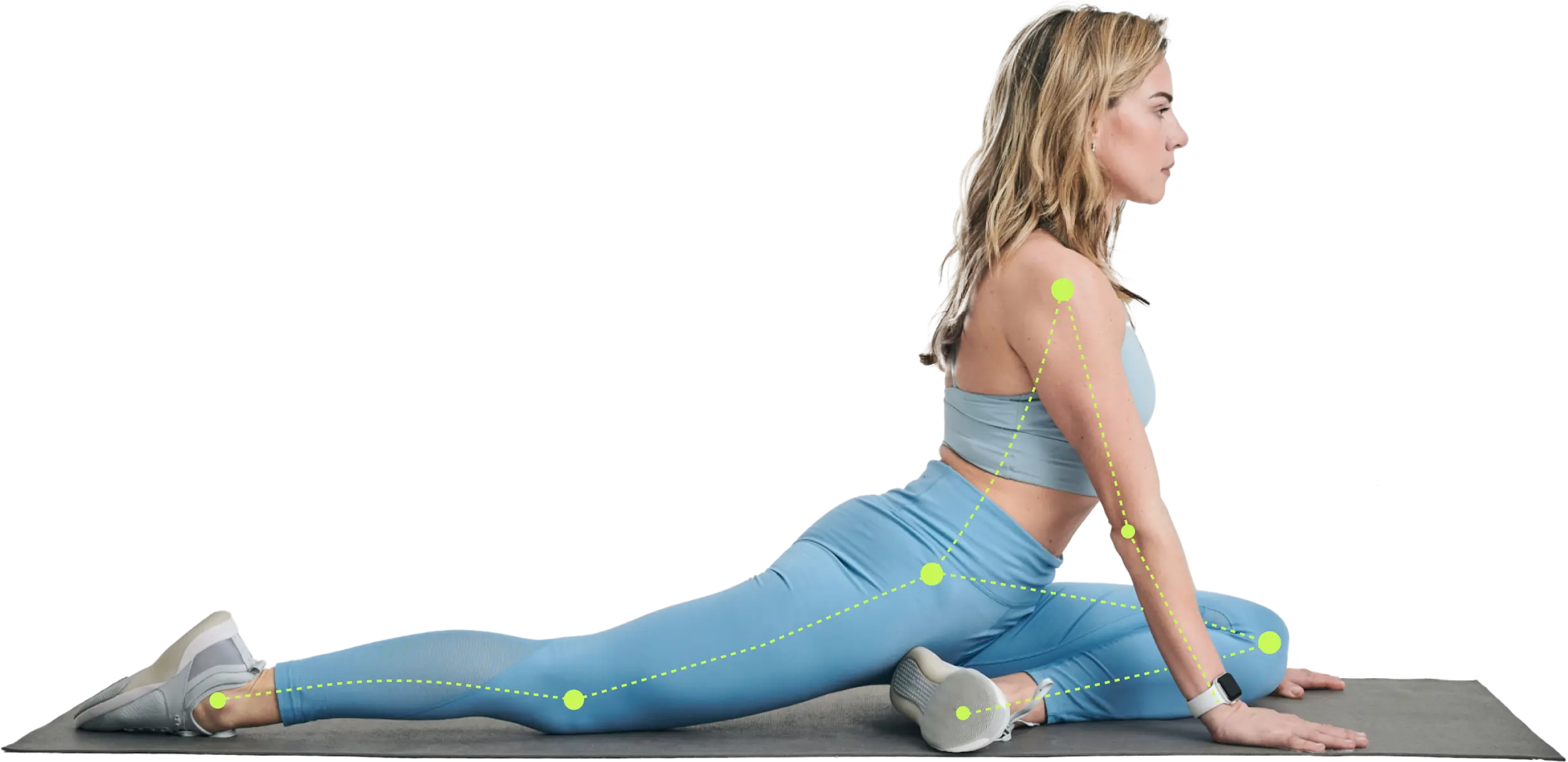
Discover a beginner workout plan at home designed to build strength and confidence. This 4-week guide requires minimal equipment for lasting results.
Jumping into a workout routine can feel like a huge commitment, but let's be real: you don't need a fancy gym membership or a ton of equipment to see results. The best place to start is often right in your own living room.
A beginner workout plan built for home is all about simple, effective bodyweight moves you can realistically do 2-4 times a week. We're talking about foundational exercises like squats, push-ups, and planks, woven into a clear schedule that includes both workout days and crucial rest days. It's about building a solid base of strength and, more importantly, consistency.
Why Your Living Room Is the Perfect Gym
Getting started with fitness at home strips away all the usual excuses. No travel time, no waiting for machines, no feeling intimidated by the person next to you lifting twice your body weight. This is about making fitness fit your life, which is the secret to building a habit that actually sticks. The goal isn't to be perfect on day one; it's to build a foundation of confidence and consistency, one workout at a time.
And you wouldn't be alone. The shift to home fitness is more than just a passing phase. By 2023, working out at home became the top choice for 51% of US exercisers. This isn't surprising—people are craving the convenience and flexibility that only at-home training can offer.
Building Your Foundation
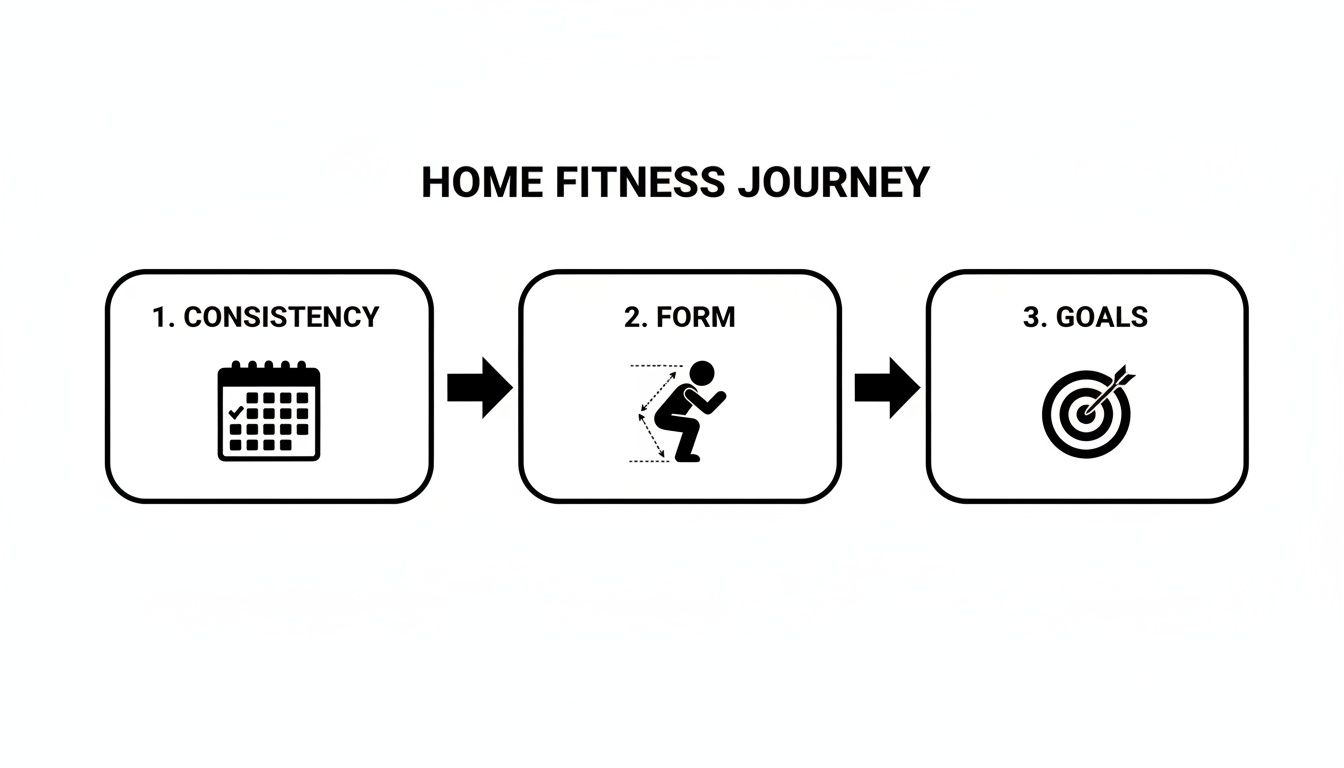
Before you jump into the first workout, let's get a few things straight. The old "no pain, no gain" mentality is out. A smart, sustainable approach is built on three core ideas:
- Consistency Over Intensity: Honestly, showing up for a 20-minute workout three times a week is way more effective than a single, grueling 90-minute session that leaves you too sore to function. The aim is to create a routine you can repeat without dreading it.
- Mastering Proper Form: This is non-negotiable. Doing an exercise correctly prevents injury and makes sure you're actually working the muscles you intend to. It’s always better to do five perfect squats than 20 sloppy ones.
- Setting Realistic Goals: Forget vague ambitions like "get fit." Get specific. A much better goal is something you can actually track, like, "I will complete three workouts every week for the next month." Small, achievable wins are what build momentum.
The best workout plan is the one you can actually stick with. Starting at home gives you the freedom to build that routine on your own terms, in a space where you feel comfortable. That's the real key to long-term success.
This guide will give you a practical plan to build that foundational strength with simple but powerful movements. If you want to dive deeper into the basics, our article on how to start strength training at home is a great resource. And for a truly personalized plan, an app like Zing Coach can act as your virtual trainer, adapting to your progress and keeping you motivated and safe as you get stronger.
Your Foundational 4-Week Workout Schedule
Alright, let's get down to business. A solid home workout plan isn't about complexity; it's about consistency. What you need is a simple, predictable structure that tells your body when to work and when to recover. This schedule is built to give you exactly that, helping you build strength without getting overwhelmed or burnt out.
Each week, you'll be doing three full-body workouts. These sessions are short and sharp, designed to hit all your major muscle groups for the biggest bang for your buck. We'll alternate between two different workouts to keep your body guessing and prevent things from getting stale.
But the work is only half the battle. You’ll also have two active recovery days. Think of these as tune-up days, not off days. Gentle movement helps ease muscle soreness, gets the blood flowing, and preps you for your next big session. Finally, two complete rest days give your muscles the critical downtime they need to repair, rebuild, and come back stronger.
The Weekly Blueprint
The name of the game for the next four weeks is rhythm. This isn't about destroying yourself every day. It's about showing up, moving with good form, and teaching your body how to adapt and get stronger.
Here’s a look at how you can structure your first week. Don't worry if this exact schedule doesn't fit your life—feel free to shuffle the days around. The key is to keep the pattern of a workout day followed by a recovery or rest day whenever possible.
Sample Week 1 Beginner Workout Schedule
| Day | Activity | Focus & Duration |
|---|---|---|
| Monday | Workout A | Full-Body Strength (20-30 minutes) |
| Tuesday | Active Recovery | Light Activity (15-20 mins walking, stretching, or gentle yoga) |
| Wednesday | Workout B | Full-Body Strength (20-30 minutes) |
| Thursday | Active Recovery | Light Activity (15-20 mins walking, stretching, or gentle yoga) |
| Friday | Workout A | Full-Body Strength (20-30 minutes) |
| Saturday | Rest | Complete Rest (No structured exercise) |
| Sunday | Rest | Complete Rest (No structured exercise) |
Following this layout gives your body nearly 48 hours of recovery between strength sessions. For beginners, that's the sweet spot for muscle repair and growth.
Your Two Core Workouts
On workout days, you'll alternate between two different full-body routines. We'll call them Workout A and Workout B. This approach makes sure you're working all your major muscles multiple times a week from slightly different angles.
Workout A:
- Bodyweight Squats: 3 sets of 10-12 reps
- Knee Push-Ups: 3 sets of as many reps as possible (AMRAP) with good form
- Plank: 3 sets, holding for 20-30 seconds
Workout B:
- Alternating Lunges: 3 sets of 10-12 reps per leg
- Towel Rows: 3 sets of 12-15 reps
- Jumping Jacks: 3 sets of 30-45 seconds
For the strength exercises (everything except jumping jacks), give yourself 60-90 seconds of rest between sets. This is crucial—it lets your muscles recover just enough so you can tackle the next set with solid, safe form.
How to Progress Each Week
Getting stronger boils down to one simple concept: progressive overload. It just means making things a tiny bit harder over time. Forget about huge jumps; we're looking for small, sustainable wins week after week.
Progress isn't about perfection; it's about persistence. Aiming to do just one more rep or hold a plank for two more seconds than last week is a huge victory.
Here’s a simple way to approach the next four weeks:
- Weeks 1-2: Your only job is to learn the movements. Focus completely on your form. Follow the sets and reps as written. If it feels tough, you're on the right track!
- Week 3: Let's add a little volume. If you did 10 squats per set last week, shoot for 12 this week. For planks, try adding another 5-10 seconds to your hold time.
- Week 4: Time to pick up the pace. If you've been resting for 90 seconds between sets, try cutting that down to 75 or even 60 seconds. This boosts the intensity without changing a single exercise.
Mastering the Essential Home Exercises
It’s one thing to follow a schedule, but it’s another to perform each movement with confidence and good form. Nailing your technique is what really builds strength and keeps you safe from injury.
Think of this section as your personal form-check guide for the foundational exercises in this plan. We’ll break down the "how" and "why" behind each one so you can move safely and get the most out of every single rep.

This entire plan is built on bodyweight movements, which means you don't need a garage full of fancy equipment to get started. The power is in mastering the fundamentals, and a simple yoga mat is more than enough for now.
The Bodyweight Squat
The squat is a true powerhouse. It works your entire lower body and core, and since it's a fundamental human movement, getting it right pays off both in and out of your workouts.
How to Do It:
- Start by standing with your feet about shoulder-width apart, with your toes pointing just slightly outward.
- Keep your chest held high and brace your core. Now, send your hips back and down like you’re about to sit in a chair.
- Lower yourself until your thighs are parallel to the floor—or as low as you can comfortably go while maintaining good form.
- Drive through your heels to push yourself back up to the starting position. Give your glutes a good squeeze at the top.
- Make it easier (Regression): Hold onto a sturdy chair or countertop for balance. You can also reduce your range of motion by only going halfway down.
- Make it harder (Progression): Slow it down! Take a full three seconds to lower yourself and one second to stand back up. This increases the time your muscles are working, and you’ll definitely feel the difference.
The Push-Up
Don’t be intimidated! Push-ups are one of the absolute best upper-body exercises you can do. They build strength in your chest, shoulders, and triceps while firing up your core at the same time.
Key Form Cues:
- Hand Placement: Put them slightly wider than your shoulders.
- Body Line: Your body should form a straight, rigid line from your head all the way to your heels (or your knees, if you're modifying). The biggest mistake is letting your hips sag down or pike up toward the ceiling.
- Elbow Position: Avoid flaring your elbows straight out to the sides. Instead, tuck them back at roughly a 45-degree angle to your body.
A common mistake is rushing through them. It’s all about controlled movement—lower your chest toward the floor, and then push back up with power.
Master the basics first. It is far more effective to perform 8 perfect knee push-ups than 15 sloppy, full push-ups that put your shoulders at risk. Form is everything.
- Make it easier (Regression): The incline push-up is a fantastic place to start. Place your hands on a wall, a kitchen counter, or a sturdy sofa. The higher the incline, the easier it will be. You can also perform push-ups from your knees.
- Make it harder (Progression): Once you can comfortably nail 12-15 knee push-ups, it's time to try a full push-up from your toes. Don't worry about busting out a ton at first—just aim for one or two perfect reps.
The Plank
The plank is what’s known as an isometric exercise, which just means you hold a static position instead of moving. It's an incredible tool for building deep core stability, which is essential for supporting your spine and improving your posture.
How to Hold It:
- Get down on your forearms, making sure your elbows are stacked directly under your shoulders.
- Extend your legs straight back, resting on the balls of your feet.
- Now, squeeze everything! Engage your core, glutes, and quads to create that straight, solid line from head to heels.
- Hold this position tight. Don’t let those hips drop or rise.
- Make it easier (Regression): Simply perform the plank from your knees instead of your toes. This shortens the lever and reduces the demand on your core while you build that foundational strength.
- Make it harder (Progression): Ready for a challenge? Try lifting one foot off the ground for a few seconds, then switch to the other leg. This forces your core to work overtime to keep you stable.
These movements are just the starting point. As you get stronger and more confident, you can explore more options. For some great ideas, check out our guide on 8 at-home exercises to stay fit without the gym.
Fueling Your Progress and Mastering Recovery
The hard work you put into your beginner workout plan at home is only half the battle. Real progress—getting stronger, feeling more energetic, and actually seeing results—happens when you give your body the right fuel and rest it needs to rebuild.
This isn't about getting bogged down in complicated diet plans or weird recovery hacks. It's about nailing a few simple, powerful habits that make all the difference.
Think of it like this: your workouts are the demolition crew, breaking down muscle fibers. Nutrition and rest are the construction crew that comes in to build everything back, bigger and stronger than before. Without them, you’re just tearing things down without ever rebuilding.
Simple Nutrition for Real Results
Don't even think about counting every single calorie right now. As a beginner, your main job is to build a solid foundation with quality foods.
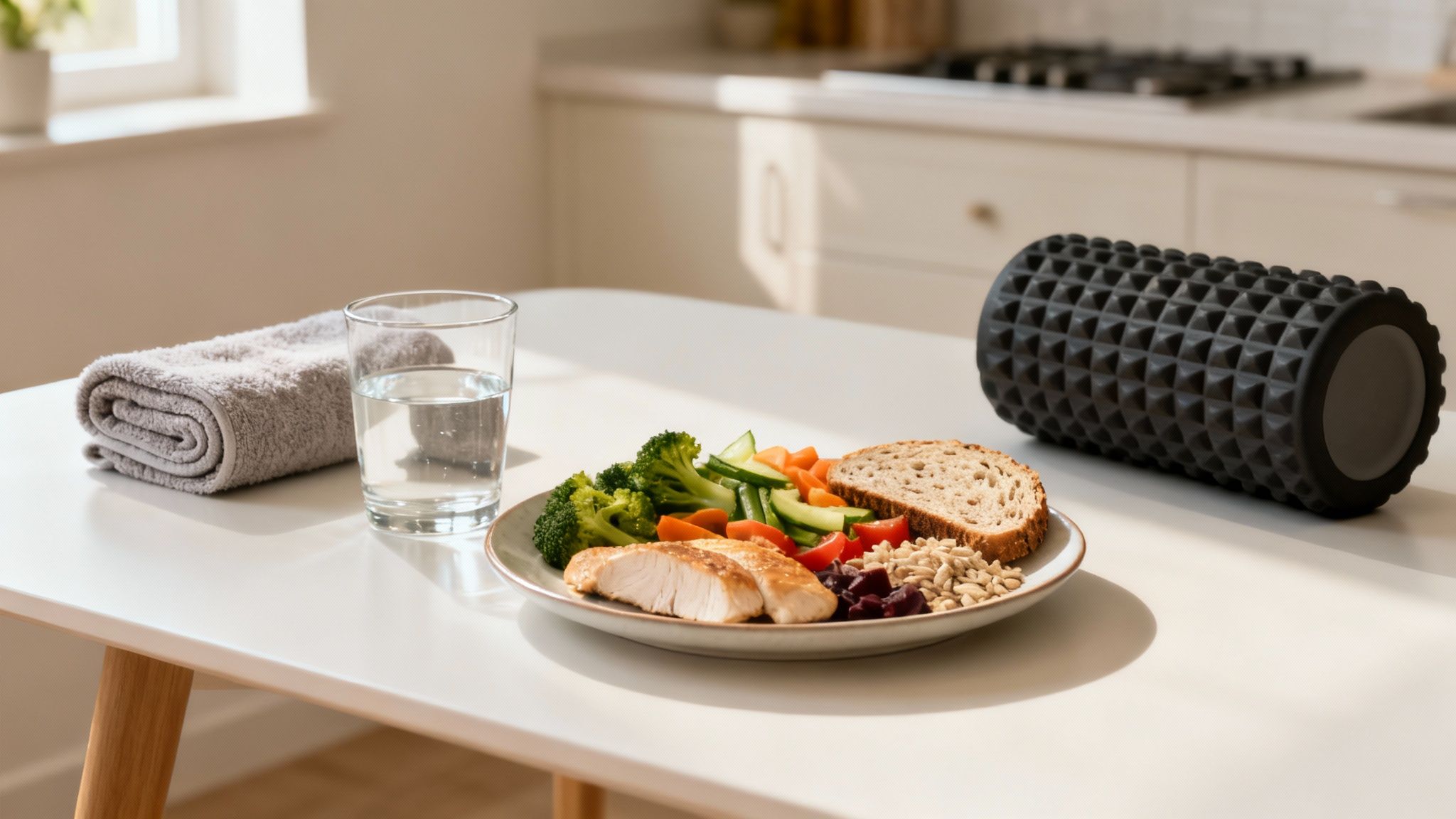
- Prioritize Protein: This is the #1 building block for muscle repair. Aim to get a solid source of protein—like chicken, fish, eggs, tofu, or beans—with each of your main meals. This kicks the recovery process into gear almost immediately.
- Embrace Whole Foods: Stick to foods that look like they did in nature. We're talking fruits, veggies, lean meats, and whole grains. They’re packed with the vitamins and minerals your body is craving after a workout.
- Hydration is Key: Water is non-negotiable. It's crucial for everything from muscle function to nutrient transport. A simple rule of thumb? Drink enough so that your urine is a pale yellow color. Keep a bottle with you and sip on it all day, especially during your workouts.
This isn't about restriction; it's about adding high-quality fuel to your tank. If you want to take the guesswork out of it, tools like Zing Coach can give you specific daily calorie and macro targets based on your goals, making it much easier to stay on track.
Your Secret Weapon: Sleep and Recovery
Here’s a little secret: your muscles don't get stronger during your workout. They get stronger while you sleep. That’s when your body releases growth hormone and really gets to work repairing all that muscle you broke down. Seriously, learning how to improve sleep quality naturally is one of the biggest fitness game-changers out there.
Rest days are not "cheat days." They are training days. Your body is actively adapting and getting stronger, so give it the downtime it needs to work its magic.
On your active recovery days, light movement is your best friend. A brisk 20-minute walk or some gentle stretching gets blood flowing to your muscles, which helps flush out soreness and speeds up the whole recovery process.
For even more ideas on making the most of your downtime, check out our guide on essential workout recovery tips.
When You Are Ready for the Next Step
After a few weeks of putting in the work, you’re going to feel a real shift. Those exercises that felt like a huge struggle at first? Suddenly, they’re manageable. That's a massive win, and you should be proud of it.
But this is also the exact point where a lot of people get stuck. A static, one-size-fits-all beginner plan will only take you so far before you hit a plateau. Once you feel that momentum and you’re ready to keep it going, bringing in some smart technology is the perfect next move.
An AI-powered app like Zing Coach is designed to take you from a fixed schedule to a dynamic fitness journey that actually grows with you. It kicks things off with an initial assessment to get a snapshot of your current fitness level, what you want to achieve, and even what gear you have lying around. This means every single workout is built for you from day one.
How AI Keeps You Progressing
The real magic is in the adaptation. Instead of you trying to guess when to add more reps or cut your rest time, the AI handles that for you. You just give a little feedback after each session on how tough it felt, and the system automatically tweaks the intensity for your next workout. It's this constant fine-tuning that keeps you in that sweet spot—challenged enough to make progress, but not so overwhelmed you want to quit.
This isn’t just a gimmick; it’s where fitness is heading. The AI-driven fitness market is on track to hit $3.8 billion by 2025, with trends like hybrid training and proven methods becoming way more accessible. Your plan is built on a solid, evidence-based foundation, so you can train with confidence.
Technology bridges the gap between a generic plan and a personal trainer. It provides expert guidance, objective tracking, and personalized adjustments that keep you safe and motivated.
Newer features, like a Computer Vision form tracker, can even watch your movements to make sure you're doing exercises correctly, which is a game-changer for minimizing injury risk. Plus, with clear avatar trainers demonstrating every single exercise, you never have to second-guess your technique. For anyone serious about their goals, learning how to build muscle at home becomes so much more straightforward with this kind of guidance in your corner.
Common Questions About Starting a Home Workout Plan
Stepping into any new fitness routine is going to bring up questions. That’s completely normal, especially when you're just getting started with a workout plan at home. Let's walk through some of the most common things people wonder about so you can start with total confidence.
How Long Until I See Results from This Workout Plan
This is the big one, isn't it? Everyone wants to know when the hard work will pay off. While every single body responds differently, most people start feeling stronger and notice a real boost in their energy within the first 2–4 weeks. Don't underestimate these early wins—they're huge for motivation!
As for visible changes, like more defined muscles or your clothes fitting a little differently, that usually starts to become more noticeable after about 6–8 weeks of sticking with it. The real secret is to focus on your performance, not just the number on the scale. Can you do one more squat than last week? Can you hold that plank for a few extra seconds? Those are the true signs that you're making real progress.
What Should I Do if I Miss a Workout Day
Look, life happens. A crazy day at work, feeling under the weather, or just plain forgetting—it happens to all of us. The most important thing is not to let one missed workout completely derail your progress.
The answer is simple: just jump right back in with your next scheduled workout. Fight the urge to double up on your sessions to "make up for it." Trying to cram two workouts into one can just lead to burnout or even an injury. What truly matters is consistency over the long haul, not being perfect every single day.
Don't let a single slip-up make you feel like you've failed. True progress is built by consistently showing up over weeks and months, not by being flawless every single day.
Is It Normal to Feel Sore After Workouts
Absolutely. A bit of muscle soreness is a totally normal, and even expected, part of the process when you're new to exercise. That feeling is often called Delayed Onset Muscle Soreness (DOMS), and it usually kicks in about 24–48 hours after your workout. It’s simply a sign that you've challenged your muscles in a new and effective way.
You can help manage the soreness with a good cool-down, staying hydrated, getting plenty of sleep, and even doing some light activity like walking on your rest days. However, if you ever feel a sharp, sudden, or nagging pain, that's your body's signal to stop, rest, and maybe check in with a professional. If you want a little more guidance on structuring your routine safely, our article on how to create a workout plan for beginners is a great resource.
Ready to move beyond a generic plan and get workouts that adapt to you? The Zing Coach app uses AI to create a personalized fitness journey based on your goals, progress, and feedback. Download Zing Coach and start your truly custom plan today!
Share this article


Authors