Discover how simple meal prep for weight loss can streamline your health journey. This guide offers practical plans, recipes, and tips that actually work.
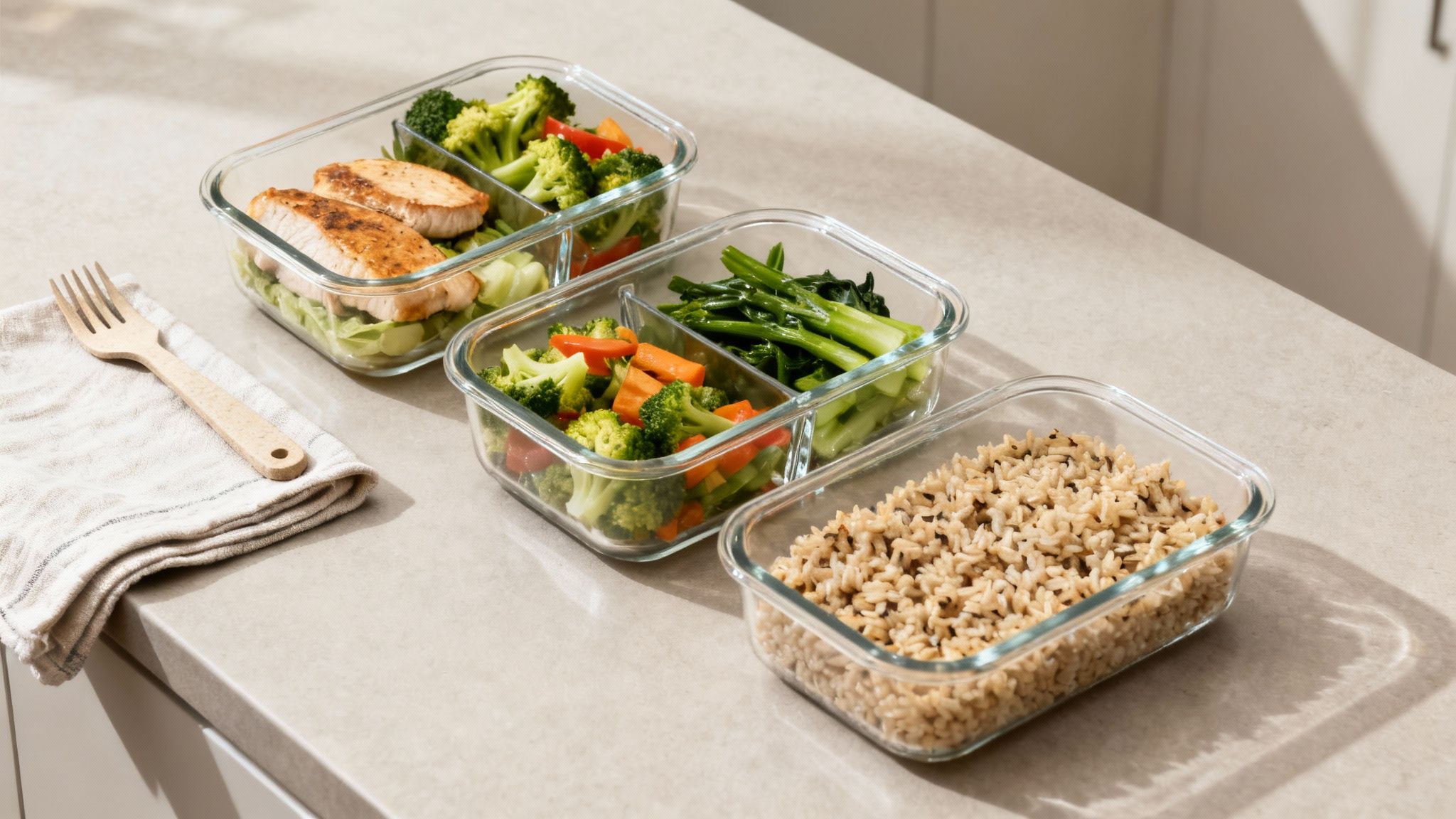
Simple meal prep is probably the most powerful tool you have for weight loss. It's the ultimate way to control your portions, get a handle on calories, and steer clear of those impulsive, unhealthy food choices that sneak up on us.
When you prepare your meals ahead of time, you’re basically eliminating the daily guesswork and decision fatigue that so often derail the best intentions. It creates a clear, straightforward path to your goals.
Why Meal Prep Is Your Secret Weapon for Weight Loss
Let’s be honest about the real challenge of losing weight. It’s rarely the motivation to hit the gym that disappears first. It’s the constant, draining mental load of figuring out what to eat for breakfast, lunch, and dinner—day after day.
This is exactly where meal prep becomes more than just a time-saver. It’s your core strategy for success.
Think about it. You get home, exhausted after a long day, and your willpower is shot. That’s when the siren song of takeout or processed snacks is loudest. Having a delicious, healthy, perfectly portioned meal ready to go completely sidesteps this trap. You’ve already made the smart choice for your future self.
More Than Just Saving Time
The benefits of planning your meals go way beyond getting a few hours back on your weekend. You're building a framework for consistency that actually fits your life, not some rigid set of rules that sets you up for failure. To truly master healthy meal prep for delicious weekday meals, you have to see it as a system.
Here's how this strategy breaks down:
- No More Decision Fatigue: You make one solid set of food decisions for the entire week, which frees up so much mental energy for everything else.
- Automatic Portion Control: By portioning out your meals ahead of time, you remove all the guesswork. This is absolutely critical for staying in a calorie deficit without having to think about it.
- Total Nutritional Consistency: You guarantee your body gets the right mix of protein, carbs, and fats to fuel your workouts and keep you feeling full and satisfied.
The core idea is simple: planning ahead creates an environment where making the healthy choice is also the easiest choice. It’s a powerful shift that builds momentum and confidence.
For a weight loss journey, your meal prep strategy is built on a few key pillars. Think of this as your starting blueprint for success.
Your Meal Prep Starting Blueprint
| Pillar | Why It Matters for Weight Loss | Quick Tip |
|---|---|---|
| Calorie & Macro Awareness | You can't manage what you don't measure. Pre-planning ensures you hit your targets consistently. | Use an app like Zing Coach to get your personalized numbers, then build your menu around them. |
| Batch Cooking | Cooking foundational ingredients (chicken, rice, roasted veggies) at once saves massive amounts of time. | Pick 2 proteins, 3 veggies, and 1-2 carbs to cook each Sunday. Mix and match all week. |
| Portioning | This is where the magic happens. It prevents accidental overeating, even with healthy foods. | Invest in a good set of glass containers and a food scale. Portion meals right after cooking. |
| Smart Storage | Keeping food fresh and appealing is key to actually wanting to eat your prepped meals. | Store sauces or dressings separately to prevent sogginess. Let food cool before sealing and refrigerating. |
This blueprint isn't about being perfect; it's about being prepared. Each pillar supports the others to create a system that works for you.
The Science Behind the Strategy
This isn't just a popular wellness trend; there's solid data to back it up. A groundbreaking 2017 study revealed that people who regularly plan their meals are far more likely to stick to nutritional guidelines and have lower odds of being overweight or obese.
Why? Because preparing your own food is directly linked to eating more fiber and essential vitamins while naturally cutting down on fat and sugar. It’s the perfect recipe for sustainable results.
By adopting a simple meal prep routine, you're doing more than just cooking. You're designing a system that makes weight loss feel less like a constant struggle and more like a natural part of your week. For anyone just starting out, getting these foundational habits in place is the best first step. You can dive deeper into more strategies in our guide on how to lose weight for beginners.
Figuring Out Your Nutrition Needs (Without the Headache)
Let's be honest: diving into the world of calories and macros can feel like you're suddenly back in a high school math class you didn't sign up for. But here’s the good news—for effective meal prep, you don't need a nutrition degree. You just need a solid starting point.
This isn’t about obsessive, rigid counting. It’s about building awareness of what your body actually needs.
The first piece of the puzzle is your Basal Metabolic Rate (BMR). Think of this as the bare minimum energy your body burns just to keep the lights on—powering your brain, lungs, and heart while you're completely at rest. Everything you do on top of that, from a grocery run to a tough workout, adds to your total daily calorie burn.
For weight loss, the name of the game is creating a gentle, sustainable calorie deficit. All that means is eating slightly fewer calories than your body uses each day.
Finding Your Starting Point
Forget those overly complicated formulas for a minute. A great way to get a ballpark estimate is to simply multiply your current body weight (in pounds) by a number between 10 and 12.
If your days are mostly sedentary, stick closer to 10. If you're more active, aim for 12. So, a 180-pound person would land somewhere between 1800-2160 calories a day.
Is it a perfect science? Nope. But it’s a fantastic starting point. You can—and should—tweak this number based on how you feel, your energy levels, and the progress you're seeing. The goal is to avoid drastic cuts, which almost always backfire and lead to muscle loss.
If you want to get more granular, our guide on how to calculate daily calorie needs will walk you through a more precise method.
A modest deficit of around 500 calories per day is a proven, effective strategy for losing about one pound per week. This pace is the sweet spot for losing fat while holding onto the muscle you’re working so hard to build.
Why Your Macros Matter, Too
Calories are only half the story. The type of food you eat is just as important for feeling full, energized, and satisfied. That's where macronutrients—protein, carbs, and fats—come in.
Each one plays a critical role in your body.
- Protein: This is your absolute best friend when you're trying to lose weight. It keeps you feeling full for longer, helps you hang onto precious muscle mass when you're in a deficit, and even requires a bit more energy for your body to digest. Make sure every single meal you prep has a solid protein source.
- Carbohydrates: Don't fear the carbs! They are your body's number-one energy source. The trick is to choose complex carbs like quinoa, sweet potatoes, and oats. They deliver slow-releasing energy and are packed with fiber, which is great for digestion and keeping you full.
- Fats: Healthy fats are non-negotiable. Sources like avocado, nuts, and olive oil are essential for hormone production and overall health. Plus, they play a huge role in making your meals satisfying so you don't feel deprived.
Getting a good balance of these three macros will keep your energy steady, your hunger in check, and your weight loss goals right on track.
Building Your Sunday Meal Prep Ritual
Now that you’ve got your numbers dialled in, it's time to turn that knowledge into actual food on your table. This is where the theory behind weight-loss meal prep becomes a practical, repeatable weekly system you can actually stick with.
Think of Sunday as your setup day for a week of success.
Building a ritual isn't about perfection. It’s about creating a smooth workflow that saves you precious time and mental energy when life gets busy. This process completely removes the daily "what's for dinner?" stress, making your healthy choice the easy choice. Over time, it just becomes second nature. To learn more about making these actions automatic, check out our guide on forming habits that stick.
Your Four-Part Weekly Workflow
This simple four-part system—plan, shop, prep, and store—is your secret weapon. Each step flows logically into the next, making your meal prep session efficient and almost effortless once you get the hang of it.
- Plan: Map out your meals for the week.
- Shop: Create an organized list and get your groceries.
- Prep: Execute your cooking plan efficiently.
- Store: Portion and store meals for maximum freshness.
This repeatable workflow is the bedrock of any successful meal prep routine.
The Planning and Shopping Phase
Before you even think about touching a knife, grab a pen and paper or open a notes app. Quickly jot down your breakfast, lunch, dinner, and snack ideas for Monday through Friday. Don't overcomplicate it. You can eat the same lunch for a few days or just rotate between two dinner options to keep things simple.
From that meal map, create your grocery list. Here’s a pro tip I swear by: organize your list by store aisle (produce, protein, pantry, etc.). This simple trick turns a meandering store visit into a quick, targeted mission, saving you time and preventing those impulse buys that don't align with your goals.
Mastering the Power Hour Prep
This is where the real magic happens. You don't need to spend your entire Sunday chained to the kitchen. Instead, adopt the "Power Hour" concept by multitasking like a pro.
Here’s what it looks like in action:
- Start with what takes longest. Get that oven preheating and put your grains (like quinoa or brown rice) on the stovetop to simmer.
- Prep your proteins and veggies. While things are heating up, chop your vegetables and season your chicken or fish.
- Use your oven wisely. Get the chicken and a sheet pan of seasoned veggies in the oven to bake and roast at the same time.
- Assemble and cool. By the time the oven timer dings, your grains are probably done. Now, just let everything cool down before you move to the final step.
By overlapping these tasks, you can knock out a week's worth of core components in about 60-90 minutes. This efficiency is what makes meal prep a sustainable part of your lifestyle, not just a one-off attempt.
This structured approach to home cooking lines up with a massive consumer shift. The global prepared meals market is projected to hit a staggering $326.50 billion by 2034, all driven by a demand for convenient, healthy food.
By prepping at home, you get all that convenience while keeping complete control over your ingredients and quality—a benefit commercial options can't always guarantee.
Smart Storage for Lasting Freshness
Finally, it’s time to portion everything out into airtight containers. Glass containers are a fantastic investment; they're microwave-safe and don't hold onto stains or smells from last week's chili.
To prevent soggy, sad meals, store dressings, sauces, and any crunchy toppings separately until you're ready to eat. And a final critical tip: let all cooked food cool completely before you seal and refrigerate it. This ensures everything stays fresh and delicious all week long.
Simple Recipes and Smart Swaps to Keep Things Interesting
Let's be honest. The single biggest threat to any meal prep routine is boredom. Eating the same bland chicken and broccoli for weeks on end is a surefire way to find yourself right back in the drive-thru line.
The real secret to making this stick is building a small library of go-to recipes that you actually look forward to eating. Consistency doesn't mean monotony. A few versatile, batch-friendly recipes can be the foundation for an entire week of varied and delicious meals. It's all about working smarter.
Core Recipes to Master First
These recipes are designed for flavor, simplicity, and high protein content to keep you feeling full and satisfied. Think of them as the perfect base that you can customize all week long.
1. Sheet Pan Lemon Herb Chicken and Veggies
This is the ultimate one-pan wonder. Just toss chicken breasts, broccoli florets, bell peppers, and red onion with a little olive oil, lemon juice, dried oregano, and garlic powder. Roast it all at 400°F (200°C) for about 20-25 minutes. The chicken stays juicy, the veggies get perfectly caramelized, and cleanup is an absolute breeze.
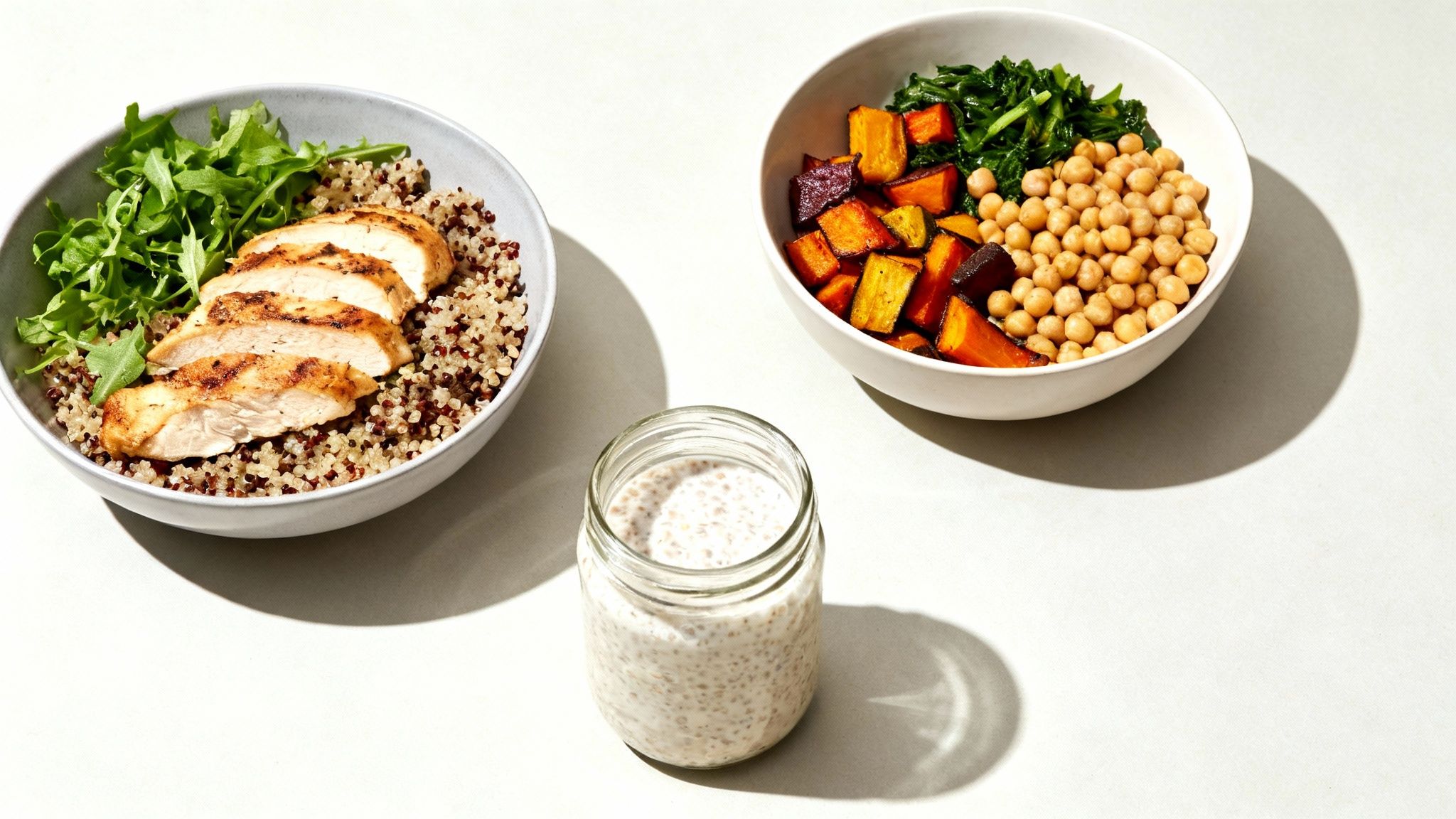
2. Versatile Quinoa Power Bowl
Quinoa is a meal-prepper's best friend because it holds up so well in the fridge. Cook a big batch and use it as the base for killer bowls. Top it with your pre-cooked chicken, a can of rinsed black beans, some corn salsa, and a dollop of Greek yogurt for a satisfying, high-fiber lunch that’s ready in minutes.
3. Simple Overnight Oats
For breakfast, nothing beats the convenience of overnight oats. In a jar, just combine 1/2 cup of rolled oats, 1/2 cup of unsweetened almond milk, 1 tablespoon of chia seeds, and a scoop of your favorite protein powder. Give it a good shake and let it sit overnight. In the morning, top with fresh berries and a few nuts. Done.
The key is focusing on meals that taste just as good on day three as they do on day one. Sheet pan meals, grain bowls, and overnight oats are champions in this regard, ensuring your effort pays off all week long.
The Power of Smart Swaps
This is where you truly defeat flavor fatigue. Knowing how to make simple, intelligent ingredient swaps allows you to adapt recipes based on your cravings, what’s on sale at the store, or what you already have in your fridge. It’s the ultimate tool for flexibility.
Here's how to think about it:
- Protein for Protein: Swap the sheet pan chicken for salmon fillets (just adjust the cooking time) or firm tofu cubes. Use chickpeas or lentils in your quinoa bowl instead of black beans. This keeps the core nutrition similar while completely changing the meal's character.
- Carb for Carb: Tired of quinoa? Swap it for brown rice, farro, or even roasted sweet potato cubes. These complex carbs provide sustained energy and keep your meals feeling fresh and new.
- Veggies for Veggies: The beauty of roasted vegetables is that almost anything works. Sub out broccoli for Brussels sprouts, asparagus, or cauliflower. This is a great way to eat seasonally and add different micronutrients to your diet.
Making swaps also keeps things interesting for snacks and quick meals. For a super-fast breakfast or snack, consider the benefits of using a single smoothie maker for healthy living.
Why Protein Is Your Priority
You’ll notice a common thread in all these recipes and swaps: a strong focus on protein. That’s by design. There’s a good reason the "proteinization" trend is sweeping the nutrition world, with 71% of Americans actively trying to increase their protein intake.
High-protein meals are a cornerstone of effective weight loss. They are highly satiating—meaning they keep you feeling full longer—and help preserve lean muscle mass when you’re in a calorie deficit, which is vital for a healthy metabolism.
Whether you're using chicken, fish, beans, or a quality protein powder, ensuring each meal is protein-packed is one of the most effective strategies for staying full and reaching your goals. If you're looking to supplement, it can be a convenient way to hit your numbers. You can learn more about protein shakes and supplements in our article to see if they fit into your plan.
Your First 7-Day Weight Loss Meal Prep Plan
Alright, let's put all this theory into action. This is where the magic really happens—when you see how simple it all is in practice. I’ve laid out a full 7-day plan using the exact recipes and components we’ve been talking about to get you through your first week.
Think of this less as a strict, must-follow menu and more like a roadmap. It’s a flexible template to show you how the proteins, carbs, and veggies you prep can come together for delicious, satisfying meals that work for your weight loss goals, not against them.
Your Sunday Prep Day Guide
Give yourself about 90 minutes on Sunday. That's it. This small time investment is going to save you so much stress and decision-making during the week. It’s a total game-changer.
Here's your plan of attack:
- Roast Your Veggies: Get your chopped broccoli, bell peppers, and red onion on a sheet pan. Toss them with a little olive oil and your favorite herbs, then roast at 400°F (200°C) until they're tender with those nice, slightly crispy edges.
- Bake the Chicken: While the veggies are in the oven, get your seasoned chicken breasts baking. Once they're cooked through, let them cool down completely before you slice or dice them up. This makes portioning way easier.
- Cook Your Grains: Get a big batch of quinoa going on the stovetop.
- Prep Breakfast: This is the easiest part. Just mix up your overnight oats in a few jars. Now breakfast is literally a grab-and-go situation.
- Portion It All Out: Once everything is cooked and cooled, it's time to assemble. Divide everything into your airtight containers, and you're officially prepped for the week.
Sample 7-Day Weight Loss Meal Plan (1800 Calories)
Here’s a look at how you can assemble those prepped ingredients into a full week of meals. This sample plan is built around an 1800-calorie target, with a focus on high protein to keep you feeling full and energized. To really dial in your numbers, it helps to understand the fundamentals of macronutrients. Our guide on how to count macros for beginners is a great place to start.
| Day | Breakfast | Lunch | Dinner | Snacks |
|---|---|---|---|---|
| Mon | Overnight Oats with Berries | Quinoa Bowl with Chicken & Black Beans | Sheet Pan Lemon Herb Chicken & Veggies | Greek Yogurt, Apple |
| Tues | Overnight Oats with Berries | Quinoa Bowl with Chicken & Black Beans | Leftover Sheet Pan Chicken & Veggies | Handful of Almonds |
| Wed | Overnight Oats with Berries | Leftover Quinoa Bowl | Sheet Pan Lemon Herb Chicken & Veggies | Protein Shake, Pear |
| Thurs | Overnight Oats with Berries | Quinoa Bowl with Chicken & Black Beans | Leftover Sheet Pan Chicken & Veggies | Rice Cakes with Peanut Butter |
| Fri | Overnight Oats with Berries | Leftover Quinoa Bowl | Flexible Meal (Planned Dinner Out) | Greek Yogurt, Orange |
As you can see, this isn't about eating the same bland meal over and over. It's about using the same core components in slightly different ways to keep things simple but satisfying.
How to Adjust Your Calories
The best part about this system? It's incredibly easy to tweak for your specific calorie goals without having to cook a bunch of different things.
The easiest way to adjust your daily intake is by modifying your snack choices and portion sizes. The core meals remain the same, ensuring your prep work is always efficient.
Here are a couple of real-world examples of how to adjust this plan:
- To lower to 1500 calories: The quickest fix is to reduce your quinoa portion at lunch by about a third. Then, swap out a higher-calorie snack like the almonds for a piece of fruit or some crunchy raw veggies like carrots or cucumber slices.
- To increase to 2000 calories: Add a healthy fat source, like half an avocado, to your lunch bowl. You could also include a daily protein shake as a second snack to easily bump up your protein and calorie intake.
This approach keeps your meal prep simple while making sure your nutrition is perfectly aligned with your goals. It's effective, adaptable, and most importantly, sustainable.
Got Questions About Meal Prep? We’ve Got Answers.
Jumping into any new routine is going to bring up some questions, and meal prepping for weight loss is no exception. Let's be honest, figuring out the little details can feel like a roadblock. Getting past these initial hurdles is what separates the people who stick with it from those who don't.
So, let's tackle the most common questions head-on with some straightforward, real-world advice.
"How Long Will My Food Actually Last?"
This is probably the biggest one. You spend all that time cooking, and the last thing you want is for your food to go bad. The good news is most cooked meals will stay fresh and tasty for about 3-4 days when you store them properly in airtight containers in the fridge. That easily covers you for the first half of the week.
So, what about the full seven days? You’ve got a couple of solid options:
- The Freeze-Ahead Method: Cook everything on Sunday. Eat your meals for Monday through Wednesday fresh, and pop the portions for Thursday and Friday into the freezer. Just remember to pull them out the night before to thaw.
- The Mid-Week Refresh: My personal favorite for keeping things extra fresh. Do your main prep on Sunday for the first few days, then schedule a quick, smaller prep session on Wednesday night to cover the rest of the week.
"Won't I Get Bored of Eating the Same Thing?"
"I get bored eating the same thing every day!" I hear this all the time, and it's a legitimate concern that derails a lot of well-intentioned preppers. The secret isn't to prep five identical chicken-and-rice boxes. The real pro move is to prep components, not just fully assembled meals.
Think of it like building your own personal salad bar for the week. Cook up a big batch of shredded chicken, a versatile grain like quinoa, and a sheet pan of roasted broccoli and bell peppers.
Then, you can mix and match. Monday, it’s a quinoa bowl with chicken and a zesty vinaigrette. Tuesday, you shred that same chicken over a bed of greens for a high-protein salad. Wednesday, you can stuff it into a whole-wheat pita with some veggies. A few different sauces, spices, and fresh toppings like avocado or cilantro can make the same core ingredients feel like a totally new dish every single time.
Meal prep is about creating a supportive structure, not a rigid prison. It's designed to make your life easier, giving you the freedom to be flexible without sacrificing your goals.
"Do I Have to Give Up My Social Life?"
People often worry they can't eat out anymore. Absolutely not! A sustainable lifestyle has room for a dinner out with friends or a family meal. In fact, meal prep makes it easier.
When you have healthy, delicious meals waiting for you, you're not making impulsive, unhealthy choices on the other nights. Your meal prep provides a solid nutritional foundation, so you can go out and enjoy those social meals completely guilt-free.
"What Gear Do I Really Need?"
Finally, let's talk tools. You don't need a kitchen full of fancy gadgets, but the right containers make a world of difference. My advice? Invest in a good set of glass or BPA-free plastic containers with airtight, leak-proof lids.
Glass is fantastic because it doesn't stain or hold onto odors (goodbye, leftover curry smell!), and you can pop it straight from the fridge into the microwave or even the oven. Sectioned containers are also a game-changer for keeping things like salads from getting soggy or keeping your sauce separate from your protein until you're ready to eat.
Ready to pair your perfect meal plan with a workout program that adapts to you? The Zing Coach app creates personalized fitness plans and calculates your daily nutrition targets to ensure your efforts in the kitchen translate to real results. Get your AI-powered plan today at zing.coach.
Share this article


Authors