Learn how to count macros for beginners with this simple, practical guide. We'll show you how to calculate your needs, track food, and achieve your goals.
Heard the term "counting macros" floating around but not quite sure where to even begin? You're in the right place. In a nutshell, counting macros just means you're tracking the grams of protein, carbohydrates, and fats you eat every day to hit specific targets. It’s a super flexible approach that goes way beyond old-school calorie counting to focus on the quality and balance of your food.
What Are Macros and Why Do They Matter?
Before you grab a food scale, let's get into why this method is so effective. "Macros" is just shorthand for macronutrients—the three big-ticket nutrients your body uses for energy and pretty much everything else. Think of them as the primary fuel sources that power you through your day.
Each one has a distinct, vital job to do:
- Protein is your body's construction crew. It's essential for repairing tissues, building muscle, and keeping your immune system strong. You'll find it in foods like meat, eggs, dairy, beans, and nuts.
- Carbohydrates are your main energy source. They're the go-to fuel for your brain and muscles, giving you the power you need for workouts and just daily life. Good sources include grains, fruits, and starchy vegetables.
- Fats are crucial for producing hormones, absorbing nutrients, and protecting your organs. Healthy fats come from awesome sources like avocados, olive oil, and nuts.
Moving Beyond Old-School Dieting
So, why zone in on these three instead of just calories? Because not all calories are created equal. Trust me, an 1,800-calorie diet from a balance of protein, carbs, and fats will have a wildly different impact on your body than 1,800 calories from sugar and processed junk.
By focusing on macronutrients, you make sure your body gets the right fuel mix to support your goals, whether that's losing weight, building strength, or just improving your overall body composition.
This flexibility is a huge reason why macro counting has exploded in popularity. While traditional, restrictive diets often have a high failure rate, the adaptability of macro tracking has been shown to help people stick with it long-term. Just look at apps like MyFitnessPal—they've seen over 200 million downloads, which signals a massive shift toward this more personalized way of looking at nutrition.
The real power of counting macros is that it empowers you. It teaches you about food composition, portion sizes, and how different foods actually make you feel. You walk away with lasting nutritional knowledge instead of just a list of "good" and "bad" foods.
For many people, counting macros is a game-changing strategy for hitting their fitness goals, especially when it comes to weight loss. If that’s your main focus, you might find these practical weight loss tips for beginners helpful as you get started.
The Zing Coach app takes this a step further by syncing your nutrition targets with your personalized workout plan, creating a seamless strategy to help you succeed.
Ready to map out your own journey? Here’s a quick look at the road ahead.
Your Macro Counting Roadmap
This table gives you a bird's-eye view of the key actions you'll be taking. Think of it as your clear, simple path to start counting macros effectively.
| Phase | Action | Your Goal |
|---|---|---|
| Foundation | Set your goals & calculate daily calories. | Establish a clear target for what you want to achieve. |
| Strategy | Choose your ideal macro ratio (e.g., 40/30/30). | Align your nutrition with your specific fitness goals. |
| Execution | Convert your macro percentages into grams. | Get concrete numbers to track against each day. |
| Application | Learn to use food labels and a food scale. | Accurately measure and understand your food intake. |
| Tracking | Log your meals using a dedicated app. | Keep a consistent record to monitor your progress. |
With this roadmap, you're not just guessing anymore—you're following a proven, step-by-step plan. Let's dive into the first phase.
Nailing Down Your Personal Macro Targets
Figuring out your personal macro targets isn't about getting lost in complex math. It's really about getting a handle on your body's specific energy needs. The whole process starts with a number called your Total Daily Energy Expenditure (TDEE). Think of it as the total number of calories you burn in a 24-hour period, covering everything from sleeping to smashing a workout. This number is your foundation.
To get your TDEE, you first need a baseline: your Basal Metabolic Rate (BMR). That's the energy your body needs just to exist, keeping the lights on at rest. From there, you multiply that BMR by an activity factor that reflects how much you move around. This makes sure your targets are actually tailored to your life, not some generic formula.
This whole approach can be broken down into three simple phases, as you can see below.
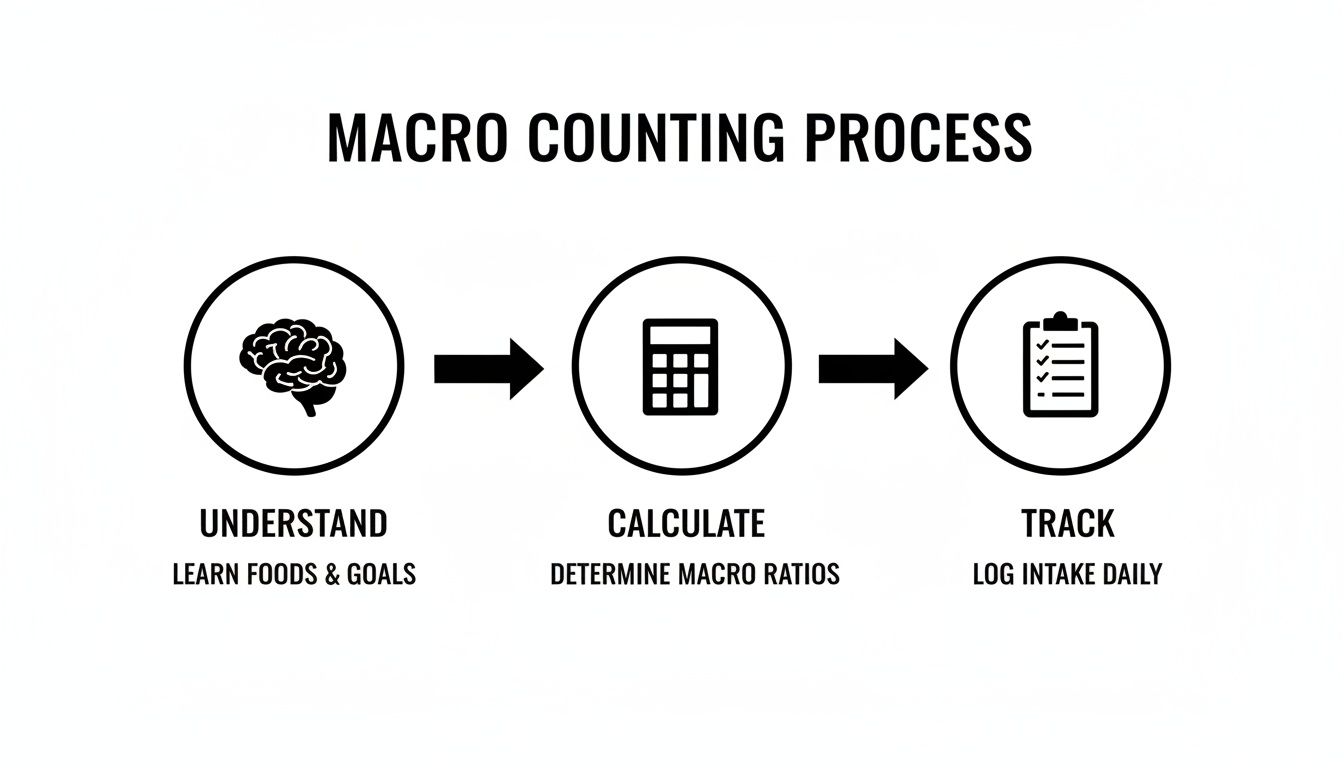
Successful macro counting is really a cycle: you understand what you need, calculate your targets, and then track what you eat. It’s that straightforward.
Finding Your Starting Numbers
Let's walk through a real-world example. Take a 30-year-old woman who is 5'5", weighs 150 lbs, and works a desk job. Her BMR is right around 1,400 calories.
Since she has a sedentary job, we'd multiply that by an activity factor of 1.2. This gives her a TDEE of roughly 1,680 calories just to maintain her current weight.
For fat loss, a common and sustainable approach is to create a modest deficit by subtracting 300-500 calories from that TDEE. This sets her up to lose a healthy 0.5 to 1 pound per week—a pace you can actually stick with, unlike most crash diets.
Translating Calories Into Grams
Once you have your daily calorie number, it's time to turn it into actual macro targets in grams. This is where your fitness goals really steer the ship.
A great, balanced starting point for a lot of people is a 40/30/30 split:
- 40% Carbohydrates
- 30% Protein
- 30% Fat
So, for someone with an 1,800-calorie goal, the math looks like this:
- Carbs: 720 calories / 4 = 180g
- Protein: 540 calories / 4 = 135g
- Fat: 540 calories / 9 = 60g
Just remember that protein and carbs both pack 4 calories per gram, while fat has a denser 9 calories per gram.
Don't feel locked into these ratios. They're flexible. A marathon runner might need to crank up their carbs for fuel, while someone focused on building muscle will likely want more protein. Once you have your baseline, you can adjust your targets to support specific goals, like finding effective strategies to maintain muscle while cutting.
Of course, crunching these numbers by hand can get old fast. That's where tools like the Zing Coach app come in clutch. It does all the heavy lifting for you, analyzing your personal stats, goals, and activity level to spit out precise targets ready for you to use. The app also helps you see the bigger picture, offering guidance on things like how to measure body fat percentage so you can track your progress in a meaningful way.
The Essential Tools for Tracking Success
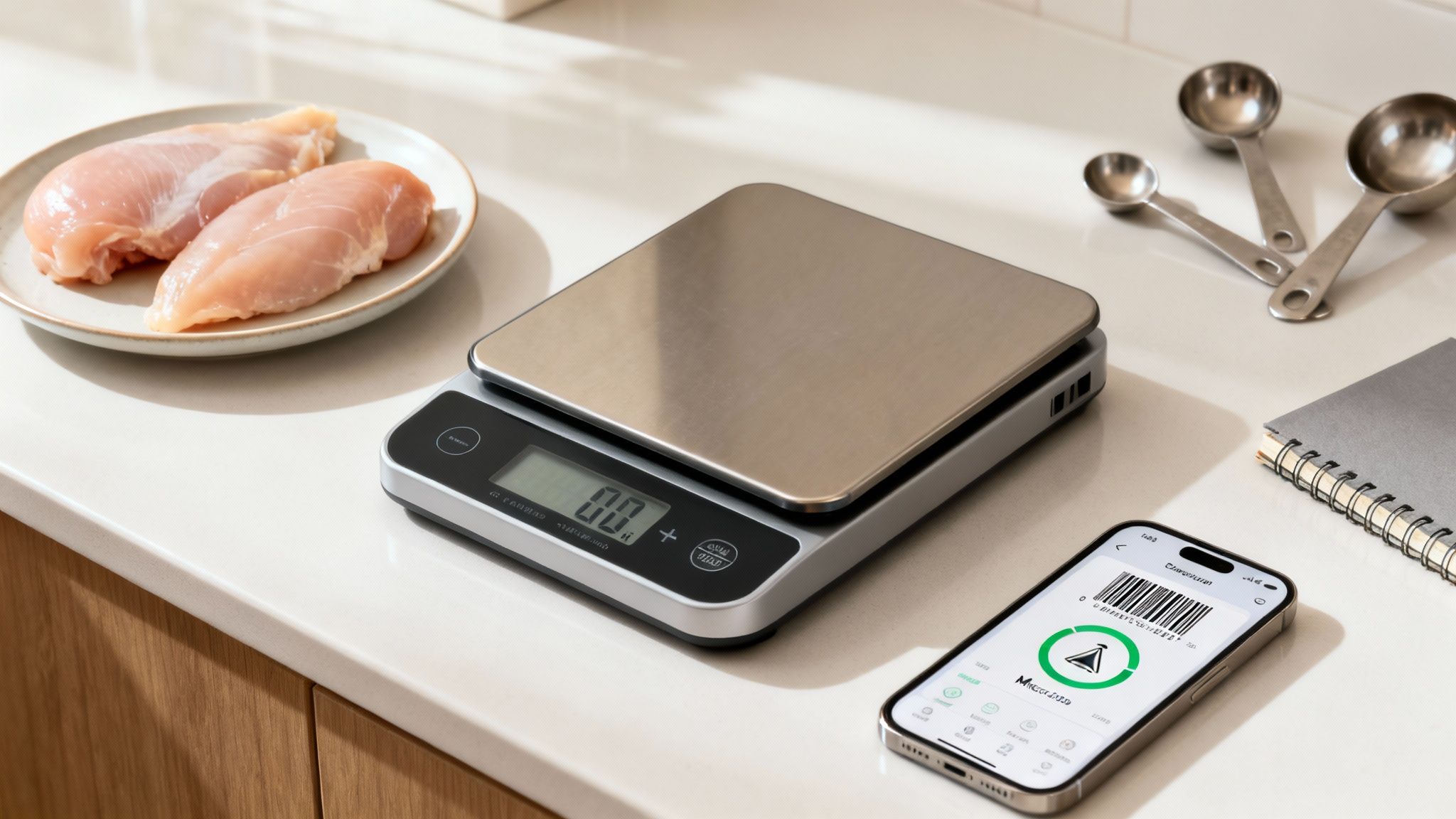
Here's the good news: you don't need a bunch of complicated gear to count macros successfully. In fact, you really only need two things to make the process simple, accurate, and something you can actually stick with: a digital food scale and a good tracking app.
These two tools are what take the guesswork out of the equation. They turn a task that seems tedious into a quick part of your daily routine.
Your Non-Negotiable Tools of the Trade
First up, the digital food scale. Think of this as your most trusted partner on this journey. While measuring cups are fine for liquids, they're notoriously inaccurate for solid foods. Ever scooped out a "cup" of oatmeal? Depending on how tightly it's packed, the actual amount can vary wildly, throwing your carb count way off for the day. A scale gives you precision down to the gram, which is exactly what you need for accurate tracking.
The point isn't to become obsessive; it's to become informed. Weighing your food builds an incredible awareness of what a true portion size looks like—a skill that will stick with you long after you stop tracking every single meal.
The other half of this power duo is a tracking app. This is your digital food diary, and it does all the heavy lifting (and the math) for you. Apps like MyFitnessPal are incredibly popular, but the Zing Coach app takes it a step further by integrating your nutrition tracking directly with your workout plan for a more holistic view of your progress.
How to Make the Most of Your Tools
Getting into a smooth rhythm with your scale and app is the secret sauce. A few practical tips can make a world of difference in turning this into a habit that doesn't feel like a chore. At the beginning, you're building new routines, and the easier you make it on yourself, the better your chances of forming habits that stick.
Here are a few pro-tips I've picked up to streamline the whole process:
- Weigh Foods Raw. This is a big one for consistency. Always weigh things like meat, rice, and pasta before you cook them. Their weight changes dramatically once they absorb water or cook off fat, but the macro content of the raw ingredient is constant.
- Use the Barcode Scanner. Seriously, this is a massive time-saver. Pretty much every modern tracking app has a barcode scanner. Just zap the package of any food, and the app instantly pulls up all its nutrition info.
- Create Custom Meals. Do you have a go-to breakfast smoothie or a favorite chili recipe you make all the time? Take a few minutes to enter it into your app once as a custom meal. The next time you eat it, you can log the entire thing with a single tap instead of punching in every single ingredient all over again.
By embracing these simple tools and techniques, you transform macro counting from an intimidating task into a straightforward daily practice. It builds confidence and gives you the hard data you need to see real progress and make smart adjustments along the way.
A Real Day of Counting Macros
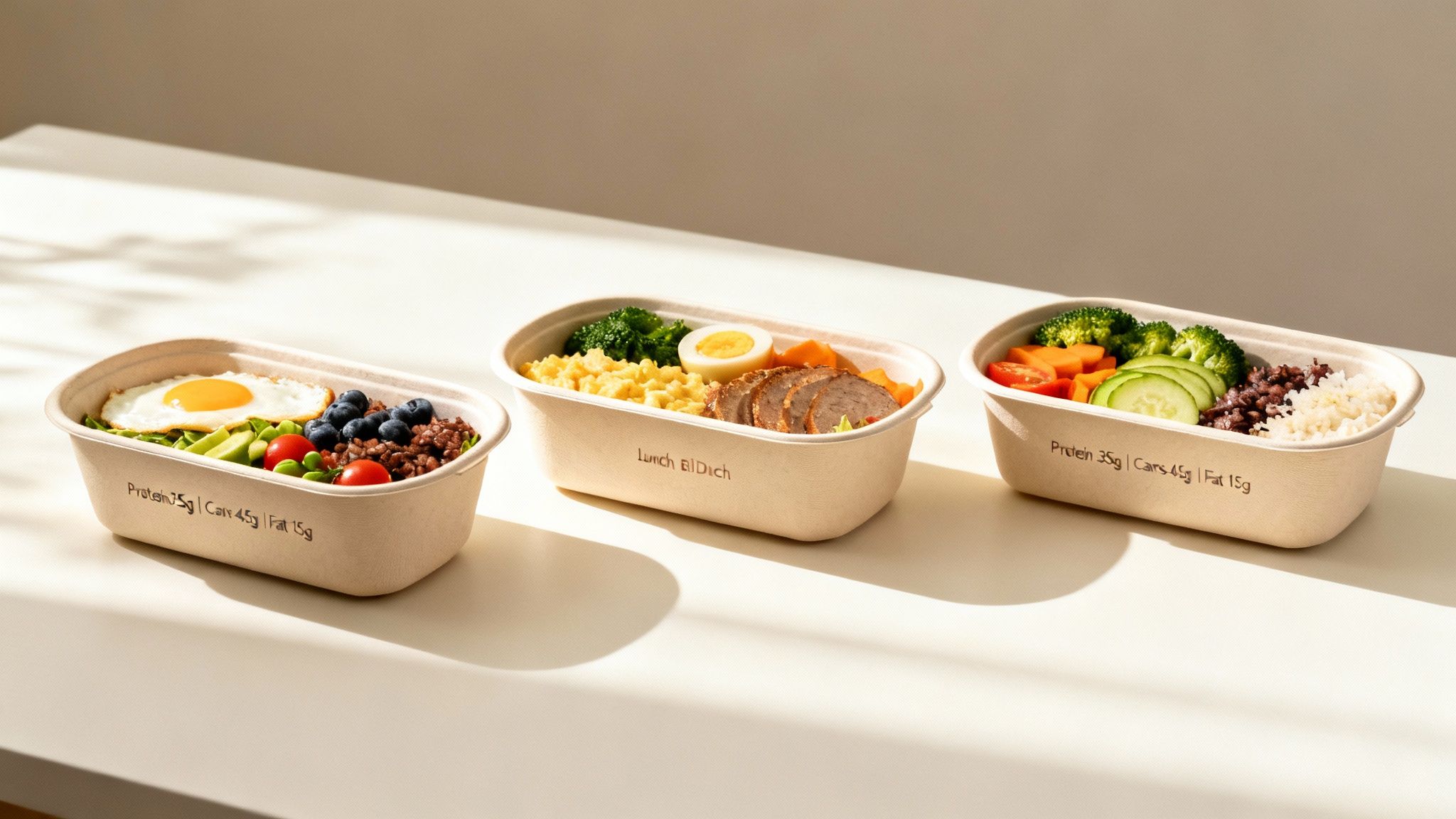
Theory is great, but seeing how macro counting plays out on a real day is where the lightbulb really goes off. Let's walk through a day in the life of a busy person with a goal of 1,800 calories, targeting 135g protein, 180g carbs, and 60g fat.
This isn't about eating bland, repetitive meals out of Tupperware. It's about making smart, flexible choices that actually fit into a normal, hectic schedule.
Starting the Day Strong
Mornings are chaotic, so breakfast needs to be fast and filling. A protein-heavy start is a fantastic way to curb hunger until lunch. The key habit here? Weigh and log the ingredients before eating. It takes a few seconds but makes a world of difference.
- Breakfast: Two scrambled eggs, 30g of feta cheese, and a side of 150g of Greek yogurt topped with a handful of berries.
- The Numbers: This quick meal comes out to roughly 30g protein, 25g carbs, and 20g fat.
Just like that, a solid chunk of the day's protein goal is already met, setting a positive tone for the hours ahead.
Navigating Lunch and a Midday Workout
For lunch, a prepped meal is an absolute game-changer for staying on track. Today, it’s a simple but delicious mix of grilled chicken, quinoa, and roasted vegetables—no guesswork needed.
After work, it's time for a strength training session at the gym. This brings up a question I get all the time: when is the best time to eat around a workout? Honestly, understanding whether to eat before or after working out can significantly impact your energy levels and recovery. Since lunch was substantial, there's plenty of fuel in the tank for the workout. A post-workout snack will be perfect for muscle repair later.
Your macro plan should support your lifestyle, not control it. Prepping a few key meals and having go-to snack options makes it so much easier to handle busy days and workout schedules without derailing your progress.
Dinner and the Final Tweak
By dinnertime, a quick check of the app shows what's left to work with: 65g protein, 75g carbs, and 25g fat. The plan is a salmon fillet with a large sweet potato.
After logging the planned meal—170g of salmon and 200g of sweet potato—it's clear the numbers will be slightly over on fat and a little under on protein. This is where the real magic of macro counting happens. It's not about being perfect; it's about being mindful.
Instead of roasting the salmon in olive oil, baking it with lemon and herbs saves about 10g of fat. To hit that protein number, a side of steamed edamame does the trick. That tiny adjustment brings the day's totals almost perfectly in line with the targets. It’s all about those small, easy tweaks.
To give you a clearer picture, here's what that entire day could look like when laid out.
Sample 1800-Calorie Macro Plan
This table breaks down a full day of eating, showing how each meal and snack contributes to the daily macro goals. It’s a great example of how you can enjoy varied, delicious food while still hitting your numbers.
| Meal | Food Item | Protein (g) | Carbs (g) | Fat (g) |
|---|---|---|---|---|
| Breakfast | 2 large eggs, scrambled | 12 | 1 | 10 |
| 30g Feta Cheese | 4 | 1 | 6 | |
| 150g Greek Yogurt (0% fat) | 15 | 6 | 0 | |
| 50g Mixed Berries | 0 | 5 | 0 | |
| Lunch | 150g Grilled Chicken Breast | 45 | 0 | 5 |
| 1 cup cooked Quinoa | 8 | 40 | 4 | |
| 1 cup Roasted Veggies | 4 | 15 | 5 | |
| Snack | Protein Shake (1 scoop) | 25 | 4 | 2 |
| Dinner | 170g Salmon fillet, baked | 35 | 0 | 20 |
| 200g Sweet Potato, baked | 4 | 45 | 0 | |
| 1 cup Steamed Edamame | 17 | 15 | 8 | |
| Daily Totals | 169g | 172g | 60g |
As you can see, you don't have to be exact down to the last gram. This plan slightly exceeds the protein goal while staying on track with carbs and fat, which is perfectly fine. The goal is consistency, not perfection.
Common Beginner Mistakes and How to Fix Them
Jumping into macro counting is exciting, but it's completely normal to hit a few bumps along the way. I've been there, and I've coached countless people through it.
Knowing the common pitfalls ahead of time is your best defense. It turns potential frustrations into valuable learning experiences. The goal isn't perfection from day one; it's about building habits that actually stick.
One of the biggest mistakes I see is forgetting to track the "little things." That splash of creamer in your coffee, the tablespoon of olive oil you used to cook your chicken, or the handful of nuts you grabbed while passing the kitchen—it all has macros and it all adds up.
These small omissions can easily account for an extra 100-200 calories and a surprising number of fat grams, throwing off your daily totals without you even realizing it.
The fix is simple: if you eat or drink it, log it. Make that your golden rule from the very beginning.
Forgetting About Liquids and Sauces
Another sneaky culprit is liquids. Sauces, dressings, and drinks are so often overlooked but can be packed with hidden sugars (carbs) and fats. That innocent-looking salad dressing could be adding 15g of fat to a meal you thought was lean and clean.
The most effective way to learn how to count macros for beginners is to build awareness around everything you consume. Weighing and tracking cooking oils and logging every drink builds a level of mindfulness that becomes second nature over time.
This attention to detail also helps you steer clear of common myths. By tracking what you actually eat, you start to see through a lot of the nutrition misinformation that can derail your progress.
Aiming for Unrealistic Perfection
Finally, so many beginners get discouraged when they don't hit their targets exactly. Striving for a perfect score of 135g protein, 180g carbs, and 60g fat every single day is a recipe for burnout. Trust me. Life happens, and flexibility is the entire point of this approach.
Instead of chasing perfection, aim for consistency. Here's a much more realistic way to look at your daily goals:
- Prioritize Protein: Make hitting your protein target your number one goal. It's the most crucial for muscle repair and satiety.
- Stay Within a Range: Don't stress about hitting the exact number. Aim to be within 5-10 grams of your carb and fat targets. Some days will be a little higher, some a little lower. It balances out.
- Focus on Calories: Above all, keep your total daily calories close to your goal.
This "progress over perfection" mindset is everything. As you build these habits, tools like the Zing Coach app can help you adapt on the fly. It adjusts your nutrition targets as your fitness level improves, ensuring your plan evolves with you and supports your long-term success.
Your Macro Counting Questions Answered
When you first dive into tracking macros, you're bound to have questions. It's totally normal. Think of this section as your personal FAQ, built from the most common things beginners run into. Getting these answers straight from the get-go will help you build confidence and cruise past any early bumps in the road.
Do I Have to Weigh and Track My Food Forever?
Absolutely not. Think of the initial phase of weighing and tracking as your nutritional training wheels, not a life sentence. It’s a powerful learning tool.
For the first few weeks, you're not just punching numbers into an app. You're building a real, intuitive sense of portion sizes and what’s actually in the food you eat every day. You'll be surprised how quickly you start to eyeball what 150 grams of chicken looks like or how much rice it takes to hit your carb goal for a meal.
After a while, most people find they can ease up and take a more relaxed approach. They only get strict with tracking again when they’re chasing a new fitness goal or just feel like they need a quick tune-up.
What if I Can't Hit My Macro Targets Perfectly?
First off, relax. The goal is consistency, not perfection. Nobody hits their numbers on the dot every single day. Being a few grams over or under is completely normal and won't throw off your progress. Your body doesn't run on a strict 24-hour cycle.
As a beginner, just focus on these two things:
- Nail your protein goal. Get as close as you can, since protein is so important for muscle repair and keeping you full.
- Stay near your total calorie target. This is the biggest factor when it comes to managing your weight.
Honestly, if you're within 5-10 grams of your carb and fat targets, you're crushing it. The whole point is to build a habit you can actually stick with. If you find you're always way off, it's not a failure—it's just a sign that you might need to tweak your targets to better match your lifestyle.
How Do I Track Macros When Eating Out?
Going out to eat is part of life, and it shouldn't feel like you're derailing all your hard work. With a little bit of strategy, you can handle it like a pro. Many big chain restaurants have their nutrition info online, so a quick search ahead of time can be a lifesaver.
If that’s not an option, your best bet is to break the meal down in your tracking app.
Instead of just searching for "chicken stir-fry," try logging the parts separately. Make an educated guess: estimate the amounts of "grilled chicken breast," "steamed rice," and "mixed vegetables." It won't be perfect, but it's a whole lot better than skipping it and gives you a pretty solid idea of where you landed.
Should I Change My Macros on Workout Days?
When you're just starting out, keeping things simple is the fastest way to win. Stick to the exact same macro targets every single day, whether you're hitting the gym or taking a rest day. This helps you build a strong, consistent routine without overcomplicating things.
More advanced strategies like carb cycling—where you eat more carbs on training days and fewer on rest days—are something you can explore way down the line. Once you’ve got the basics down cold. For now, just focus on consistency. Hitting your targets day in and day out is what will get you real results, fast.
Ready to take the guesswork out of your fitness and nutrition? Zing Coach uses AI to create personalized workout plans and calculates your exact macro targets to support your goals. Start your journey with a plan that adapts with you.
Share this article


Authors