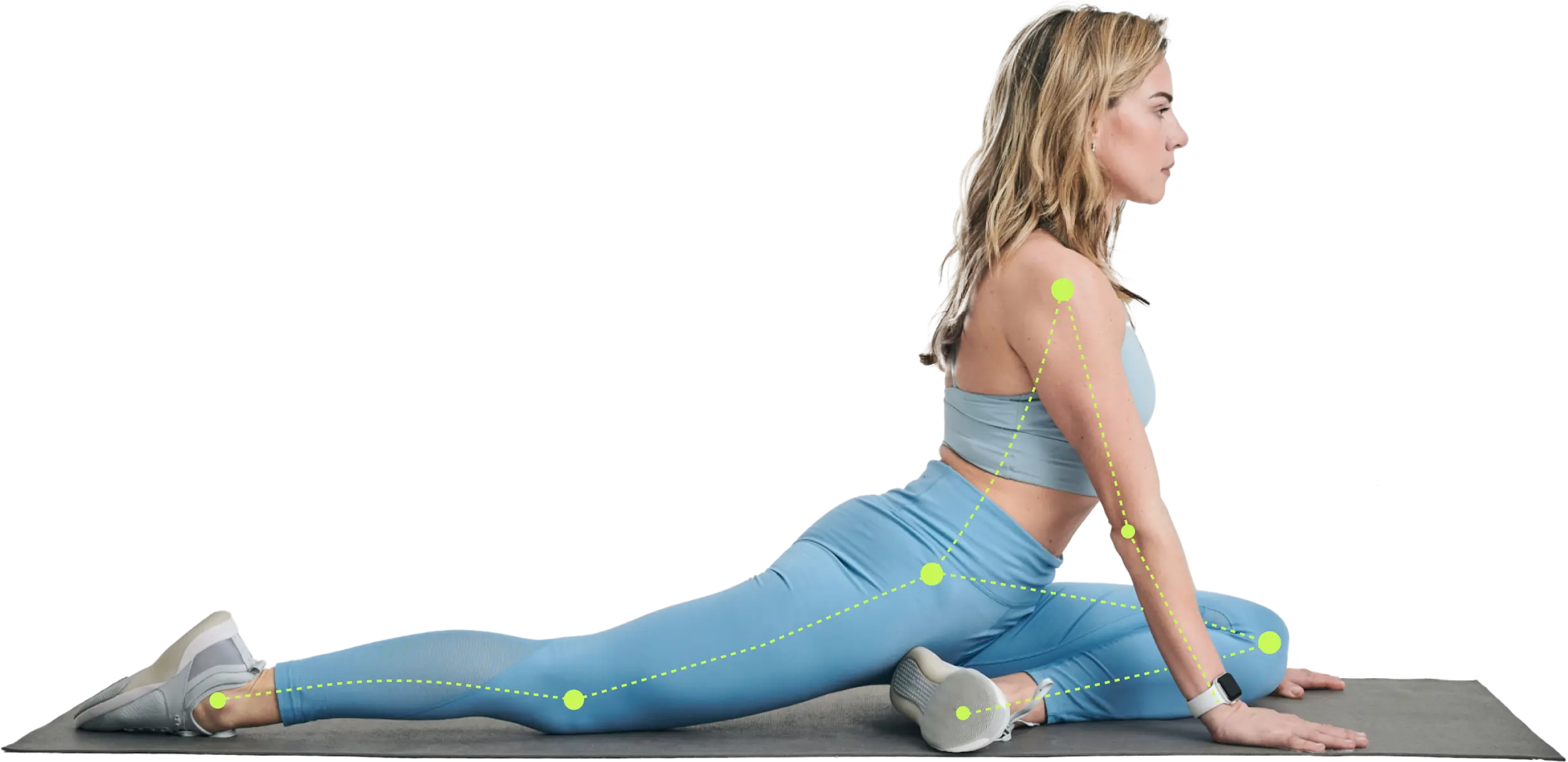
Discover the 10 best cable machine exercises for muscle growth and fat loss. Our expert guide includes step-by-step instructions for a killer workout.

Step into any modern gym, and you'll see it: a towering structure of pulleys, cables, and weight stacks that often gets overlooked in favor of dumbbell racks and cardio equipment. This is the cable machine, and it's arguably one of the most versatile, effective, and underutilized tools for building a strong, functional physique. Its primary advantage over free weights is its ability to provide constant tension throughout an entire movement. This sustained resistance challenges your muscles through their full range of motion, creating superior metabolic stress and a powerful stimulus for growth.
Unlike fixed-path machines that lock you into a single plane of movement, the best cable machine exercises mimic the way your body moves in the real world. This functional training approach enhances coordination, strengthens stabilizer muscles, and builds practical strength that translates beyond the gym walls. Whether you're pushing a heavy cart, lifting a child, or rotating to swing a bat, cables prepare your body for the dynamic demands of daily life. The adjustable nature of the pulleys and weights also offers unparalleled safety and customizability, reducing joint strain and making it an ideal choice for everyone from beginners to seasoned athletes managing past injuries. A clean station is also crucial for a safe workout; understanding the proper use of gym equipment wipes ensures you can train in a hygienic environment.
This guide will serve as your definitive resource, breaking down the 10 most impactful cable machine exercises you can perform. We will provide step-by-step instructions, highlight common mistakes, and offer progressions for every fitness level. These are the same foundational movements that the Zing Coach AI uses to build personalized, adaptive training plans, ensuring you perform each repetition with perfect form to maximize your results and build a truly resilient physique.
1. Cable Machine Chest Fly
The Cable Machine Chest Fly is a premier isolation exercise for sculpting the pectoral muscles. Unlike its free-weight counterpart, the dumbbell fly, this movement provides consistent tension throughout the entire range of motion. This mechanical advantage ensures your chest muscles are working hard from the moment you start the pull until your hands meet, making it an incredibly effective tool for hypertrophy and muscular endurance.
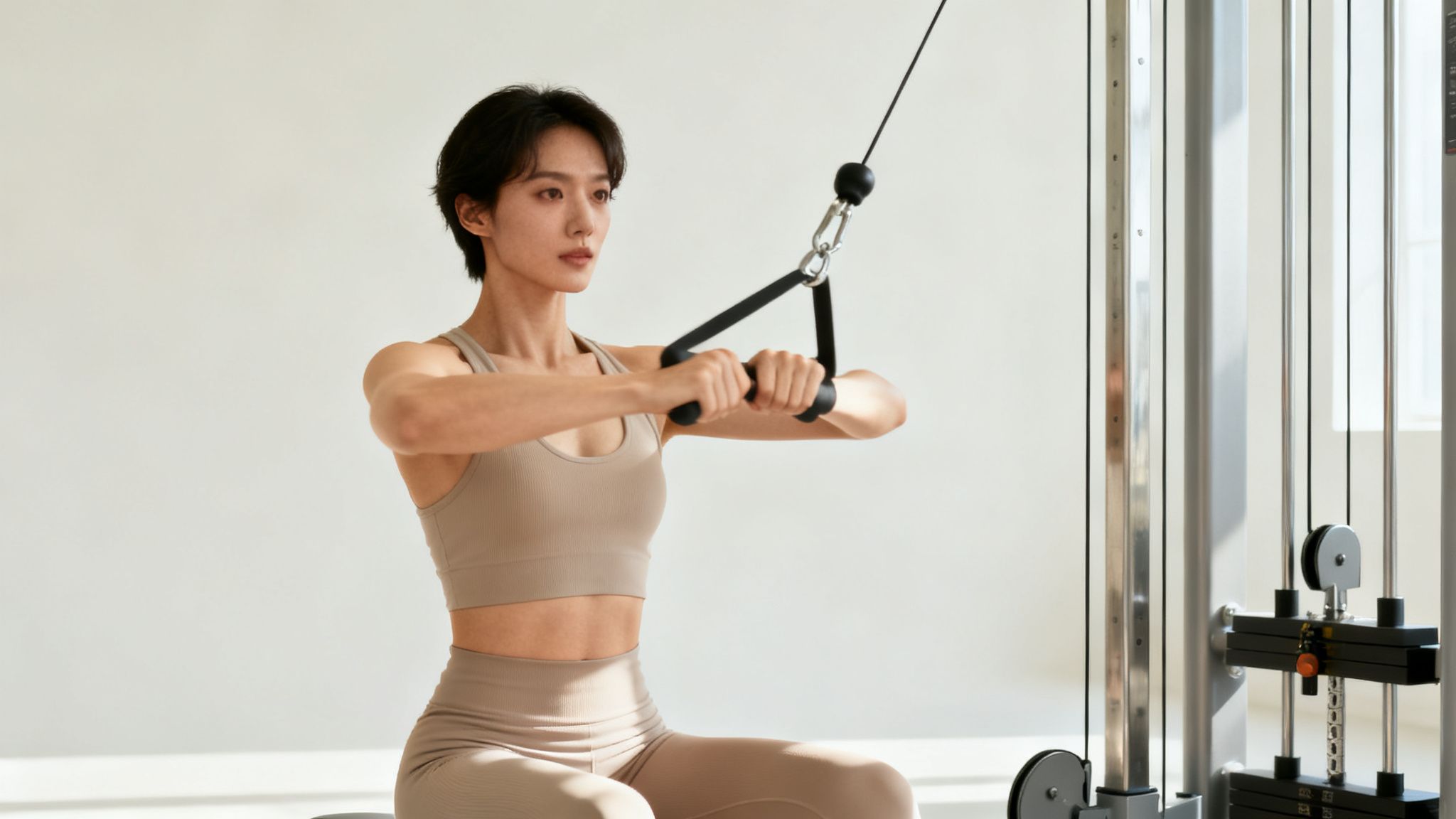
This exercise is a staple for a reason; its versatility allows it to be programmed for various goals. For instance, bodybuilders often use cable flys to enhance chest definition and separation before competitions, while physical therapists may prescribe them for rotator cuff rehabilitation due to the controlled and stable movement pattern.
How to Perform the Cable Chest Fly
- Setup: Position two pulleys at chest height (or slightly below). Attach a D-handle to each cable and select a light, manageable weight to start.
- Stance: Stand in the center of the cable machine. Take a staggered stance for stability by placing one foot slightly in front of the other.
- Starting Position: Grab a handle in each hand with your palms facing forward. Step forward to create tension, extend your arms out to your sides with a slight, soft bend in your elbows, and puff your chest out.
- Execution: Maintaining the slight elbow bend, bring the handles together in a wide, hugging arc in front of your chest. Squeeze your pectoral muscles intensely at the point of peak contraction.
- Return: Slowly and with control, reverse the motion, allowing your arms to open back up to the starting position. Feel the stretch across your chest before beginning the next repetition.
Pro-Tips for Maximum Efficacy
- Protect Your Joints: Lock in a slight bend in your elbows and maintain it throughout the entire set. Straightening your arms can place undue stress on the elbow joint.
- Mind-Muscle Connection: Focus on squeezing your chest muscles to initiate the movement, not just pulling with your arms or shoulders. The slow, controlled eccentric (return) phase is crucial for maximizing muscle activation.
- Stagger for Stability: A staggered stance provides a much more stable base than standing with your feet parallel, preventing you from using momentum.
- Track Your Form: Use an app like Zing Coach to get real-time feedback on your arm angle and range of motion, ensuring every rep is both safe and effective. This data-driven approach is perfect for optimizing one of the best cable machine exercises for chest development.
2. Cable Machine Lat Pulldown
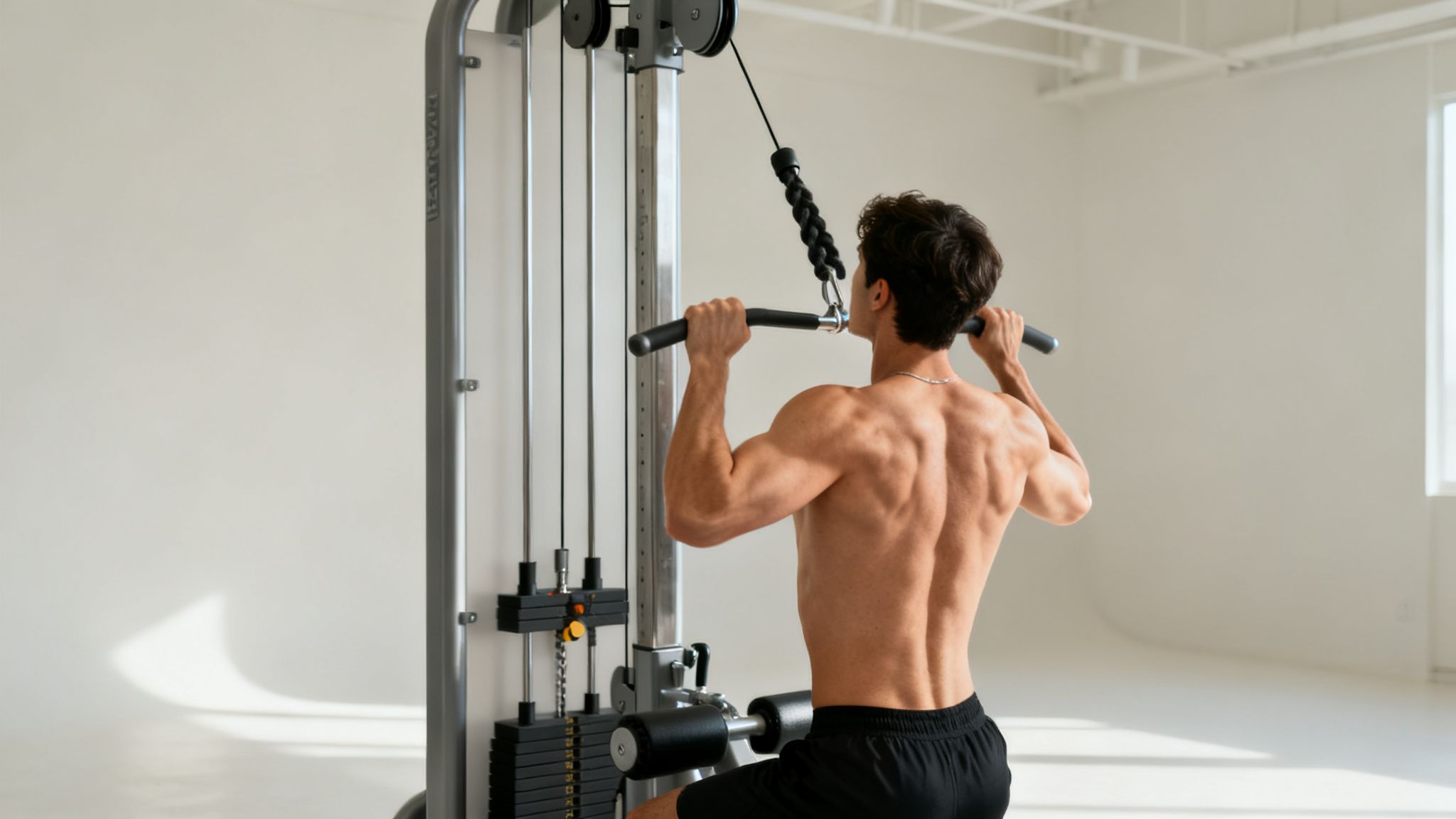
The Cable Machine Lat Pulldown is a cornerstone compound exercise for building a strong and wide back. As a fantastic alternative to the bodyweight pull-up, it allows users to precisely control the resistance, making it accessible for all fitness levels. This movement provides constant tension on the latissimus dorsi throughout both the pulling and returning phases, making it highly effective for developing back strength and muscular hypertrophy.
This exercise is a staple in almost every strength program for good reason. Personal trainers frequently use it as the primary back-builder for clients who are working towards their first pull-up. Similarly, competitive swimmers and rock climbers integrate lat pulldowns to build the functional pulling strength crucial for their sports.
How to Perform the Cable Lat Pulldown
- Setup: Attach a long bar (lat pulldown bar) to the high pulley. Adjust the knee pad so it securely locks your thighs in place when you sit down.
- Stance: Sit on the seat, placing your feet flat on the floor and your thighs firmly under the pads.
- Starting Position: Grasp the bar with a wide, overhand grip (palms facing away from you), slightly wider than your shoulders. Lean back slightly (about 15-20 degrees), puff your chest out, and create a small arch in your lower back.
- Execution: Initiate the movement by depressing your shoulder blades (pulling them down and back). Pull the bar down towards your upper chest, leading with your elbows. Squeeze your back muscles intensely as the bar reaches its lowest point.
- Return: Slowly and with control, allow the bar to return to the starting position, letting your lats stretch fully before starting the next rep.
Pro-Tips for Maximum Efficacy
- Lead with Your Back: Focus on pulling your shoulder blades down and back to start the movement. Avoid initiating the pull with your biceps; think of your hands as simple hooks.
- Control the Eccentric: The return phase is just as important as the pull. Control the weight for a 2-3 second count on the way up to maximize time under tension and muscle growth.
- Vary Your Grip: Experiment with different grip widths. A wider grip tends to target the outer lats for more width, while a closer or underhand grip can emphasize the lower lats and biceps.
- Visualize Your Muscles: Use an app like Zing Coach to see a body map of the activated muscles. This real-time feedback enhances your mind-muscle connection, making this one of the most effective cable machine exercises for back development.
3. Cable Machine Woodchop (Rotational Core)
The Cable Machine Woodchop is a powerhouse functional exercise that targets the core through a dynamic, rotational movement pattern. Unlike static core exercises like planks, the woodchop builds rotational strength and anti-rotation stability simultaneously. This diagonal, chopping motion directly translates to real-world activities and athletic movements, enhancing your ability to generate power from your core while protecting your spine.
This exercise is a cornerstone in many advanced training programs. For example, golfers and baseball players use woodchops to build explosive power in their swings, while physical therapists often prescribe them to improve core stability for clients recovering from spinal injuries. Its focus on controlled rotation makes it one of the most effective cable machine exercises for a strong, resilient midsection.
How to Perform the Cable Woodchop
- Setup: Adjust a single pulley to the highest position on the cable machine and attach a D-handle. Select a light weight to master the form first.
- Stance: Stand sideways to the machine with your feet shoulder-width apart for a stable base. The cable should be to one side of your body.
- Starting Position: Grab the D-handle with both hands, interlocking your fingers. Extend your arms fully and rotate your torso to face the anchor point, keeping your arms straight. There should be tension on the cable.
- Execution: Bracing your core, pull the handle down and across your body in a smooth, diagonal arc towards your opposite knee. Allow your torso and hips to rotate naturally with the movement, pivoting on your back foot.
- Return: Slowly and with control, reverse the motion, resisting the cable's pull as you return the handle to the high starting position. Complete all reps on one side before switching.
Pro-Tips for Maximum Efficacy
- Lead with Your Core: Initiate the movement from your obliques and torso, not by yanking with your arms. Your arms should act as levers guided by your core's rotation.
- Rotate, Don't Bend: The rotation should primarily come from your mid-spine (thoracic region). Avoid bending at the lower back, which can increase the risk of injury.
- Control the Eccentric: The return phase is just as important as the pull. Resisting the weight as you return to the start builds crucial anti-rotational strength.
- Track Your Stability: Use the Zing Coach app to monitor your posture and rotational speed. Its feedback can help you maintain a braced core and ensure the movement is controlled, preventing momentum from taking over.
4. Cable Machine Tricep Pushdown (Rope Attachment)
The Cable Machine Tricep Pushdown is a cornerstone isolation exercise for building well-defined triceps. Using a rope attachment provides a significant advantage over straight or V-bars; it allows for a more natural wrist position and a greater range of motion at the bottom of the movement. This constant tension from the cable, combined with the rope's flexibility, targets all three heads of the tricep for comprehensive development.
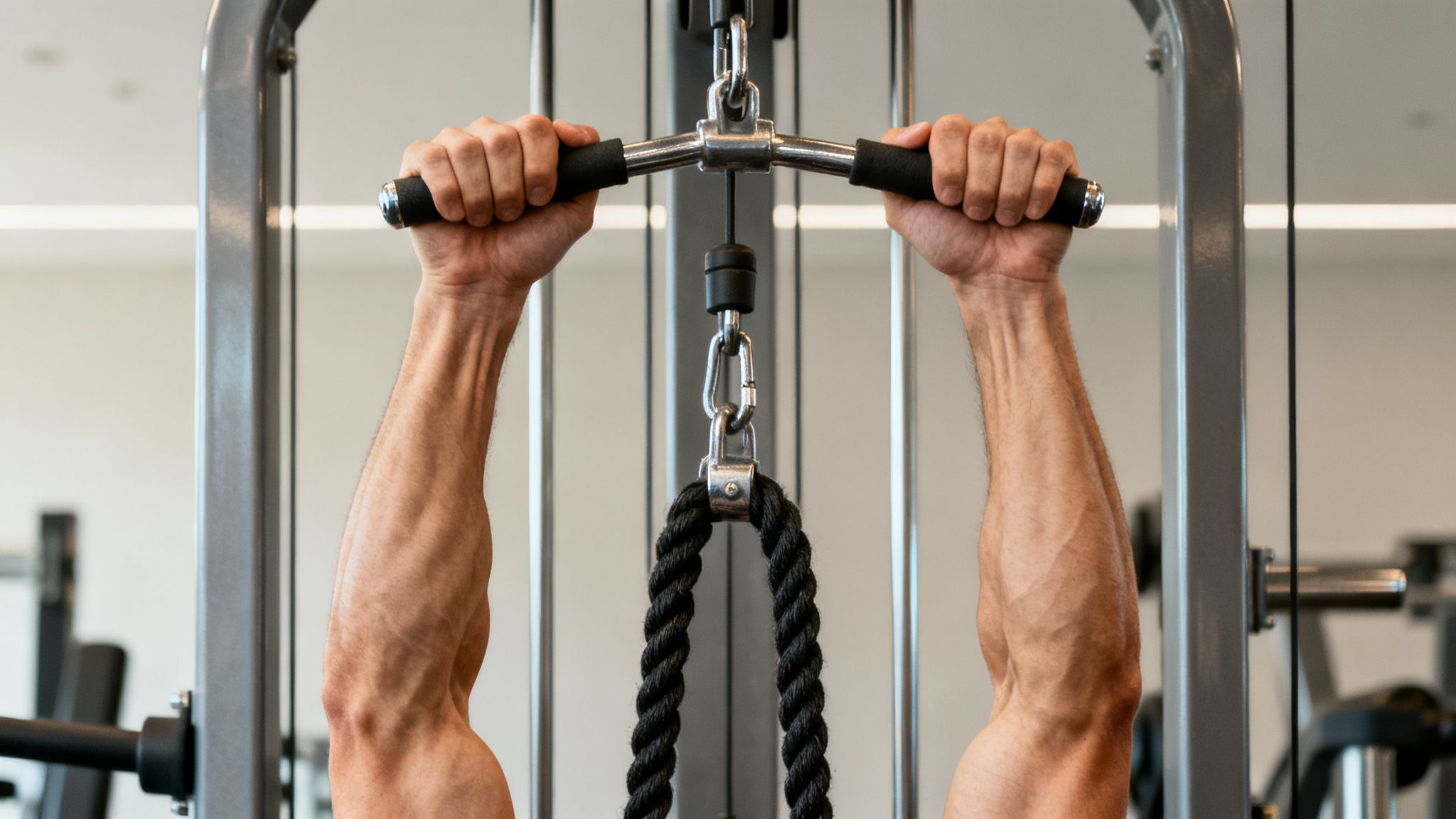
This exercise is a staple in both bodybuilding and functional fitness circles. Bodybuilders use it to carve out the classic "horseshoe" shape in their triceps, while physical therapists often recommend it for elbow joint rehabilitation due to the controlled and isolated movement pattern. Its versatility makes it a perfect finisher on an upper body day or a primary movement in an arm-focused workout.
How to Perform the Cable Tricep Pushdown
- Setup: Attach a rope to a high pulley on the cable machine. Select a moderate weight that allows you to maintain strict form.
- Stance: Stand facing the machine with your feet shoulder-width apart. Hinge slightly at your hips and keep a soft bend in your knees for stability.
- Starting Position: Grasp the rope with a neutral grip (palms facing each other). Pull it down until your elbows are bent at a 90-degree angle and tucked firmly into your sides.
- Execution: Keeping your upper arms stationary, push the rope down by extending your elbows until your arms are fully straight. At the bottom, separate the rope ends slightly to maximize the tricep contraction.
- Return: Slowly and with control, allow the rope to return to the 90-degree starting position. Feel the stretch in your triceps before initiating the next rep.
Pro-Tips for Maximum Efficacy
- Lock Your Elbows: Pin your elbows to your sides and do not let them drift forward. The movement should only come from the elbow joint, isolating the triceps.
- Mind-Muscle Connection: Focus on squeezing your triceps to move the weight, not using momentum from your body. The slow, controlled return (eccentric phase) is just as important as the pushdown.
- Separate and Squeeze: Spreading the rope handles apart at the bottom of the movement increases the peak contraction and engages more muscle fibers for better results.
- Track Your Form: Utilize a fitness tracker or app to monitor your elbow position and rep tempo. Ensuring your upper arms remain stable is key to making this one of the most effective cable machine exercises for your arms.
5. Cable Machine Row (Single Arm)
The Single-Arm Cable Row is a powerful unilateral exercise that builds a strong, symmetrical back while intensely challenging core stability. Unlike bilateral rows, this variation forces your core muscles to fire isometrically to prevent your torso from rotating. This anti-rotation demand makes it a superior choice for developing functional strength, correcting muscular imbalances between the left and right sides of your body, and enhancing overall spinal stability.
This exercise is a favorite among strength coaches for diagnosing and correcting postural asymmetries in athletes. It’s also frequently used in rehabilitation settings to improve core control and rebuild unilateral strength safely. The constant tension and independent arm movement make it one of the most effective cable machine exercises for balanced back development.
How to Perform the Cable Machine Row (Single Arm)
- Setup: Position a single pulley at a low-to-mid height and attach a D-handle. Sit on a bench or the floor facing the machine, placing your feet securely against the footpads.
- Stance: If seated on a bench, plant your feet firmly. If on the floor, you can brace one foot against the machine for added stability.
- Starting Position: Grab the handle with one hand using a neutral (palm facing in) grip. Extend your arm fully, allowing for a good stretch in your lat, while keeping your torso upright and your core engaged.
- Execution: Initiate the pull by retracting your shoulder blade first. Then, drive your elbow back and pull the handle toward your hip, squeezing your back muscles hard at the peak of the contraction. Keep your torso rigid and avoid any rotation.
- Return: Slowly and with control, extend your arm back to the starting position, allowing your shoulder blade to protract forward for a full stretch. Complete all reps on one side before switching.
Pro-Tips for Maximum Efficacy
- Torso Lock: Brace your core as if you're about to take a punch. Your torso should remain perfectly still and upright throughout the entire set, with no twisting or leaning.
- Pull to the Hip: For maximum latissimus dorsi activation, focus on pulling the handle toward your hip pocket rather than straight back or up toward your chest.
- Lead with the Scapula: Think of the movement in two parts: first, pull your shoulder blade back, and second, pull with your arm. This sequence ensures your back is doing the work.
- Control the Eccentric: The return phase is just as important as the pull. A slow, 2-3 second negative maximizes time under tension and muscle growth.
6. Cable Machine Bicep Curl
The Cable Machine Bicep Curl is a fundamental isolation exercise renowned for its ability to build peaked, well-defined biceps. Unlike traditional dumbbell or barbell curls, the cable provides constant, unwavering tension on the biceps throughout the entire lift. This eliminates the "rest spot" at the top and bottom of the movement, forcing the muscle to work harder from full extension to peak contraction, which is a powerful stimulus for muscle growth.
This exercise is a mainstay in arm-focused routines for good reason. Bodybuilders often use it as a "finisher" to pump the biceps full of blood after heavier compound movements, while rehabilitation specialists may use it for controlled elbow strengthening post-injury. Its continuous tension makes it one of the most effective cable machine exercises for pure hypertrophy.
How to Perform the Cable Bicep Curl
- Setup: Position a pulley at the lowest setting on the cable machine. Attach a straight bar, EZ bar, or D-handle to the cable and select a moderate weight.
- Stance: Stand facing the machine with your feet shoulder-width apart, maintaining a slight bend in your knees for stability.
- Starting Position: Grasp the handle with an underhand grip (palms facing up). Stand tall with your chest up and shoulders back, keeping your arms fully extended and elbows tucked into your sides.
- Execution: Keeping your upper arms stationary, exhale and curl the handle upward toward your shoulders. Focus on squeezing your biceps, pausing for a second at the top of the movement for maximum contraction.
- Return: Inhale and slowly lower the handle back to the starting position with control. Resist the weight on the way down, taking 2-3 seconds for this eccentric phase.
Pro-Tips for Maximum Efficacy
- Pin Your Elbows: Lock your upper arms to your sides. The only movement should come from the elbow joint. If your elbows drift forward, you are engaging your shoulders.
- Eliminate Momentum: Avoid leaning back or using your body to swing the weight up. This is a common mistake that reduces tension on the biceps and increases the risk of lower back strain.
- Control the Negative: The eccentric (lowering) phase is just as important as the lift. A slow, controlled return maximizes muscle fiber recruitment and stimulates more growth.
- Track Your Execution: Utilize an app like Zing Coach to monitor your lifting tempo and ensure you maintain a strict form. The app can provide cues to slow down the eccentric phase, guaranteeing you get the most out of every single rep.
7. Cable Machine Shoulder Press (Standing)
The Standing Cable Machine Shoulder Press is a fantastic compound exercise for building strong, well-rounded deltoids. Unlike free-weight presses that have a fixed resistance curve, the cable provides constant tension throughout the entire pressing motion. This continuous load enhances muscle activation and is particularly effective for developing overhead strength and stability, crucial for both athletic performance and everyday functional movements.
This exercise is highly valued in functional fitness and rehabilitation circles. Overhead athletes like swimmers and baseball pitchers use it to build shoulder stability, while physical therapists often prescribe it for controlled rotator cuff and shoulder joint recovery. The standing variation adds a significant core stability challenge, making it a more comprehensive and metabolically demanding movement than its seated counterparts.
How to Perform the Standing Cable Shoulder Press
- Setup: Position a pulley at its lowest setting and attach a D-handle. Select a conservative weight to begin, as this movement requires significant stabilization.
- Stance: Stand sideways to the machine, grabbing the handle with the hand farthest from the pulley. A staggered or split stance will provide the most stability.
- Starting Position: Bring the handle up to your shoulder, with your palm facing forward or neutral. Brace your core, keep your chest up, and ensure your elbow is slightly in front of your body, not flared out to the side.
- Execution: Exhale and press the handle straight overhead until your arm is fully extended but not locked. Avoid leaning back; your core should remain tight to keep your torso upright.
- Return: Slowly and with control, lower the handle back to the starting shoulder position. Complete all repetitions on one side before switching to the other.
Pro-Tips for Maximum Efficacy
- Build a Stable Foundation: Stand tall and actively brace your core and glutes. Imagine pressing from a solid, unmoving base to isolate the work in your shoulder and triceps.
- Protect Your Shoulders: Keep your elbow slightly in front of your body rather than directly under your wrist or flared out. This "scapular plane" is a safer, more natural path for the shoulder joint.
- Control the Eccentric: The lowering phase is just as important as the press. Take 2-3 seconds to bring the weight down, maximizing time under tension for the deltoid muscles.
- Correct Imbalances: The unilateral nature of this exercise makes it one of the best cable machine exercises for identifying and correcting strength imbalances between your left and right shoulders. Pay close attention to any differences in form or strength.
8. Cable Machine Face Pull
The Cable Machine Face Pull is a crucial exercise for building a strong, healthy upper back and resilient shoulders. It directly targets the often-neglected rear deltoids, rhomboids, and external rotator cuff muscles. Unlike many pressing movements that can contribute to rounded shoulders, the face pull actively corrects postural imbalances, making it a non-negotiable addition for both athletes and desk workers seeking to improve shoulder health and stability.
This movement has been widely popularized by physical therapists and strength coaches for its immense benefits in injury prevention. Physical therapists often prescribe it for rotator cuff rehabilitation, while elite strength coaches incorporate it into nearly every athlete's program to build the structural integrity needed to support heavy lifts and dynamic movements. Its ability to counteract the forward-slump posture from prolonged sitting makes it one of the most effective cable machine exercises for overall upper-body wellness.
How to Perform the Cable Face Pull
- Setup: Adjust a pulley to slightly above head height and attach a rope handle. Select a very light weight; form is paramount here.
- Stance: Stand facing the machine and take a step or two back to create tension on the cable. A staggered or shoulder-width stance will provide stability.
- Starting Position: Grasp the ends of the rope with an overhand grip, palms facing down. Extend your arms straight in front of you, ensuring your shoulders are relaxed and not shrugged.
- Execution: Initiate the movement by pulling the rope directly towards your face. As you pull, focus on driving your elbows high and out to the sides. The goal is to bring your hands to either side of your head, as if making a "double bicep" pose.
- Return: At the peak of the contraction, squeeze your shoulder blades together. Then, slowly and with full control, reverse the motion back to the starting position, resisting the pull of the weight stack.
Pro-Tips for Maximum Efficacy
- Lead with the Elbows: Focus on driving your elbows back and high. Your hands are just along for the ride. This ensures the rear deltoids and upper back muscles are doing the work.
- Prioritize Form Over Weight: This is not an ego lift. Using a lighter weight for higher repetitions (12-15+) allows for perfect form and a strong mind-muscle connection, which is crucial for activating the target muscles.
- Control the Eccentric: The return phase is just as important as the pull. A slow, controlled 2-3 second negative will maximize muscle engagement and enhance shoulder stability.
- Track Your Movement: For an exercise where precision is key, using the Zing Coach app can help monitor your tempo and range of motion. This ensures you're performing the movement correctly for optimal shoulder health and postural correction.
9. Cable Machine Pallof Press (Anti-Rotation Core)
The Cable Machine Pallof Press is a foundational core stability exercise that trains your body to resist rotational forces. Unlike crunches or sit-ups that focus on spinal flexion, this movement is an "anti-rotation" exercise, which builds a strong, stable core that protects your spine and enhances power transfer in athletic movements. The constant, sideways-pulling tension from the cable forces your obliques, transverse abdominis, and lower back to work isometrically to keep your torso rigid and unmoving.
Popularized by physical therapist John Pallof, this exercise is a staple in both high-performance and rehabilitation settings. Strength coaches program it for athletes to improve rotational power and prevent injury, while physical therapists use it to rebuild core integrity safely after a back injury. It's a truly functional movement that translates directly to maintaining stability in everyday life, from carrying groceries to playing sports.
How to Perform the Cable Pallof Press
- Setup: Position a single pulley at chest height on the cable machine and attach a D-handle. Select a light weight; the goal is to resist rotation, not to move a heavy load.
- Stance: Stand perpendicular to the machine, with your feet shoulder-width apart for a stable base. Your side, not your chest, should be facing the weight stack.
- Starting Position: Grab the D-handle with both hands, interlacing your fingers or cupping one hand over the other. Bring the handle to the center of your chest and take a step away from the machine to create tension.
- Execution: Brace your core as if you're about to be punched in the stomach. Slowly press the handle straight out in front of your chest until your arms are fully extended. The cable will try to pull you back and rotate your torso; your job is to resist this pull.
- Return: Hold the fully extended position for a 2-3 second count, then slowly and with control, bring the handle back to your chest. Complete all reps on one side before switching to the other.
Pro-Tips for Maximum Efficacy
- Fight the Rotation: The primary goal is to keep your hips and shoulders perfectly square and facing forward. Do not let the weight twist your torso toward the machine.
- Control the Pace: This is not a power-based exercise. Perform each repetition slowly and deliberately, focusing on keeping your core engaged throughout the entire movement.
- Breathe and Brace: Exhale as you press the handle away from your body and inhale as you return. Maintain a tight core brace throughout your entire set.
- Track Your Stability: Use an app like Zing Coach to monitor your posture and ensure balanced volume on both sides. The app can help you progress the hold time or resistance, making it one of the most effective cable machine exercises for building a truly functional and resilient core.
10. Cable Machine Lateral Raise (Shoulder Abduction)
The Cable Machine Lateral Raise is a superior isolation exercise for developing the medial (side) deltoids, the muscles responsible for creating shoulder width and a coveted V-taper physique. Unlike dumbbell lateral raises, which lose tension at the bottom of the movement, the cable provides consistent resistance throughout the entire range of motion. This constant tension ensures maximum stimulus on the target muscle, leading to more effective hypertrophy and strength gains.
This exercise is a cornerstone for anyone serious about shoulder development. Physique competitors rely on it to sculpt round, capped delts, and it's a key component in shoulder specialization programs. Additionally, its controlled nature makes it a valuable tool in rehabilitation settings for rebuilding shoulder strength and stability post-injury.
How to Perform the Cable Lateral Raise
- Setup: Position a pulley at the lowest setting on the cable machine and attach a D-handle. Select a light weight; form is paramount with this movement.
- Stance: Stand sideways to the machine, about an arm's length away. For stability, you can hold onto the machine with your non-working hand.
- Starting Position: Grab the handle with the hand farthest from the machine (e.g., if the machine is on your left, use your right hand). The cable should cross in front of your body. Stand tall with your chest up and shoulders back.
- Execution: Keeping a slight bend in your elbow, raise your arm out to the side in a wide arc until it is parallel to the floor (shoulder height). Focus on leading with your elbow to engage the side deltoid.
- Return: Slowly and with control, lower the handle back to the starting position, resisting the pull of the cable. Complete all reps on one side before switching to the other.
Pro-Tips for Maximum Efficacy
- Lead with the Elbow: To ensure the medial deltoid is doing the work, think about lifting your elbow to the ceiling, not just your hand. Your hand should never be higher than your elbow.
- Control the Eccentric: The lowering phase is crucial. A slow, controlled 2-3 second negative will significantly increase muscle activation and growth.
- No Shrugging: Avoid engaging your upper traps by keeping your shoulders down and away from your ears throughout the entire set. If you find yourself shrugging, the weight is too heavy.
- Track Your Performance: Precision is key for isolation movements. Using an app like Zing Coach can help you monitor your lifting tempo and ensure you’re not using momentum, making it one of the most effective cable machine exercises for building impressive shoulders.
Cable Machine Exercises — 10-Item Comparison
| Exercise | Implementation complexity | Resource requirements | Expected outcomes | Ideal use cases | Key advantages |
|---|---|---|---|---|---|
| Cable Machine Chest Fly | Moderate — requires elbow bend and scapular control | Cable machine, dual handles, adjustable pulley height | Chest isolation, hypertrophy, improved stretch | Bodybuilding, rehab, beginners learning chest activation | Constant tension; adjustable angle; joint-friendly |
| Cable Machine Lat Pulldown | Low–Moderate — focus on scapular depression/retraction | Cable machine with long bar, adjustable knee pad | Back width, lat strength, pull-up progression | Beginners, back development, rehab, athletes | Accessible progression to pull-ups; variable grips; easy load changes |
| Cable Machine Woodchop (Rotational Core) | Moderate–High — needs thoracic rotation and core bracing | Single handle, adjustable pulley height, space to stand | Rotational power, anti-rotation strength, spinal stability | Rotational athletes (golf, baseball), functional training, rehab | Functional transfer to sport; scalable; engages multiple muscles |
| Cable Machine Tricep Pushdown (Rope Attachment) | Low — simple elbow-driven movement | Cable machine, rope attachment | Triceps isolation, arm definition, elbow-friendly strength | Bodybuilding, rehab, beginners | Natural hand position; low shoulder stress; strong mind–muscle link |
| Cable Machine Row (Single Arm) | Moderate — unilateral control and core anti-rotation | Single handle, bench/seat, adjustable pulley | Unilateral back strength, posture correction, core stability | Correcting imbalances, rehab, functional strength training | Identifies asymmetries; high core demand; improved mind–muscle control |
| Cable Machine Bicep Curl | Low — straightforward elbow flexion with tension | Cable machine, curl/bar/handle attachments | Biceps hypertrophy, continuous tension, joint-friendly curls | Arm specialization, rehab, beginners | Constant tension; multiple grip options; easy progression |
| Cable Machine Shoulder Press (Standing) | Moderate — overhead mechanics and core stability needed | Cable machine, single/bilateral handles, adjustable height | Overhead deltoid strength, core stabilization | Functional overhead training, rehab, athletes | Increased core demand vs seated; safer shoulder loading |
| Cable Machine Face Pull | Low — technique focused on high elbows and scapular retraction | Cable machine, rope attachment at face height | Rear delts, rotator cuff strength, postural correction | Shoulder health, rehab, desk-worker posture programs | Excellent shoulder health exercise; minimal lumbar stress |
| Cable Machine Pallof Press (Anti-Rotation Core) | Low–Moderate — bracing technique critical | Cable machine, single handle, side positioning | Anti-rotation core stability, transferable bracing | Core stability programs, rehab, athletic conditioning | Highly functional core training; minimal equipment; scalable |
| Cable Machine Lateral Raise (Shoulder Abduction) | Low–Moderate — control to avoid momentum | Cable machine, single handle, adjustable height | Lateral deltoid development, shoulder width | Physique training, shoulder specialization, rehab | Constant tension through ROM; unilateral correction; low joint stress |
Putting It All Together: Your Personalized Cable Machine Workout Plan
You've just explored a comprehensive toolkit of the top 10 cable machine exercises, each offering a unique pathway to building strength, enhancing stability, and sculpting your physique. We've dissected everything from the chest fly to the face pull, providing the technical cues and programming insights needed for safe and effective execution. The common thread woven through every movement is the cable machine's unparalleled advantage: constant, smooth tension that keeps your muscles engaged through the entire range of motion, a feature that free weights simply cannot replicate.
This consistent resistance not only maximizes muscle stimulation but also provides a more joint-friendly alternative, making these exercises a cornerstone for beginners, seasoned lifters, and individuals navigating physical limitations. By mastering these movements, you’re not just lifting weights; you're building functional strength that translates directly into everyday activities, from lifting groceries to improving your posture.
Sample Cable Machine Workout Templates
To help you transition from knowledge to action, here are three sample workout templates designed for different fitness levels and schedules. These are starting points, so listen to your body and adjust the weights to ensure you are challenged while maintaining perfect form.
Template 1: Beginner Full-Body Foundation (3 Days/Week)
This routine provides a balanced, total-body workout perfect for building a solid strength base. Perform this workout on non-consecutive days (e.g., Monday, Wednesday, Friday) to allow for adequate recovery.
- Cable Machine Lat Pulldown: 3 sets of 10-12 reps
- Cable Machine Chest Fly: 3 sets of 10-12 reps
- Cable Machine Pallof Press: 3 sets of 10-12 reps per side
- Cable Machine Tricep Pushdown: 3 sets of 12-15 reps
- Cable Machine Face Pull: 3 sets of 15-20 reps
Template 2: Intermediate Upper/Lower Split (4 Days/Week)
This split allows for greater volume and focus on specific muscle groups. Here is an example of an Upper Body day built exclusively from our list of cable machine exercises.
- Upper Body Day (Example: Monday/Thursday)
- Cable Machine Row (Single Arm): 3 sets of 8-10 reps per arm
- Cable Machine Shoulder Press: 3 sets of 8-10 reps
- Cable Machine Chest Fly: 3 sets of 10-12 reps
- Cable Machine Lateral Raise: 3 sets of 12-15 reps
- Cable Machine Bicep Curl: 3 sets of 10-12 reps
- Cable Machine Tricep Pushdown: 3 sets of 10-12 reps
Template 3: Advanced Push/Pull Split
For the experienced lifter, a Push/Pull split isolates opposing muscle groups for maximum intensity and recovery.
Push Day (Chest, Shoulders, Triceps)
- Cable Machine Shoulder Press: 4 sets of 6-8 reps
- Cable Machine Chest Fly (High-to-Low): 3 sets of 10-12 reps
- Cable Machine Lateral Raise: 4 sets of 12-15 reps
- Cable Machine Tricep Pushdown: 4 sets of 8-10 reps
Pull Day (Back, Biceps, Rear Delts)
- Cable Machine Lat Pulldown: 4 sets of 6-8 reps
- Cable Machine Row (Single Arm): 4 sets of 8-10 reps per arm
- Cable Machine Face Pull: 3 sets of 15-20 reps
- Cable Machine Bicep Curl: 4 sets of 8-10 reps
The Ultimate Advantage: True Personalization
While these templates offer a powerful framework, the key to unlocking your true potential lies in a program built specifically for you. This is where generic plans fall short. Your unique goals, current fitness level, available equipment, and even daily energy levels dictate what the "perfect" workout looks like on any given day.
True optimization requires a dynamic, intelligent approach. If you're seeking more structured guidance or a social aspect to your fitness journey, exploring options like personal training small groups can provide excellent support in developing your personalized plan. However, for a solution that adapts to you in real-time, technology offers an even more powerful alternative.
This is precisely why Zing Coach was created. The AI-powered app goes beyond templates to become your personal digital trainer. It assesses your data to design a fully bespoke cable machine program, then uses your phone’s camera to provide real-time form correction, ensuring every rep is safe and effective. As you get stronger, the AI automatically adjusts your workouts, eliminating guesswork and guaranteeing continuous progress. Stop following generic plans and start building the body you want with a program that understands you.
Ready to transform your workouts with a plan that’s as unique as you are? Download Zing Coach to get an AI-generated training program that intelligently incorporates these cable machine exercises and more. Let our technology guide your form, track your progress, and build the most effective workout plan for your specific goals.
Share this article


Authors