Discover the best exercises for weight loss beginners. This guide covers 8 effective workouts with how-to guides and sample plans to start your journey.
Embarking on a weight loss journey often feels overwhelming, with a flood of complex advice and intimidating routines. The secret to success, however, isn't about adopting extreme measures from day one. It's about building momentum with sustainable, effective movements that you can master and enjoy. This guide is designed to cut through that noise, presenting a clear, curated list of the best exercises for weight loss beginners.
We will provide a detailed blueprint for eight powerful and accessible methods, each selected for its proven results, scalability, and beginner-friendly nature. You won't find generic advice here. Instead, you'll get actionable "how-to" instructions, form tips, and specific workout structures for everything from the foundational simplicity of walking to the metabolic efficiency of High-Intensity Interval Training (HIIT).
This isn't just a list of exercises; it's a comprehensive roadmap. We’ll cover:
- Walking and Incline Walking: Building a solid aerobic base.
- Bodyweight Circuit Training: Gaining strength without equipment.
- Swimming and Water Aerobics: Low-impact, full-body conditioning.
- Cycling: Boosting cardio health indoors or out.
- HIIT: Maximizing calorie burn in minimal time.
- Strength Training: Building muscle to boost your metabolism.
- Yoga and Pilates: Improving flexibility, core strength, and mindfulness.
- Running and Jogging: Progressing your cardiovascular fitness.
Each section includes sample schedules and guidance on integrating tools like the Zing Coach app to perfect your form, track your progress, and stay motivated. This is your starting point for building a strong, healthy foundation for lasting change.
1. Walking and Incline Walking
Walking is often overlooked, yet it stands as one of the most effective and accessible best exercises for weight loss beginners. Its power lies in its simplicity and sustainability. Requiring no special equipment and posing a minimal risk of injury, walking is the ideal starting point for anyone new to fitness or returning after a long break.
It’s a low-impact activity, meaning it’s gentle on your joints, particularly your knees, ankles, and hips. This makes it a safe and comfortable choice for individuals managing joint pain, past injuries, or those who are significantly overweight.
Why Walking Is a Weight Loss Powerhouse
The magic of walking for weight loss comes from its consistency. While a single walk won't transform your body, incorporating it into your daily routine creates a significant cumulative calorie deficit over time. It's an exercise you can do almost anywhere, anytime.
For example, many busy professionals integrate walking into their workday by using a treadmill during calls or taking brisk 15-minute walks during breaks. This approach, sometimes called "exercise snacking," makes fitting in activity seamless and less intimidating than a dedicated one-hour gym session.
Elevate Your Walk: The Power of Incline
To supercharge your results, introduce incline walking. By walking on hills outdoors or increasing the incline on a treadmill, you dramatically increase the exercise's intensity without adding impact.
Key Insight: Walking at an incline can boost your calorie burn by 40-50% compared to walking on a flat surface at the same speed. It also recruits more muscles, including your glutes, hamstrings, and calves, helping to build lower body strength.
How to Get Started
Follow these actionable steps to build a consistent and effective walking routine:
- Start Small: Begin with 20-30 minute walks, 3-4 times per week, at a pace where you can still hold a conversation.
- Gradually Progress: Every two weeks, aim to increase your duration by 5 minutes or your incline/speed by 5-10%. This prevents plateaus and keeps your body challenged.
- Invest in Footwear: Proper walking shoes are your most important tool. They provide crucial support and cushioning, which helps prevent common issues like shin splints and foot pain.
- Track Your Progress: Use a fitness tracker or an app like Zing Coach to monitor your distance, pace, and estimated calorie burn. Seeing your numbers improve is a powerful motivator.
As you build stamina, you'll find walking is a fantastic foundation for a more diverse fitness plan. Understanding how to incorporate it with other activities is key; learning how to balance cardio and strength training will set you up for long-term, sustainable success.
2. Bodyweight Circuit Training
Bodyweight circuit training is a highly efficient workout method and one of the best exercises for weight loss beginners because it merges strength and cardio into one powerful session. This style of training involves performing a series of simple exercises back-to-back with minimal rest, creating a significant metabolic demand that torches calories and builds lean muscle without any equipment.
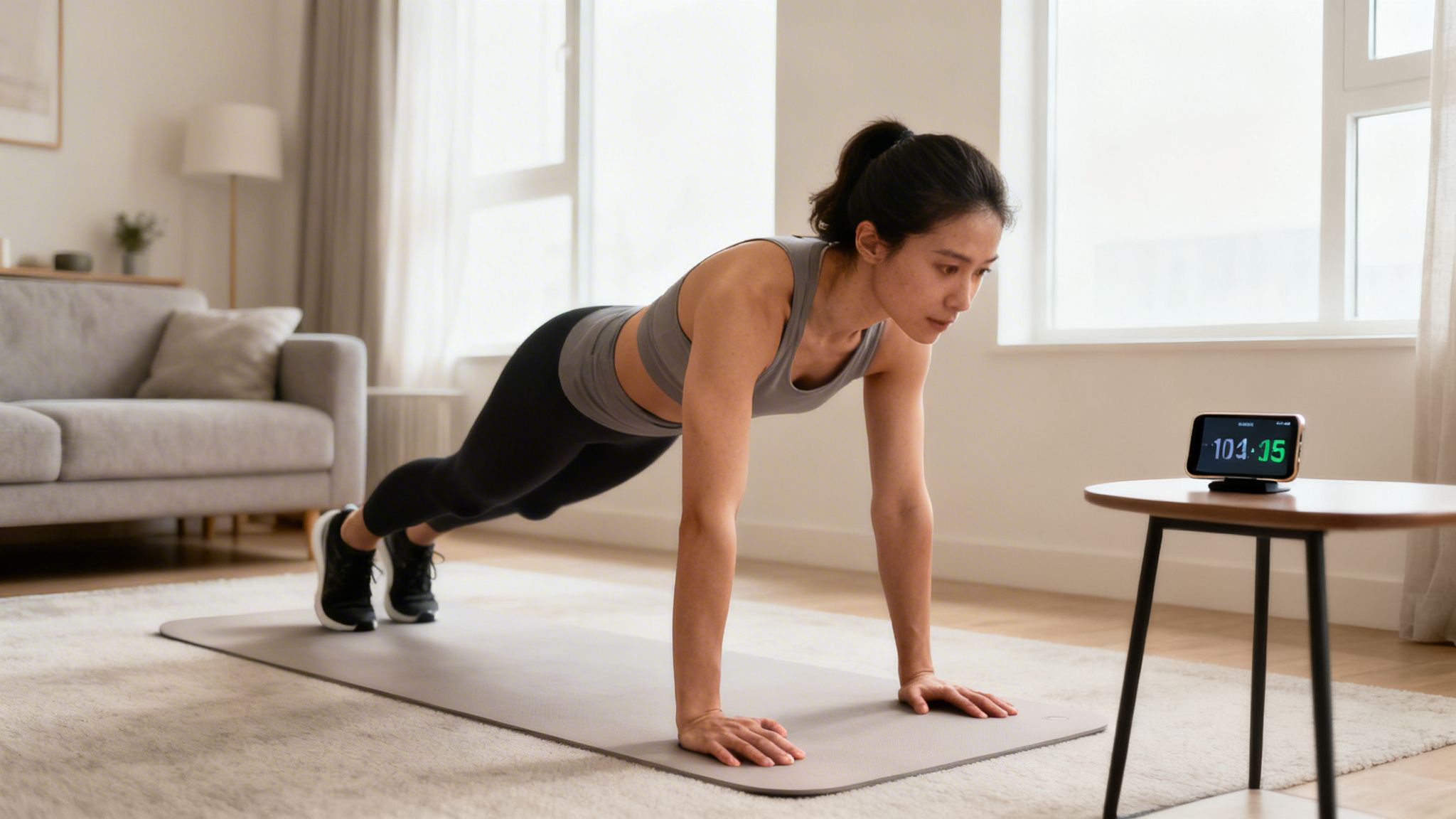
It’s an ideal choice for home workouts, as the intensity is easily adjusted to your fitness level. By alternating between different movements like squats, push-ups, and lunges, you keep your heart rate elevated while allowing specific muscle groups to recover, maximizing workout efficiency.
Why Bodyweight Circuits Are a Weight Loss Powerhouse
The secret to circuit training's success is the combination of muscle-building and cardiovascular conditioning. This dual benefit not only burns calories during the workout but also boosts your metabolism long after you finish, a phenomenon known as Excess Post-exercise Oxygen Consumption (EPOC).
This method has been popularized by high-intensity programs like Insanity and is a staple in military training for its effectiveness in building functional fitness. The short, intense bursts of effort followed by brief rest periods make it a time-efficient way to achieve significant results, making it perfect for busy schedules.
Elevate Your Circuit: Smart Progressions
To maximize results and avoid plateaus, it's crucial to progressively challenge your body. You can easily increase the intensity of your bodyweight circuits without adding a single piece of equipment.
Key Insight: Increasing workout density, which means doing more work in the same amount of time, is a powerful driver of weight loss. You can achieve this by reducing your rest periods by just five seconds or adding one to two more reps to each exercise.
How to Get Started
Follow these actionable steps to build a safe and effective bodyweight circuit routine:
- Start with a Simple Structure: Begin with 2-3 rounds of 5-8 exercises. A great starting point is 40 seconds of work followed by 20 seconds of rest.
- Prioritize Form Over Speed: Quality repetitions are more important than quantity. Focus on maintaining proper technique to prevent injury and ensure you’re working the target muscles effectively.
- Alternate Muscle Groups: Structure your circuit to alternate between upper-body, lower-body, and core exercises. This allows one muscle group to partially recover while you work another.
- Track Your Progress: Use an app like Zing Coach to guide your sessions. Its computer vision technology can provide real-time form feedback, ensuring you perform each exercise safely and correctly.
As you become more comfortable, you can explore a full beginner workout plan at home that incorporates these principles for structured, long-term success.
3. Swimming and Water Aerobics
For those seeking an effective, full-body workout that is exceptionally gentle on the joints, swimming is one of the best exercises for weight loss beginners. The unique properties of water create an environment where you can challenge your muscles and cardiovascular system with minimal impact, making it ideal for individuals with arthritis, past injuries, or significant weight to lose.

The buoyancy of water supports your body weight, relieving stress on your hips, knees, and spine. This allows for a greater range of motion and a longer workout duration without the discomfort often associated with land-based exercises.
Why Swimming Is a Weight Loss Powerhouse
The magic of swimming lies in the constant, gentle resistance provided by the water. Moving through water requires significantly more effort than moving through air, leading to a high calorie burn and comprehensive muscle engagement. It’s a true total-body workout, toning your arms, shoulders, back, core, and legs simultaneously.
For example, water aerobics classes provide a structured, motivating environment that combines cardio and resistance training using equipment like water dumbbells and noodles. This format is especially popular in senior fitness centers and therapeutic rehabilitation programs because it provides a challenging workout in a safe, supportive setting.
Elevate Your Swim: The Power of Variety
To maximize your results and prevent boredom, incorporate different swimming strokes and water-based activities. Alternating between freestyle, breaststroke, and backstroke targets different muscle groups, ensuring a balanced and more effective workout.
Key Insight: Water provides 12 to 15 times more resistance than air. This means every kick, pull, and push is a mini strength-training exercise, helping you build lean muscle mass which in turn boosts your metabolism.
How to Get Started
Follow these actionable steps to build a consistent and effective aquatic routine:
- Start Small: Begin with 30-minute sessions, 2-3 times per week. Focus on comfort and consistency over speed or intensity in the beginning.
- Gradually Progress: Aim to add 5 minutes to your sessions every two weeks or challenge yourself by trying a more demanding stroke or increasing your pace for short intervals.
- Invest in Comfort: A well-fitting swimsuit and a quality pair of goggles are essential. They prevent distractions and discomfort, allowing you to focus on your workout.
- Track Your Progress: Log your sessions in an app like Zing Coach to monitor your duration, effort, and estimated calories burned. Documenting your consistency is a powerful way to stay motivated.
4. Cycling and Stationary Biking
Cycling is a phenomenal low-impact cardiovascular workout that makes it one of the best exercises for weight loss beginners. It effectively elevates your heart rate to burn significant calories while simultaneously building lower body strength in your quads, hamstrings, and glutes. Its minimal impact makes it an excellent choice for those with sensitive joints.
Stationary bikes offer a convenient, all-weather alternative, allowing you to train consistently regardless of outdoor conditions. This accessibility is a key reason why platforms like Peloton and virtual cycling apps like Zwift have built massive communities, blending fitness with motivation and entertainment.
Why Cycling Is a Weight Loss Powerhouse
The effectiveness of cycling lies in its scalability and joint-friendly nature. You control the intensity completely through speed, resistance, and duration, allowing for a workout that is always perfectly matched to your fitness level. This prevents the burnout and risk of injury that can derail a new fitness routine.
Because cycling is an activity many people genuinely enjoy, it promotes long-term adherence. Whether you prefer a scenic outdoor ride or a high-energy indoor class, finding a form of cycling you love is crucial for sustainable weight loss.
Elevate Your Ride: The Power of Resistance
To maximize your results, focus on manipulating resistance and intensity. Simply pedaling at a leisurely pace is good, but introducing structured challenges is what drives change. Interval training is particularly effective on a bike.
Key Insight: Incorporating high-intensity intervals, where you increase your pedaling speed or resistance for short bursts, can significantly boost your metabolic rate. This effect, known as EPOC (Excess Post-exercise Oxygen Consumption), means you continue to burn calories at a higher rate even after your workout is finished.
How to Get Started
Follow these actionable steps to build a consistent and effective cycling routine:
- Start Small: Begin with 20-30 minute sessions, 3-4 times per week, at a pace where you could comfortably hold a conversation. Focus on creating a consistent habit first.
- Prioritize Proper Fit: Whether indoors or outdoors, ensure your bike is adjusted to your body. A proper bike fit prevents knee and back pain and maximizes power output for a more efficient workout.
- Invest in Comfort: Padded cycling shorts and a comfortable saddle are game-changers. Discomfort is a major reason people give up on cycling, and these small investments make a huge difference. For those just starting their fitness journey, an electric bike can make cycling more accessible and enjoyable. Consider exploring options for the best electric bike for beginners to find a model that supports your initial efforts.
- Track Your Progress: Use the bike's console, a fitness watch, or an app like Zing Coach to monitor your time, distance, and resistance levels. Watching your performance improve over time is a powerful motivator to keep going.
5. High-Intensity Interval Training (HIIT)
High-Intensity Interval Training (HIIT) is a time-efficient and powerful method that makes our list of the best exercises for weight loss beginners. It involves alternating short, intense bursts of all-out effort with brief recovery periods. This approach keeps your heart rate elevated and can burn a significant number of calories in a fraction of the time compared to steady-state cardio.
Because HIIT is based on your personal maximum effort, it's incredibly scalable. A beginner's "all-out" effort will be different from an advanced athlete's, but the metabolic benefits remain. This makes it a fantastic tool for those short on time who want to maximize their workout.
Why HIIT Is a Weight Loss Powerhouse
The primary advantage of HIIT is its impact on your metabolism through a phenomenon called Excess Post-exercise Oxygen Consumption (EPOC), or the "afterburn effect." Your body has to work hard to return to its resting state after an intense HIIT session, meaning you continue to burn calories for hours after you've finished exercising.
Popular fitness programs like Barry's Bootcamp and Apple Fitness+ are built around HIIT principles precisely because they deliver significant results in short, 20-30 minute sessions. This efficiency makes it easier to stay consistent, which is crucial for long-term weight loss.
Customizing HIIT for Beginners
The key to starting HIIT safely is modifying the intensity and movements to match your current fitness level. You can achieve an effective workout without high-impact, joint-jarring exercises.
Key Insight: For beginners, the work-to-rest ratio is your most important tool. Starting with a 1:2 ratio (e.g., 30 seconds of work followed by 60 seconds of rest) allows your body to recover properly while still challenging your cardiovascular system.
How to Get Started
Follow these actionable steps to incorporate HIIT into your routine safely and effectively:
- Start Slow: Begin with just one or two HIIT sessions per week on non-consecutive days to allow for adequate recovery (at least 48 hours between sessions).
- Choose Low-Impact Moves: Start with exercises like high knees, stationary bike sprints, or modified burpees (stepping back instead of jumping).
- Focus on Form: Quality is more important than speed. During your work intervals, maintain proper form to prevent injury. Using a tool with form-tracking technology, like the Zing Coach app, can provide real-time feedback.
- Warm Up and Cool Down: Always begin with a dynamic 5-10 minute warm-up to prepare your body for the intensity, and finish with a cool-down to help your heart rate return to normal.
As you progress, you can gradually increase the intensity by shortening your rest periods or choosing more challenging movements. For more ideas on effective exercises, explore the 10 best exercises for fat loss at home, many of which can be adapted for a HIIT format.
6. Strength Training with Weights
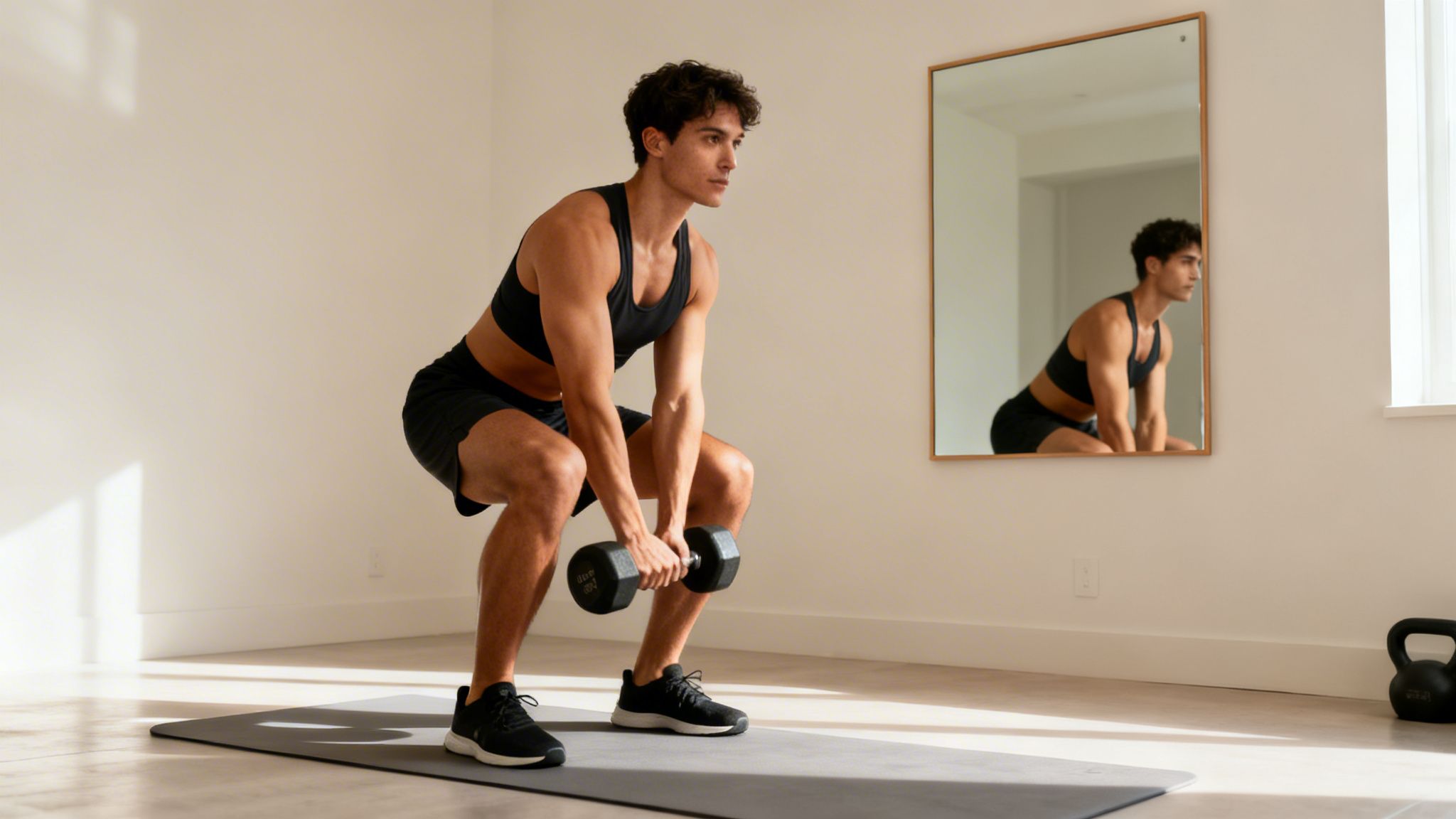
Strength training is a cornerstone of any effective, long-term fat loss strategy and is among the best exercises for weight loss beginners. It involves using resistance from dumbbells, barbells, kettlebells, or machines to challenge your muscles, forcing them to adapt and grow stronger. This process builds lean muscle mass, which is metabolically active and helps you burn more calories even when you're at rest.
Unlike cardio, which primarily burns calories during the workout, strength training elevates your metabolism for hours afterward through a process called excess post-exercise oxygen consumption (EPOC), or the "afterburn effect." It reshapes your body, improves bone density, and enhances functional strength for daily activities.
Why Strength Training Is a Weight Loss Powerhouse
The primary benefit of strength training for weight loss is its impact on your resting metabolic rate (RMR). Muscle tissue burns more calories at rest than fat tissue. By increasing your muscle mass, you effectively turn your body into a more efficient, 24/7 calorie-burning machine, making it easier to create and maintain a calorie deficit.
For instance, successful beginner programs like StrongLifts 5x5 and Starting Strength focus on a few key compound movements. This approach allows newcomers to build a solid foundation of strength and muscle efficiently without getting overwhelmed by dozens of different exercises.
Key Insight: Building muscle is a long-term investment in your metabolism. For every pound of muscle you gain, your body can burn an additional 7-10 calories per day at rest, which adds up significantly over time.
How to Get Started
Follow these actionable steps to begin strength training safely and effectively:
- Focus on Compound Lifts: Start with 2-3 full-body sessions per week, centered around compound movements like squats, deadlifts, bench presses, and rows. These exercises work multiple muscle groups at once for maximum efficiency.
- Prioritize Form Over Weight: Begin with very light weights or even just your body weight. Your initial goal is to master perfect form to prevent injury and ensure you're activating the correct muscles.
- Implement Progressive Overload: To see results, you must consistently challenge your muscles. Aim to increase the weight by 5-10% only when you can comfortably complete all your prescribed sets and reps with good form.
- Track Everything: Use a notebook or an app like Zing Coach to log your exercises, weights, sets, and reps. Tracking is essential for ensuring you are progressively overloading and making consistent progress.
Understanding the principles behind this type of exercise is crucial for success. To dig deeper into how it works, you can explore the fundamentals of strength training for weight loss and build a program that accelerates your results.
7. Yoga and Pilates
Yoga and Pilates offer a unique, mind-body approach that makes them excellent best exercises for weight loss beginners. While not as calorie-intensive as high-impact cardio, their value lies in building foundational strength, improving flexibility, and enhancing body awareness, all of which are crucial for long-term fitness success.
These low-impact practices are gentle on the joints, making them an ideal starting point for those with physical limitations or who find traditional workouts intimidating. They focus on controlled movements, core engagement, and breath work to develop functional strength and stability.
Why Yoga and Pilates Are Weight Loss Powerhouses
The power of yoga and Pilates for weight loss extends beyond the mat. By improving your mind-body connection, these disciplines help you become more attuned to your body's signals, which can lead to better eating habits and reduced stress-related weight gain. They build lean muscle, which increases your resting metabolic rate.
This approach is highly sustainable and complementary. For example, many successful fitness journeys, like those highlighted by popular platforms such as Peloton and Yoga with Adriene, show how integrating these practices reduces injury risk from other activities, allowing for more consistent training overall.
Elevate Your Practice: Mindful Movement
To maximize the benefits, focus on form and breath rather than simply going through the motions. The goal is not to achieve a "perfect" pose but to engage the correct muscles and move with intention.
Key Insight: A consistent Pilates or yoga practice improves posture and core strength, which can alleviate common issues like lower back pain. This foundational stability makes it easier and safer to perform other exercises, from lifting weights to running, accelerating overall progress.
How to Get Started
Follow these actionable steps to build a consistent and effective yoga or Pilates routine:
- Start with Beginner Classes: Look for classes specifically labeled "beginner" or "foundations." This ensures you learn the basic poses and principles correctly and safely.
- Use Props Shamelessly: Blocks, straps, and bolsters are tools, not crutches. They help you achieve proper alignment and get the full benefit of a pose, especially when your flexibility is still developing.
- Focus on Consistency: Aim for 2-3 sessions per week. Consistency is far more important than intensity when you are starting out and building the habit.
- Combine with Other Activities: For optimal weight loss, pair your yoga or Pilates practice with cardio and strength training. This holistic approach builds a well-rounded fitness base. Many of these exercises are a form of low-impact strength training, which is a great place to start.
8. Running and Jogging
For those ready to increase the intensity, running and jogging are classic and highly efficient best exercises for weight loss beginners. This powerful cardiovascular activity burns a significant number of calories in a short amount of time, using only your bodyweight and the force of gravity. Jogging, a slower-paced form of running, offers a great middle-ground, building aerobic capacity with less impact than an all-out sprint.
The key to starting successfully is progression. Rather than trying to run continuously from day one, structured programs that alternate between walking and running intervals are the safest and most sustainable way to build endurance and prevent burnout or injury.
Why Running Is a Weight Loss Powerhouse
Running excels at burning calories quickly and boosting your metabolism. Because it’s a high-impact, full-body movement, it engages major muscle groups and elevates your heart rate substantially, leading to a greater energy expenditure compared to lower-intensity activities.
A structured approach makes this powerful exercise accessible to anyone. Programs like Couch to 5K (C25K) are designed specifically for beginners, gradually decreasing walk time and increasing run time over several weeks. This method builds both physical fitness and mental confidence, proving that you can become a runner.
Elevate Your Run: Structured Training
Simply running without a plan can lead to injury. A structured program provides the framework needed for safe and effective progress, helping you build a solid foundation.
Key Insight: A beginner runner who follows a structured run/walk program is significantly more likely to stick with the habit and avoid common overuse injuries like shin splints or knee pain. The recovery days built into these plans are just as important as the running days.
How to Get Started
Follow these actionable steps to build a safe and consistent running routine:
- Invest in Proper Shoes: This is non-negotiable. Visit a specialty running store to get fitted for shoes that match your foot type and gait. This is the single most important step to prevent injury.
- Follow a Program: Use an app like C25K or the guided runs in the Nike Run Club app. Start with a pattern like 1 minute of running followed by 2 minutes of walking, repeating for 20-30 minutes.
- Prioritize Recovery: Aim to run 3 times per week on non-consecutive days. Your body needs at least 48 hours between runs to repair and get stronger.
- Don't Overdo It: A common rule of thumb is to increase your total weekly distance or duration by no more than 10%. This gradual increase prevents your body from becoming overwhelmed.
- Keep a Conversational Pace: When you are in the running portion of your interval, you should still be able to speak in short sentences. If you are too breathless to talk, slow down.
- Track Your Progress: Log your runs in an app like Zing Coach. This allows you to see your improvements over time and ensures your running fits into a balanced overall fitness plan, preventing overtraining.
8-Exercise Comparison for Weight-Loss Beginners
| Activity | Implementation complexity | Resource requirements | Expected outcomes | Ideal use cases | Key advantages |
|---|---|---|---|---|---|
| Walking & Incline Walking | Very low — minimal skill; easily adjustable via pace/incline | None to low — supportive shoes or treadmill optional | Moderate calorie burn (200–400/30–60m); steady aerobic improvement; slow but sustainable weight loss | Sedentary beginners, busy professionals, people with joint concerns | Lowest barrier to entry; low injury risk; daily sustainability |
| Bodyweight Circuit Training | Low–medium — basic exercise knowledge and pacing needed | Minimal — mat; optional pull-up bar | Moderate–high calorie burn (250–500/30–40m); builds strength and cardio; EPOC effect | Time-constrained home exercisers, those wanting functional strength | Time-efficient, scalable, requires no equipment |
| Swimming & Water Aerobics | Low–medium — swimming technique improves efficiency | Pool access, swimsuit, goggles | Moderate–high calorie burn (300–500/45m); full-body conditioning with zero joint impact | People with joint pain/injuries, obesity, seniors, rehabilitation | Zero-impact full-body resistance; therapeutic and cooling |
| Cycling & Stationary Biking | Low — easy to learn; proper bike fit recommended | Bicycle or stationary bike; helmet for outdoors | Moderate–high calorie burn (250–600/45–60m); builds leg strength and endurance | Those avoiding running impact, commuters, social exercisers | Low joint stress, scalable intensity, easy metrics tracking |
| High-Intensity Interval Training (HIIT) | Medium–high — needs programming and baseline fitness | Minimal to moderate — bodyweight or basic equipment | High calorie burn in short time (300–600/20–30m); strong metabolic afterburn | Time‑pressed individuals, intermediate/advanced exercisers, metabolic health seekers | Extremely time-efficient; elevates metabolism; effective fat loss |
| Strength Training with Weights | Medium — technique and progressive programming required | Gym access or home weights (dumbbells, barbells) | Builds lean muscle and strength; increases resting metabolic rate; modest session burn (200–400/60m) | Long-term weight maintainers, strength-focused individuals, returning gym-goers | Increases resting metabolism, bone density; measurable progress |
| Yoga & Pilates | Low–medium — guided instruction recommended for form | Minimal — mat; optional props (blocks, straps) | Low–moderate calorie burn (150–300/45–60m); improved flexibility, balance, recovery | Injury management, stress reduction, mobility and long-term practice seekers | Very low injury risk; enhances movement quality and body awareness |
| Running & Jogging | Low–medium — progressive training required to avoid injury | Quality running shoes; optional watch | High calorie burn (400–700/45–60m); strong aerobic gains | Healthy-joint individuals, outdoor enthusiasts, those seeking efficient calorie burn | Highly accessible; efficient calorie expenditure; strong community/race options |
From Plan to Progress: Building Your Sustainable Fitness Habit
Your journey to sustainable weight loss has begun. We've explored a powerful arsenal of the best exercises for weight loss beginners, from the accessible rhythm of walking and the low-impact grace of swimming to the metabolic boost of HIIT and the foundational strength gained from lifting weights. Each of these modalities offers a unique pathway to achieving your goals, proving that the "best" workout is not a one-size-fits-all prescription.
The real secret lies in finding the activities you genuinely enjoy and can commit to consistently. Remember, the most effective exercise plan is the one you actually stick with.
The Core Principles of Lasting Success
As you move forward, let's distill the most critical takeaways from this guide. These principles are the bedrock of a successful and lasting fitness transformation:
- Consistency Over Intensity: Showing up for a 20-minute walk three times a week is far more valuable than a single, grueling workout that leaves you too sore or unmotivated to move for days. Build a routine first, then gradually increase the challenge.
- Progressive Overload is Key: Your body is incredibly adaptive. To continue seeing results, you must consistently challenge it. This doesn't always mean lifting heavier weights; it can also mean adding an extra repetition, reducing rest time, or improving your form.
- Listen to Your Body: Acknowledge the difference between the discomfort of a challenging workout and the sharp signal of pain. Rest days are not a sign of weakness; they are a critical component of recovery, muscle repair, and long-term progress. Never sacrifice proper form for speed or weight.
- Nutrition and Fitness are Partners: Exercise is a powerful catalyst for change, but it works best in tandem with a balanced, nutrient-dense diet. You cannot out-train poor nutrition. Focus on whole foods that fuel your workouts and support your body's recovery.
Turning Knowledge into Actionable Steps
Information is only potential power; action is where the transformation happens. Your immediate next steps are simple but crucial. First, select one or two exercises from our list that genuinely appeal to you. Don't overthink it. Just pick something that sounds enjoyable or achievable right now.
Second, schedule your workouts into your week just as you would any other important appointment. Whether it's a 15-minute bodyweight circuit before your morning shower or a 30-minute bike ride after work, putting it on your calendar dramatically increases your likelihood of success.
Key Insight: The goal is not perfection, but persistent progress. A "bad" workout is still infinitely better than no workout at all. Celebrate the act of showing up for yourself.
Finally, consider how you'll track your efforts. Tangible data can be a powerful motivator. Beyond the scale, tracking metrics like workout duration, reps completed, or how you feel can illuminate your progress. Modern tools can simplify this process significantly. Beyond the exercises themselves, tools like smartwatches can significantly aid in tracking progress and maintaining motivation. For specific recommendations, you might review the Tempo Smartwatch. These devices provide real-time feedback that keeps you engaged and informed, turning abstract goals into concrete achievements.
By embracing consistency, listening to your body, and combining these beginner-friendly exercises with smart planning, you are not just starting a workout plan. You are building a sustainable habit that will deliver lasting health, confidence, and energy for years to come.
Ready to eliminate the guesswork and start a plan that’s built just for you? Let Zing Coach be your personal trainer, using AI to create customized workouts from the very exercises discussed here, adapting them as you get stronger. Start your personalized fitness journey today and turn your efforts into measurable results with Zing Coach.
Share this article


Authors