How to lose weight for beginners: a practical, sustainable guide with simple nutrition, workouts, and motivation tips.
Losing weight, especially when you're just starting out, really boils down to one simple idea: creating a sustainable calorie deficit. This isn't about some miserable diet or punishing yourself at the gym. It’s about making small, consistent changes to what you eat and how you move your body.
That’s it. Focus on making slightly healthier food choices and getting a little more active each day, and you're already on the right path.
Laying a Strong Foundation for Your Weight Loss Journey
Starting a weight loss plan can feel like you're standing at the bottom of a massive mountain. You can see the peak—your goal weight—but the path up looks impossibly steep, cluttered with confusing advice and complicated workout plans.
Here's the secret: the most successful journeys don't start with a giant leap. They start with a single, totally manageable step. So let's forget the quick fixes and fad diets and focus on what actually works.
Understanding the Calorie Deficit
At its core, weight loss is just simple science. You need to consume slightly fewer calories than your body burns each day. This is the famous calorie deficit.
Think of your body as a car and calories as its fuel. If you put more fuel in than the car uses, the extra gets stored (as fat). If you give it just a little less fuel than it needs, it has to tap into its stored reserves to keep running.
This doesn't mean you need to starve yourself—far from it. In fact, a small, steady deficit is way more effective than a drastic cut. Public health guidance suggests a daily calorie deficit of about 500 kcal is a safe and effective target, typically leading to about 1 pound of weight loss per week. This pace helps ensure you're losing fat, not valuable muscle mass.
An AI-powered coaching app like Zing can be a huge help here. It takes the guesswork out by analyzing your goals, activity level, and body composition to figure out a healthy starting point for you.
Here’s a peek at the kind of initial questions an AI coach might ask to get your plan just right.
This kind of personalization from day one is what sets you up for success, making sure your targets are realistic for your body and lifestyle.
Shifting from Outcomes to Actions
One of the biggest traps beginners fall into is focusing only on the final outcome, like "lose 20 pounds." While it’s good to have a big-picture goal, it can also feel so far away that it’s easy to get discouraged when the scale doesn’t cooperate.
A much more powerful approach is to zero in on action-based goals. These are the small, repeatable behaviors you have total control over every single day. They're the building blocks of real, lasting change.
Instead of obsessing over the number on the scale, you get to celebrate the small wins that are actually moving you forward.
The goal isn't just to lose weight; it's to build the habits that make maintaining a healthy weight feel effortless. This mindset shift is the key to turning a temporary diet into a permanent lifestyle.
Think about it: which of these feels more doable right now?
- Outcome Goal: Lose 5 pounds this month.
- Action Goal: Go for a 20-minute walk after dinner on Monday, Wednesday, and Friday.
The action goal is specific, measurable, and completely in your control. You can nail that goal no matter what the scale says, which builds the momentum and confidence you need to keep going. Our guide on forming habits that stick dives deeper into how to make these new behaviors feel automatic.
Your First Week's Goal Setting Framework
To kick things off, don't try to overhaul your entire life overnight. That's a recipe for burnout. Instead, pick just one small goal from each of these three key areas: nutrition, activity, and a supportive habit.
This balanced approach keeps things from feeling overwhelming and helps you build a solid foundation. Use this framework to set your first week's goals.
Your First Week's Goal Setting Framework
Use this framework to set balanced, achievable goals covering nutrition, activity, and new habits. This approach builds confidence and makes the process manageable.
| Goal Type | Beginner Example | Why It Works |
|---|---|---|
| Nutrition | Swap sugary drinks for water or unsweetened tea. | This is a simple change that can cut hundreds of empty calories daily without requiring a full diet overhaul. |
| Activity | Take the stairs instead of the elevator at work. | It integrates movement into your existing routine, making it an easy and consistent way to burn extra calories. |
| Habit | Prepare your workout clothes the night before. | This removes a common barrier to exercise, making it easier to follow through with your plans, especially on busy mornings. |
By checking these small boxes, you start building the proof you need to believe in yourself and your ability to make bigger changes down the road.
Building a Workout Plan You Can Actually Stick With
Alright, you’ve set your goals. Now it's time to get moving. The phrase "workout plan" often brings to mind images of hardcore gyms and routines that look like they require a PhD to understand. But let's be real—effective exercise is much simpler than that.
It’s all about finding activities you enjoy (or at least don't hate) and doing them consistently. The real magic happens when you challenge your body just enough to nudge it toward change. This is where the powerful duo of cardio and strength training comes into play. Think of them as the one-two punch for sustainable weight loss.
The Power of Cardio and Strength
Cardio, or cardiovascular exercise, is anything that gets your heart pumping. We're talking brisk walking, jogging, cycling, or even dancing around your living room. It's fantastic for your heart health and burns a good number of calories while you're doing it.
Strength training, on the other hand, is about using resistance to build muscle. This doesn't mean you need to start training for a bodybuilding competition. Simple bodyweight moves like squats, push-ups (even on your knees!), and lunges are incredibly effective, especially when you're just starting out.
Here’s why building even a little muscle is a game-changer: muscle tissue burns more calories at rest than fat does. That means your body becomes a more efficient calorie-burning machine, 24/7.

As you can see, it all starts with understanding your own needs. Nail down the basics—like your calorie deficit—and you can build sustainable habits that create real momentum.
Demystifying Progressive Overload
So how do you actually get fitter and stronger over time without hitting a wall? The secret is a concept called progressive overload. It sounds technical, but it just means making your workouts a tiny bit harder as your body gets used to them.
This is the key to avoiding the dreaded plateau where your progress grinds to a halt. It’s not about making huge, painful jumps in difficulty. It’s about small, consistent challenges.
Here’s what that looks like in practice:
- Add more reps: If you managed 8 bodyweight squats last week, aim for 10 this week.
- Increase duration: Walked for 20 minutes? Try for 25 next time.
- Reduce rest: Shave 5-10 seconds off the rest time between your sets.
- Add weight: Once you're feeling confident, introduce light dumbbells or resistance bands.
This gradual increase is what signals your body to adapt, rebuild, and come back stronger.
Time-Efficient Workouts for Beginners
You absolutely do not need to spend hours in the gym to see results. When you're new to this, consistency beats intensity every single time. A well-planned 20-30 minute workout done 3-4 times a week is a fantastic place to start.
Here's a sample full-body routine you can do at home with zero equipment:
- Warm-up (3 minutes): Get your blood flowing with some light marching in place, arm circles, and leg swings.
- Bodyweight Squats (3 sets of 8-12 reps): Keep your chest up and imagine you’re sitting back into a chair.
- Push-ups (3 sets of as many as you can): Start on your knees if you need to! It’s a great way to build strength.
- Lunges (3 sets of 8-10 reps per leg): Step forward and lower your hips until both knees are at a 90-degree angle.
- Plank (3 sets, hold for 20-30 seconds): Keep your body in a perfectly straight line from your head to your heels.
Tack on 15-20 minutes of brisk walking or another type of cardio you enjoy after the strength moves, and you’ve got a highly effective workout. For more ideas and detailed routines, check out our guide on strength training for weight loss.
The best workout plan is the one you actually stick with. Seriously. Don't get paralyzed trying to find the "perfect" routine. Start simple, stay consistent, and build from there.
Even adding resistance training just 2–3 times per week can make a huge difference. It helps you hold onto (or even build) lean muscle, which often declines during weight loss. This can improve your resting metabolism and functional strength in as little as 8–12 weeks.
Sample Beginner Weekly Workout Schedule
Here’s a visual guide showing how you could structure your first month. This is just a template—feel free to move days around to fit your life, your schedule, and your energy levels.
| Day | Activity (30-45 Minutes) | Focus |
|---|---|---|
| Monday | Strength Training (Full Body Routine) | Building foundational strength |
| Tuesday | Cardio (Brisk Walk, Cycling, or Jogging) | Improving cardiovascular health |
| Wednesday | Active Recovery / Rest | Light stretching or a gentle walk |
| Thursday | Strength Training (Full Body Routine) | Applying progressive overload |
| Friday | Cardio (Brisk Walk, Cycling, or Jogging) | Increasing stamina and endurance |
| Saturday | Optional: Fun Activity (Hike, Dance, Swim) | Moving your body in a way you enjoy |
| Sunday | Rest | Full recovery for muscles and mind |
The key is to listen to your body. If you're feeling sore, take an extra rest day. If you have more energy, maybe go for a slightly longer walk. Flexibility is your friend here.
Fueling Your Body With Simple Nutrition
Exercise is a huge piece of the puzzle, but you've probably heard the old saying: you can't out-train a bad diet. Nutrition is the other half of the weight-loss equation, but so many beginners get completely overwhelmed by complicated rules and the pressure to track every last calorie.
Let's cut through the noise.
Good nutrition for weight loss isn’t about crazy restrictions; it's about giving your body the right fuel to thrive. So, forget the fad diets for a moment and let's get back to basics: protein, carbohydrates, and fats. Honestly, understanding how these "big three" macronutrients work together is your secret weapon for feeling full, energized, and in control.
The Power of Protein
If you only focus on one thing to start, make it protein. Seriously, it's a game-changer. Protein is incredibly satiating, which is just a fancy way of saying it helps you feel fuller for longer after you eat. This is huge because it dials down the urge to mindlessly snack on empty calories between meals.
Plus, when you're eating in a calorie deficit to lose weight, getting enough protein helps your body hold onto its lean muscle. This is critical. Muscle is metabolically active tissue, meaning it helps keep your metabolism fired up and running efficiently.
Here are a few dead-simple ways to get more protein in your day:
- Toss a scoop of protein powder into your morning oatmeal or smoothie.
- Reach for Greek yogurt, cottage cheese, or a hard-boiled egg for a quick snack.
- Make sure you have a palm-sized portion of lean protein—think chicken, fish, tofu, or beans—with every main meal.
Smart Carbs for Sustained Energy
Carbs have gotten a really bad rap over the years, but they are your body's absolute favorite source of energy. The trick is simply choosing the right kind. We want to focus on complex carbohydrates, the kind you find in whole grains, vegetables, and legumes. They break down slowly, giving you a nice, steady stream of energy for your workouts and just getting through your day.
Simple carbs, on the other hand (sugary drinks, white bread, pastries), digest in a flash. That leads to those nasty energy spikes and crashes that leave you craving more junk. Swapping these out for more nutrient-dense options makes a massive difference in how you feel.
Healthy Fats for Hormonal Balance
Fat is not the enemy! Your body actually needs healthy fats for things like hormone production, absorbing certain vitamins, and just basic cell function. Adding sources like avocado, nuts, seeds, and olive oil to your meals not only supports your body's internal systems but also adds a ton of flavor and helps you feel satisfied.
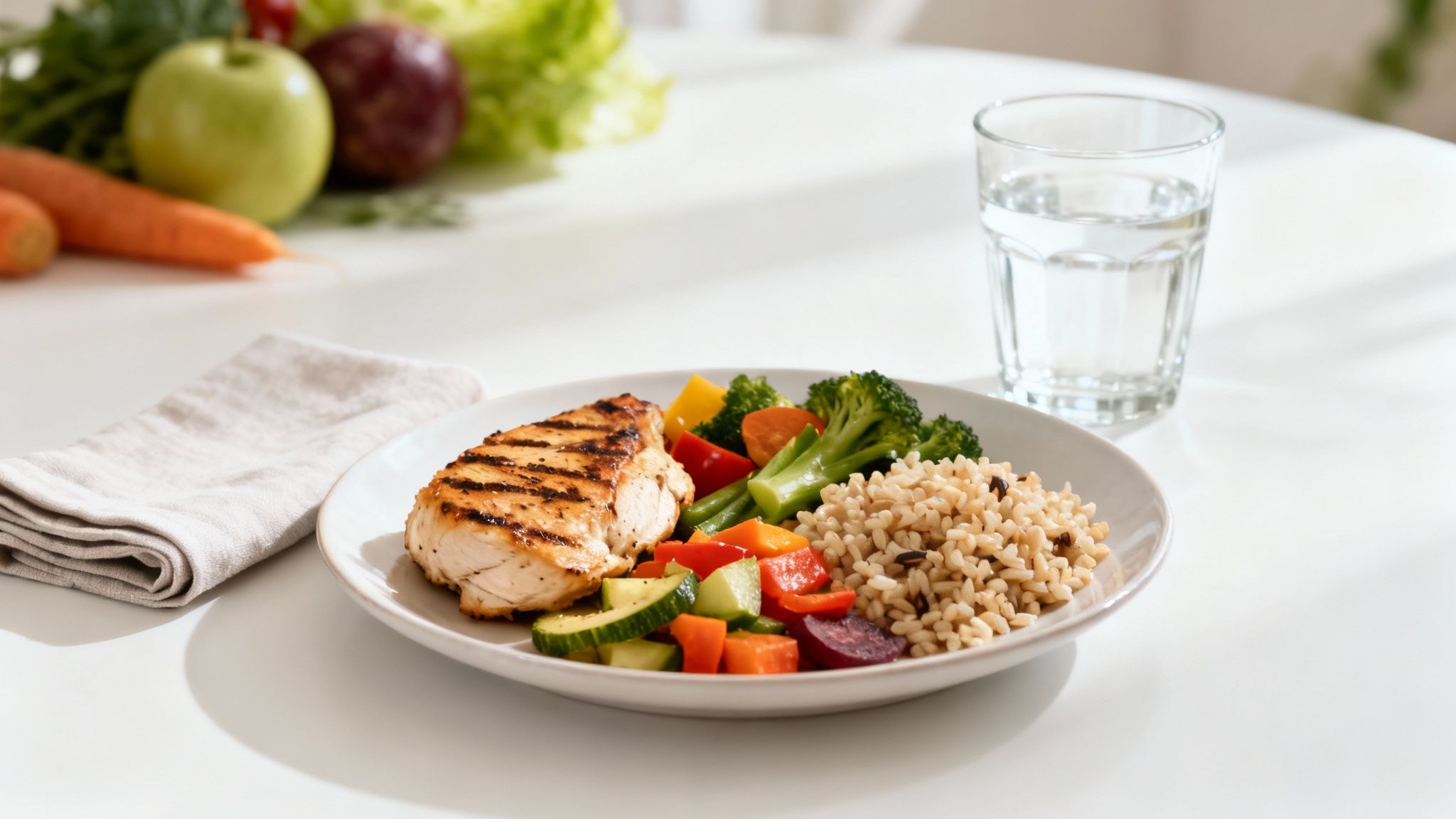
Key Takeaway: A balanced plate is a powerful tool. Try to visualize your plate for each meal: roughly ¼ protein, ¼ complex carbs, and ½ non-starchy vegetables, plus a small serving of healthy fats. This simple visual guide makes balanced eating easy, no food scale required.
Simple Food Swaps for Big Wins
You don't need to throw out everything in your kitchen and start over. Small, strategic swaps can cut a surprising number of calories and add a ton of nutritional value to your meals without making you feel like you're sacrificing anything.
| Instead Of This... | Try This Smart Swap... | Why It's Better |
|---|---|---|
| Sugary Cereal | Oatmeal with Berries | Higher in fiber and protein, keeping you full all morning. |
| Creamy Salad Dressing | Olive Oil & Vinegar | Cuts down on sugar and unhealthy fats while providing heart-healthy benefits. |
| Potato Chips | Air-Popped Popcorn | A high-volume, low-calorie snack that satisfies the craving for something crunchy. |
| Soda or Juice | Sparkling Water with Lemon | Hydrates without adding hundreds of empty liquid calories to your day. |
These little changes add up fast, helping you create that necessary calorie deficit without feeling deprived. It’s also important to know which advice to follow and which to ignore. To help separate fact from fiction, check out our guide on 12 nutrition misconceptions that are holding back your health.
Stay Hydrated to Curb Cravings
Here's a pro tip: sometimes your brain mixes up its signals and tells you you're hungry when you're actually just thirsty. Before you grab a snack, try drinking a big glass of water and waiting 15 minutes. You might be surprised to find that the "hunger" pangs completely vanish.
Aiming for around 8-10 glasses of water a day can also give your metabolism a slight boost and just helps your body run better in general. Keep a reusable water bottle with you everywhere you go—it makes hitting that goal almost effortless.
And for anyone who wants to really lock in their healthy eating habits, learning how to meal prep for the week can be a total game-changer. It takes the guesswork out of "what's for dinner?" and ensures you always have a healthy, hydrating meal ready to go.
Tracking Progress and Staying Motivated
Alright, you’ve built a solid foundation with a workout plan that works for you and some simple nutrition strategies. Now for the part that really matters for the long haul: tracking your progress and mastering the mental game.
This is where so many people get tripped up, usually because they put way too much faith in the number on the scale.
Let's be clear: the scale is just one tiny piece of the puzzle, and frankly, it can be a terrible motivator. Your weight can swing wildly day-to-day thanks to water retention, hormones, and even what you ate for dinner last night. Pinning all your hopes on that number is just a recipe for frustration. It's time to track what actually matters.
Beyond the Scale: How to Really Measure Success
When you start exercising and eating better, your body starts to change in amazing ways. You're building lean muscle while shedding fat. And since muscle is much denser than fat, you might see the scale stay put—or even tick up a tiny bit—even as your clothes are getting looser.
This is incredible progress! The scale just can't see it.
To get the real story of your results, you need to look elsewhere. Here are my go-to methods:
- Progress Photos: Every four weeks, snap a few photos from the front, side, and back. Try to use the same lighting, location, and even the same outfit. You will be absolutely stunned by the visual changes over time.
- Body Measurements: Once a month, grab a simple tape measure and jot down the circumference of your waist, hips, chest, and thighs. These numbers often shrink even when the scale is being stubborn.
- The Jean Test: Is that old pair of jeans feeling a little less snug? Are your shirts fitting better across the shoulders? This is one of the most satisfying real-world signs that you're on the right track.
Focusing on these metrics gives you a much more complete and encouraging picture of all your hard work. If you want to get more technical down the line, our guide on how to measure body fat percentage covers more advanced techniques.

Think of it like a dashboard. You wouldn't just look at one dial to see if your car is running well, right? Same thing here. Tracking multiple data points paints the full picture of your success.
Celebrate Your "Non-Scale Victories"
Non-scale victories (NSVs) are the real-life rewards that come from building healthier habits. These are the moments that genuinely improve your life and provide some of the most powerful motivation to keep going. You have to actively look for them and celebrate every single one.
A non-scale victory is any positive change you notice that has nothing to do with a number. Celebrating these wins is the secret sauce for building long-term motivation because it proves your efforts are about so much more than just weight loss.
Here are a few powerful NSVs to watch for:
- Having more energy to play with your kids.
- Walking up a flight of stairs without feeling totally winded.
- Sleeping through the night and waking up feeling rested.
- Noticing your skin is clearer or your mood is better.
- Simply feeling more confident and at home in your body.
Keep a running list of these in a notebook or on your phone. On days when you feel like you're spinning your wheels, reading that list is the perfect reminder of how far you've already come.
The Mental Game: Bouncing Back from Setbacks
Look, everyone has an off day. Everyone has a weekend where healthy choices just don't happen. It’s not a failure; it’s just part of being human. The real difference between someone who succeeds and someone who quits is how they react in that moment.
Don't let one slip-up derail your entire week. It's so easy to fall into that "all-or-nothing" trap.
If you have a big, indulgent meal, just enjoy it! Then get right back on track with your next meal or workout. One "off" meal won't undo a week of good choices, just like one salad won't instantly get you to your goal. Consistency over perfection is the name of the game.
To get a better handle on your eating patterns, especially after an off day, you might find it helpful to use the best food diary app for your needs. It can offer some valuable, judgment-free insights, making it easier to see where you can make small tweaks and get back on plan. Remember, this whole thing is a marathon, not a sprint.
Navigating Common Challenges and Plateaus
Sooner or later, every single person on a weight loss journey hits a roadblock. Let’s just get that out in the open. It’s not a sign you’ve failed; it’s a completely normal, even expected, part of the process.
The trick isn’t to somehow avoid these hurdles, but to have a game plan for when they pop up. Think of this as your troubleshooting guide for when things get tough. We'll tackle the most common obstacles head-on so you can push through with confidence.
The Dreaded Weight Loss Plateau
You’ve been crushing it for weeks. You’re eating well, getting your workouts in, and the number on the scale has been your friend. Then, all of a sudden… nothing. For a week, maybe two, that number just won't budge.
Welcome to the weight loss plateau. It's frustrating, I know. But here’s what’s really going on under the hood: your body is adapting. As you lose weight, your metabolism naturally slows down a bit because a smaller body simply needs less energy to run. Your original plan, which was perfect at the start, now just meets your body's new maintenance level.
A weight loss plateau isn't a dead end. It’s a sign that your body has successfully adapted to all the positive changes you’ve made. Now, it's just time for a few small adjustments to get things moving again.
Breaking through doesn't require a massive overhaul. You just need to gently shake things up.
- Tweak Your Calories: Your new, lighter body needs a new calculation. Re-evaluate your calorie target to match your current weight.
- Up the Intensity: Try adding an extra set to your strength routine, walking a little faster, or cutting your rest time between exercises. A little more effort goes a long way.
- Prioritize Protein: Are you getting enough protein at every meal? It’s crucial for preserving metabolism-boosting muscle and helps keep you feeling full and satisfied.
- Get More Sleep: Seriously. A lack of quality sleep can wreak havoc on the hormones that regulate your hunger and fat storage, bringing your progress to a grinding halt.
For a deeper dive, our guide on tips to prevent plateaus has even more strategies to get you back on track.
Staying on Track in Social Situations
Eating out with friends, family dinners, holiday parties—these can feel like navigating a minefield when you're focused on your goals. The pressure to "just have one" or ditch your plan for the night can be real. The secret is walking in with a strategy.
Do a little recon. Check out the restaurant's menu online before you go. Deciding what you're going to order ahead of time eliminates those impulse decisions made under pressure.
And don't be afraid to make simple requests when you order. A few easy ones:
- "Could I get the dressing on the side?"
- "Is it possible to have the chicken grilled instead of fried?"
- "Could I swap the fries for a side salad or steamed veggies?"
Most places are more than happy to accommodate. Remember, you’re in the driver's seat, no matter where you're eating.
Finding Time When You Have None
"I just don't have time to work out." If I had a dollar for every time I've heard this—and said it myself—I'd be retired. Life gets chaotic with work, family, and everything in between.
The solution isn't about magically finding a free hour you don't have. It's about redefining what a "workout" actually is.
You don't need long, uninterrupted blocks of time. Breaking your activity into smaller, bite-sized chunks is incredibly effective. This approach, sometimes called "exercise snacking," can fit into the most jam-packed schedules.
For instance, you could do a 10-minute brisk walk first thing in the morning, another 10 minutes of bodyweight squats and push-ups on your lunch break, and a final 10-minute walk after dinner. Just like that, you’ve hit 30 minutes of solid activity without ever feeling overwhelmed. It all adds up.
Got Questions? We've Got Answers
Stepping onto the path of weight loss always kicks up a few questions. It’s completely normal. We’ve been there. So, we’ve rounded up some of the most common things beginners ask, with clear, no-nonsense answers to get you started on the right foot.
How Fast Should I Expect to Lose Weight?
Realistically, a safe and sustainable pace is about 1 to 2 pounds per week. I know it can be tempting to want faster results, but losing weight quicker than that often means you're just shedding water weight and, worse, hard-earned muscle. That can actually tank your metabolism, making it much harder to keep the weight off for good.
Think of it this way: slow and steady progress is what creates permanent change. Be patient with yourself and focus on building solid, healthy habits. The scale will follow.
Do I Have to Give Up All My Favorite Foods?
Absolutely not. In fact, you shouldn't. A weight loss plan you can actually stick to is one that has room for real life, and that includes the foods you love. The secret isn't deprivation; it's moderation.
That all-or-nothing mindset is a classic trap. You don’t have to blacklist foods you enjoy. It's all about learning how to make them fit into your overall calorie budget.
Love pizza? Great, plan for it. Have a slice or two, load up the rest of your plate with a big salad, and make sure it works with your weekly calorie target. Outright banning foods often just leads to cravings and bingeing down the road. It’s far better to practice a little mindful indulgence.
What If I Don’t Have Time for the Gym?
No gym? No problem. You absolutely do not need a fancy gym membership to see incredible results. You can get a killer workout right in your living room with little or even no equipment. What matters most is consistency, not the location.
Here are a few ways to get it done without the commute:
- Bodyweight Circuits: You’d be amazed at what 20 minutes of squats, push-ups, and planks can do.
- Brisk Walking: Seriously, this is one of the most underrated fat-loss tools out there.
- Exercise "Snacks": Can’t find a solid block of time? Squeeze in 10-minute bursts of activity throughout your day. It all adds up.
How Much Water Should I Drink?
Try to aim for around 8-10 glasses (about 2-3 liters) of water a day. Staying hydrated is a game-changer for a few key reasons. It gives your metabolism a slight nudge, helps your body run like a well-oiled machine, and can even help you realize that what you thought was a craving was actually just thirst.
Here's a super simple trick: drink a full glass of water right before each meal. This one little habit can help you feel fuller, making it easier to manage your portions without even thinking about it.
Ready to stop guessing and start seeing results with a plan that’s actually built for you? The Zing Coach app does the heavy lifting. Our AI designs a personalized workout and nutrition plan based on your body, goals, and lifestyle, making every step feel manageable. Get your personalized plan today and let's get started.
Share this article


Authors