Discover how to lose weight without starving yourself using a science-backed plan for sustainable fat loss, muscle preservation, and lasting results.
Losing weight without starving yourself isn't about willpower or suffering. It's about working smarter, not harder. The whole game plan shifts from extreme restriction to a sustainable, science-backed strategy that focuses on managing hunger, preserving muscle, and building healthy habits that actually last.
Moving Beyond Starvation Diets for Real Results
That dreaded "starvation mode" you've heard about? It's not a myth. It's a very real physiological response hardwired into our DNA for survival. When you slash your calories too drastically, your body doesn't just happily burn fat—it panics and fights back.
Your metabolism slams on the brakes to conserve every last bit of energy, hunger hormones surge, and your body starts sacrificing precious muscle tissue for fuel. It's a miserable experience, and worse, it sets you up for the inevitable rebound.
This guide will show you how to lose weight by working with your body, not declaring war on it. We're going to sidestep the outdated, harmful advice that fuels so many common myths about nutrition and weight loss, which you can read more about here: https://www.zing.coach/fitness-library/nutrition-misinformation-12-misconceptions-that-are-holding-back-your-health.
Why Extreme Diets Always Fail
History has already shown us, in no uncertain terms, why severe calorie restriction is a terrible idea. The famous Minnesota Starvation Experiment provided a brutal look at the consequences.
Yes, the participants lost weight. But their metabolisms slowed down by a staggering 40%, and many developed severe psychological issues. After the study, nearly all of them regained the weight—and then some. It was a perfect demonstration of the powerful rebound effect that starvation diets trigger.
This happens because your body is designed for survival. An extreme calorie deficit sends a loud and clear famine signal, kicking off a cascade of protective measures:
- Metabolic Slowdown: Your body becomes incredibly efficient, burning far fewer calories at rest to conserve its resources.
- Muscle Loss: Without enough fuel (especially protein), your body raids your muscle tissue for energy, which tanks your metabolic rate even further.
- Hormonal Chaos: Ghrelin, the "hunger hormone," skyrockets while leptin, the "satiety hormone," plummets. The result? Relentless, gnawing hunger and cravings.
To help you visualize the difference, let's break down the two approaches.
Starvation Diet vs Sustainable Fat Loss
This table gives a quick side-by-side comparison of the short-sighted starvation method versus a long-term, intelligent approach to fat loss.
| Approach | Starvation Diet | Sustainable Fat Loss |
|---|---|---|
| Calorie Goal | Drastic, unsustainable cuts | Moderate, personalized deficit |
| Primary Fuel Source | Burns muscle and fat | Primarily targets fat stores |
| Metabolism | Slows down significantly | Preserved or even increased |
| Hunger Levels | Extremely high, constant cravings | Managed with protein & fiber |
| Energy Levels | Low, fatigued, irritable | Stable and consistent |
| Long-Term Result | Weight regain (often more) | Lasting results, healthy habits |
The takeaway is clear: one path leads to a frustrating cycle of loss and regain, while the other builds a foundation for lifelong health.
The goal isn't just to lose weight; it's to lose fat while preserving the lean muscle that keeps your metabolism revving and your body strong. A sustainable plan makes this possible.
Moving beyond these quick-fix traps is the only way to achieve results that stick. It's all about making sustainable lifestyle changes for weight loss that last.
Adopting a Smarter Strategy
Instead of deprivation, this guide is built on a much more intelligent, personalized foundation. We’ll walk you through calculating a moderate calorie deficit that encourages your body to burn fat without sounding the famine alarm.
You'll learn how to leverage protein and fiber to feel full and satisfied, making the entire process feel less like a "diet" and more like a simple upgrade to your lifestyle.
Tools like Zing Coach can take the guesswork out of it, creating a plan that adapts to your body and your progress. By sidestepping the common pitfalls of starvation dieting, you can finally build the momentum you need for lasting success.
Figure Out Your Personal Energy Needs for Fat Loss
If you want to lose weight for good without feeling like you're starving, you have to stop guessing and start calculating. Forget about those drastic, random calorie cuts that just leave you hungry and miserable. The real secret is figuring out exactly how much energy your body burns every day and then creating a small, smart deficit from that number.
This all comes down to two key ideas: your Basal Metabolic Rate (BMR) and your Total Daily Energy Expenditure (TDEE).
Your BMR is basically your body’s idle speed—it’s the calories you burn just keeping the lights on (heart pumping, lungs breathing, brain thinking). Your TDEE is the whole picture. It takes your BMR and adds in everything else you do all day, from walking to your car to hitting the gym. That TDEE number is your maintenance level—eat that much, and your weight stays the same.
Finding Your Maintenance Calories
Before you can create a deficit, you need a solid estimate of your TDEE. Online calculators can give you a decent ballpark figure, but they're just that—an estimate. For a more detailed look at the formulas, check out our guide on how to calculate daily calorie needs.
Just remember, this number is completely unique to you. It's shaped by a few key factors:
- Age: Our metabolism tends to slow down as we get older.
- Sex: Men generally have more muscle mass, which means a higher metabolism.
- Weight and Height: A bigger body simply needs more energy to run.
- Activity Level: This one's the real game-changer. A construction worker's TDEE will be worlds apart from someone with a desk job.
This simple diagram breaks down the core pieces of a weight loss plan that actually works—moving from the calorie deficit to fueling your body the right way and holding onto muscle.
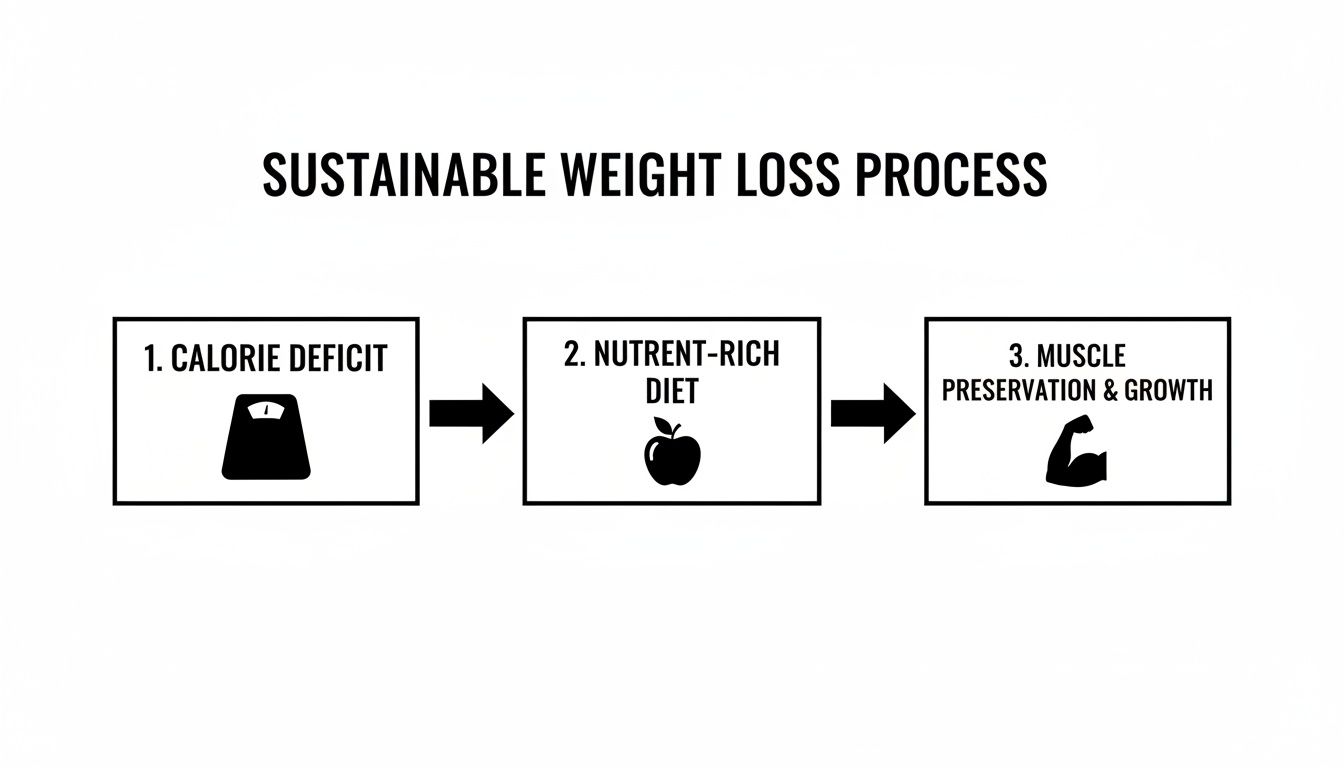
As you can see, it’s not just about eating less. It’s a balanced system: a smart deficit, nutrient-packed food, and keeping your muscle mass intact.
Creating a Sustainable Calorie Deficit
Once you've got your TDEE, it's time to create a moderate calorie deficit. This is where so many people go wrong. Slashing 1,000+ calories might look good on the scale for a week, but that’s how you trigger the exact metabolic slowdown and hormonal mess we're trying to avoid.
The sweet spot is a conservative deficit of 300 to 500 calories below your TDEE. It’s a gentle nudge that encourages steady fat loss—usually around 1 to 2 pounds per week—without making your body freak out. You’ll have enough energy to feel good and you won’t be constantly battling hunger.
A 500-calorie daily deficit adds up to 3,500 calories a week, which happens to be the energy stored in one pound of body fat. That simple math is why a moderate deficit is so reliable for predictable, long-term results.
So, if your TDEE is 2,400 calories, your target for fat loss would be somewhere between 1,900 and 2,100 calories per day. That’s still a lot of food, leaving plenty of room for satisfying meals that won’t make you feel like you're on a crash diet.
This is where technology can be a huge help. An AI-powered app like Zing Coach takes all the manual math out of the equation. It syncs with your health data, factors in your activity, and gives you a personalized calorie target that's both effective and manageable. And as your body changes, it adapts with you, so you're always working with the right numbers.
Fuel Your Body with the Right Macronutrients
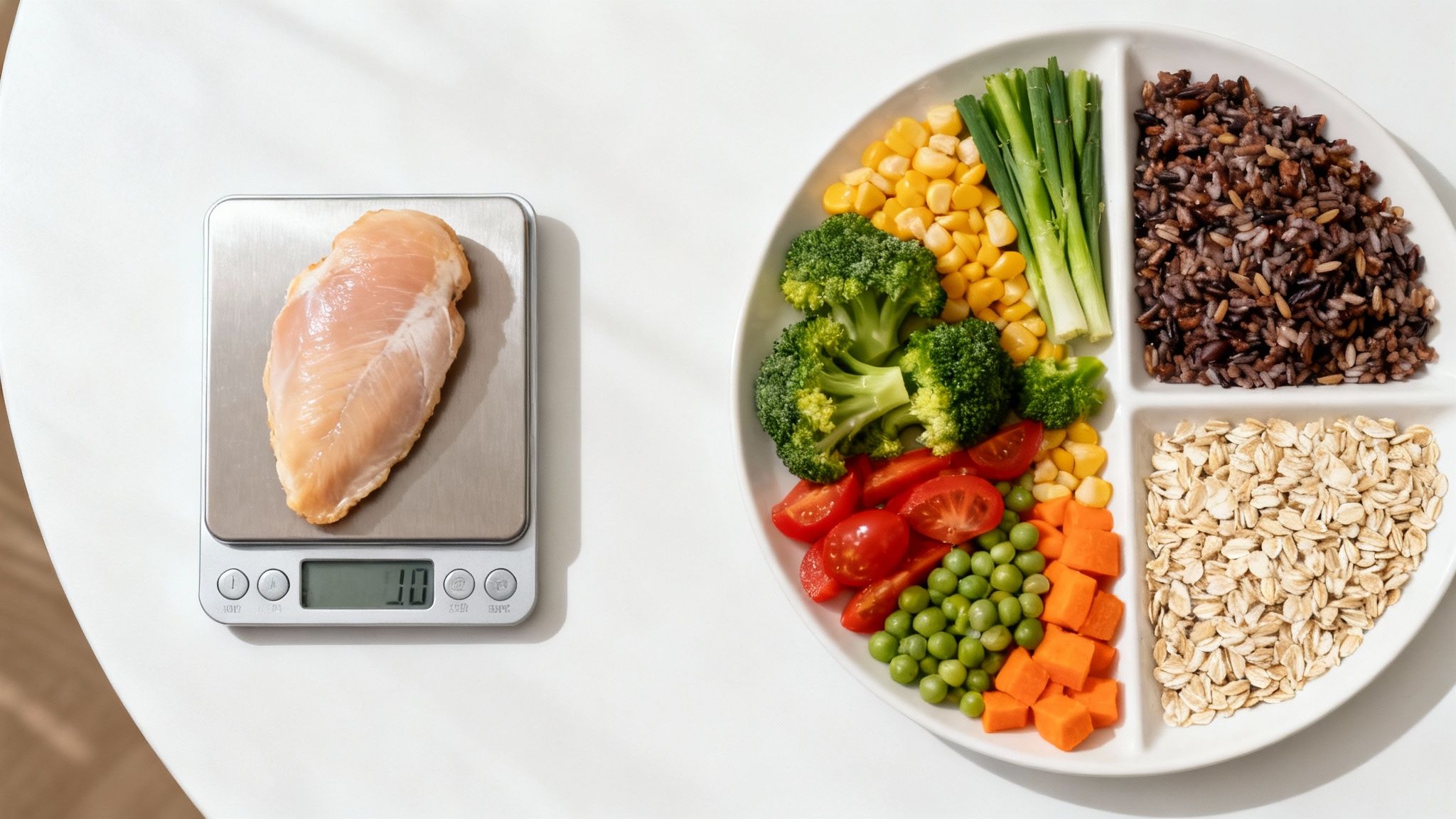
A calorie deficit is the engine of fat loss, but the fuel you choose determines how smooth the ride is. Just eating less isn’t the full picture if you want to lose weight without constantly fighting hunger. What you eat is just as crucial for managing your appetite, keeping your energy levels stable, and protecting the muscle you've worked so hard to build.
This is where macronutrients—protein, carbs, and fats—come into play. While they all have a role, one of them is the undisputed champion for making fat loss feel manageable: protein.
Prioritize Protein to Crush Hunger and Protect Muscle
If you only follow one piece of nutritional advice during your weight loss journey, make it this one: eat more protein. The benefits are so powerful it almost feels like a cheat code for avoiding that gnawing, diet-derailing hunger.
For starters, protein has the highest Thermic Effect of Food (TEF), meaning your body burns more calories just breaking it down. But the real magic is in its ability to keep you full. A high-protein meal is incredibly satiating, helping you feel satisfied for hours and making your calorie deficit feel effortless instead of like a constant battle of willpower.
When you're eating fewer calories, your body needs to find energy somewhere. Without enough protein coming in, it will start breaking down your muscle tissue for fuel. A high protein intake sends a powerful signal to your body: preserve that valuable muscle and burn stored body fat instead.
Protecting your muscle is your best defense against the dreaded metabolic slowdown. After all, your lean mass is the very engine that burns calories 24/7.
Setting Your Daily Protein Goal
So, how much do you actually need? A solid target for active people looking to lose fat is between 1.6 to 2.2 grams of protein per kilogram of body weight (that's about 0.7 to 1.0 grams per pound).
For someone weighing 80 kg (176 lbs), that works out to a daily goal of 128 to 176 grams of protein. The key is to spread this out over your meals to keep hunger at bay all day long.
Here are some excellent, protein-rich foods to build your meals around:
- Lean Meats: Chicken breast, turkey, lean ground beef
- Fish: Salmon, tuna, cod
- Dairy: Greek yogurt, cottage cheese
- Eggs: A versatile and budget-friendly powerhouse
- Legumes: Lentils, chickpeas, black beans
- Plant-Based: Tofu, tempeh, edamame
- Supplements: Whey or plant-based protein powders can be a convenient boost
Try to include a primary protein source with every meal and snack. This simple habit alone can completely change your ability to lose weight without feeling miserable.
Don't Fear Carbs and Fats
While protein gets the spotlight, carbohydrates and fats play vital supporting roles. They give you the energy for your workouts and are essential for things like hormone production. You absolutely need them.
The trick is to choose high-quality, whole-food sources. These foods are not only loaded with nutrients but also contain another secret weapon against hunger: fiber.
Found in fruits, vegetables, and whole grains, fiber slows digestion and helps keep your blood sugar stable. This is huge for preventing the energy crashes and intense cravings that often follow a meal of highly processed, low-fiber junk food.
- Smart Carb Choices: Oats, quinoa, brown rice, sweet potatoes, and every vegetable you can think of.
- Healthy Fat Sources: Avocado, nuts, seeds, and olive oil.
By building your diet around these nutrient-dense foods, you'll feel more satisfied on fewer calories. If you're new to tracking this stuff, our complete guide on how to count macros for beginners breaks it all down step-by-step.
Here’s a quick look at how you might structure a day to hit these targets and stay full.
Sample High-Protein High-Satiety Meal Template
This template shows how to distribute your protein intake throughout the day to maximize fullness and muscle preservation.
| Meal | Example Foods | Key Benefits |
|---|---|---|
| Breakfast | Scrambled eggs with spinach and a side of Greek yogurt with berries. | Starts the day with a significant protein hit to control morning hunger. |
| Lunch | Large salad with grilled chicken breast, mixed greens, chickpeas, and an olive oil vinaigrette. | Balanced meal with protein, fiber from veggies, and healthy fats to keep you full through the afternoon. |
| Snack | Cottage cheese with a handful of almonds. | A slow-digesting protein (casein) and healthy fats provide a steady stream of energy and satiety. |
| Dinner | Baked salmon with roasted sweet potatoes and broccoli. | Omega-3s from salmon, complex carbs for energy, and high-fiber veggies make for a satisfying final meal. |
This is just a template, of course. The key takeaway is to structure every eating occasion around a solid protein source.
Let Technology Personalize Your Plan
Trying to figure out the perfect macro split on your own can feel like a chore. Thankfully, modern tools can take the guesswork out of the equation.
An AI-driven app like Zing Coach does the heavy lifting for you. It calculates your ideal daily targets for protein, carbs, and fats based on your body, goals, and activity level. This ensures you’re eating not just the right number of calories, but the right kind of calories to fuel your body and get lasting results without the starvation-diet feel.
Build and Preserve Muscle with Resistance Training

Being in a calorie deficit is a must for fat loss, but it sends a tricky signal to your body. Without the right kind of stimulus, your system might start burning not just fat but also your precious, metabolically active muscle for energy. This is a classic mistake I see with cardio-only plans, and it's a guaranteed way to sabotage your long-term results.
So, how do you fix this? You have to give your body a compelling reason to hang onto that lean mass. The single most powerful way to do that is through resistance training. Lifting weights tells your body, loud and clear, that your muscles are essential for survival and must be preserved, which encourages it to pull energy primarily from your fat stores instead.
Why Strength Training Is a Non-Negotiable
When you combine a smart calorie deficit with resistance training, you create the perfect storm for changing your body composition. You’re no longer just trying to get a lower number on the scale; you're actively sculpting a body that's leaner and stronger, with the muscle needed to maintain a healthy metabolism.
This one-two punch is far more effective than just dieting or doing cardio alone. A landmark study in the journal Obesity, for example, found that adults who paired resistance training with a moderate calorie deficit lost 10.5% of their body weight. The cardio-only groups? Just 5.2%. But here's the kicker: the strength training group kept over 90% of their lean mass, while those who only dieted lost a significant amount of muscle along with fat.
If you want to dig deeper, you can explore more about the benefits of strength training for muscle preservation and how specific routines can supercharge this process.
A Beginner-Friendly Routine to Get Started
You don't need to live in the gym to see fantastic results. A simple, effective routine built around compound movements—exercises that hit multiple muscle groups at once—is all it takes. This approach is incredibly efficient and gives you the most metabolic bang for your buck.
Here’s a sample full-body routine you can do 2-3 times per week. Just make sure to leave at least one rest day in between sessions.
- Goblet Squats: 3 sets of 8-12 reps (Hits your quads, glutes, and core)
- Dumbbell Bench Press: 3 sets of 8-12 reps (Works your chest, shoulders, and triceps)
- Bent-Over Rows: 3 sets of 8-12 reps (Builds a strong back and biceps)
- Overhead Press: 3 sets of 10-15 reps (Great for sculpting your shoulders)
- Plank: 3 sets, hold for 30-60 seconds (The foundation of core stability)
Need more guidance? Check out our complete beginner strength training program for detailed instructions and ways to progress.
The name of the game is progressive overload. This just means gradually making things more challenging over time. That could be lifting a slightly heavier weight, squeezing out one more rep, or just perfecting your form. This constant progression is what signals your muscles to keep adapting and getting stronger.
Boost Your Burn Outside the Gym with NEAT
Believe it or not, your scheduled workouts are just one piece of the calorie-burning puzzle. A massive—and often ignored—contributor is something called Non-Exercise Activity Thermogenesis (NEAT).
NEAT is simply the energy you burn from all the little movements you do all day that aren't formal exercise. Think fidgeting at your desk, taking the stairs, walking across a parking lot, or even just standing up. On their own, they seem tiny, but they can add up to hundreds of extra calories burned every single day.
Here are a few easy ways to sneak more NEAT into your life:
- Pace around when you're on the phone.
- Always opt for the stairs over the elevator.
- Park in the farthest spot from the store entrance.
- Set a timer to get up and stretch every hour.
- Put a little more hustle into chores like gardening or cleaning.
By consciously weaving more movement into your daily rhythm, you boost your total energy output without adding more gym time, making it that much easier to lose weight without feeling deprived.
Smart Tools for Safe and Effective Training
Jumping into resistance training can feel like a lot, especially if you're worried about getting the form right. This is where an AI-powered tool like Zing Coach can be a game-changer. It doesn't just give you a generic plan; it builds an adaptive workout tailored to your fitness level and whatever equipment you have. Better yet, its computer vision technology acts like a personal trainer in your pocket, tracking your movements to count reps and give you real-time feedback on your technique. This helps ensure you’re performing every exercise safely and getting the most out of it.
Optimize Recovery with Sleep and Stress Management
Your fat loss journey doesn’t stop when you leave the gym or finish your last meal of the day. It’s a 24/7 process, and two of the biggest—and most frequently ignored—players are sleep and stress.
You can have the most dialed-in diet and a killer training plan, but if you're not managing these two, you're essentially fighting with one hand tied behind your back.
Think of sleep as your body's nightly repair crew. It’s when your muscles actually rebuild and get stronger, and it’s also prime time for resetting the hormones that govern fat loss. Skimp on sleep, and this whole system goes haywire.
The Hormonal Havoc of Poor Sleep
Bad sleep directly messes with two critical appetite hormones: ghrelin and leptin. Ghrelin is your "I'm hungry" signal, and it screams louder when you're sleep-deprived. At the same time, leptin, the "I'm full" hormone, gets quiet.
The result is a perfect storm for overeating. You feel hungrier all day, the food you do eat is less satisfying, and cravings for sugary, high-calorie junk food go through the roof. One study even showed that after just a single night of bad sleep, people dished out larger portion sizes for themselves the next day. It makes sticking to a calorie deficit an exhausting battle of willpower you're hormonally set up to lose.
On top of that, poor sleep torpedoes muscle recovery. Our guide on workout recovery tips dives deeper into this, but the short version is this: without enough rest, your body can’t properly repair the muscle you worked so hard to break down. This stalls your strength gains and hurts your metabolism in the long run.
How Chronic Stress Sabotages Your Results
Stress is another silent saboteur. When you're constantly on edge, your body floods itself with the stress hormone cortisol. While cortisol is normal in short bursts, chronically high levels can be a disaster for your body composition.
One of its nastiest side effects is encouraging the storage of visceral fat—that’s the really dangerous kind that wraps around your organs in your midsection. It’s the reason why many people notice they gain weight around their belly during stressful times, even if their diet hasn't changed much.
High cortisol also fuels emotional eating, driving powerful cravings for "comfort foods" packed with fat and sugar. These foods give you a temporary dopamine fix that dulls the stress but completely derails your progress. Managing your stress is just as crucial as managing your macros.
Your body doesn't know the difference between stress from a looming work deadline and the stress of being chased by a predator. It reacts the same way: by storing energy (as fat) and driving you to seek out quick calories for survival.
Actionable Strategies for Better Recovery
Look, you can't eliminate every stressor from your life or guarantee 8 hours of perfect sleep every single night. But you can absolutely build habits that make a massive difference. These small tweaks are game-changers for anyone trying to lose weight sustainably, because they make the whole process feel less like a grind.
Simple Steps for Better Sleep Hygiene
- Stick to a Schedule: Try to go to bed and wake up around the same time each day, even on the weekends. Your body loves a routine.
- Create a Cave: Your bedroom should be cool, dark, and quiet. Make it a sanctuary for sleep, not for scrolling.
- Power Down Electronics: That blue light from your phone or tablet messes with melatonin production. Shut it all down at least an hour before you plan to sleep.
Effective Stress Management Techniques
- Mindful Movement: Take a 10-minute walk outside. Leave your phone behind. Just walk and breathe.
- Breathing Exercises: Just a few minutes of slow, deep belly breaths can dramatically lower your cortisol levels. It sounds simple, but it works.
- Schedule "Do Nothing" Time: Seriously. Block out small pockets of time in your calendar for pure, unapologetic relaxation with no agenda.
Frequently Asked Questions About Sustainable Weight Loss
Diving into a sustainable weight loss plan is smart, but it's natural to have a few questions pop up along the way. Let's tackle some of the most common ones I hear from people who are ready to ditch the quick-fix mindset for good.
How Fast Should I Expect to Lose Weight?
This is probably the biggest mental hurdle to clear right from the start. We're all conditioned by crash diets that promise jaw-dropping results in a week. A truly sustainable approach, however, is deliberately slower.
A healthy and realistic rate of fat loss is somewhere between 0.5% to 1.0% of your total body weight per week.
For most folks, that shakes out to about 1 to 2 pounds a week. I know, it doesn’t sound as flashy as losing ten pounds in seven days. But that slow, steady pace is your guarantee that you're shedding actual body fat—not your hard-earned muscle or just a bunch of water. This is how you make results that actually stick.
Is It Okay to Feel Hungry Sometimes?
Yep, it sure is. A little bit of hunger is a totally normal, expected part of being in a calorie deficit. Our goal here isn't to magically erase hunger forever. It's about managing it so that it's just a background signal, not a five-alarm fire that sends you running to the pantry.
If you're really focusing on protein and fiber like we've talked about, your hunger should feel manageable. Think of it as a gentle nudge that your next meal is approaching, not a ravenous, all-consuming craving. If you're constantly irritable, hangry, or just can't stop thinking about food, that's a red flag. It likely means your calorie deficit is too steep or your meals aren't built to keep you full.
Do I Have to Give Up My Favorite Foods Forever?
Absolutely, positively not. In fact, thinking you have to is one of the biggest reasons diets fail. A sustainable plan has to have room for the foods that make you happy. It's all about moderation and planning, not deprivation.
When you forbid certain foods, you just make them more desirable. It creates this intense craving that usually ends in an "all-or-nothing" binge. A much better way to handle it is to build your favorite treats into your plan. Love pizza? Great. Plan for a couple of slices on Friday night. Enjoy them, savor them, and just make sure they fit into your overall calorie budget for the day. This flexibility is what keeps you from feeling miserable and makes the whole process something you can do for life.
What If I Have a Bad Day and Go Over My Calories?
First things first: take a breath. It's just one day. A single day of eating more than you planned will not undo weeks of consistent effort. It's the overall pattern that dictates your results, not one little blip.
The most successful people aren't perfect. They're just really good at getting right back on track after a slip-up, without beating themselves up about it.
Whatever you do, don't fall into the trap of trying to "fix" it by starving yourself the next day. That just creates a vicious cycle. The best response is the most boring one: simply wake up the next morning and get back to your normal, planned routine. Acknowledge what happened, see if there's a lesson to be learned, and move on. Consistency always beats perfection.
What If the Scale Isn’t Moving?
Welcome to the club! Weight loss is never a straight line down—it zigs and zags. The number on the scale can bounce around daily thanks to things like water weight, how much salt you ate, or even just normal digestion. It is not a perfect measure of fat loss.
If the scale has been stuck for more than a couple of weeks, it's time to do a little troubleshooting:
- Are you tracking accurately? It's easy for little things to sneak in—a splash of creamer, a handful of nuts, the sauce on your chicken. Doing a quick, honest audit of your food log can often reveal where those extra calories are hiding.
- Look beyond the scale. Are your favorite jeans fitting a little looser? Do you feel stronger during your workouts? Do you have more energy in the afternoon? These are all clear signs of progress, even if the scale is being stubborn.
- It might be time for a tune-up. As you lose weight, your metabolism adapts and your Total Daily Energy Expenditure (TDEE) goes down. This is normal! It just means you may need to slightly decrease your calorie target or add a bit more activity to get things moving again.
This is exactly where having a tool that adapts with you can be a game-changer. It takes the guesswork out of making these small adjustments and keeps you heading in the right direction.
Ready to stop guessing and start building a truly personalized weight loss plan? Zing Coach uses AI to create workouts and nutrition targets that adapt to your body, goals, and progress. Take the first step toward sustainable results without starvation at https://zing.coach.
Share this article


Authors