Discover the best apps for weight loss. Our in-depth guide compares top apps on features, coaching, and real-world results to help you choose the right fit.
The right weight loss app can feel like having a personal trainer, nutritionist, and motivational coach all living in your pocket. Heavy hitters like MyFitnessPal and Noom have been go-to options for years, but now a new wave of AI-powered apps, including Zing Coach, is pushing the boundaries with smarter, more personalized support.
Why Weight Loss Apps Are Your New Fitness Partner
Let's be honest, starting a weight loss journey can feel like staring up at a mountain. It’s easy to get lost in a sea of conflicting nutrition advice, generic workout plans that just don't click, and the constant battle to stay motivated. This is exactly where a good app steps in, giving millions of people the structure, guidance, and accountability they need.
It’s no surprise the global fitness app market is projected to hit $10.5 billion by 2026. That's a massive jump, growing at a 26.5% annual clip from its 2019 value of $2.1 billion. The pandemic really lit a fire under this trend, as gym closures pushed everyone from busy professionals to total beginners to find ways to stay active at home.
The best apps cut through the noise. They solve timeless fitness challenges by making health accessible, data-driven, and genuinely personal. It’s like having a dedicated coach who actually gets you.
Establishing Our Core Comparison Criteria
To help you find the app that fits you best, we're digging into the features that actually drive results. These are the make-or-break elements that separate a decent app from a truly great one.
- Personalized Programming: Does the app give you a cookie-cutter plan, or does it build workouts and meal suggestions that actually adapt as you get stronger? A smart app grows with you.
- Tracking Precision: How easy and accurate is it to log your food, workouts, and measurements? The goal isn't just to collect data, but to get real insights that inform your next move. Tailoring your workouts is key, as our guide on the best exercises for fat loss at home explains.
- Coaching Quality: What kind of support are you getting? This can range from AI-powered feedback and automated check-ins to live human coaching and active community forums.
- User Engagement: Does the app actually make you want to come back? We're looking beyond simple streak counters to find features that help build real, sustainable habits.
A lot of these apps also sync up with popular wearables. If you're a Fitbit user, for example, pairing your device with an app is a game-changer. Plus, you can always personalize your gear with different Fitbit Sense straps to keep things fresh.
So you're wading through the sea of weight-loss apps, and they're all starting to look the same. How do you tell the difference between a pretty good app and one that will genuinely stick with you for the long haul?
A good app might give you a place to count your calories. A great one, though, becomes a true partner in your health journey. The real magic isn't in flashy ads or long feature lists; it's in a few core principles that turn a simple digital tool into a powerful system for real, sustainable change.
Think of these as the philosophies that guide the app's design. They're what determine whether you'll still be engaged and making progress months from now, or just deleting another forgotten download from your phone. Let's break down what these essentials really look like in action.
True Personalization That Evolves
Lots of apps ask for your age, weight, and goals when you sign up, then spit out a generic, one-size-fits-all plan. That's not real personalization. A truly great app doesn't just give you a starting point; it continuously adapts as you make progress. It gets that the plan that works for you in week one won't be the right fit in week ten.
This means the app should be smart enough to adjust your workout intensity as you get stronger or tweak your calorie targets when you hit a plateau. It learns from your feedback—your logged energy levels, your performance data—to keep you challenged but never overwhelmed. This is what makes long-term success feel achievable, because the plan grows right alongside you.
Insightful Tracking That Creates Action
Simply logging your meals and workouts is just data collection. Anyone can do that with a notebook. Insightful tracking, on the other hand, is all about connecting the dots for you. The best apps don't just show you what you did; they help you understand why it matters and what to do about it.
Instead of just spitting out a number of calories consumed, a superior app might highlight how your protein intake yesterday could be affecting your energy during today's workout. It turns raw numbers into advice you can actually use.
A truly effective app acts as an analyst, translating your daily inputs—food, exercise, sleep—into clear, practical guidance that helps you make smarter decisions tomorrow. It moves you from just recording data to actively using it.
Meaningful Coaching and Guidance
Whether it's powered by a sophisticated AI or a real human expert, coaching provides direction and support when you need it most. Generic, automated notifications like "Time for your workout!" just don't cut it. Meaningful coaching offers guidance that's contextual and genuinely motivating.
This could be an AI giving you real-time feedback on your exercise form to prevent injury, or a human coach helping you navigate a tough week. The goal is to provide accountability and expertise that feel personal to you and your situation. It's the difference between a nagging reminder and a supportive mentor.
For anyone just building their fitness foundation, a solid, structured program is absolutely key. You can find fantastic examples in a well-designed workout routine for weight loss that focuses on consistency and steady progression.
Sustainable Motivation That Builds Habits
Finally, a great app understands that motivation isn't constant—it's a resource that needs to be refilled. While streaks and badges are fun for a little while, sustainable motivation comes from building lasting habits and celebrating real, meaningful progress.
Effective apps nail this with a few different approaches:
- Celebrating Non-Scale Victories: They recognize achievements like lifting a heavier weight, running a little farther, or consistently hitting your vegetable intake for the week.
- Educational Content: They offer bite-sized articles or tips that help you understand the "why" behind your plan, empowering you with knowledge.
- Building Community: They create a supportive space where you can share successes and challenges with others, which builds a powerful sense of shared purpose.
This focus on habit formation ensures that even when the initial excitement wears off, you have a solid foundation of routines to keep you moving forward.
Comparing the Top Weight Loss Apps Head-to-Head
Stepping into the world of weight loss apps can feel like walking into a crowded gym—every machine promises results, but each works in a completely different way. To find the right fit, you have to look past the marketing hype and get to the core philosophy of the top contenders. It’s not just about what features they have, but how they tackle the fundamental challenge of changing your behavior.
We’re going to break down four major players: MyFitnessPal, the data-logging giant; Noom, the psychology-driven habit builder; WW (WeightWatchers), the community-powered legacy brand; and Zing Coach, the AI-powered personal trainer. Forget a simple pros and cons list. We'll measure each against the pillars of a truly great app to see who they’re really built for.
The best platforms are built on four key pillars that support you through your entire journey.
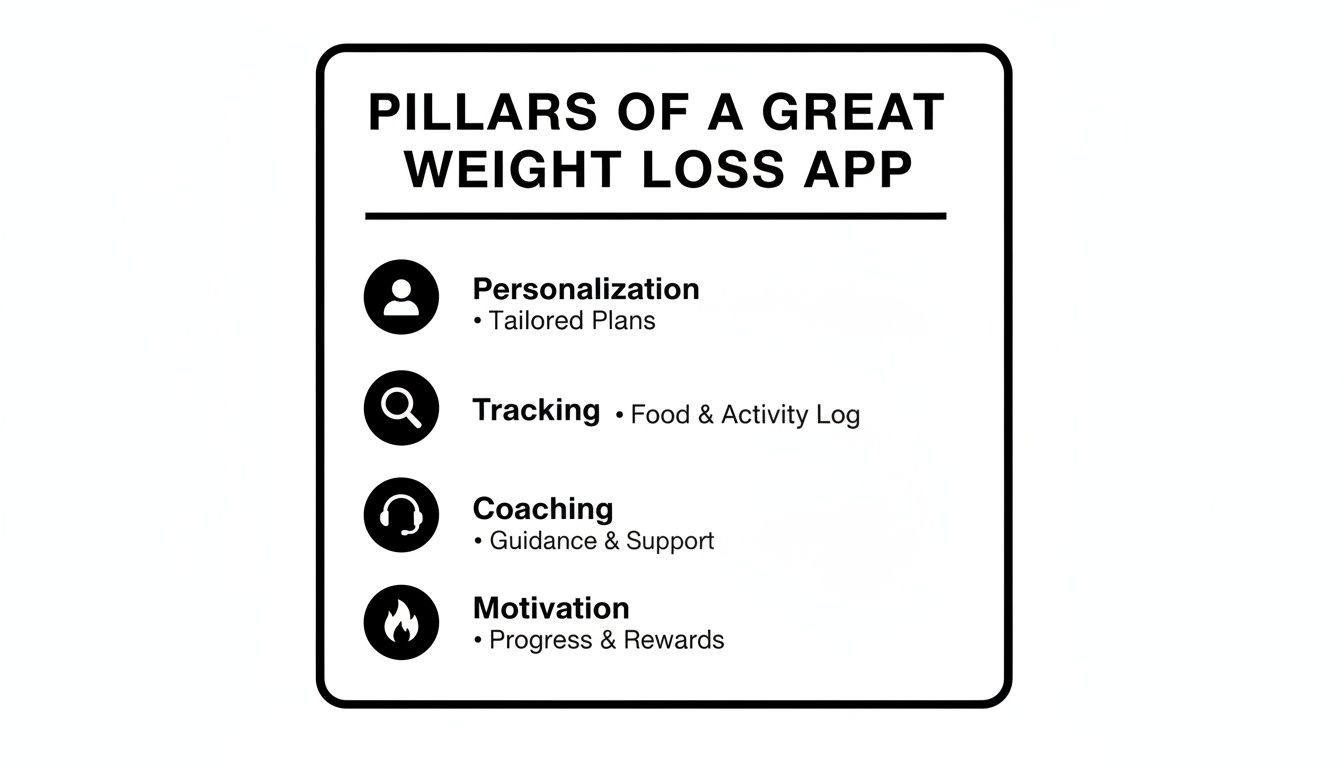
This breakdown shows how an effective app needs to balance personalized plans, detailed tracking, expert coaching, and sustained motivation to actually deliver results that last.
MyFitnessPal: The Data-Driven Diary
MyFitnessPal has been the gold standard for calorie counting for a long time, and for good reason. Its killer feature is an absolutely massive, user-generated food database. It makes logging just about anything you eat incredibly easy with a quick barcode scan or search.
The app’s whole philosophy is built on awareness. By meticulously tracking what you eat, you get a clear, quantitative picture of your habits. This makes it the perfect tool for self-directed people who just need a reliable way to manage their caloric intake and macros.
But here’s the catch: its personalization and coaching are pretty limited, especially in the free version. The app tells you what you’ve eaten but offers very little guidance on what to do next. Premium adds more insights, but the core experience is still a self-guided journey.
MyFitnessPal is the ultimate digital food diary. It’s brilliant at giving you the raw data, but it puts the responsibility of interpreting that data and creating an action plan squarely on your shoulders.
This approach is fantastic for those who already have a solid understanding of nutrition and fitness. For beginners who need more direction, though, it can feel like being handed a map without a compass.
Noom: The Mindset Makeover
Noom looks at weight loss not as a math problem, but as a psychological one. Its entire system is built on the principles of Cognitive Behavioral Therapy (CBT), designed to help you understand—and change—the habits and thought patterns that lead to weight gain.
You still track your food, but Noom uses a color-coded system (green, yellow, red) based on caloric density to gently nudge you toward more nutrient-dense choices. The real work, however, happens in the daily, bite-sized lessons that dive into topics like emotional eating, stress management, and goal setting.
This makes it one of the best apps for weight loss if your biggest struggle is the "why" behind your eating habits. You’re also assigned a human coach and a support group, which adds layers of accountability and community that many other apps just don't have.
The trade-off? Its exercise guidance isn't as robust as what you'd find in a dedicated fitness app. It tracks activity, sure, but it doesn't give you structured, adaptive workout plans. Think of it more as a mindset coach than a personal trainer.
WW (WeightWatchers): The Power of Community
WW has brilliantly transitioned its decades-old, community-based model into the digital age. The whole system revolves around its simplified Points® system, which distills complex nutritional info into a single, easy-to-manage number.
This system encourages you to eat more ZeroPoint™ foods—like fruits, non-starchy veggies, and lean proteins—which makes healthy choices feel a lot less restrictive. But the real magic of WW is its community. The app gives you access to coaches and a vibrant social network where members share successes, recipes, and encouragement.
For anyone who thrives on social support and accountability, WW is a fantastic choice. That shared journey creates a powerful motivational loop that keeps you going. Like Noom, however, its built-in fitness tracking and guidance take a backseat to its nutrition and community features.
Zing Coach: The AI-Powered Personal Trainer
Zing Coach operates on a philosophy of true, dynamic fitness personalization. It acts as an intelligent trainer that adapts to you in real-time, putting a heavy focus on the exercise side of the weight loss equation.
It all starts with a detailed assessment of your goals, fitness level, and whatever equipment you have. From there, its AI generates workouts that aren't static; they actually evolve based on your performance, logged fatigue, and data pulled from sources like Apple Health.
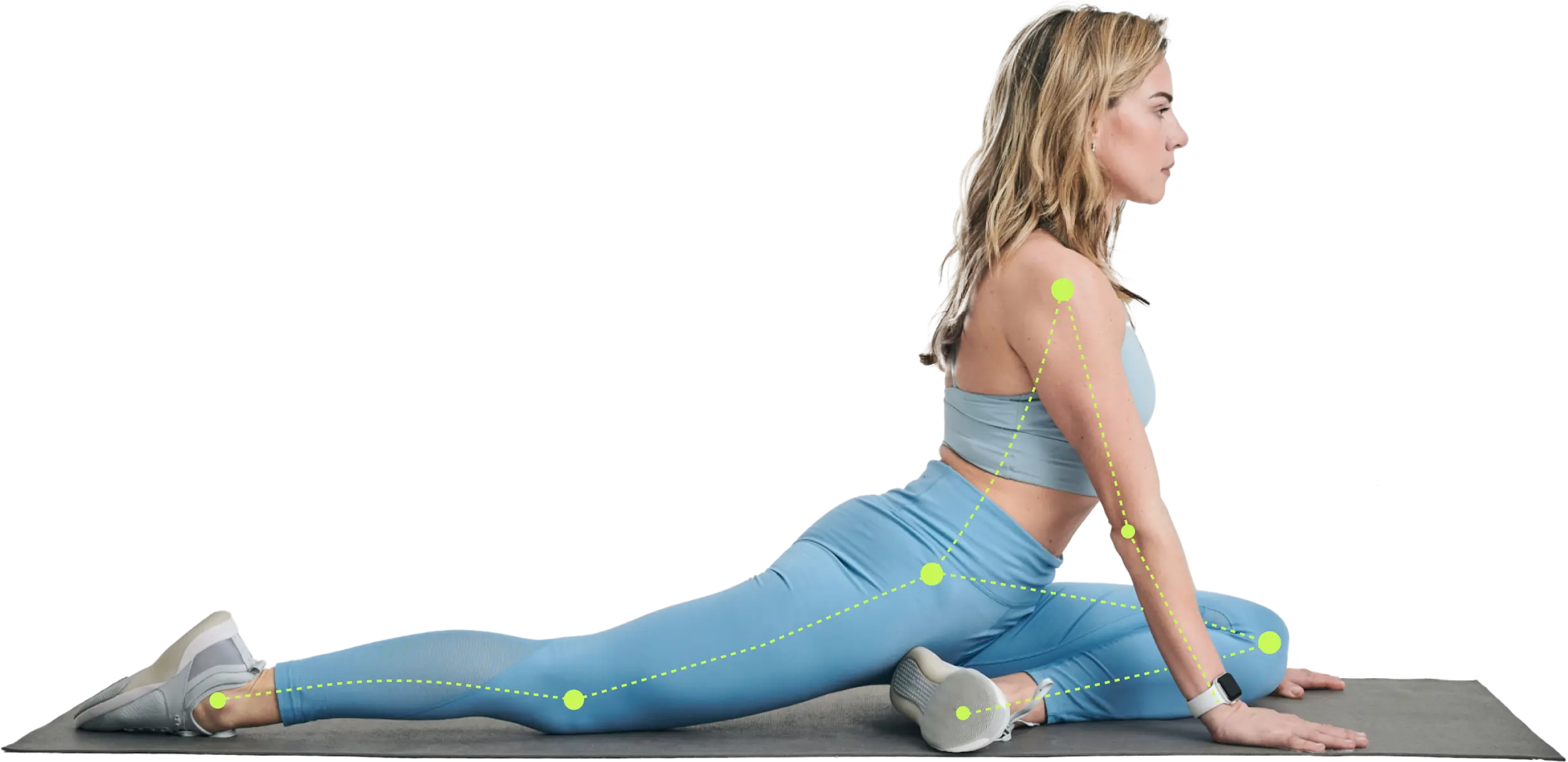
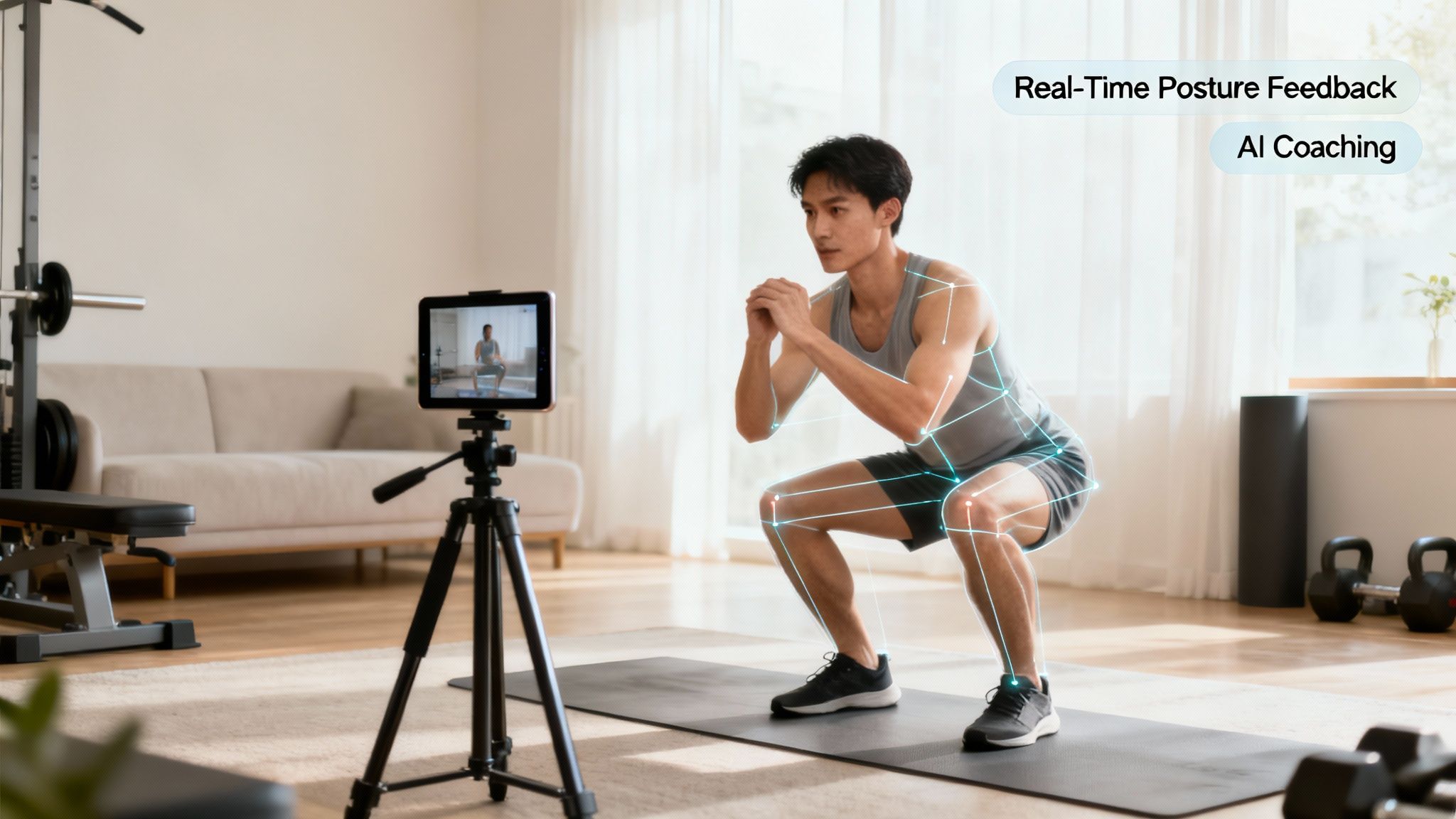
Zing Coach's standout feature is its use of computer vision. Using your phone's camera, it gives you real-time feedback on your exercise form, correcting your posture and counting reps to make sure you're moving safely and effectively. It’s the closest an app can get to having a human trainer right there with you.
The app pairs this advanced fitness coaching with nutritional guidance, giving you calorie and macro targets that line up with your workout intensity. This integrated approach is perfect for users who want a structured, science-backed fitness plan that eliminates all the guesswork. For those focused on building strength while losing fat, understanding the best workout apps for muscle gain can provide additional context.
The global demand for these kinds of integrated tools is exploding. Exercise and weight loss apps are reshaping global health, with the market projected to hit $991.1 million in 2025 and skyrocket to $3,046.2 million by 2032. Android users are a massive part of this growth, accounting for 50.90% of the revenue share in 2024 and making apps accessible to billions. The subscription model, which Zing Coach uses, leads the market at a 43.1% share, appealing to data-driven users who love tracking their progress. You can dive deeper into this market's trajectory by exploring the full market analysis on coherentmarketinsights.com.
Feature and Pricing Comparison of Top Weight Loss Apps
To help you see how these apps stack up at a glance, we've put together a direct comparison. This table breaks down what each app focuses on, its standout features, and who it’s really designed for.
| App Name | Primary Focus | Key Features | Coaching Model | Pricing (Approx.) | Best For |
|---|---|---|---|---|---|
| MyFitnessPal | Calorie & Macro Tracking | Massive food database, barcode scanner, progress reports | Self-guided (premium offers meal plans) | Free; Premium: ~$20/mo | The DIY data tracker who wants full control. |
| Noom | Psychology & Habit Building | Daily CBT lessons, food color system, human coaching, group support | Human coach & peer group | ~$70/mo (discounts for longer plans) | The emotional eater needing to change their relationship with food. |
| WW | Simplified Nutrition & Community | Points® system, ZeroPoint™ foods, coach chat, member workshops | Human coach & strong community network | ~$23/mo (Core plan) | The social dieter who thrives on group accountability and support. |
| Zing Coach | AI-Driven Fitness & Form Correction | Adaptive AI workouts, real-time form correction, progress tracking | AI coach with expert-designed programs | ~$13/mo (annual plan) | The beginner or enthusiast wanting guided, safe, and effective workouts. |
At the end of the day, the "best" app really depends on your personal needs and where you face the biggest hurdles. By understanding the core philosophy behind each one, you can pick a partner that actually aligns with your specific weight loss journey.
Finding the Right App for Your Real-World Needs
A slick interface and a long feature list look great on paper, but they don't mean an app will actually stick. The real test is how seamlessly it fits into your day-to-day life. The best app should feel like a supportive partner, not just another chore on your to-do list.
To figure out what you actually need, it helps to think through specific, real-world scenarios. We've sketched out three common user profiles to show you how different apps solve very different problems. See which one sounds the most like you.
The Busy Professional
Meet Sarah. She’s a project manager juggling tight deadlines and a chaotic schedule. She can squeeze in a workout three or four times a week, but she only has about 30–45 minutes, and every single second needs to count. Efficiency is everything; she can't waste time scrolling through endless workout options or wondering if her form is right.
For Sarah, the perfect app cuts out the guesswork and delivers a high-impact, time-boxed session.
- Top Recommendation: Zing Coach is a perfect match. Its AI system asks about her available time and equipment right at the start, then builds a complete, guided workout around those constraints.
- Why It Works: The real-time form correction is a game-changer. Sarah can do squats or lunges at home with total confidence, knowing the app’s computer vision is making sure her technique is safe and effective. It maximizes the benefit of every single rep without needing a personal trainer, making her short workouts incredibly productive.
The Total Beginner
Next up is David, who’s brand new to fitness and finds the whole gym scene pretty intimidating. He's tried following generic workout plans before but always lost motivation because he wasn't sure what to do or if he was making any progress. What he needs is clear, step-by-step guidance, a real sense of accomplishment, and a system that builds his confidence from the ground up.
David's biggest need is a supportive, educational space that makes fitness feel approachable, not overwhelming.
- Top Recommendation: Noom is an excellent starting point for David. Its psychology-first approach is all about building sustainable habits through daily lessons and a strong community.
- Why It Works: Noom helps David understand the why behind weight loss, which is absolutely crucial for long-term success. The human coach and peer support group provide the accountability and encouragement he needs to push through the tough weeks. It’s focused on creating a healthy relationship with food and activity, which builds a solid foundation for his entire journey.
The most effective app for you is the one that directly solves your biggest bottleneck. Whether it's a lack of time, knowledge, or motivation, the right tool will make your next step feel clear and achievable.
The Data-Driven Athlete
Finally, there's Maria, an experienced runner who wants to optimize her performance and body composition. She already has a solid fitness routine but knows she needs to dial in her nutrition to support her training. Maria loves digging into the metrics and wants an app that delivers precise, actionable data to help her hit that next level.
For Maria, the best app is one that offers granular tracking and connects her nutrition directly to her athletic output.
- Top Recommendation: MyFitnessPal (with a Premium subscription) is the ideal tool for Maria. Its massive food database and detailed macro tracking capabilities give her the precise control she’s looking for.
- Why It Works: Maria can set specific targets for carbs, protein, and fat to fuel her runs and boost recovery. Learning how to count macros for beginners and applying those principles in an app like MyFitnessPal lets her see exactly how her diet impacts her energy and performance. It empowers her to make small, data-informed tweaks that lead to big results.
When you're looking for an app, remember to consider the kinds of activities you'll be tracking, like the full-body benefits of a water rowing machine. By matching an app's strengths to your unique situation—whether you’re a busy professional, a nervous beginner, or a seasoned athlete—you’ll pick a tool that truly supports your real-world needs and helps you achieve lasting success.
How Zing Coach Uses AI for Smarter Fitness
While plenty of weight loss apps are great at logging meals, Zing Coach sets itself apart by acting as a true AI fitness partner. It’s built on a foundation of dynamic intelligence, designed to give you the kind of personalized, adaptive training that, until now, you could only get from a human personal trainer. This approach weaves exercise and nutrition into a single, cohesive system for smarter, more sustainable results.
Your journey starts with a detailed initial assessment that goes way beyond basic stats. It digs into your specific goals, fitness history, and—most importantly—what equipment you have access to, even if that’s just your own body weight. This creates a deeply personalized starting point, ensuring every workout is perfectly matched to your capabilities from day one.
Dynamic Intelligence in Action
Zing Coach’s intelligence isn’t static; it constantly learns from you and adjusts. This is where its data integration becomes a powerful tool for your weight loss journey. By syncing with sources like Apple Health, it gets a clear picture of your overall activity levels and health metrics.
The app combines this with its own inputs:
- Fitness Tests: Periodic assessments measure your strength and endurance, creating a solid baseline to track your progress against.
- Body Composition Scans: Using just your phone’s camera, the app estimates metrics like body fat and lean mass, giving you a much more nuanced view of your progress than the scale alone ever could.
- User Feedback: After each session, you can log how hard it felt. This simple feedback helps the AI fine-tune the intensity of your next workout.
This constant flow of data allows the algorithm to automatically adjust workout volume and intensity, making sure you’re always challenged but never overwhelmed. The ability for the best weight loss apps to connect with wearables is a major driver of growth in a market valued at $980.19 million in 2024, which is projected to reach $2.56 billion by 2030. Zing Coach is a perfect example of this trend, using Health data to adapt plans and boost consistency for users. Discover more about these market trends and their impact on fitness app development on grandviewresearch.com.
Groundbreaking Form Correction Technology
Perhaps Zing Coach’s most impressive feature is its use of computer vision. This technology essentially turns your phone's camera into a virtual spotter, giving you real-time feedback on your exercise form.
Zing Coach's AI analyzes your movements during exercises like squats and lunges, offering on-screen corrections to help you maintain proper technique. This not only makes every rep more effective but also significantly cuts down the risk of injury—a common concern, especially for beginners.
This level of guidance is what makes the app feel less like a simple workout log and more like an interactive coaching experience. It builds your confidence by teaching you how to move safely and correctly. For a closer look at how this works, you can learn more about recent Zing AI Coach upgrades and their benefits.
Ultimately, Zing Coach stands out by creating a closed-loop system where your workouts, nutrition, and real-world data constantly inform one another. It’s a science-backed approach that removes the guesswork, making sophisticated, personalized fitness accessible to everyone.
Answering Your Top Questions About Weight Loss Apps
Even after comparing features and philosophies, it’s normal to have a few questions swirling around. Picking a digital fitness tool is a real investment in your health, so you want to feel completely confident before you commit. Let's tackle some of the most common questions that come up when you're on the hunt for the right weight loss app.
Can I Genuinely Lose Weight Using Just an App?
Yes, you absolutely can. The best apps out there give you the structure, expert-level guidance, and accountability that are so crucial for seeing real results. Think of it as having a personal trainer and nutritionist living in your pocket, pulling together workout plans and meal tracking into one seamless system.
Of course, your own consistency is what will ultimately move the needle. But a well-designed app takes all the guesswork out of the equation, keeps you fired up, and adjusts as you get stronger. Apps with advanced AI, like Zing Coach, take this a step further by making sure every single workout is dialed in perfectly to your current fitness level and goals.
The biggest key to success is just showing up consistently, and a great app makes that so much easier. It simplifies the complicated stuff like workout programming and calorie counting, so you can just focus on doing the work.
What Is the Typical Cost of a Good Weight Loss App?
Prices are all over the map, so it helps to understand the different pricing models you'll run into. Many apps, like MyFitnessPal, operate on a "freemium" basis. You get basic calorie counting for free, but you’ll need to pay around $10–$20 per month for premium features like detailed macro tracking or pre-made meal plans.
Then you have the all-in-one platforms like Noom and WW (WeightWatchers), which are usually subscription-only. These can run anywhere from $40–$70 per month because they lean heavily into psychological coaching and human-led community support. AI-powered apps like Zing Coach also use a premium subscription model, where the price reflects the value of deeply personalized programming and smarter tech. It's best to look at the fee not as a cost, but as an investment in your long-term health.
Which App Is Best If I Am a Complete Beginner?
If you're just starting out, the perfect app is one that builds your confidence with crystal-clear guidance and a major emphasis on safety. Zing Coach really stands out here because its AI tailors every workout to your true starting point. It even uses your phone's camera for real-time form correction, teaching you proper technique from day one. This is huge for preventing injuries and avoiding that "I don't know what I'm doing" feeling.
Apps with strong community vibes and structured daily lessons, like Noom, are also fantastic for beginners who get a boost from that kind of support and habit-building work. The main goal is to find a platform that makes fitness feel approachable, not intimidating.
Do I Need Gym Equipment to Use These Fitness Apps?
Not at all. One of the biggest perks of modern fitness apps is their flexibility. When you first set up an app like Zing Coach, it will ask you exactly what equipment you have access to—and "none" is a perfectly valid answer.
The algorithm will then create effective workouts using just your bodyweight, so you can start making progress right away, right from your living room. And if you decide to join a gym or buy some dumbbells down the road? You just update your profile, and the app will intelligently weave that new equipment into your plan to keep things fresh and challenging.
Ready to stop guessing and start training with a plan that actually adapts to you? Zing Coach uses AI to create workouts tailored to your body, goals, and lifestyle, complete with real-time form correction to keep you safe. Download the app and start your personalized fitness journey today!
Share this article


Authors