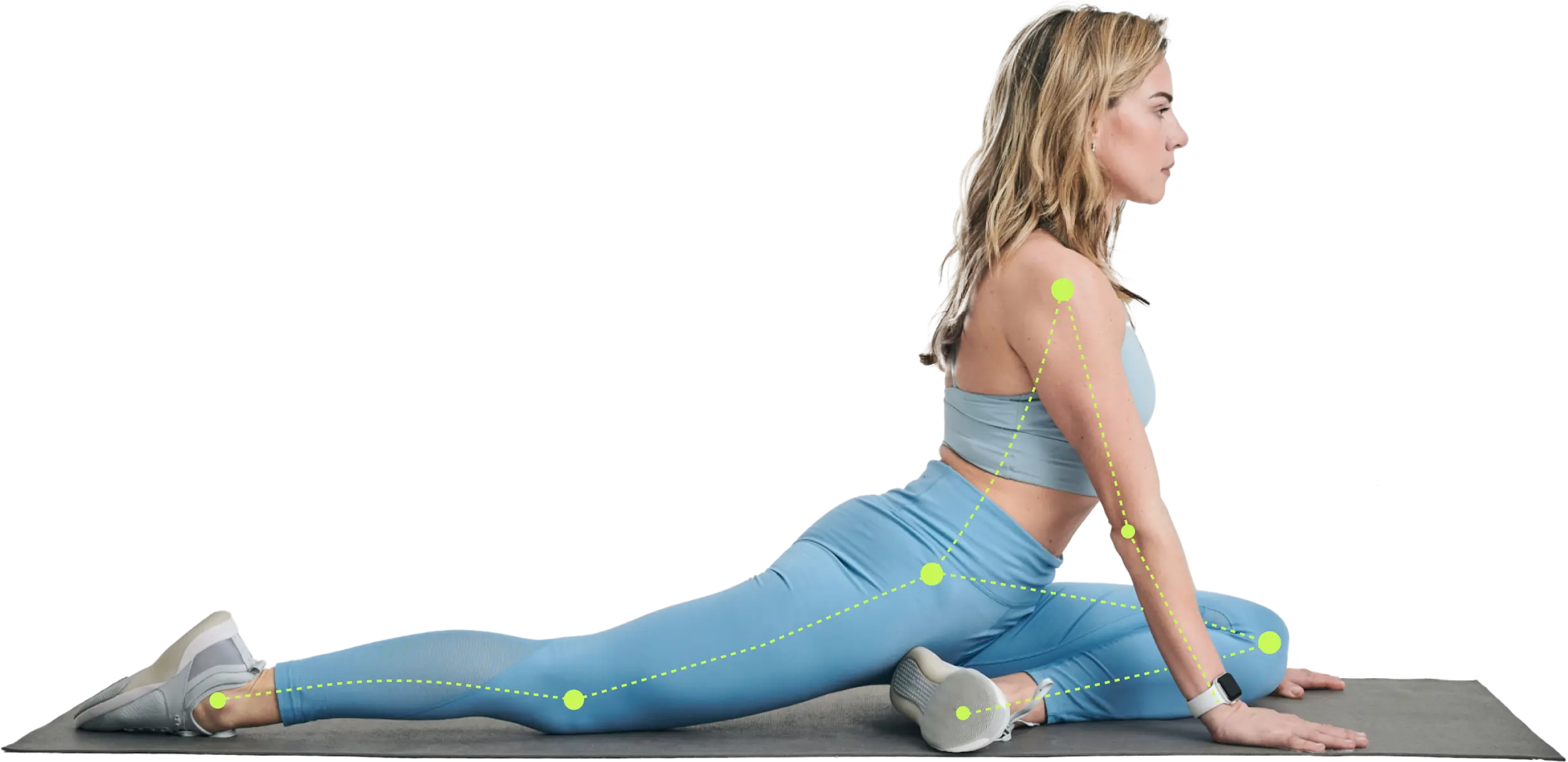
Frustrated asking, 'why am I not seeing results from working out?' This guide uncovers the real reasons your fitness progress has stalled and how to fix them.
There’s nothing more frustrating than putting in the hours at the gym, sweating through every rep, only to look in the mirror and see… well, not much change. If the scale is stuck and you feel like you’re spinning your wheels, you’re not alone.
But here’s the good news: your hard work isn't going to waste. The problem is almost never a lack of effort. It’s a mismatch in strategy.
Think of it like trying to build furniture with the wrong instructions. You can spend hours tightening screws and connecting parts with all the effort in the world, but if the blueprint is flawed, you won't end up with a sturdy chair. Your fitness journey is the same. A generic plan, an off-track diet, or an inconsistent schedule are those faulty instructions holding you back.
The 7 Hidden Barriers to Your Fitness Progress
So, where is the breakdown happening? When you're working out but not seeing results, the issue typically falls into one of a few key categories. Getting familiar with them is the first step to getting back on track.
We'll dive deep into each of these throughout this guide, but this table gives you a quick-glance summary of the common culprits that stall even the most dedicated efforts.
| Problem Area | Why It Stops Your Progress | Where to Find the Solution |
|---|---|---|
| 1. Program Mismatch | Your plan isn’t built for your body, goals, or fitness level. | Fixing Your Training Program |
| 2. Poor Nutrition | You can’t out-train a diet that works against your goals. | Aligning Your Diet With Your Goals |
| 3. Inconsistent Effort | Progress requires consistent stimulus; sporadic workouts aren't enough. | Building Real Consistency |
| 4. Ineffective Recovery | Muscles grow during rest, not during workouts. No recovery = no results. | Mastering Your Recovery |
| 5. Poor Form | Incorrect technique prevents muscle activation and leads to injury. | How to Perfect Your Form (covered in Measurement section) |
| 6. Wrong Metrics | You're only tracking the scale, which doesn't tell the whole story. | Measuring What Matters |
| 7. Underlying Issues | Hormones, stress, or medical conditions can sabotage your progress. | When to See a Professional |
Each of these is a critical pillar supporting your results. If one is weak, the entire structure can falter. Let's figure out which one needs fixing.
Pinpointing the Problem
This decision tree is a great starting point for diagnosing what’s really going on. Follow the path to see where your strategy might need a tune-up.

As the chart shows, stalled progress isn't a dead end. It’s a fork in the road pointing you toward a smarter approach. Whether it's your plan, your diet, or your schedule, a small adjustment can make all the difference.
The feeling of being stuck is a signal. It’s your body telling you that the current approach needs an adjustment. It’s not a sign of failure, but an opportunity to get smarter about your training.
This guide is your new roadmap. We’ll tackle each of these barriers one by one, giving you a clear troubleshooting plan to identify what's wrong and a corrective strategy to finally start seeing the results you’ve been working so hard for.
If your workout feels like a generic chore you downloaded off the internet, it’s probably the biggest reason you’re stuck asking, “Why am I not seeing results from working out?” A one-size-fits-all program just doesn’t work because it ignores the single most important factor in the equation: you.
Your body, your goals, and your starting point are completely unique. Trying to follow a generic plan is like trying to cook a gourmet meal with a recipe that just says, “add some ingredients and cook for a while.” You’re left guessing, and that’s no way to get your body to change.

The Missing Ingredient: Progressive Overload
The secret sauce behind every single successful workout plan is a principle called progressive overload. The idea is simple: for your body to change and your muscles to get stronger, you have to consistently challenge them with more work than they’re used to.
Think of it like learning any new skill. At first, it's hard. But as you practice, it gets easier. To keep improving, you have to try something just a little bit harder. Your muscles operate on the exact same logic.
Progressive overload is the science of telling your body, "The last workout was manageable, so now we need to do a little more." Without this gradual increase in demand, your body has no reason to adapt, and your progress will inevitably stall.
This is exactly where most cookie-cutter plans fall flat. They don’t give you a roadmap for how or when to make things more challenging, leaving you stuck on a frustrating plateau.
Are You Undertraining or Overtraining?
A great workout program lives in a “Goldilocks” zone—it’s not too easy, not too hard, but just right for triggering growth. Straying outside this zone is one of the most common reasons for not seeing results.
- Undertraining: This is the usual suspect. Your workouts simply aren't tough enough to signal your body that it needs to adapt. If you've been lifting the same 5 kg dumbbells for the last three months without upping the weight or reps, you’re almost certainly undertraining.
- Overtraining: On the flip side, pushing way too hard without giving your body time to recover can seriously backfire. This leads to burnout, a higher risk of injury, and can even spike stress hormones that get in the way of your progress. Telltale signs include constant soreness, deep fatigue, and your performance actually getting worse.
Finding that sweet spot is everything. For instance, if your goal is to build muscle but your routine is 90% cardio and only 10% light-resistance work, your plan is completely misaligned with your goal. Your workouts have to directly support what you want to achieve. If you need help structuring a balanced routine, check out our guide on how to create a workout plan for beginners.
The Power of a Personalized and Adaptive Plan
This is where personalization becomes a total game-changer. A plan designed specifically for you takes into account your current fitness level, goals, what equipment you have, and even how you’re feeling on a particular day. An adaptive plan takes it a step further by actually adjusting based on your performance.
A lack of personalization is a huge reason people give up. Generic plans don’t account for the fact that everyone progresses and recovers at a different pace. When a program doesn’t match your capacity, you either burn out from overtraining or see zero change from undertraining. This is why consistency is so hard—and consistency is directly tied to results.
An intelligent system like Zing Coach doesn’t just build your initial plan; it evolves right along with you. It tracks your progress and automatically dials up the difficulty when you’re ready, ensuring you’re always challenged just enough to keep seeing results without pushing you toward injury.
The Critical Role Of Workout Consistency
A few killer workouts scattered here and there won’t change your body. But consistent, regular effort? That absolutely will. If you’re asking yourself, "why am I not seeing results from working out?" the answer almost always comes back to consistency.
Think of it like learning a new language. You wouldn't cram for eight hours once a month and expect to become fluent. Real progress comes from practicing 20–30 minutes every single day. Your body adapts the same way—it responds to the steady, predictable signal of regular exercise.
Why Sticking To The Plan Is So Hard
So, if consistency is the secret sauce, why is it so tough to maintain? It usually boils down to a mix of psychology and mismatched expectations. People often fall off the wagon because they set huge, unrealistic goals, expect to see a six-pack in two weeks, and then crash when it doesn't happen.
This cycle of all-out enthusiasm followed by a sharp drop-off is a classic pattern. It’s a massive challenge for the entire fitness app industry.
The fitness app industry faces a critical retention challenge that directly impacts workout consistency and results visibility. According to 2026 market data, over 70% of fitness app users abandon their applications within the first 30 days.
That’s a staggering number, and it points to a huge barrier to progress. When you lose motivation and stop tracking, you lose the very structure that delivers results. This means most people never stick around long enough to see the meaningful changes that typically take 4–8 weeks of consistent training.
Building A Habit That Actually Sticks
Turning consistency from a daily battle into a rewarding habit isn't about brute force. It’s about designing a routine that feels manageable and actually fits your life. Here’s how you can build that foundation:
- Start Smaller Than You Think: Don't jump into six intense workouts a week if you're coming from the couch. Aim for three solid, achievable sessions. The goal is to build momentum and prove to yourself that you can show up.
- Schedule It Like An Appointment: Block out time in your calendar for your workouts. Give it the same weight you’d give a work meeting or a doctor's visit. It’s non-negotiable.
- Focus on the "Showing Up" Metric: On days when your motivation is in the gutter, just focus on starting. Even a 15-minute workout is a win. Why? Because it reinforces the habit.
The key is to remove as much friction as possible. An app like Zing Coach helps by creating sessions that fit your available time and energy, making it way easier to say "yes" to your workout. For a deeper dive, check out our guide on how to stay consistent with exercise.
At the end of the day, the most effective workout plan is the one you actually do, week in and week out.
Why You Cannot Out-Train A Bad Diet
It’s a tough pill to swallow, but here’s a fitness truth: you can have the most dialed-in workout plan on the planet, but if your nutrition is a mess, you’re just spinning your wheels. Your results are made in the kitchen, not just the gym. This is one of the biggest reasons people get stuck wondering, "Why am I not seeing results from working out?"
Think of your body like a high-performance car and your workouts as its powerful engine. What happens when you fill that engine with low-grade fuel? It sputters, stalls, and can't perform. Your diet is that fuel.

The Unbreakable Law Of Energy Balance
When it comes to changing your body—whether that means losing fat or gaining muscle—everything boils down to one simple concept: energy balance. This is the relationship between the calories you eat (calories in) and the calories you burn (calories out).
Just “eating healthy” won’t cut it. You can eat all the avocados, nuts, and olive oil in the world, but if you’re still taking in more calories than you’re burning, you won’t lose fat. On the flip side, if you want to build muscle but aren't eating enough, your body simply won't have the building blocks it needs to grow.
Energy balance is the non-negotiable foundation for getting results. To lose fat, you must be in a consistent calorie deficit. To build muscle, you need a slight calorie surplus. There’s no getting around this biological reality.
Understanding this is step one. Step two is putting it into practice, which is where most people get tripped up. A great starting point is to calculate your daily calorie needs to get a personalized target.
Beyond Calories Macronutrients Matter
Once you have your calorie target, the next step is to look at the quality of those calories. This is where macronutrients—protein, carbs, and fats—enter the picture. Each one has a specific job to do in fueling your workouts and helping your body repair and rebuild itself.
- Protein The Builder: This is your most important macro for changing how your body looks. Protein provides the amino acids your body uses to repair the muscle fibers you break down during training. Not getting enough protein is a huge roadblock for both building muscle and losing fat, as it also helps you feel full.
- Carbohydrates The Fuel: Carbs are your body's go-to energy source, especially for high-intensity training. They’re stored in your muscles as glycogen and are essential for powering you through those tough workouts. Skimping on carbs will leave you feeling weak and unable to give your all.
- Fats The Supporter: Healthy fats are crucial for hormone production (including the ones needed for muscle growth), absorbing nutrients, and your overall health. They’re a dense energy source, so you have to watch your portions, but cutting them out completely is a big mistake.
Common Nutritional Mistakes That Sabotage Progress
Many people with the best intentions find their progress derailed by a few common pitfalls. If you can spot these, you can get back on track and make sure your diet is helping, not hurting, your hard work.
- Underestimating Your Calorie Intake: That "small" handful of nuts, the extra splash of creamer in your coffee, and the dressing on your salad all add up. It’s incredibly easy to eat hundreds of extra calories without even noticing.
- Overestimating Calories Burned: Fitness trackers are great for motivation, but they often give you a very generous estimate of the calories you burn during a workout. People mistakenly think a 30-minute run earns them an extra 500-calorie treat, which can wipe out their entire deficit for the day.
- Not Eating Enough Protein: This might be the most common mistake of all. For active people, a good goal is to aim for around 1.6–2.2 grams of protein per kilogram of body weight. If you’re not hitting that target, building or even maintaining muscle becomes nearly impossible.
Remember, what’s on your plate is just as important as the reps you do in the gym. Making smart grocery choices can make a massive difference. Nailing your nutrition is the key to finally unlocking the results you’ve been working so hard for.
Are You Measuring Progress The Right Way?
You’re putting in the work. You’ve been hitting your workouts consistently and keeping your diet in check, but every time you step on the scale, that number just won’t budge. It’s a frustrating moment, and it’s one of the biggest reasons people throw their hands up and ask, “Why am I not seeing results from working out?”
Here's the thing: the scale is a terrible storyteller. It has no clue how to tell the difference between a pound of fat and a pound of hard-earned muscle.
When you start strength training, you’re building lean muscle—which is dense and compact—while you’re losing fat. Your body is changing for the better, but because muscle takes up less space than fat for the same weight, your total body weight might stall or even tick up a bit.
Fixating on the scale can be incredibly misleading. Your weight can swing daily based on water retention, hormones, or what you ate last night. Relying on that one number is like judging an entire movie by a single, blurry frame—you’re completely missing the bigger picture.
Moving Beyond The Scale
To actually see the progress you’re making, you need to look at a wider set of metrics. These are the indicators that paint a full, accurate picture of your transformation and give you the positive feedback you need to stay in the game.
Here are some far more effective ways to measure your success:
- Progress Photos: This is the gold standard for a reason. Snap photos from the front, side, and back every 4–6 weeks in the same lighting and outfit. You’ll be shocked by the visual changes you can see over time that the scale would never reveal.
- Body Measurements: Grab a flexible measuring tape and track the circumference of your waist, hips, chest, arms, and thighs. Losing inches is a crystal-clear sign that you’re shedding fat, even if your weight stays the same.
- Performance Gains: Are you lifting heavier? Can you squeeze out more reps than you could last month? Are you running faster or longer? These improvements are concrete proof that you’re getting stronger and fitter.
When you limit your idea of progress to a single number, it’s easy to feel defeated. Broadening your view to include photos, measurements, and performance creates a much more motivating and honest feedback loop, showing you how your body is truly changing for the better.
The Critical Link Between Tracking and Results
Failing to see results is often directly tied to not tracking them in the first place. When you stop monitoring your progress, you lose the very feedback that tells you if your plan is actually working. For a deeper dive, check out our detailed guide on how to track fitness progress.
This is a huge gap because real, visible fitness results depend on watching metrics like body fat percentage, lean mass, and performance benchmarks over time. When people stop tracking, they lose the feedback loop that helps them recognize their own progress and stay motivated. You can find more industry insights on how monitoring impacts workout results and user retention.
Apps like Zing Coach make this whole process much simpler. It automatically tracks your workout performance and gives you tools for body composition analysis, so you always have a clear view of how far you’ve come. Shifting your focus from just the scale to these more holistic metrics will finally let you see the incredible progress you're actually making.
The Overlooked Importance Of Recovery And Sleep
We tend to put our workouts on a pedestal, but here’s something most people miss: you don’t build muscle in the gym. You build it while you rest. An intense training session is just the signal for change; the real magic happens during recovery. If you skip this part, you're only doing half the work.
Think of it this way: your workout is like a construction crew that demolishes the old, weak parts of your muscles. But recovery—fueled by sleep and proper rest—is what brings in the new, stronger materials to rebuild everything better than before. Without that rebuilding phase, you’re just left with a pile of rubble.

This is a huge reason why so many people get frustrated, asking, “Why am I not seeing results from working out?” They’re constantly knocking things down without ever building back up.
The Hidden Damage Of Poor Sleep And High Stress
Not getting enough quality sleep and dealing with chronic stress are silent progress killers. They actively work against your fitness goals by messing with your hormones, especially one called cortisol. While cortisol isn’t always the bad guy, when it’s constantly high from stress or poor sleep, it becomes destructive.
Elevated cortisol tells your body to store fat, particularly around your stomach. It also revs up your appetite for sugary, fatty foods. Even worse, it's catabolic, meaning it can literally break down your hard-earned muscle tissue. You end up in a losing battle where your lifestyle undoes all the effort from your workouts.
Your fitness plan doesn’t end when your workout does. Proper recovery, sleep, and stress management are non-negotiable parts of any successful training program. They determine whether you adapt and grow stronger or simply burn out.
Quality sleep is also crucial for managing the hormones that control hunger. When you’re sleep-deprived, ghrelin (the "I'm hungry" hormone) spikes, while leptin (the "I'm full" hormone) drops. This hormonal one-two punch leaves you feeling hungrier and less satisfied, making it incredibly difficult to stick to your nutrition plan. For a deep dive into improving your rest, check out these tips on how to sleep better at night.
Making Recovery An Actionable Part Of Your Plan
Prioritizing recovery isn't about being lazy; it’s an active strategy. It means scheduling rest days with the same commitment as your workouts and actively working to improve your sleep.
Here’s how you can start building better recovery into your routine:
- Schedule Rest Days: Your body needs time to repair itself. Plan for at least 1–2 full rest days each week, maybe more if your training is especially tough. On these days, focus on light activity like walking or stretching.
- Prioritize Sleep Consistency: Try to get 7–8 hours of quality sleep a night. Going to bed and waking up around the same time every day—even on weekends—helps regulate your body’s internal clock and seriously improves sleep quality.
- Listen to Your Body: Pay attention to the signs of overtraining. Are you always sore? Constantly tired? Is your performance dropping? Don’t be afraid to take an unscheduled rest day when you need one.
Building a solid recovery foundation is a game-changer. If you want more specific strategies, our guide has some excellent workout recovery tips. By making rest a priority, you ensure you come back to every single workout stronger, more energized, and ready to make real progress.
Your Questions On Workout Results Answered
Even when you're doing everything right, you're bound to have questions. Let's tackle some of the most common ones that pop up when you're trying to figure out your progress and keep your motivation high.
How Quickly Should I Expect To See Results?
Ah, the million-dollar question. The honest-to-goodness truth? It varies. You’ll typically start seeing noticeable changes in the mirror, like less fat or more muscle definition, within 4 to 8 weeks of consistent training and nutrition.
But the "under-the-hood" changes happen way faster. These are the wins that fuel your motivation for the long haul.
Within the first week or two, you’ll probably start to feel:
- More energy to get through your day.
- Deeper, more restful sleep.
- A better mood and less day-to-day stress.
Don't dismiss these early victories. They're proof that your body is responding positively, even before the scale or your reflection has had a chance to catch up.
Why Do I Feel Weaker Some Days?
Feeling "off" in the gym is completely normal and happens to everyone. One weak workout doesn't mean you're going backward. Your strength can fluctuate for a dozen reasons, like a bad night's sleep, sky-high stress from work, or simply not eating enough to power through your session.
Think of it as feedback, not failure. If it happens every once in a while, just chalk it up to a bad day and move on. But if you’re constantly feeling drained, it’s a big red flag that you might need to prioritize recovery, clean up your sleep habits, or take a hard look at your nutrition.
Can I Still Build Muscle While Losing Fat?
Absolutely. It's a process known as body recomposition, and it's especially achievable if you’re fairly new to lifting weights. The catch is that it demands a very specific game plan: a small calorie deficit, a diet packed with protein, and a challenging strength training routine.
The secret to body recomposition is walking a tightrope. You need enough protein to give your muscles the building blocks they need, while also creating a small calorie gap that nudges your body to tap into stored fat for energy.
For seasoned lifters, this gets a lot trickier. It's often more efficient to dedicate specific blocks of time to either building muscle or losing fat. But for most people starting out, hitting both goals at once is entirely realistic. If you're asking yourself why am I not seeing results from working out while trying this, a lack of protein is almost always the number one reason.
Ready to eliminate the guesswork and start a plan that truly adapts to you? Zing Coach uses AI to create personalized workouts that evolve as you get stronger, ensuring you're always challenged enough to see results. With real-time form correction, progress tracking, and nutrition guidance, it's the smartest way to turn your effort into visible progress.
Share this article


Authors