Find the best strength training apps for runners to prevent injury and boost performance. We review 10 top apps, from AI coaches to PT-led programs.
What usually goes wrong when runners add strength work? It is rarely effort. The problem is placement.
A hard workout on Tuesday, a poorly timed leg session on Wednesday, and dead legs on Thursday is the pattern I see most. Then strength gets blamed, when the true issue is timing, exercise choice, and load management. Strength training helps runners when it fits the week they are already running. It falls apart when it is treated like a separate project with no regard for workouts, long runs, or recovery.
That is the standard I used for this list. Some apps are better because they build strength into a running plan. Others earn a spot because they make lifting easier to schedule, progress, and track without stealing energy from key run sessions. For runners, that trade-off matters more than having the biggest exercise library or the flashiest coaching features.
The category is also more specialized than it used to be. Runner-focused options now sit alongside general strength apps, logging tools, and coach-led platforms. Dedicated products like 10W2S on the App Store show how specific this niche has become, with programming aimed at running economy, durability, and performance rather than general fitness.
The practical question is not just which app has good workouts. It is how the app fits your training week and what you can do with the data it collects.
For example, a runner doing intervals on Tuesday and a long run on Sunday usually does better with strength on Monday and Thursday, or after an easy run, than with heavy lower-body work the day before quality sessions. If your app syncs with Apple Health, Garmin, or similar platforms, that data can help you spot patterns. Resting heart rate trends, sleep, soreness, and missed reps are useful only if they change what you do next. Good apps help you reduce volume during race weeks, keep lifting on maintenance mode during peak mileage, and avoid stacking fatigue on the wrong days.
If you are building the habit from scratch, a simple at-home setup often works better than chasing a perfect gym plan. This guide on how to start strength training at home covers the basics well.
If you also track performance closely, lab testing can add context. A proper VO2 Max testing treadmill assessment can help you judge how hard you are really working, so strength supports your run training instead of interfering with it.
1. Zing Coach

Zing Coach is the best fit here for runners who don't want to manually stitch together lifting, recovery, nutrition, and technique checks across three different apps. It's an AI-powered training app that personalizes sessions based on your goal, available equipment, preferred workout duration, and current fitness level, then adjusts training using Apple Health data, in-app fitness tests, and body composition inputs.
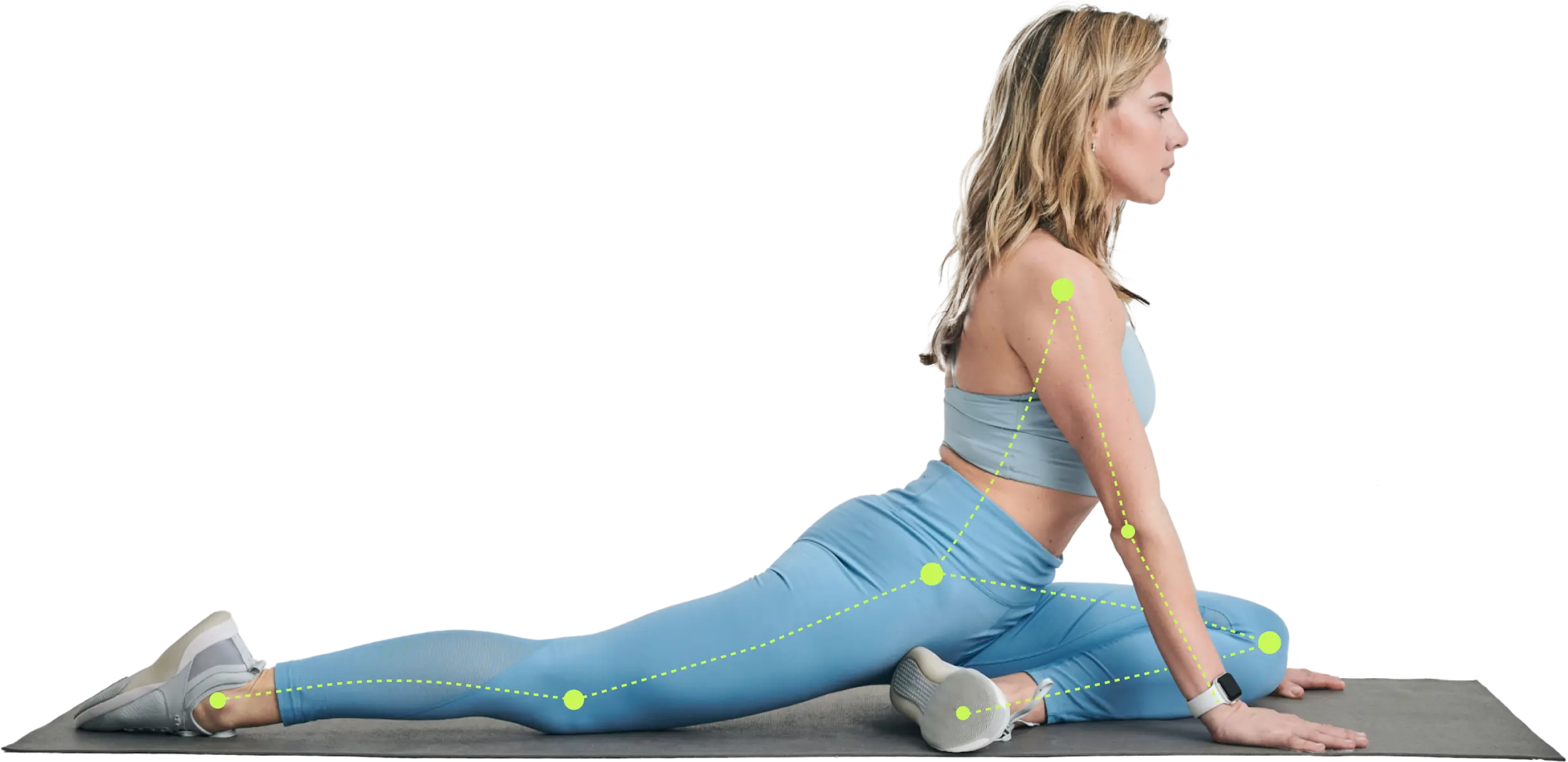
What makes it stand out for runners isn't just personalization. It's the fact that Zing adds real-time computer vision coaching. That matters because runner-specific strength work often falls apart on the details: knee position in split squats, trunk control in single-leg hinges, and rushed reps when fatigue sets in.
Why it works for runners
A lot of runner-focused apps give you a video demo and call that coaching. Zing goes further by using your phone camera for rep counting and live form feedback. That's useful for home workouts, travel sessions, and anyone rebuilding confidence after a layoff.
The underserved gap in this category is form correction and injury-prevention feedback. Coverage of runner apps has highlighted high injury rates among runners, up to 79% annually, while noting that existing runner strength apps often lack live technique analysis for movements like squats and lunges in home settings, according to Runner's World coverage of running apps. Zing is one of the clearest answers to that problem.
Practical rule: If you train alone and you're not sure whether your reps still look good near the end of a set, form feedback matters more than a bigger exercise library.
Zing also handles the fact that runners aren't always training for aesthetics. Some weeks the priority is staying durable during a race block. Other weeks it's rebuilding muscle, trimming body fat, or getting back into the gym without wrecking the next day's tempo run.
Best use case
Zing suits beginners, busy professionals, returning gym-goers, and data-driven runners who want the app to make training decisions instead of constantly second-guessing session length, exercise choice, and recovery. The nutrition guidance and broader progress tracking help if your running and body composition goals overlap.
Its trade-offs are straightforward:
- Best strength: Real personalization across time, equipment, and readiness.
- Best differentiator: Live rep counting and technique feedback.
- Main drawback: Pricing details can feel less transparent than some competitors, and camera-based features work best with decent space and lighting.
If you're training at home, Zing's guide on how to start strength training at home fits well with the app's low-friction approach.
2. Runna

Runna is the easiest recommendation for runners who already think in race calendars. If your training revolves around a 5K, half marathon, marathon, or ultra date, Runna makes more sense than a general strength app because the lifting sits inside the running plan rather than beside it.
That sounds simple, but it's the difference between useful strength work and junk fatigue. Runna places mobility, strength, and injury-prevention sessions in a week that already includes your key runs, and it syncs well with common runner tools like Garmin, Apple Watch, and Strava.
Where Runna beats general fitness apps
Most general training apps are good at workouts. Runna is good at context. It understands that a lower-body session on the wrong day can ruin the workout that matters.
Its “not feeling 100%” style adjustments are also practical. Busy runners rarely miss sessions because they forgot. They miss because work ran late, sleep was poor, or the long run took more out of them than expected.
Put strength next to the least important run of the week, not the most important one.
That's also why Runna pairs well with a separate lifting philosophy if needed. If you want more detail on sequencing both, Zing's article on running and lifting gives a solid framework.
Best for
Runna is strongest for runners who want one calendar, one progression, and fewer decisions. It's less ideal for people who want deep gym logging, detailed strength analytics, or a broad standalone lifting platform.
The trade-off is clear:
- What works: Great scheduling logic for race-focused runners.
- What doesn't: If strength is your bigger priority than running, it can feel too run-first.
3. The Run Experience

The Run Experience is a strong choice for runners who learn best by being coached through the session, not by reading a workout card and figuring it out. The app leans heavily into video-guided strength, run form, mobility work, and community support.
That makes it especially useful for newer runners and returners. A lot of people know they “should” strengthen glutes, calves, and core. Fewer know how to build that into a week consistently without overcomplicating it.
Why people stick with it
The app's biggest strength is clarity. You don't need to decode a program or translate gym language into runner language. Sessions are built around common needs like durability, form, and injury prevention.
It also helps if you prefer coach access and community Q&A over pure automation. Some runners thrive when someone explains why a movement matters and how it should feel.
A practical complement to that approach is learning how strength supports pace without just adding fatigue. This guide on how to run faster without getting tired connects well with the kind of form-and-strength emphasis The Run Experience promotes.
Trade-offs to know
- Good fit: Runners who want coaching energy and follow-along structure.
- Less ideal: People who want a minimal, data-dense interface and fast logging.
- Potential friction: The content library can feel large if you want a simple “just tell me today's workout” experience.
The Run Experience works best when you value instruction more than automation.
4. RunSmart Online

RunSmart Online is one of the better options for cautious runners. If you're coming back from an injury, dealing with recurring niggles, or you know your mechanics need work, a physical-therapist-designed system is often the smarter choice than a high-energy class app.
Its programs focus on common runner weak points like glutes, calves, hips, and trunk stability. That sounds basic, but that's exactly the point. Runners rarely need more novelty. They need the right boring things, progressed well.
Best use case
RunSmart is most useful when your limiter is durability, not motivation. It's built for runners who want conservative progressions, run-form drills, and a practical return-to-run mindset.
If you're managing knee issues, this kind of approach often makes more sense than jumping into loaded lower-body volume too early. Pairing it with movement selection advice like these exercises for bad knees can help you stay productive without forcing movements that don't suit you yet.
The best runner strength plan after injury is usually the one that feels almost too easy for two weeks.
Where it falls short
RunSmart's ecosystem is smaller and more utilitarian than big mainstream platforms. If you want flashy visuals, social competition, or advanced wearable-style analytics, it won't be the most exciting app on this list.
But if your main question is, “What can I do that helps me run more consistently without stirring things up again?”, it deserves a serious look.
5. Vert.run

Vert.run is for trail and ultra runners who need strength for terrain, not just aesthetics or generic injury prevention. That changes the target. You care more about uphill power, ankle stiffness, descending control, and hip stability under fatigue than you do about adding a lot of gym complexity.
The app's adaptive plans are built around race dates and mountain-specific demands. That's a real advantage if your running isn't steady-state road mileage and your long runs involve climbing, technical footing, and uneven loading.
What it gets right
Vert.run understands that trail runners often need prehab as much as strength. A road runner can get away with a simpler routine. A mountain runner usually can't.
Its strength inclusion makes sense because it supports the terrain directly. Think more single-leg control, trunk stability, and durability than classic bodybuilding structure.
- Best for trail specificity: Uphill and downhill resilience matter here.
- Best for year-round use: It fits runners who always have some adventure or race on the calendar.
- Main limitation: If you're mostly training for flat road races, it can feel too niche.
For technical trail athletes, that niche is exactly the value.
6. Nike Training Club
Nike Training Club fits a common runner question well. What should you do when you know strength work matters, but you do not want another paid subscription or a complicated lifting plan?
For that job, NTC is one of the easiest answers. It gives runners a large free library of strength, mobility, and recovery sessions with clear coaching, solid production, and useful filters for time, body area, and workout type. If you need a 10 to 20 minute session that you can complete after a run, it does that well.
Its value is convenience. Its limitation is programming.
NTC works best for runners who already have a running schedule and need help filling the gaps around it. Use it for post-run core work, short lower-body sessions on easier mileage days, mobility on travel days, or general strength during base training. It is less effective if you want the app to decide your weekly loading, progression, and exercise selection around a race build.
How runners should use it
Treat Nike Training Club as a session library, not as your head coach. That distinction matters.
A runner training for a 10K or half marathon can get a lot out of two short strength sessions per week in NTC. Place the harder session after an easy run or on the same day as a workout, then keep the next day easy. Put mobility or lighter core work before rest days, during travel, or after shorter recovery runs. That setup keeps your hard days hard and protects the quality of key run sessions.
If you sync run data in Nike Run Club and handle strength in NTC, you get a practical split. Run tracking stays in one place, strength lives in another, and you still need to make the training decisions yourself. That is the fundamental trade-off. The ecosystem is easy to use, but it does not fully connect fatigue, lifting load, and run intensity the way a true integrated coaching platform would.
Real trade-off
NTC is a strong choice for runners who need consistency more than precision. The app lowers the barrier to doing strength work at all, which is often the biggest problem.
The catch is simple. You need enough judgment to choose the right sessions at the right time. If you stack a tough leg workout before intervals or a long run, the app will not stop you. For runners with some training awareness, that freedom is useful. For runners who want guided progression tied tightly to race prep, it can feel too open-ended.
7. Peloton App

Peloton App works well for runners who stay consistent when someone is coaching them in real time. If you like time-boxed sessions and energetic instruction, Peloton is one of the easiest ways to keep strength work from becoming another thing you postpone.
Its “Strength for Runners” collection, lower-body classes, core work, and bootcamp-style formats are useful because they're short and accessible. You can fit them into a normal run week without needing a full gym plan.
Why runners like it
Peloton removes decision fatigue. You open the app, choose a 10-minute, 20-minute, or 30-minute session, and get moving.
That simplicity matters because the hybrid running-strength segment is growing fast. The global running training app market was valued at USD 4.5 billion in 2024 and is projected to expand at a 12% CAGR through 2030, according to Future Data Stats' running training app market overview. More runners want one ecosystem for movement, not separate silos.
If your biggest weakness is inconsistency, a shorter coached session usually beats a perfect session you never start.
Main downside
Peloton doesn't think like a run coach. It gives you excellent sessions, but you still need to decide where those sessions belong in a training week.
That's fine for self-aware runners. It's less fine for athletes who need the app to protect them from doing too much.
8. StrengthLog

StrengthLog is for runners who take lifting seriously and want proper tracking. It's much closer to a dedicated strength tool than a lifestyle fitness app, and that's its advantage.
If you already follow a separate run plan and want your strength work to progress with intention, StrengthLog gives you more control over sets, reps, load, personal records, and volume trends than most runner-first apps.
Who should choose it
This is the right app for runners who think, “I don't need motivation. I need a clean logbook and a good progression model.” It's also a good fit if you're in a gym regularly and want your strength cycle to be something more structured than bodyweight circuits.
The app's value sits inside a larger trend too. Fitness app downloads reached 850 million in 2024, with 345 million active users, according to Business of Apps fitness market data. In a crowded market, tools that offer deeper specialization and serious tracking stand out for users who already know what they want.
Limits
- Strongest point: Excellent strength logging and progression.
- Weakest point: It doesn't coach your running.
- Good pairing: Any established run plan where you want the gym side handled properly.
StrengthLog is less “runner lifestyle” and more “strength plan with running in the background.” For some athletes, that's exactly right.
9. Volt Athletics

Volt Athletics is a strong pick for runners who want a proper strength and conditioning framework rather than runner-branded circuits. It isn't built only for runners, but it's useful for them because it handles periodized strength blocks, equipment awareness, and progression well.
That matters if you're experienced enough to know your running is held back by force production, tissue tolerance, or general strength. At that point, you often need actual S&C structure, not another collection of short mobility videos.
Where Volt fits
Volt suits busy runners who still want disciplined training. You can scale it from bands and bodyweight to a full gym setup, and the readiness tools add some practicality when life gets messy.
If your training includes power work, pairing your running with a plyometric workout program can also help you think about how explosiveness fits into the broader picture.
The trade-off
Volt is better at strength structure than runner cueing. It won't hold your hand through race-week adjustments the way a running-first platform might.
That said, some runners don't want that. They already know how to manage miles. They want the gym side to be professional, progressive, and efficient. Volt does that well.
10. Keelo

Keelo on the App Store is a good fit for runners who need short, potent sessions and don't want to overplan. Its workouts are generally efficient, scalable, and easy to do at home or while traveling.
That makes Keelo useful in real life. A lot of runners don't miss strength because they hate it. They miss it because a full gym session doesn't fit around work, family, and the run they care about.
Why it works
Keelo lowers the barrier. Short bodyweight and dumbbell sessions can keep a runner consistent during heavy mileage blocks, travel weeks, or off-seasons where the goal is maintaining some strength.
It also aligns with a common scheduling problem in this category. Coverage of running-and-strength apps has noted that many runners struggle to fit regular strength sessions around irregular lifestyles, while rigid plans often clash with real-world schedules, according to Find Your Edge's review of running and strength apps for beginners.
What you give up
You're not getting runner-specific periodization. You're getting flexible, efficient conditioning. For some runners that's enough. For others, it's a bridge tool until they're ready for more structure.
Strength Training Apps for Runners, Top 10 Comparison
| Product | Core focus | Personalization & adaptivity | Best for | Key USP | Pricing |
|---|---|---|---|---|---|
| Zing Coach | AI-powered, science-backed personalized training (fat loss, muscle, consistency) | Continuous adaptation via Apple Health, body‑scan, fitness tests + real‑time computer vision | Beginners, busy pros, returning gym-goers, data-driven users | Real‑time form coaching (rep count & technique) + body composition calibration | Subscription (varies by region); occasional one‑time body‑scan fee |
| Runna | Periodized run plans with integrated strength & mobility | Auto-adjusts plans; watch/Strava/Garmin sync; fatigue tools | Runners training for 5K→ultra who want race-aligned strength | Strong watch/Strava integration and race periodization | Subscription; regional pricing varies |
| The Run Experience | App programs with video-guided strength, form & injury prevention | Programmed run plans + coach Q&A, less automatic adaptivity | Runners wanting follow‑along strength routines and community | Clear follow‑along videos and active community support | Free content + paid membership options |
| RunSmart Online | PT-designed strength & return-to-run programs | PT-built periodized plans and run-form drills | Runners rehabbing or rebuilding after layoffs/injury | Physical‑therapist-led, conservative progressions | Paid programs / program fees |
| Vert.run | Trail & ultra plans with strength and prehab | Auto-adapting plans tied to race dates; coach-authored content | Trail and ultra runners needing uphill power and stability | Trail-specific strength by elite mountain runners | Subscription; affordable entry-level options |
| Nike Training Club (NTC) | Large free library of strength, mobility and yoga | Filterable workouts but no true periodized runner plans | Runners needing free accessory work and mobility | High‑production, zero‑cost workouts | Free |
| Peloton App | Instructor-led strength classes and Gym mode | Class filters by duration/equipment; users assemble periodization | Runners who prefer coached, time-boxed sessions | Motivating coaches and wide class variety | Subscription; some content behind higher tiers |
| StrengthLog | Strength tracker, logging, and analytics | Custom program building, volume/PR tracking, Apple Health sync | Runners who pair structured strength with separate run plans | Detailed progression analytics and logging tools | Free basic; premium for programs & advanced stats |
| Volt Athletics (Individual) | Evidence-based S&C with periodized blocks | Cortex AI personalization; equipment-aware programming | Runners seeking structured strength & readiness tools | CSCS coach-built blocks with automatic progression | Subscription; pricing varies |
| Keelo | Short, high-intensity full-body strength & HIIT sessions | Personalization by history and available equipment | Busy runners wanting short, potent sessions (home/travel) | Time-efficient HIIT/strength with simple progression | Free trial / subscription for full access |
Final Thoughts
Which app will help you get stronger without disrupting your running?
For runners, the best choice usually comes down to fit. Runna works well for athletes who want strength scheduled around workouts and races. RunSmart Online suits runners who need a more conservative, rehab-aware approach. Nike Training Club is a strong pick for free mobility, accessory work, and short strength sessions. StrengthLog stands out for runners who already know how they want to lift and need better tracking than a runner-specific app usually provides.
Choosing the app is only the first decision. Using it inside a real training week is what determines whether strength work helps your running or just adds fatigue.
How to fit strength into a real running week
Most runners get better results when they place stress deliberately instead of sprinkling hard sessions across the week. Put your heavier strength work on the same day as a workout or faster run, usually after the run if running is the main goal. That setup protects your easy days and keeps recovery simpler.
Easy-run days are better for lighter work. Use them for calf raises, single-leg stability, trunk work, mobility, and moderate accessory lifts. Keep the lifting technical and controlled rather than turning an easy day into another hard day.
Long runs need respect. If the weekend long run matters, avoid placing a heavy leg session the day before unless you know you recover well from it. In practice, a short mobility session, activation work, or complete rest is often the better call.
Two well-timed strength sessions usually beat four sessions that compete with your running.
How to use app data without overthinking it
App data helps when it changes the plan. If it does not change the plan, it is just extra information.
Use sync from Apple Health, Garmin, Strava, or your watch platform to make a few practical decisions. If your running load was high this week, trim the second lift. If sleep has been poor, lower the skill demand and cut a set or two. If a workout or long run left your legs flat, skip jumps and keep the session focused on clean movement. If travel removes gym access, swap to bands, bodyweight, or dumbbells and keep the habit in place.
That is the core challenge: coordination. The best app for a runner is not always the one with the most features. It is the one that makes these small adjustments easy enough to do consistently.
What tends not to work
A few patterns fail again and again.
Copying a bodybuilding split during a hard run block usually creates soreness you do not need. Saving all strength work for rest days often turns the week into seven straight training days. Picking an app that demands more planning discipline than you possess is another common miss.
That is why Zing Coach remains the best place to start for many runners. It covers the gaps that matter in daily use: personalization, schedule adjustment, technique feedback, and fast session setup. For runners training at home, training alone, or fitting lifting around a busy week, that combination is unusually practical.
If you want one app that can adapt strength work to your schedule, equipment, recovery, and technique, Zing Coach is the best place to start. It gives runners structured training without forcing them to act as their own coach, and the live form feedback adds something many strength training apps for runners still lack.
Share this article


Authors