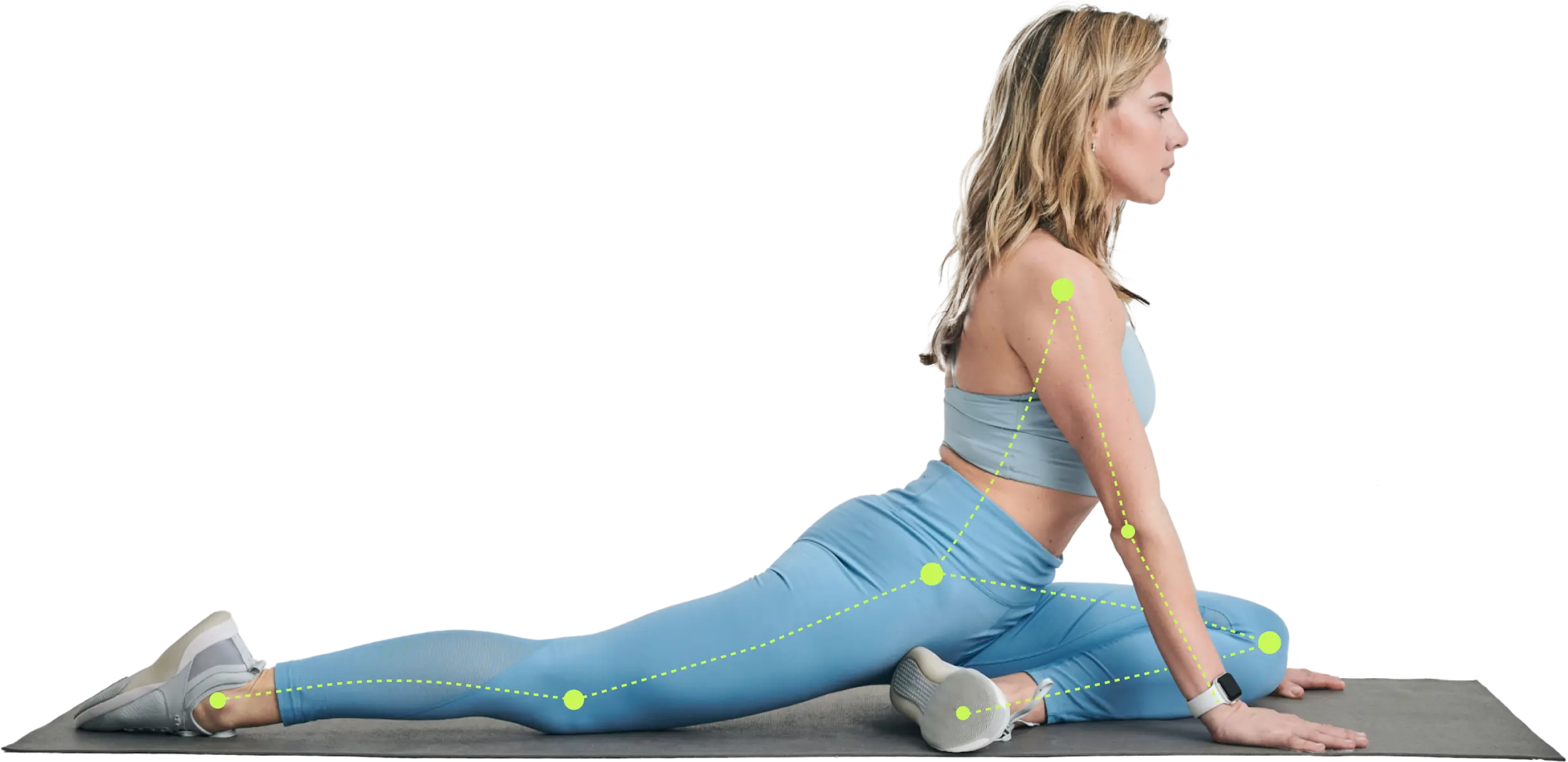
Want to learn how to run faster without getting tired? Our expert guide covers form, cadence, strength training, and pacing to boost your speed and endurance.
You start a run feeling smooth. The first mile is comfortable, your pace looks good, and then the whole thing changes. Your breathing gets messy, your stride gets heavy, your shoulders creep up, and what felt controlled suddenly becomes survival.
Most runners assume that means they need more grit. Usually, they need a better system.
If you want to learn how to run faster without getting tired, stop treating fatigue like a character problem. It’s usually a mix of aerobic limits, poor pacing, wasted motion, and strength leaks that show up once the run gets hard. Push through those blindly and you don't build speed. You just rehearse breakdown.
The Real Reason You Get Tired While Running
A lot of runners blame their lungs when the underlying problem starts lower down. The glutes stop doing their job. The core stops stabilizing the pelvis. Cadence drops. Overstriding starts. Breathing gets shallow. Then the effort spikes, even if the pace hasn't changed much.
That’s why “just run harder” fails so often. Hard effort only works when the engine, mechanics, and support muscles can all hold up together. If one piece lags, fatigue shows up early and speed disappears.
There’s also a big difference between being productively tired and being cooked. Productive fatigue comes from training stress that your body can absorb. The other kind keeps stacking until even easy runs feel flat. If that sounds familiar, it’s worth learning the signs of overtraining in runners before you add more intensity.
Practical rule: If your pace falls apart every time the run gets uncomfortable, don’t assume you need more suffering. Assume you need fewer leaks.
The runners who improve fastest usually clean up four things at once:
- Aerobic capacity: They make easy running a true foundation instead of an afterthought.
- Running economy: They reduce wasted motion so each mile costs less energy.
- Strength support: They build glutes, hips, calves, and trunk stability to hold form under fatigue.
- Pacing and recovery: They stop turning every session into a test.
Speed that lasts comes from durability. You need a body that can keep producing efficient steps when the run stops feeling fresh.
Build Your Fatigue-Resistant Running Engine
Most runners who want speed need more patience before they need more intensity. The ability to run faster without falling apart starts with an aerobic base. Without it, every moderate run feels hard, and every hard run takes too much out of you.
The foundation is easy running in the aerobic zone, usually around 70-80% of maximum heart rate. That effort builds better oxygen efficiency, which is why runners who spend most of their weekly volume there can keep moving longer with less strain, as explained in this running endurance breakdown.

Use the conversational pace test
If you’re not sure what easy means, forget pace for a moment. Use talkability. You should be able to speak in short sentences without feeling rushed or breathless.
That pace often feels slower than people expect. That’s normal. Easy running isn't a lazy version of training. It’s the part that lets the rest of your training work.
When runners skip this step, they get stuck in the middle. Not easy enough to recover from, not hard enough to create a strong speed stimulus.
What easy miles actually do
At this intensity, your body gets better at using oxygen and producing steady energy over time. Your tendons and muscles also get repeated low-risk exposure to running, which improves the physical resilience needed for longer efforts.
That matters because fatigue resistance isn't just about your heart and lungs. It’s about building a system that keeps working after the novelty of the first mile is gone.
A simple weekly structure works well:
- Most runs easy: Keep the bulk of your running calm and repeatable.
- One long easy run: Extend duration gradually so your body learns to stay efficient deeper into the effort.
- One harder session at most: Especially if you’re new to running or coming back after time off.
Easy running should leave you feeling like you could have done more. That restraint is what lets fitness accumulate instead of stall.
Add support work that makes the engine more useful
Aerobic running works better when your body is strong enough to use it well. In the same source above, runners who added 45-minute strength sessions every two to four days showed measurable improvements in running economy in 10 weeks, and runners who used a sauna for 30 minutes after easy or long runs three times weekly improved time to exhaustion by 12% on average in research cited there.
Those details matter because they show something practical. Endurance improves faster when training, strength, and recovery support each other.
If you want structure for the aerobic side of your week, a VO2 max training plan for runners can help you place easy and harder days more intelligently instead of guessing.
A simple progression that works
If you're building your base, keep the focus narrow for a few weeks:
- Run easy more often than you think you should.
- Extend only one run per week. Keep the rest stable.
- Protect recovery days. Don’t turn them into sneaky workouts.
- Lift consistently. Not to chase soreness, but to support economy.
- Watch for drift. If easy pace keeps feeling hard, back off before forcing the issue.
The biggest mistake here is impatience. Runners often abandon aerobic work right before it starts paying off. Stay with it. Once the engine is stronger, faster running stops feeling like an all-out fight.
Improve Your Running Economy with Efficient Form
A stronger engine helps, but it won’t fix wasted motion. Many runners have enough fitness to run faster. They just spend too much energy getting there.
Running economy is the cost of holding a pace. Lower that cost and you can run the same speed with less effort, or run faster before fatigue shows up. One of the clearest ways to improve economy is to clean up cadence and posture.

Start with cadence, not bigger strides
A lot of tired runners try to speed up by reaching farther in front. That usually makes things worse. Overstriding creates braking forces and pushes more stress into the joints.
A better cue is quicker, lighter steps. According to Fit&Well’s summary of expert guidance on efficient running form, optimizing form to 170-180 steps per minute can reduce energy cost by 2-4%. Runners who reach 180 SPM report 3-5% faster 5K times with 25% less perceived exertion.
That doesn’t mean forcing a robotic stride. It means nudging your rhythm up while keeping your feet landing under you instead of out in front.
The form cues that matter most
Most runners don’t need ten complicated instructions. They need a few useful ones they can use while moving.
Try these:
- Stand tall: Keep your torso upright with a slight forward lean from the ankles, not a bend at the waist.
- Relax the shoulders: Tension in the upper body often leaks into the rest of the stride.
- Keep arm swing simple: Let the arms move forward and back, not across the body.
- Land under the hips: Think quiet steps rather than aggressive push-off.
- Shorten the stride slightly: Let cadence rise naturally rather than forcing speed through reach.
If you want a useful reference for these mechanics, this guide on how to improve running form lays out the basics clearly.
A drill progression for better rhythm
Use one or two form sessions each week inside an easy run. Keep them short enough that you can stay focused.
Step 1
Run for one minute at a normal easy pace and count your steps. Multiply by two to estimate your steps per minute.
Step 2
Use a metronome app or a playlist set in the 170-180 BPM range. Jog easily for about ten minutes and match the beat without speeding up dramatically.
Step 3
Focus on where the foot lands. The cue is “down under me,” not “forward.”
Step 4
Finish with a few short strides where you keep the same relaxed rhythm while moving a little faster.
Your best form cue is the one you can still remember when you’re tired. For many runners, that cue is simply “quick feet.”
Don’t ignore breathing mechanics
Shallow breathing makes runners feel less fit than they are. In the same Fit&Well source, syncing breathing with your stride and using deep diaphragmatic breaths over 4-6 steps can extend run duration by 20% compared with shallow breathing.
That’s practical, not academic. Ragged breathing often shows up before a runner reaches a real aerobic ceiling because posture tightens and the ribcage stops moving well.
A simple pattern works:
| Situation | Breathing cue |
|---|---|
| Easy running | Breathe deep and steady, letting the belly expand |
| Moderate effort | Sync inhale and exhale to foot strikes |
| Late in a run | Exhale fully to reset rhythm before you speed up |
What doesn’t work
A few common form fixes backfire:
- Forcing a forefoot strike: This often creates calf overload instead of better efficiency.
- Trying to copy elite runners exactly: Their form is built on years of strength and speed.
- Changing everything at once: One cue at a time sticks better.
- Practicing form only when exhausted: Learn the movement when you’re fresh, then test it under fatigue later.
Form work should feel controlled, not frantic. Done well, it makes running look quieter. The pace may improve later, but the first sign of progress is usually that the same run feels less expensive.
Add Targeted Strength to Prevent Running Burnout
If your runs always fall apart in the same way, stop assuming the answer is more cardio. For many runners, the limiter isn’t oxygen delivery. It’s the inability to hold good mechanics once the support muscles tire.

Weak glutes can reduce hip stability. A weak trunk can let the pelvis wobble. Poor calf strength can make push-off feel heavy. Once that chain starts slipping, bigger muscles compensate, your stride gets less efficient, and fatigue shows up early.
That’s why some runners feel “out of shape” even when their heart rate says otherwise.
The hidden fatigue problem most runners miss
A useful explanation comes from this analysis of why runners get tired. Many runners fatigue not from aerobic limits but from neuromuscular fatigue in stabilizer muscles. It notes that glute activation imbalances and core weakness can force compensation patterns that waste energy, and that identifying whether fatigue comes from cardio or movement quality changes the training answer.
That distinction matters. If your lungs are fine but your form collapses, adding more random mileage won’t solve the underlying issue.
Look at the pattern:
- Hips dropping late in the run: often linked to glute weakness or poor pelvic control
- Stride getting loud and heavy: often tied to leg stiffness loss and poor force transfer
- Upper body twisting more as pace rises: often a trunk stability problem
- One side tiring faster than the other: often a movement asymmetry issue
Strength work that carries over to running
You don’t need a bodybuilding split. You need exercises that improve control, force transfer, and single-leg stability.
Good options include:
- Single-leg glute bridge: Builds glute drive and helps reduce compensation from the lower back.
- Plank variations: Train trunk stiffness so energy transfers forward instead of leaking side to side.
- Deadlifts: Build posterior-chain strength for stronger push-off and better posture.
- Step-ups: Reinforce single-leg control in a pattern that resembles running.
- Calf raises: Help maintain ankle stiffness and late-run bounce.
- Banded lateral walks: Wake up the glute medius, which supports pelvic control.
- Hamstring curls: Support the pull-through phase of the stride.
If you want a strength starting point outside the gym bro template, this guide on building leg muscle for performance is a practical reference.
Coach’s lens: When a runner says, “I just die at the end,” I watch where the body starts cheating. The first visible compensation often tells you more than the pace chart does.
Keep it simple and repeatable
Two sessions per week is enough for most runners. The goal is to leave the gym stronger, not too sore to run well.
A smart template looks like this:
| Focus | Example work |
|---|---|
| Hip stability | Single-leg glute bridges, banded lateral walks |
| Trunk control | Front plank, side plank, dead bug |
| Posterior chain | Deadlifts, hamstring curls |
| Lower-leg resilience | Calf raises, skipping or light plyometric drills |
Later in the week, it helps to see a few movements demonstrated clearly before you load them. This short video is a useful visual guide.
How to tell if strength is your missing piece
Ask yourself three questions after a run:
- Did breathing fail first, or did form fail first?
- Do the same muscles always tighten or quit?
- Does your pace drop because effort rises, or because the stride loses shape?
If form unravels before your cardio tops out, strength deserves immediate attention. This is also where tools with movement feedback can help. For runners who like data, options that use computer vision to track form can help distinguish aerobic fatigue from movement breakdown. Zing Coach is one example that uses form tracking and recovery-aware planning for that purpose.
General fitness helps. Running-specific strength changes the run itself.
Incorporate Smart Speed Work and Pacing Strategies
Speed work belongs in the plan, but only after you’ve built enough support around it. The mistake isn’t doing fast running. The mistake is doing too much of it, too soon, with no pacing discipline.

The fastest way to stall is to treat every run like a race rehearsal. Smart speed work teaches your body to handle discomfort in controlled doses, then recover enough to adapt.
Choose the right kind of fast
Not every workout should feel the same. Most runners do well with two broad categories.
Intervals
Shorter bouts of faster running with recovery between efforts. These help you practice pace, rhythm, and efficient mechanics without staying under strain too long.
Tempo efforts
Sustained running at a controlled, comfortably hard effort. These teach you to hold speed without a dramatic form collapse.
If you’re newer to speed, cadence drills matter here. Research discussed in this video on running cadence and speed shows trained runners can increase cadence by 3% at the same energy cost, while beginners can improve stride frequency by up to 8% for the same energy expenditure. That’s why short rhythm-based pickups are often a better entry point than all-out repeats.
Use pacing that leaves room at the end
Pacing is one of the biggest separators between runners who improve and runners who always blow up. The right start feels conservative. That’s the point.
A few rules work well:
- Start the first rep too easy on purpose. If it feels smooth, you’re more likely to finish strong.
- Keep interval recoveries honest. Full recovery turns endurance work into disconnected sprints.
- Finish with control. The last rep should look like running, not flailing.
- On tempo runs, hold back early. The pace should settle, not spike.
Most runners don’t lack courage in speed sessions. They lack restraint in the first third of the workout.
Tools that can help without overcomplicating it
Resisted running can be useful in small doses when mechanics stay clean. If you’re curious about how coaches use parachutes for running, that guide gives a grounded look at where resistance tools fit and where they don’t.
For most runners, though, speed still comes from basics:
- One quality session per week
- A few short strides after easy runs
- No chasing paces when tired
- Enough recovery to absorb the work
If you’re building toward a benchmark effort, a 3 mile run progression guide can help you structure pace practice without turning every session into a maximal test.
A practical week of speed without burnout
A balanced setup might look like this:
| Day | Focus |
|---|---|
| Early week | Easy run plus short strides |
| Midweek | Interval or tempo session |
| Later week | Easy recovery run |
| Weekend | Longer easy run with stable pacing |
That setup works because it respects timing. Fast work needs fresh enough legs to reinforce good mechanics. If you cram speed into a body that’s already overloaded, you don’t train speed. You train survival habits.
Optimize Recovery Fueling and Fatigue Management
A good training plan only works if your body can rebuild between sessions. Runners often search for a better workout when the actual fix is better recovery behavior.
Fuel before and after the run
Before a run, aim for food that gives you steady energy and sits well. Most runners do best with something simple and familiar rather than a heavy meal. After the run, think in terms of replacing energy and giving the muscles what they need to recover.
The exact food choices can vary a lot. What matters more is consistency. If you regularly under-fuel, hard sessions feel harder than they should and easy runs stop feeling easy.
Some runners also use caffeine strategically. If you’re trying alternatives to sugary pre-workout products, this guide to natural energy drinks for training is a useful place to compare options qualitatively.
Sleep is part of your training load
Sleep affects pace, mood, coordination, and your ability to handle the next session. Poor sleep also makes normal training stress feel larger.
That’s why recovery management isn’t passive. Pay attention to patterns:
- Easy pace suddenly feels awkward
- Legs feel flat for several days in a row
- Motivation drops sharply
- Form cues won’t stick
- You dread workouts that normally feel manageable
Track fatigue like a coach would
You don’t need a lab. You need honest observation.
Keep short notes after runs. Not full essays. Just enough to spot trends. Record how the run felt, where fatigue showed up first, and whether your mechanics stayed organized.
A simple checklist helps:
| Signal | What it may suggest |
|---|---|
| Breathing hard early | Poor pacing, stress, or inadequate recovery |
| Legs heavy from the start | Residual fatigue or under-fueling |
| Form breaks late | Strength or durability issue |
| Every run feels medium-hard | Too little true easy running |
Recovery isn’t what you do when training pauses. Recovery is what allows training to count.
The runners who improve steadily usually get good at this. They don’t panic over one bad run, but they also don’t ignore repeated signs that the body needs less stress or better support.
Sample 8-Week Plan to Run Faster and Longer
This template keeps the main pieces in place. Easy running builds the engine. Form drills reduce waste. Strength keeps your stride from falling apart. Speed work arrives gradually enough that it helps instead of frying you.
8-Week Training Plan to Increase Speed and Endurance
| Week | Beginner Plan (Run/Walk progressing to continuous running) | Intermediate Plan (Focus on increasing 5K/10K speed) |
|---|---|---|
| 1 | 3 run/walk sessions, 1 strength session, 1 easy walk. Keep all runs conversational. | 3 easy runs, 1 strength session, 1 short interval session, 1 rest day. |
| 2 | 3 run/walk sessions with slightly longer running segments, 1 strength session, cadence drill during one easy run. | 3 easy runs, 1 strength session, 1 tempo introduction, strides after one easy run. |
| 3 | 3 sessions progressing toward more running than walking, 2 short strength sessions. | 2 easy runs, 1 long easy run, 1 interval session, 1 strength session. |
| 4 | 3 sessions with one continuous easy run attempt, 2 strength sessions, extra recovery focus. | 2 easy runs, 1 tempo run, 1 long easy run, 2 strength sessions. |
| 5 | 3 continuous easy runs if tolerated, short cadence practice once, 2 strength sessions. | 2 easy runs, 1 interval session, 1 long easy run, 1 strength session, strides. |
| 6 | 3 continuous runs, one slightly longer, 2 strength sessions, relaxed breathing practice. | 2 easy runs, 1 tempo run, 1 long easy run, 2 strength sessions. |
| 7 | 3 runs with one moderate finish, 2 strength sessions, keep pacing controlled. | 2 easy runs, 1 interval session, 1 race-pace practice run, 1 strength session. |
| 8 | 2 easy runs, 1 confidence run at steady effort, 1-2 light strength sessions. | 2 easy runs, 1 sharpened speed session, 1 benchmark run or race effort, light strength. |
If you’re a beginner, the main win is continuity. If you’re intermediate, the main win is quality without piling stress on every day. In both cases, the body learns the same lesson. Run relaxed first, then run fast.
If you want help turning these ideas into a day-by-day plan, Zing Coach can build personalized training based on your fitness level, available time, recovery, and movement feedback so you’re not guessing when to push and when to back off.
Share this article


Authors