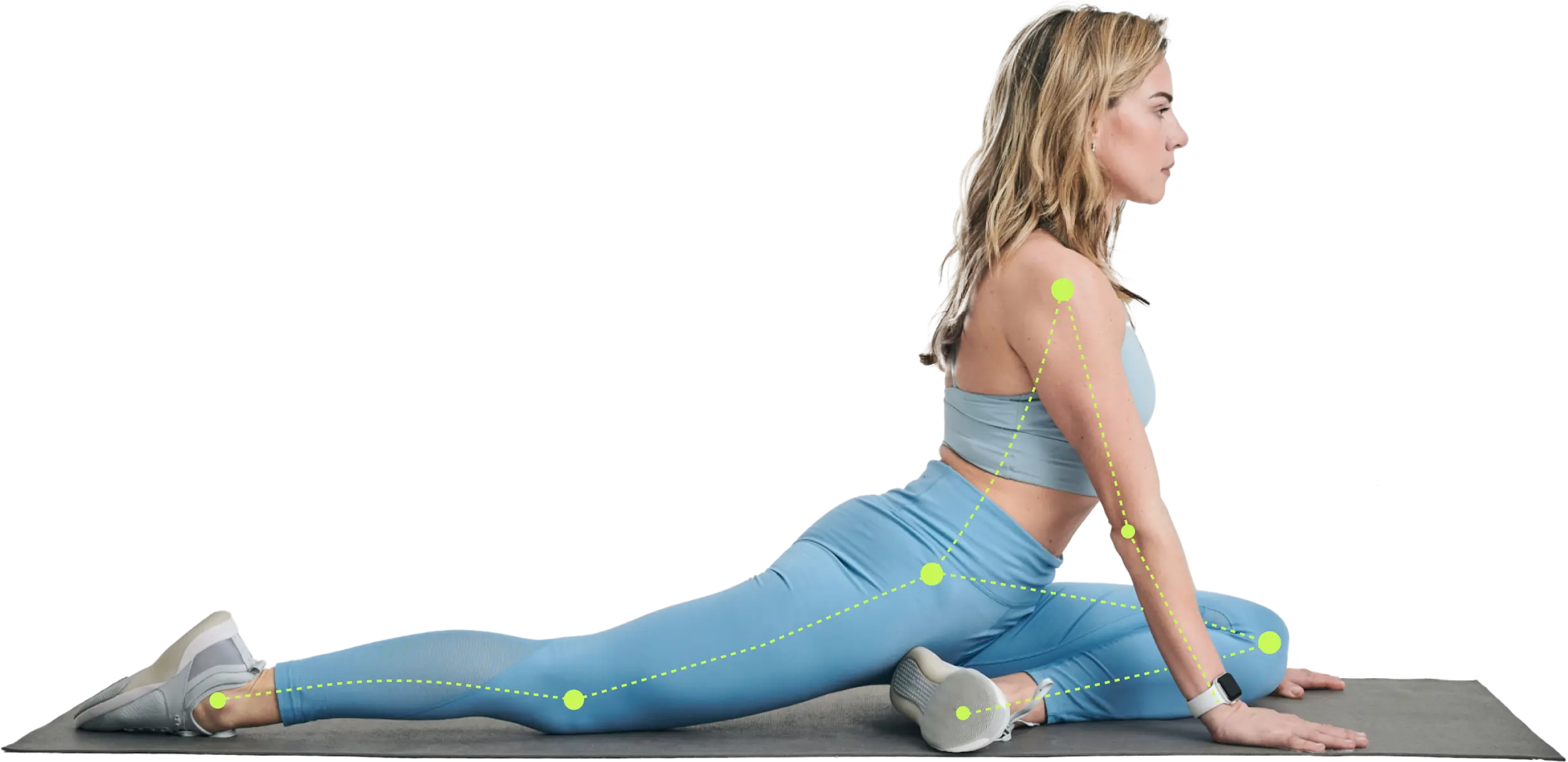
Learn how to build leg muscle with proven workouts, nutrition tips, and practical progressions for stronger, more athletic legs.

If you want to build bigger, stronger legs, you can't just show up for leg day and hope for the best. Real growth comes down to a few core principles. Master these, and you'll trade guesswork for consistent, measurable progress.
It’s all about systematically demanding more from your muscles over time. This forces them to adapt, repair, and grow back stronger. That’s the entire game right there. Without that constant challenge, you’re just spinning your wheels.
Your Blueprint for Building Stronger Legs
Let's cut through the noise. Building impressive legs isn't about some secret exercise or a magic supplement. It's about applying three fundamental concepts with intention.
- Progressive Overload: This is the engine. You have to continually make your workouts harder over time.
- Training Volume: This is the total work you do—think sets, reps, and weight combined.
- Workout Frequency: This is simply how often you train your legs.
Getting a handle on these three turns your training from a random collection of exercises into a clear, actionable plan for growth.
The Core Principles of Leg Muscle Growth
So, how do we put this into practice? It’s not just about lifting heavy; it’s about lifting smart.
Progressive overload is the absolute non-negotiable. If you don't give your body a reason to change, it won't. This doesn't always mean piling on more plates, though. You can achieve overload by adding a small amount of weight, grinding out one more rep than last time, or even shortening your rest periods. We cover this in-depth in our guide on progressive overload training.
Volume and frequency are the supporting cast. The sweet spot for most people is 10–20 hard sets per muscle group, per week. For a major muscle group like your legs, it’s best to split this volume across two weekly sessions. This gives you enough time to recover but keeps the growth stimulus coming consistently.

As you can see, growth is a simple cycle: apply a new challenge (overload), make sure you’re doing enough total work (volume), and do it consistently (frequency).
To help you get your head around these concepts, here’s a quick breakdown.
The Core Principles of Leg Muscle Growth at a Glance
This table simplifies the fundamental ideas you'll need to master to build leg muscle effectively.
| Principle | What It Means for Your Legs | Practical Example |
|---|---|---|
| Progressive Overload | Continuously increasing the demands on your leg muscles to stimulate adaptation and growth. | Last week you squatted 135 lbs for 8 reps. This week, you aim for 9 reps with the same weight. |
| Training Volume | The total amount of work performed (sets x reps x weight). Hitting an optimal range maximizes growth. | Performing 12 total sets for your quads and hamstrings, split between a Monday squat focus and a Thursday deadlift focus. |
| Workout Frequency | How often you train your legs. It needs to be frequent enough for growth but allow for full recovery. | Training legs twice a week (e.g., Monday and Thursday) instead of just once. |
Think of these as the dials you'll be turning week after week to keep the gains coming.
Of course, all the hard work in the gym won't mean much if your nutrition isn't on point. Training breaks the muscle down; food builds it back up. You need to provide your body with the fuel it needs to repair and grow, which is where a smart eating strategy comes in. For many, a lean bulk for smart muscle growth is the most effective way to pack on muscle without unwanted fat.
The number one predictor of longevity in humans is muscle mass and strength. If you're in the strongest third of the population in midlife, you are two and a half times more likely to make it to your 100th birthday.
This is where technology can step in to take the guesswork out of the equation. For example, the Zing Coach app is designed to automate these principles. It builds a plan based on your goals and then adjusts the volume and intensity for you based on your performance and how you’re feeling—turning all this complex theory into a simple, follow-along guide.
Understanding Your Leg Muscles and How They Grow
Before you can build impressive legs, you need to know what you’re working with. Your lower body is a powerhouse made up of several major muscle groups, and each one has a specific job. Getting to know them is the first step toward a smarter, more balanced training plan.

Four distinct groups handle most of the work in your legs. Hitting them all is the secret to building both functional strength and a well-proportioned physique.
The Major Leg Muscle Groups
Let's meet the key players you'll be training on leg day. Understanding what they do helps you build a stronger mind-muscle connection, which is vital for getting the most out of every single rep.
- The Quadriceps: This group of four muscles sits on the front of your thigh. Their main job is knee extension—straightening your leg. They’re the primary movers in exercises like squats, lunges, and leg presses. You can find a whole range of powerful quadriceps exercises to incorporate into your routine.
- The Hamstrings: Found on the back of your thigh, these three muscles handle knee flexion (bending your knee) and hip extension. They work in opposition to the quads, so it's crucial to train them with moves like Romanian Deadlifts and leg curls to maintain balance.
- The Glutes: Your gluteal muscles (maximus, medius, and minimus) are the biggest and strongest muscles in your body. They power hip extension, abduction, and rotation. Strong glutes are non-negotiable for athletic power, good posture, and keeping lower back pain at bay.
- The Calves: Made up of the gastrocnemius and soleus, these lower-leg muscles are responsible for plantarflexion—pointing your toes down. While they get some work during most standing exercises, they really pop when you give them direct attention with calf raises.
Key Takeaway: You don't build muscle in the gym; you stimulate it. The actual growth happens during recovery when your body repairs the microscopic muscle damage caused by training, making the fibers bigger and stronger. This process is called hypertrophy.
How Leg Muscles Grow
The large muscles in your legs have a massive potential for growth. That’s because they respond incredibly well to the mechanical tension and metabolic stress you create during resistance training. When you lift heavy, you create tiny micro-tears in the muscle fibers, and your body's hormonal response rushes in to repair and rebuild them even stronger.
Interestingly, research suggests the lower body often gets stronger faster than the upper body, especially in women. A major meta-analysis revealed that women increased their lower-body one-rep max by an average of 5.2% per week. When they trained legs twice a week, that number shot up to an 8.5% weekly strength gain over a 15-week period. This rapid progress is likely tied to how the large leg muscles respond to growth-promoting hormones.
For Zing Coach users, this science is baked right into the app. The AI designs your workout plan to hit that ideal frequency and volume, and it automatically adjusts as you progress to keep the growth stimulus going. This takes the guesswork out of your programming and helps you build leg muscle much more efficiently.
The Most Effective Exercises for Leg Growth

If you're serious about wanting to build leg muscle, your exercise choices matter. A lot. To really spark new growth, you need to focus on the lifts that recruit the most muscle and let you move some serious weight. This is your game plan for the most powerful leg-building exercises out there.
We're going to zero in on the big, compound movements that give you the most bang for your buck. These are the bedrock of any solid leg program, whether you’re in a fully-stocked gym or making it work at home.
Foundational Gym Exercises for Maximum Growth
When you're in the gym, you've got access to the single best tool for packing on size: the barbell. It’s your ticket to applying heavy progressive overload, which is exactly what your legs need to grow.
1. Barbell Back Squat There's a reason they call the squat the king of all exercises. It’s a full-on assault on your quads, glutes, and hamstrings, all while forcing your core to work overtime for stability. Done right, it’s the most effective single move you can do to build leg muscle. To really nail it down, it's worth digging into all the details of proper squat form and its benefits.
- Technique Tip: Start the squat by sending your hips back, not by just bending your knees. Keep that chest proud and brace your core like you're about to take a punch. This keeps your spine safe.
- Common Mistake: Letting your knees collapse inward. You have to fight this by actively pushing your knees out so they track in line with your feet.
2. Deadlift The deadlift is a total-body monster, but it's an absolute powerhouse for building your entire posterior chain—your hamstrings, glutes, and lower back. Nothing builds raw, functional mass quite like picking heavy weight up off the floor.
- Technique Tip: Your back must stay flat from the floor to lockout. Think about "pushing the floor away" with your legs instead of "pulling the bar up" with your back.
- Common Mistake: Rounding your lower back. This puts a ton of dangerous stress on your spine. If you can't keep your back straight, drop the ego and lower the weight.
3. Leg Press The leg press is a fantastic tool because it lets you absolutely overload your legs with weight in a stable, supported position. By taking your lower back and core out of the equation, you can focus purely on frying your quads and driving hypertrophy.
Pro Insight: Own the negative. A slow, controlled lowering phase on the leg press creates a ton of muscle damage, which is a major trigger for growth. Try for a solid three-second descent on every single rep.
For serious leg development, these powerful lifts are non-negotiable. If you want to go even deeper, you can explore a full guide to the top 8 lower body compound exercises.
Potent Leg Exercises for Home Workouts
No gym? No sweat. You can still build an impressive set of wheels at home. The secret is focusing on unilateral work (one leg at a time) and finding creative ways to maximize tension with just your bodyweight or a pair of dumbbells.
Effective Variations for Home Training
Even without a barbell, you can generate a powerful stimulus for growth. You just have to be smart about your exercise selection, choosing movements that challenge your stability and still allow you to progress.
- Goblet Squat: Holding one dumbbell at your chest is a game-changer. It acts as a counterbalance, helping you stay upright and sink into a deep, quad-dominant squat. It's also an incredible tool for mastering squat mechanics.
- Bulgarian Split Squat: This single-leg movement is a brutal but effective quad and glute builder. By elevating your back foot, you shift nearly all the load onto your front leg, creating an intense burn and growth stimulus.
- Dumbbell Romanian Deadlift (RDL): The RDL is your go-to for hammering your hamstrings and glutes at home. The key is to focus on a pure hip hinge, keeping only a slight bend in your knees. You should feel a deep stretch in your hamstrings as you lower the weights.
No matter what exercises you pick, perfect form has to be your number one priority. This is where technology can give you a massive edge. Apps like Zing Coach use your phone’s camera and computer vision to provide real-time form correction. It's like having a personal trainer in your pocket, counting your reps and giving instant feedback to make sure every move is safe, effective, and gets you closer to your goal to build leg muscle.
Weekly Workout Plans for Every Fitness Level
Alright, you know which exercises work. Now, how do you string them together into a routine that actually builds serious leg muscle? A random collection of movements won't cut it. You need a structured plan.
Think of these templates as your roadmap. They’re built on the principles of progressive overload and smart volume management, giving you a clear path to follow whether you're a complete beginner or a seasoned lifter. The most important thing is to show up, nail your form, and push yourself a little harder each week.
The Beginner Foundation Plan
If you’re new to lifting, your mission is simple: master the fundamental movements and build a solid strength base. Forget about maxing out or trying complex exercises. That’s a fast track to injury, not growth.
We’ll start with two full-body workouts per week. This gives your muscles plenty of time to recover and grow while still getting enough stimulus to see real progress.
Workout A (Monday):
- Goblet Squats: 3 sets of 8-12 reps
- Glute Bridges: 3 sets of 12-15 reps
- Standing Calf Raises: 3 sets of 15-20 reps
Workout B (Thursday):
- Dumbbell Romanian Deadlifts: 3 sets of 10-15 reps
- Walking Lunges: 3 sets of 10-12 reps per leg
- Plank: 3 sets, hold for 30-60 seconds
Take 60-90 seconds of rest between sets. Your number one priority is feeling the right muscles engage—don't just go through the motions.
This table shows a practical example of how you could apply progressive overload to your Goblet Squats over the first month.
Sample 4-Week Beginner Leg Progression
| Week | Exercise | Sets x Reps | Weight/Intensity | Progression Focus |
|---|---|---|---|---|
| 1 | Goblet Squat | 3 x 8 | 20 lbs | Master form |
| 2 | Goblet Squat | 3 x 10 | 20 lbs | Increase reps |
| 3 | Goblet Squat | 3 x 12 | 20 lbs | Increase reps |
| 4 | Goblet Squat | 3 x 8 | 25 lbs | Increase weight |
The goal isn't just to lift more weight but to do it with better control and confidence each week.
The Intermediate Hypertrophy Plan
So, you've been training consistently for 6+ months and your beginner gains are starting to slow down. It’s time to crank up the intensity and volume. This intermediate plan splits your training into two dedicated leg days, one for quads and another for your hamstrings and glutes.
This focused approach is where you'll start packing on noticeable size and strength. The goal is to push your working sets close to muscular failure—that point where you can just barely finish the last rep with perfect form.
Pro Tip: For muscle growth (hypertrophy), the 8-12 rep range is your sweet spot. It delivers the perfect mix of mechanical tension and metabolic stress, which are the primary triggers for building muscle.
Here’s how you could structure your week:
Day 1 (Monday) Quads & Calves:
- Barbell Back Squats: 4 sets of 6-8 reps
- Leg Press: 3 sets of 10-12 reps
- Leg Extensions: 3 sets of 12-15 reps
- Seated Calf Raises: 4 sets of 10-15 reps
Day 2 (Thursday) Hamstrings & Glutes:
- Deadlifts: 3 sets of 5-8 reps
- Bulgarian Split Squats: 3 sets of 8-10 reps per leg
- Lying Leg Curls: 3 sets of 12-15 reps
- Hip Thrusts: 4 sets of 8-12 reps
For your big compound lifts, rest for 90-120 seconds. On your smaller isolation exercises, 60 seconds should be enough. If you need help fitting this into a full-body routine, our guide on building a balanced 3 day workout plan can show you how to pull it all together.
The Advanced Specialization Plan
Once you've been in the game for 2+ years, progress doesn't come easy. To keep growing, you need to get strategic and pull out all the stops. That means using advanced techniques, manipulating training variables, and pushing your body right to its edge.
This isn't about just lifting heavy; it's about lifting smart with maximum intensity. We'll introduce methods like drop sets and rest-pause sets to recruit as many muscle fibers as possible.
Workout A (Tuesday) Power & Quads:
- Barbell Back Squats: 5 sets of 3-5 reps (Focus on explosive power out of the bottom)
- Leg Press: 4 sets of 8-10 reps (On the final set, perform a rest-pause set)
- Leg Extensions: 3 sets of 10-12 reps (On the final set, perform a double drop set)
- Walking Lunges: 3 sets of 20-25 reps per leg (A high-rep burnout finisher)
Workout B (Friday) Volume & Posterior Chain:
- Romanian Deadlifts: 4 sets of 6-8 reps
- Good Mornings: 3 sets of 8-10 reps
- Lying Leg Curls: 4 sets of 10-12 reps (Focus on a slow, 3-second negative on each rep)
- Seated Calf Raises: 5 sets of 15-20 reps (High-volume focus)
Remember, these plans are just a framework. The real magic happens when you consistently apply progressive overload—adding a few pounds to the bar, squeezing out one more rep, or simply perfecting your form. That’s how you earn your results.
Fueling Your Growth with Proper Nutrition and Recovery

Here's a hard truth many lifters learn too late: the work you do in the gym is only half the battle. You don’t actually build leg muscle under the squat rack; you just create the stimulus for it. The real growth happens afterward, fueled entirely by what you eat and how well you rest.
Think of it like this. Your workout is the demolition crew, creating tiny micro-tears in your muscle fibers. Nutrition provides the raw materials—the bricks and mortar—to rebuild everything stronger, while sleep is the construction crew that works the overnight shift to get the job done.
Your Nutritional Blueprint for Muscle Growth
You simply can’t build something out of nothing. To pack on new muscle tissue, your body needs a surplus of energy. This means consuming slightly more calories than you burn each day, a state we call a caloric surplus.
A modest surplus of 250-500 calories above your daily maintenance level is the sweet spot. It provides enough energy to build muscle efficiently while keeping unwanted fat gain to a minimum. But where those calories come from matters just as much.
- Protein: This is the undisputed king of muscle repair and growth. Your goal should be 1.6-2.2 grams of protein per kilogram of bodyweight. For a 180-pound person, that’s roughly 130-180 grams per day. If you want to dial in your exact numbers, a protein intake calculator for muscle growth can be a huge help.
- Carbohydrates: Think of carbs as your body's high-octane fuel. They replenish the glycogen your muscles burn through during intense leg days, making sure you have the energy to train hard session after session.
- Fats: Don't fear the fats. They’re essential for producing hormones vital for muscle growth, like testosterone. Focus on healthy sources like avocados, nuts, and olive oil.
And don't forget the most basic element: water. Staying hydrated is critical, as even slight dehydration can tank your performance and slow down recovery.
The Science of Sleep and Smart Recovery
When you sleep, your body gets to work. It releases growth hormone and focuses on repairing all that muscle tissue you broke down. Skimping on sleep is like hiring a lazy construction crew—the job just won’t get done right. Make 7-9 hours of quality sleep a non-negotiable part of your plan.
Recovery isn't just about sitting on the couch. It's an active process, and learning to listen to your body is a skill. Pushing through genuine, deep fatigue can lead to overtraining, where your performance actually starts to go backward and your risk of injury skyrockets.
Beyond just getting enough sleep, active recovery can work wonders. Gentle activities like stretching, foam rolling, or even just going for a walk on your off days can help manage soreness by improving blood flow. Some modern apps can even track fatigue and help you decide when to push and when to pull back, adapting your plan to ensure you’re recovering properly.
This focus on smart, long-term training isn't just for looking good; it's crucial for healthy aging. A 2024 study found that adults aged 64-75 who did heavy resistance training maintained their leg strength over four years, while non-lifting groups saw significant declines. This really drives home why a sustainable, personalized plan is so important for lifelong strength. You can dive deeper into these long-term training benefits on News Medical.
By fueling your body correctly and making recovery a priority, you create the perfect environment for your hard work to pay off with real, lasting results.
Common Leg Training Questions Answered
So you've decided to get serious about building stronger legs. Awesome. But with that commitment usually comes a flood of questions and a bit of uncertainty. It's totally normal to wonder if what you're doing is actually working, especially when you hit a plateau.
Let's clear the air on some of the most common questions I hear. Getting these answers straight will help you train smarter, sidestep common mistakes, and build the confidence you need to see it through.
How Long Does It Realistically Take to Build Noticeable Leg Muscle?
Let's get this one out of the way first: building impressive legs is a long game, not an overnight fix. If you're new to lifting and stay consistent, you'll probably feel stronger and see some initial changes within 8-12 weeks.
But it's important to know that most of these early gains are your nervous system getting better at activating the muscle you already have. Think of it as your brain and muscles learning to communicate more efficiently.
True muscle growth (hypertrophy) takes longer. If your training, nutrition, and recovery are all on point, gaining 0.5 to 1.5 pounds of muscle a month is a realistic target. Your personal genetics, age, and how hard you're willing to work will all influence that number. This is exactly why a training log is your best friend—you'll see your strength numbers go up long before you see dramatic changes in the mirror.
Can I Build Big Legs With Just Bodyweight Exercises?
You can absolutely build a solid, athletic base with bodyweight training. But if your goal is to build truly "big" legs, you'll eventually hit a wall without adding weight. The reason comes back to one key principle: progressive overload. Your muscles need a constantly increasing challenge to grow.
When you're starting out at home, you can create that challenge by:
- Doing more reps in each set.
- Cutting down your rest time between sets.
- Switching to tougher single-leg movements, like pistol squats or Bulgarian split squats.
Sooner or later, though, your body will adapt. To keep forcing new growth, you have to introduce external load, whether it’s from dumbbells, kettlebells, or a loaded barbell. A great approach is to master the bodyweight basics first, then start adding weight to those same patterns.
My Knees Hurt When I Squat What Should I Do?
First thing's first: if you feel any sharp, sudden pain, stop immediately. That's your body's alarm bell.
More often than not, nagging knee pain during squats comes down to either form or mobility, not the squat itself. Take a hard look at your technique. Are your knees caving inward on the way up? Are you initiating the squat by pushing your hips back, like you're aiming for a chair behind you? Little mechanical flaws can put a ton of unnecessary stress on your knee joints.
The problem could also be coming from somewhere else entirely. Tight hips or ankles are common culprits, forcing your knees to pick up the slack and move in ways they aren't meant to.
Expert Tip: Try adding hip and ankle mobility drills to your warm-up routine. Another great tool is the box squat. Set up a box or bench at a height that lets you squat without any pain. This lets you drill perfect form in a controlled range of motion. Over time, you can use a lower box and gradually work your way back to a full, pain-free squat.
How Do I Know If I am Training Hard Enough for Growth?
If you can finish a set and feel like you could have easily done five more reps, you're probably not pushing hard enough to trigger muscle growth. The sweet spot is what we call training to "near failure."
This means the last 1-2 reps of a set should be a real struggle to complete with good form. You should be able to finish them, but just barely.
Other signs you're on the right track are feeling a "burn" in the target muscles during the set and having some mild to moderate muscle soreness (DOMS) a day or two later. But the ultimate proof is in your workout log. Are you consistently adding a little more weight or getting one more rep than you did last week? That's the #1 indicator that you're training effectively for growth.
Ready to stop guessing and start building a truly personalized leg day? Zing Coach uses AI to create a plan that adapts to your goals, equipment, and fitness level. Get real-time form correction and intelligent progression to build muscle safely and effectively. Start your journey with Zing Coach today!
Share this article


Authors