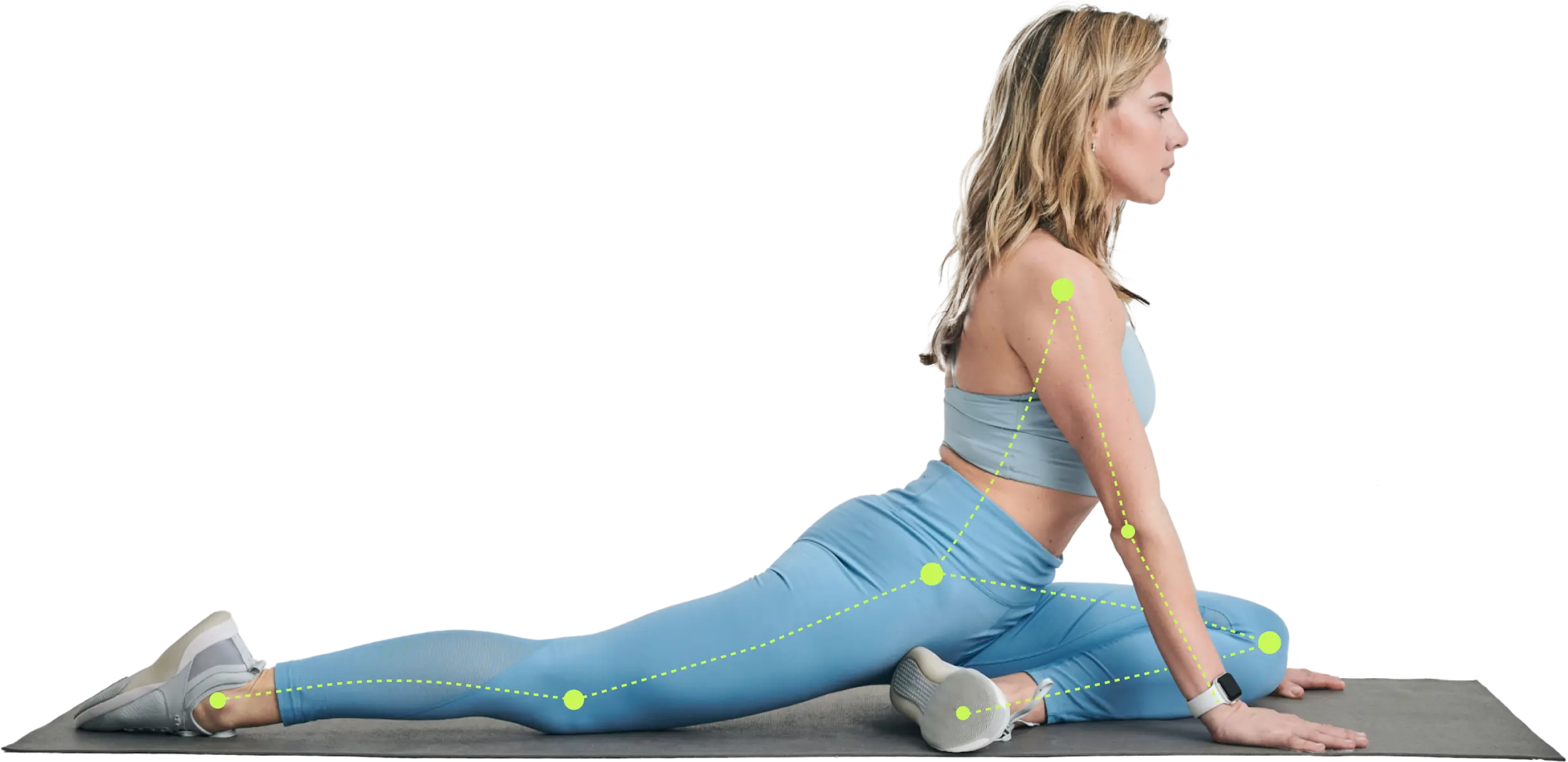
Find your perfect alternative to leg curl machine! Build stronger, resilient hamstrings with 8 effective exercises like RDLs & Nordic curls for home/gym.
If your gym has a leg curl machine, the obvious answer is to use it. But if that machine is always taken, your home setup doesn't include one, or your knees and hips don't love the fixed path, what then?
That’s where most hamstring training falls apart. People either skip direct hamstring work entirely or replace a knee-flexion exercise with random lower-body movements that don’t train the same function well. Squats won’t solve that problem on their own. Neither will lunges, and neither will piling on more leg press volume.
A good alternative to leg curl machine work should do one of two things well. It should either train knee flexion directly, like a band curl or stability ball curl, or load the hamstrings hard through a hip hinge, like an RDL or good morning. The best programs use both. That’s how you build muscle, improve control, and make your hamstrings more useful outside a machine.
There’s also a bigger point. Hamstrings don’t just bend the knee. They help control sprinting, deceleration, hip extension, and pelvis position. If all your hamstring work happens seated in one fixed setup, you’ll miss a lot of what makes them strong and resilient. That matters whether you’re trying to grow your legs, protect your knees, or just stop cramping every time you do RDLs.
One useful clue comes from a Journal of Strength and Conditioning Research study summarized here, where seated leg curls produced greater hamstring growth than prone leg curls over 12 weeks in resistance-trained men. The practical takeaway isn’t that machines are bad. It’s that hamstrings respond well when you challenge them in a lengthened position. That idea shows up again and again in the best non-machine options.
Below are the exercises I keep coming back to when I need an alternative to leg curl machine training that works in real programs, not just on paper.
1. Romanian Deadlift
The Romanian deadlift is the first substitute I’d program for almost anyone who needs more hamstring work. It doesn’t mimic a leg curl exactly, because it trains hip extension more than knee flexion, but it loads the hamstrings where many lifters are weakest. That’s in the stretched position.
If you only ever train hamstrings through short-range machine curls, an RDL fills a gap fast. It also gives you more total return for your time because your glutes, adductors, grip, and trunk all have to contribute.

How to do it without turning it into a bad deadlift
Stand with feet about hip-width apart and keep a soft bend in the knees. Push your hips back, keep the weights close to your legs, and stop when you feel a clear hamstring stretch without losing spinal position. Then drive the hips forward to stand tall.
Most mistakes come from chasing depth. If the dumbbells only reach mid-shin before your back rounds, that’s your range for now. Hamstrings care about tension, not how low the plates travel.
Practical rule: If you feel your lower back more than your hamstrings, reduce the load and shorten the range.
A few setups work well:
- Bodyweight RDL: Learn the hinge pattern before adding load.
- Dumbbell RDL: Best home-gym version and easy to control.
- Barbell RDL: Best choice when strength is the main goal.
- Single-leg RDL: Good when one side is weaker or balance needs work.
Programming and progression
For hypertrophy, use 3 to 4 sets of 6 to 10 reps with a controlled lowering phase. For strength, 3 to 5 sets of 4 to 6 reps works well if your hinge pattern is already solid. If you’re a beginner, start with higher reps and lighter dumbbells so you can learn the movement.
Pair RDLs with a true curl pattern later in the workout. That combination usually beats relying on one exercise alone.
What works well:
- Slow eccentrics: Lower with control and own the stretch.
- Packed shoulders: Keep the upper back set so the bar path stays clean.
- Video feedback: A quick side-view clip tells you if you’re hinging or just folding.
What doesn’t work:
- Locked knees: That turns the movement into a mobility test.
- Cranking the neck up: Keep your head neutral.
- Touch-and-go slop: Reset your tension every rep.
For real-world use, this is a strong option for busy lifters training at home with adjustable dumbbells. If you’ve got limited time, RDLs can carry a lot of your posterior-chain work.
2. Glute-Ham Raise
The glute-ham raise is one of the toughest hamstring builders you can do without a classic leg curl machine. It challenges the hamstrings through knee flexion while also asking the glutes to keep the hips extended. That combination makes it brutal and useful.
A lot of people treat it like a flashy advanced movement and then fail every rep. The better approach is to respect the learning curve and scale it correctly.
Why it earns a place
A 2014 EMG study discussed in this Greatist review of leg curl alternatives reported that glute-ham raises and Romanian deadlifts produced higher hamstring activation than traditional leg curls, with glute-ham raises reaching up to 85 to 90% MVIC in the biceps femoris while machine leg curls reached 60 to 70%. That lines up with what coaches see in practice. If someone can perform clean GHR reps, their hamstrings usually aren’t weak.
You don’t need a dedicated GHR bench to start. A partner can anchor your feet, or you can use a padded setup with your ankles fixed under something stable. The setup matters. If your knees are jammed into a hard surface, you won’t stick with it.
Your first clean partial rep matters more than a sloppy full rep.
How to scale it so it actually works
Start in a kneeling position with hips extended. Lower under control, keep your torso in line, and use as little arm help as possible on the way back up. If full range bodyweight reps aren’t there yet, that’s normal.
Use these progressions:
- Band-assisted GHR: Best first step for most lifters.
- Eccentric-only GHR: Lower slowly, then push off lightly to return.
- Partial-range GHR: Work the top half first.
- Full GHR: Only when you can control both directions.
For hypertrophy, 3 sets of 6 to 10 controlled reps is plenty. For strength emphasis, keep reps lower and focus on crisp, hard efforts with longer rest. On eccentric-only work, stop before your speed drops and the rep turns into a face plant.
If glute development is also part of your lower-body plan, these glute-building exercise ideas from Zing Coach pair well with GHR work because they reinforce the hip extension side of the pattern.
Common errors are predictable. Lifters bend at the hips, overuse the lower back, or throw the torso around to finish. Don’t do that. Keep the body long, ribs down, and lower slowly enough that the hamstrings stay in charge.
This is one of the best choices when you want an alternative to leg curl machine work that still feels like direct hamstring training, not just a generic hinge.
3. Nordic Hamstring Curl
If you want the bodyweight option with the best reputation for making hamstrings stronger, this is it. The Nordic hamstring curl is demanding, humbling, and worth learning.
The movement tends to be largely eccentric. That’s fine. In fact, that’s where much of the value comes from.
A useful demo helps here:
Why Nordics stand out
In a landmark 2006 randomized controlled trial involving 409 elite soccer players, Nordic hamstring curls reduced ACL injury incidence by 51% when players followed a structured preseason protocol, as summarized in this overview of leg curl alternatives. That’s one reason Nordics keep showing up in field sports, rehab settings, and performance programs.
They also solve a practical problem. You can do them with very little equipment. A partner, a secure anchor, or a dedicated Nordic bench is enough.
If you’re starting from zero, don’t judge the exercise by whether you can do a full rep. Most strong lifters can’t at first.
Best regressions and programming
Kneel on a pad, anchor your ankles, keep the hips extended, and lower forward slowly. Catch yourself with your hands near the bottom if needed, then use light assistance to return.
These progressions work:
- Band-assisted Nordic: Loop a band around the torso to reduce load.
- Partial-range Nordic: Control the top half only.
- Hand-assisted Nordic: Use the floor to help on the return.
- Full bodyweight Nordic: Aim for smooth, controlled eccentrics first.
For injury-prevention work, 2 to 3 sets of 3 to 5 slow reps is enough for most lifters. For strength, keep the same general rep range and focus on better control before adding volume. Don’t cram Nordics into the end of a long leg day if your hamstrings are already cooked.
Coaching note: Nordics punish ego. Stop the set when the lowering phase speeds up.
If you’re new to direct hamstring work, beginner hamstring exercise guidance from Zing Coach can help you build toward this exercise instead of forcing it too early.
What works well is low volume, high focus, and plenty of recovery. What usually fails is trying to do too many reps, too often, with no assistance. That just creates soreness and ugly movement.
As an alternative to leg curl machine training, Nordics are especially useful when you need direct hamstring work at home and you want more than light band curls.
4. Good Mornings
Good mornings get a bad reputation from people who load them like a squat and hinge like they’re folding a lawn chair. Done properly, they’re one of the cleanest ways to train the posterior chain with a strong hamstring bias.
They’re not a beginner’s first loaded hinge, but they are an excellent second or third step after you’ve learned RDL mechanics.
What they do well
The bar sits on your upper back, so the load challenges your ability to maintain trunk position while the hips move back. That makes the hamstrings and spinal erectors work hard together. If your leg curl machine work never seems to carry over to real lifting, good mornings can help close that gap.
Start with bodyweight or a very light bar. The goal is to feel the hamstrings lengthen while the torso tips forward under control. The knees stay slightly bent, but they don’t travel much.
Three good entry points:
- Bodyweight good morning: Best for grooving the hinge.
- Band good morning: Great for home training and warm-ups.
- Barbell good morning: Best once technique is reliable.
How to program them without beating up your back
For hypertrophy, 3 to 4 sets of 8 to 12 reps usually works better than very low reps. For strength, keep the load moderate and the technique strict. This isn’t the place to grind ugly reps just to say you lifted heavier.
A few coaching cues clean the movement up fast:
- Soft knees: Enough bend to keep tension in the hamstrings.
- Chest proud, ribs controlled: Don’t crank into extension.
- Hips back: If the movement starts at the waist, it’s wrong.
- Stop at your range: Depth depends on control, not ambition.
I like good mornings for lifters who need a barbell-based alternative to leg curl machine work but don’t want another deadlift variation from the floor. They fit well after squats, especially if the lower back can tolerate moderate accessory loading.
What doesn’t work is fatigue-driven slop. If your torso drops too fast or the knees start bending more and more every rep, end the set. This exercise rewards precision and punishes loose positions.
A practical use case is the garage-gym lifter with a rack, a barbell, and no hamstring machine. In that setting, good mornings can become the direct posterior-chain accessory that keeps the program balanced.
5. Single-Leg Deadlift
When one hamstring is always tighter, weaker, or crampier than the other, single-leg deadlifts usually expose it immediately. That’s why this exercise earns a place on the list. It doesn’t just build strength. It shows you where your control breaks.
This is less of a pure hamstring isolation move and more of a precision hinge. That’s exactly why it works so well for many lifters who can’t get much from bilateral accessories.

Why unilateral work matters
The standing leg has to control balance, hip rotation, and the hinge itself. That creates a strong training effect with relatively light loads. For people training at home, that’s useful because you don’t need massive dumbbells to make it challenging.
The biggest mistake is treating balance as the main event. Balance matters, but the goal is still to hinge through the hip and load the hamstrings and glute of the standing leg.
Here’s how to start:
- Bodyweight with wall support: Best for learning.
- One dumbbell in the opposite hand: Strong option for most lifters.
- Kettlebell version: Easy to use in home sessions.
- TRX-assisted variation: Good if balance is the limiting factor.
Sets, reps, and form fixes
For hypertrophy, use 3 to 4 sets of 8 to 12 reps per side. For strength and control, 3 to 5 sets of 5 to 8 reps per side works well with slower eccentrics. If balance is shaky, lower the load before cutting the range.
A few cues make a big difference:
- Reach the free leg back: That helps create a true hinge.
- Keep hips mostly square: Don’t let the pelvis fly open.
- Slight bend in the standing knee: Enough to stay athletic.
- Own the bottom: Pause briefly if you’re rushing.
If you want a clearer picture of the loaded version, this barbell single-leg Romanian deadlift exercise page from Zing Coach shows the pattern in a more structured setup.
This is one of my favorite choices for runners, field-sport athletes, and anyone returning from a layoff who needs strength without a lot of spinal loading. It also fits neatly into short sessions. One dumbbell, a bit of floor space, and you’ve got a legitimate alternative to leg curl machine training that also cleans up side-to-side imbalances.
6. Lying Leg Curl Alternatives With Stability Ball Hamstring Curl
If you want the closest home version to an actual leg curl, the stability ball hamstring curl is near the top of the list. It keeps the knee-flexion pattern, adds a glute bridge, and forces you to control the trunk while the legs move.
That last part matters more than is commonly understood. When the hips sag, the exercise stops being a good curl and turns into flailing.

Why this one works at home
You lie on your back, put your heels on the ball, lift the hips, and pull the ball toward you by bending the knees. It’s simple on paper. In practice, it lights up the hamstrings fast if you keep the hips up.
A Zing Coach Swiss ball exercise guide is useful if you need a visual reference for setup and movement quality.
The movement is beginner-friendly, but only if you respect the progression. Starting with single-leg reps before you can hold a stable bridge is a common mistake.
Progressions and practical programming
Use these steps:
- Isometric bridge on the ball: Learn to keep hips high.
- Double-leg curl: Standard entry point.
- Slow eccentric curl: Better for control and cramp prevention.
- Single-leg curl: Advanced version once bilateral reps are smooth.
For hypertrophy, 3 to 4 sets of 10 to 15 reps is a solid target. For endurance and control, higher reps can work well if the hips stay high throughout the set. If you cramp, reset, shorten the range, and slow down. Don’t force it.
This exercise is especially useful for people who want a true alternative to leg curl machine work without racks, benches, or cable stations. You can also slot it after heavy hinges because it gives you direct hamstring work without another loaded spinal pattern.
Keep the line from shoulders to knees as straight as you can. Once the hips drop, the set is basically over.
What works is controlled motion, solid bridge position, and full-foot pressure through the ball. What doesn’t is yanking the ball in with momentum and letting the torso wobble around. Treat it like skill work at first, then load it with more reps and harder variations.
7. Trap Bar Deadlift
The trap bar deadlift isn’t a direct leg curl replacement in the pure isolation sense, but it’s one of the best hamstring-building options when your real problem is lack of overall posterior-chain strength. It also tends to be easier to learn than a straight-bar pull from the floor.
If someone tells me they need an alternative to leg curl machine work because they want stronger legs, not just a better pump, the trap bar often enters the conversation quickly.
Where it fits best
The trap bar lets you stand inside the load, which usually creates a more manageable torso position than a conventional deadlift. You can still drive hard through the hips, load the glutes and hamstrings, and build strength that carries over to sport and daily life.
This is a strong pick for:
- Beginners: Easier setup and simpler bar path.
- Field athletes: Good force production without a steep technical barrier.
- Busy lifters: One lift can cover a lot of ground.
- Lifters with long femurs: The setup often feels more natural.
Programming and trade-offs
For strength, 3 to 5 sets of 4 to 6 reps is a reliable range. For muscle, 3 to 4 sets of 6 to 8 reps with controlled lowering works well. High handles can make the lift more accessible, while pulling from the floor increases the range and demand.
The trade-off is simple. You won’t get the same direct knee-flexion stimulus you’d get from curls. You will get a lot more total-body loading, and for many lifters that’s a good deal.
Form priorities:
- Brace before you pull: Don’t yank the bar from the floor.
- Push the floor away: Better cue than “pull with your back.”
- Stay balanced through midfoot: Don’t rock forward.
- Lock out with glutes: Don’t finish by leaning back.
If you want a deeper comparison between this lift and other deadlift options, this trap bar deadlift vs deadlift guide from Zing Coach is a practical reference.
What doesn’t work is pretending this replaces all direct hamstring work. It doesn’t. It works best when paired with a curl variation later in the week. In that role, it’s excellent.
8. Banded Hamstring Pulls Or Lying Leg Curl With Resistance Band
Sometimes the best answer is the simplest one. If you want a movement that behaves like a leg curl and you don’t have a machine, a resistance band setup gets you surprisingly close.
It’s portable, cheap, joint-friendly, and easy to progress by changing band tension or adding pauses. That makes it a very practical alternative to leg curl machine work for beginners, travelers, and home trainees.
How to set it up
Anchor a loop band low, lie down prone or supine, and place the band around your ankles or feet. Curl the heels toward the glutes with control, then lower without letting the band snap you back. You can also do it seated or standing, but the lying versions usually feel closer to the machine pattern.
The resistance curve is different from a machine. Bands get harder as they stretch, so the top of the rep often feels toughest. That’s not a flaw. It’s just something to account for.
A few useful versions:
- Prone lying band curl: Most machine-like feel.
- Supine bridge band curl: Adds glute work.
- Seated band curl: Good in limited spaces.
- Standing single-leg band curl: Easy for warm-ups or rehab-style work.
Best use in a program
For hypertrophy, 3 to 4 sets of 12 to 20 reps works well because band resistance is usually lighter than loaded machines or heavy hinges. For strength, bands are limited, but you can make them harder with slower eccentrics, longer pauses, and stacked bands.
This is one of the better options for beginners because the learning curve is low. It’s also useful at the end of a session when you want direct hamstring fatigue without more heavy spinal loading.
Keep these points in mind:
- Control the lowering phase: Don’t let the band win.
- Keep tension on the band: Avoid totally slack reps.
- Use full but pain-free range: Especially if the knees are cranky.
- Pair with a hinge: Bands alone usually aren’t enough for full hamstring development.
For real-world use, I like band curls for apartment training, travel training, and post-workout finishers. They aren’t glamorous, but they solve the problem. That matters.
Leg Curl Machine Alternatives: 8-Exercise Comparison
| Exercise | Implementation complexity | Resource requirements | Expected outcomes | Ideal use cases | Key advantages |
|---|---|---|---|---|---|
| Romanian Deadlift (RDL) | Moderate, requires solid hip-hinge and spine control | Barbell, dumbbells or kettlebells; mirror/video helpful | Hamstring/glute hypertrophy, posterior-chain strength and hip-hinge proficiency | General strength programs, hypertrophy, teaching hip-hinge pattern | Scalable, functional carryover, effective for hamstring development |
| Glute‑Ham Raise (GHR) | High, advanced movement with steep learning curve | GHR machine or adjustable bench; bands/spotter for assistance | Very high eccentric/concentric hamstring stimulus and hypertrophy | Advanced athletes, eccentric strength work, targeted hamstring development | Maximal hamstring activation with low spinal compression |
| Nordic Hamstring Curl | High initially but highly scalable (assisted → unassisted) | Minimal, anchor/partner or resistance band | Exceptional eccentric hamstring strength and injury-prevention adaptations | Home-based training, sports teams, hamstring injury prevention | Equipment-free options, research-backed eccentric benefits |
| Good Mornings | Moderate, demands spinal stability and proper hinge | Barbell/dumbbells or bands; safe rack setup recommended | Loaded posterior-chain and spinal erector strength; hinge reinforcement | Lifters improving posture, posterior-chain accessory work | Reinforces hip hinge under load; strengthens erectors |
| Single‑Leg Deadlift (SLD) | Moderate, balance and coordination required | Dumbbell/kettlebell or bodyweight; optional support (TRX/wall) | Unilateral hamstring/glute strength, balance and proprioception | Correcting side-to-side imbalances, home workouts, rehab | Addresses asymmetries, low absolute load, improves stability |
| Stability Ball Hamstring Curl | Low–Moderate, stability demands but easy to learn | Stability ball (and mat); optional wall for stability | Hamstring isolation similar to machine curl plus core/stabilizer activation | Home rehab, core-integrated hamstring work, machine-free routines | Affordable machine alternative, increases core engagement |
| Trap Bar Deadlifts | Moderate, technique simpler than straight-bar deadlift | Trap (hex) bar and plates (gym-based) | High posterior-chain strength and power with heavier loads | Gym strength programs, beginners seeking safer deadlift mechanics | High load capacity, back-friendly, good transfer to athletic power |
| Banded Hamstring Pulls / Lying Leg Curl | Low, simple technique, minimal learning curve | Resistance bands (looped); bench or floor | Hamstring activation, variable-resistance hypertrophy/endurance | Travelers, beginners, rehab and low-equipment home routines | Extremely portable, affordable, variable resistance matching strength curve |
Programming Your Hamstring Training for Real Results
Choosing the right exercise is only half the job. The bigger issue is whether your week gives the hamstrings enough direct work, enough lengthened tension, and enough recovery to improve. Frequently, one of those three aspects is overlooked.
A simple way to think about programming is to split hamstring work into two buckets. First, use a hinge that trains the hamstrings hard in a stretched position. RDLs, good mornings, single-leg deadlifts, and trap bar deadlifts all fit here. Second, use a curl pattern that trains knee flexion more directly. Nordic curls, glute-ham raises, stability ball curls, and banded curls handle that part.
For strength, keep your main hinge early in the session when you’re fresh. RDLs or trap bar deadlifts for 3 to 5 sets of 4 to 6 reps work well for many lifters. Then add a lower-rep accessory like a glute-ham raise or Nordic variation if your technique is stable enough to keep those reps clean.
For hypertrophy, the structure changes slightly. Use one loaded hinge in the moderate rep range, then add one or two direct curl patterns for more total hamstring volume. Stability ball curls and banded curls work very well here because they add local fatigue without demanding the same systemic recovery as another heavy barbell lift.
If injury prevention is part of the goal, eccentric control matters. Nordic curls are especially valuable for that, but only when they’re scaled correctly and recovered from properly. A few slow, high-quality reps usually do more than forcing extra volume.
Here’s a practical weekly template that works for a lot of people:
- Day one heavy emphasis: Trap bar deadlift or RDL, followed by a lighter curl pattern
- Day two accessory emphasis: Single-leg deadlift or good morning, followed by stability ball curls or banded curls
- Optional third touch: Low-volume Nordic or GHR work if recovery is good
This setup also helps you manage trade-offs. Heavy hinges build broad posterior-chain strength, but they don’t replace direct knee-flexion work. Curls give you targeted hamstring training, but they don’t build the same total-body strength. You need both if you want complete development.
Recovery matters more with hamstrings than many lifters expect. Eccentric-heavy work, especially Nordics and GHRs, can leave the back of the legs sore enough to affect sprinting, lower-body lifting, and even normal walking. Don’t drop those into your plan randomly and assume more is better.
For beginners, the smartest move is usually this. Learn one bilateral hinge, one unilateral hinge, and one direct curl variation. That gives you enough variety without turning leg day into a circus. Returning gym-goers and people managing old injuries usually do better with simpler progressions, slower tempos, and fewer max-effort reps.
If you want outside help structuring all of that, an adaptive platform can be useful. Zing Coach is one option if you want workouts adjusted to your equipment, session length, and current fitness level, especially when you need home and gym alternatives in the same plan.
For younger athletes, the same principles apply, but exercise selection has to match training age, sport demands, and supervision. If that’s your context, these strength programs for young Houston athletes show how broader strength and conditioning fits around lower-body development.
The bottom line is simple. Don’t look for one magic replacement. Build a hamstring plan that includes a hinge, a curl, and a progression you can stick to. That’s what gets results.
If you want a guided way to build hamstring training around the equipment you already have, Zing Coach can help organize alternatives like Swiss ball curls, hinges, and beginner-friendly regressions into a personalized plan that adjusts as you progress.
Share this article


Authors