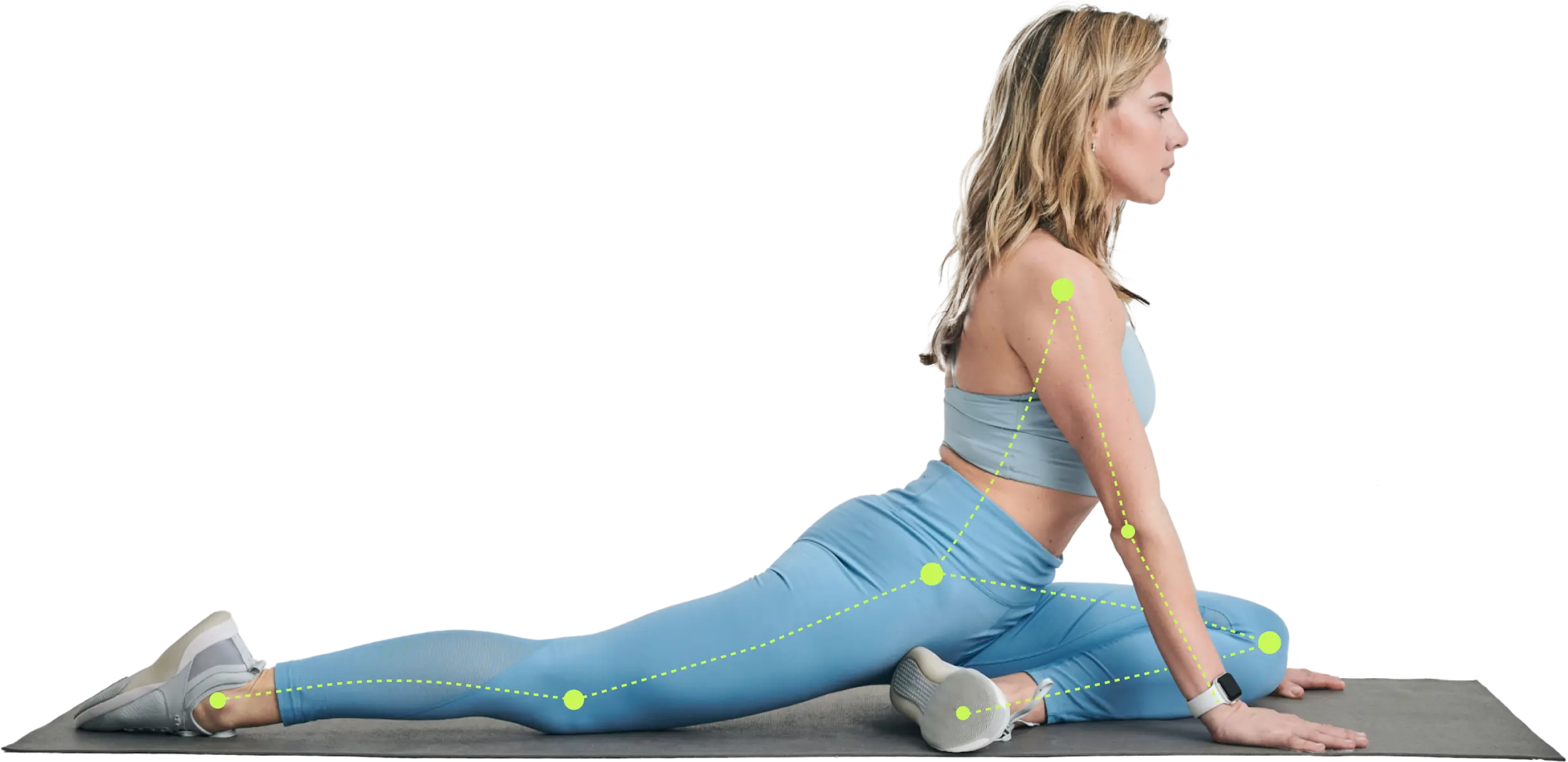
Is eating 1800 calories a day right for your weight loss goals? Our guide covers meal plans, macros, and how to know if this popular target is right for you.
You’ve probably seen 1800 calories a day framed as either the magic answer or a miserable diet. Generally, it’s neither.
It’s a useful starting point. A number on its own can help you create structure, but it can also confuse you if you don’t know what it means for your body, your workouts, your hunger, and your schedule. That’s why some people do well on it and others feel flat, overly hungry, or stuck.
A better way to think about 1800 calories is this: it’s a draft, not a verdict. Your body has an energy budget every day, and that budget changes with your size, activity, muscle mass, recovery, and goals. Once you understand that, the number becomes much more practical and much less intimidating.
What an 1800-Calorie Day Really Means
A calorie is a unit of energy. That’s all. It isn’t good or bad, and it isn’t a sign that you’ve “been good” or “fallen off.”
Your body uses calories the same way a car uses fuel. Some energy goes to basic operations like breathing, circulation, digestion, and keeping you alive. The rest supports movement, exercise, fidgeting, walking to meetings, carrying groceries, and recovering from training. So when someone says they’re eating 1800 calories a day, they’re talking about their daily energy budget.

Why this number became so common
Part of the reason 1800 calories a day comes up so often is that public health guidance has used it as a practical benchmark. In 2017, Public Health England recommended 1,800 calories per day from food alone, split as 400 for breakfast, 600 for lunch, and 600 for dinner, after noting that UK adults were often consuming about 200 to 300 extra calories daily and that over 60% of adults were overweight or obese, as summarized in this report on the Public Health England guidance.
That doesn’t mean 1800 is correct for every person. It means health agencies saw it as a useful anchor to reduce mindless overconsumption, especially from foods and drinks people often underestimate.
What 1800 looks like in real life
An 1800-calorie day doesn’t have to mean tiny meals and constant hunger. It can look like:
- A solid breakfast with protein, fiber, and some carbs
- A filling lunch that keeps your energy steady through the afternoon
- A satisfying dinner with enough food to feel like an actual meal
- A planned snack so you’re not raiding the pantry at night
That old PHE meal split works well for many people because it creates rhythm. You don’t need to follow it exactly, but it gives you a simple frame.
Practical rule: Treat your calorie target like a spending plan. Don’t blow most of it early, then expect dinner to fix the day.
The number matters less than the context
If 1800 calories is below what you burn, it can help with fat loss. If it matches what you burn, it may maintain your weight. If it’s above your needs, it can lead to weight gain. The same number can do three different things for three different people.
That’s why generic charts only get you so far. If you want a better starting estimate, use a guide that explains how to calculate daily calorie needs and then adjust based on real-life feedback like hunger, performance, and progress.
Is an 1800-Calorie Target Right for You
Some people thrive on 1800 calories a day. Others need more. A few need less. The deciding factor isn’t willpower. It’s your energy demand.
Think of your metabolism as a phone battery that’s always draining, even when you’re not actively “using” it. Your body spends energy at rest, then drains more through movement, exercise, work, chores, and recovery. The total cost of your day determines whether 1800 is a deficit, maintenance, or too low.

Start with resting needs
Your body burns calories even if you stay in bed all day. That baseline is often called resting metabolic rate or basal metabolic rate. It covers the energy cost of essential functions, not workouts or errands.
If you want a simple explanation of that baseline, this guide on what resting metabolic rate means breaks it down clearly.
Then add your real day
After that baseline comes the rest of your life:
- Movement at work: desk job, retail floor, nursing shift, construction site
- Planned exercise: lifting, running, classes, walking
- Daily habits: stairs, commuting, cleaning, pacing, carrying kids
- Recovery demands: hard training and poor sleep can change how you feel at a given intake
This is why two people with the same height and weight can need very different calorie intakes.
Who often fits 1800 well
Standard U.S. dietary guidance places 1,800 calories per day as a reasonable target for weight management in groups such as women aged 19 to 30, and it can support a safe 0.5 to 1 lb weekly weight loss when it creates a 300 to 500 calorie deficit. The same guidance also suggests that an 1800-calorie plan can include about 2½ to 3½ servings of protein, 3 servings of dairy, and keep saturated fat below 18 grams, as summarized by Diabetes UK’s 1800-calorie meal plan page.
That’s useful because it shows two things at once. First, 1800 isn’t random. Second, it’s still a category, not a prescription.
A quick decision framework
Ask yourself these questions:
Are you mostly sedentary or lightly active?
If yes, 1800 may be closer to maintenance or a modest deficit.Do you train hard and move a lot outside workouts?
If yes, 1800 may feel too tight.Are you trying to lose fat without feeling wrecked?
Then the goal is a manageable deficit, not the smallest number you can tolerate.Are your workouts getting worse fast?
That can be a sign your intake is too low for your current output.
If 1800 leaves you constantly hungry, low-energy, and unable to recover, the problem may not be discipline. The target may simply be wrong for your current life.
Signs the target may fit
A workable calorie target usually feels boring in the best way. You can follow it most days, your hunger is manageable, and your training still feels productive.
A poorly matched target tends to create one of two patterns:
| Pattern | What it often feels like |
|---|---|
| Too low | You think about food all day, workouts suffer, evenings feel chaotic |
| About right | Meals feel structured, hunger comes and goes normally, progress is steady |
| Too high for fat loss | You feel fine, but body-weight trends and measurements don’t change much |
The right question isn’t “Can I survive on 1800?” It’s “Does 1800 support the result I want without making my life harder than it needs to be?”
Building Your Plate Macro Edition
Calories set the budget. Macros decide how useful that budget feels.
You can spend 1800 calories in a way that leaves you hungry, under-recovered, and craving snacks by late afternoon. Or you can build meals that keep you full, support your training, and make fat loss more realistic. That’s why food composition matters just as much as calorie totals.

The three macros and what they do
Protein helps repair and maintain muscle tissue. It also tends to be the most filling macro, which matters when you’re trying to stay in a calorie deficit without feeling constantly pulled toward snacks.
Carbohydrates are your quick-access fuel. They help power lifting sessions, brisk walks, intervals, and the basic mental energy you need to get through your day.
Fats support hormones, satisfaction, and meal flavor. A plan with too little fat often feels joyless and hard to stick to.
Why higher protein often works better at 1800
If your goal is fat loss with muscle preservation, protein deserves special attention. According to this breakdown of an 1800-calorie meal plan, 150g of protein at 1800 calories can support fat loss and muscle preservation, especially for a 75 to 85kg person doing resistance training. That same approach still leaves room for about 154g of carbohydrates, which can help fuel workouts and recovery.
That matters because many people make the same mistake: they cut calories first and let protein fall too low. Then they wonder why they feel flat, weak, and hungry.
Eat for the body you want to keep, not just the weight you want to lose.
A simple way to build meals
You don’t need to obsess over perfect percentages from day one. A practical plate often works better than a spreadsheet.
Try this meal structure:
- Start with protein: chicken, Greek yogurt, eggs, tofu, fish, cottage cheese, lean beef, beans
- Add a smart carb: oats, fruit, rice, potatoes, whole-grain bread, beans
- Fill the rest with produce: salad greens, berries, broccoli, peppers, carrots, roasted vegetables
- Finish with some fat: olive oil, avocado, nuts, seeds, salmon, nut butter
This approach helps each meal do a job. Protein supports muscle and fullness. Carbs fuel movement. Produce adds volume. Fat makes the meal satisfying enough to repeat.
If you want a practical primer, this guide on how to count macros for beginners helps make the numbers less abstract.
Two macro styles people often use
| Style | Best for | What it feels like |
|---|---|---|
| Balanced split | General health, moderate activity | Easier to maintain, flexible with meals |
| Higher-protein split | Fat loss with strength training | More filling, better support for muscle retention |
Neither style is universally “best.” The better choice is the one you can follow while training well and eating enough protein consistently.
A short visual can help if you’re new to macro planning:
Don’t let macro tracking become a trap
Macro targets should improve your decisions, not make meals stressful. If tracking every gram makes you more rigid, use it as a learning tool for a few weeks. Build familiar meals, learn portions, then loosen the grip.
The goal isn’t to turn dinner into math homework. The goal is to make your 1800 calories a day work harder for you.
Sample 1800-Calorie Meal Plan and Ideas
A sample day helps because individuals don’t struggle with the idea of calories. They struggle with turning that idea into breakfast, lunch, dinner, and snacks that feel normal.
This example isn’t a rigid script. Think of it as a practical “day in the life” that shows how 1800 calories a day can look when meals are built for fullness, convenience, and decent energy.
One full day at a glance
| Meal | Food Item | Approximate Calories |
|---|---|---|
| Breakfast | Greek yogurt bowl with oats, berries, chia seeds, and a spoon of nut butter | Approximate share of the day’s calories |
| Morning snack | Apple with cottage cheese | Approximate share of the day’s calories |
| Lunch | Grilled chicken rice bowl with mixed vegetables and olive oil based dressing | Approximate share of the day’s calories |
| Afternoon snack | Protein smoothie with milk or fortified alternative, banana, and spinach | Approximate share of the day’s calories |
| Dinner | Salmon, roasted potatoes, and a large serving of vegetables | Approximate share of the day’s calories |
| Evening option | A small square of dark chocolate or fruit, if it fits your day | Approximate share of the day’s calories |
I’m keeping the calorie line qualitative here on purpose. Real meals vary by brand, portion, cooking method, and extras like oils, sauces, and toppings. The structure matters more than pretending every home-cooked plate lands on a perfect number.
How this day actually feels
Breakfast gives you protein plus slow-burning carbs, which is useful if you tend to get hungry early. Lunch carries more volume, so the afternoon doesn’t become a snack spiral. Dinner is substantial enough to feel like dinner, not punishment.
That’s the hidden skill with 1800 calories a day. You’re not trying to eat as little as possible. You’re trying to distribute food in a way that protects your appetite and your routine.
Mix and match ideas
If you like variety, keep the structure and swap the ingredients:
- Breakfast swap: eggs on whole-grain toast with fruit instead of yogurt and oats
- Lunch swap: turkey wrap with crunchy vegetables instead of a rice bowl
- Dinner swap: tofu stir-fry with rice instead of salmon and potatoes
- Snack swap: edamame, Greek yogurt, or hummus with carrots instead of a smoothie
For readers who want easier weekday planning, this guide on Healthy Meal Prep for Delicious Weekday Meals is a useful resource for thinking through prep, storage, and repeatable meal building.
A good meal plan should reduce decisions, not remove flexibility.
If you’re hungry, change the food mix first
Before lowering calories further, look at meal quality. Meals built around lean protein, produce, beans, potatoes, oats, yogurt, and other filling foods usually feel easier to sustain than meals built around small portions of calorie-dense snack foods.
That’s where foods with high volume can help. If your plate looks small and your hunger feels loud, this guide to high-volume low-calorie foods gives useful ideas for increasing fullness without making your plan feel cramped.
Tips for Long-Term Success and Adherence
The hardest part of 1800 calories a day usually isn’t knowing what to do. It’s doing something close to it on busy Tuesdays, restaurant Fridays, and tired Sundays.
Consistency gets easier when your plan fits your life. It gets harder when the plan depends on perfect motivation.
Make hunger easier to manage
Hunger isn’t always a problem. Constant, distracting hunger is.
A few habits help:
- Build meals around protein and produce so meals take up more space on the plate and in your stomach
- Don’t save all your calories for night unless that pattern works for you
- Eat before you’re starving because extreme hunger makes “just one snack” much harder to manage
- Drink water regularly since low fluid intake can blur hunger and thirst cues
Use repetition strategically
You don’t need endless meal variety to eat well. In fact, repeating a few breakfasts and lunches often makes adherence easier because you reduce daily decisions.
Try creating a short rotation:
| Meal type | Keep it simple |
|---|---|
| Breakfast | Pick two reliable options you can make half-awake |
| Lunch | Use leftovers, bowls, wraps, or salads that travel well |
| Dinner | Rotate a few proteins, carbs, and vegetables instead of reinventing meals nightly |
This isn’t boring if it removes stress. It’s efficient.
Plan for social meals instead of fearing them
One restaurant meal doesn’t ruin progress. What often proves detrimental is the all-or-nothing rebound: “I already went off plan, so the whole weekend is gone.”
A better approach is to stay grounded:
- Eat a normal protein-rich meal earlier in the day.
- Go out and enjoy the meal.
- Stop treating one higher-calorie meal like a personal failure.
- Return to your usual structure at the next meal.
The meal after the off-plan meal matters more than the off-plan meal itself.
Watch more than the scale
Scale weight can bounce around from sodium, stress, digestion, sleep, and training soreness. If you rely on that one signal, you’ll often misread what’s happening.
Pay attention to:
- How your clothes fit
- How your workouts feel
- Your hunger across the week
- Your energy at work
- Your ability to stay consistent without white-knuckling it
These are useful feedback signals. Fat loss should improve your routine over time, not make your life feel smaller.
Keep plateaus in perspective
Sometimes progress slows because your body has adapted to your current intake and activity. Sometimes it slows because portions drifted, weekends got looser, or movement dropped without you noticing.
Before making big cuts, check the basics. Are you still eating roughly the way you think you are? Are your workouts still happening? Are snacks, drinks, and “bites” adding up more than expected?
Many individuals don’t need a dramatic reset. They need a calmer review and a small adjustment.
How Zing Coach Personalizes Your Nutrition Plan
A fixed target like 1800 calories a day is helpful because it gives you a starting line. Its weakness is that your body doesn’t live on a fixed schedule.
Your energy needs change when training volume changes, when step count rises, when body composition shifts, and when recovery is poor. That’s where a static number starts to break down. A smarter system treats calorie intake as something to recalibrate, not something to obey forever.

Why dynamic targets make more sense
A calorie target should respond to real conditions:
- Your current goal such as fat loss, maintenance, or muscle gain
- Your actual activity instead of what you planned to do
- Your body composition because lean mass changes energy needs
- Your recovery status since fatigue changes training output and appetite
This is especially important for people returning to exercise, managing previous injuries, or trying to balance training with a demanding work schedule. A plan that ignores those factors can be technically accurate on paper and still fail in real life.
Where adaptive nutrition helps most
The biggest gap in generic meal plans is personalization. A broad 1800-calorie template may work for a while, but it can miss key context like your actual movement, training response, and limitations.
That matters for people rebuilding consistency after time away. A 2026 JAMA review reported that adaptive 1800-calorie plans using tools such as form-tracking computer vision and real-time data integration reduced injury recurrence by 35% compared with static plans in populations with physical limitations, and the same source notes that up to 40% of gym returners drop out when plans don’t account for their needs, as summarized in this UMass Memorial Health reference page.
The key point isn’t the technology by itself. It’s the feedback loop. Better inputs create better adjustments.
What that looks like in practice
An adaptive approach can use:
| Input | Why it matters |
|---|---|
| Activity data | Your calorie need changes when your movement changes |
| Body composition trends | Lean mass and fat mass give more context than body weight alone |
| Workout performance | Struggling through sessions may suggest recovery or fueling issues |
| Fatigue feedback | Low energy can mean the plan needs to be adjusted, not endured |
One example is an AI-powered workout app that connects training, recovery, and nutrition guidance instead of treating them as separate projects. In practice, that means your calorie target can function more like a moving range anchored to your real data, not a static rule copied from a generic chart.
The real shift in mindset
This is the most useful upgrade you can make: stop asking, “Is 1800 the right number forever?” and start asking, “Is this number still appropriate for what my body is doing now?”
That shift changes everything. It makes your plan more forgiving, more accurate, and more sustainable.
It also helps you avoid a common trap. Many people blame themselves when a fixed calorie target stops working. Often, the issue isn’t effort. The plan wasn’t updated.
Moving Beyond a Fixed Number to Sustainable Results
1800 calories a day can be a strong starting point. For some people, it creates the right deficit for fat loss. For others, it’s a maintenance intake or a temporary benchmark that needs adjustment. The number only becomes useful when you pair it with context.
That context includes your appetite, movement, body composition, training, and routine. It also includes food quality. A well-built 1800-calorie day with enough protein, smart carbs, satisfying fats, and plenty of produce will feel very different from a loosely tracked 1800 made up of random snacks and tiny meals.
The long-term win isn’t memorizing a single calorie target. It’s learning how to read your body’s feedback and adjust without panic. If your energy crashes, workouts stall, or hunger becomes relentless, that’s information. If your meals feel satisfying and your progress is steady, that’s information too.
Use 1800 as a tool, not an identity. The goal is a way of eating you can repeat when work is busy, motivation is average, and life is normal.
If you want a more individualized starting point, Zing Coach combines workout planning with calorie and macro guidance so your target can reflect your goals, activity, and progress instead of staying fixed forever.
Share this article


Authors