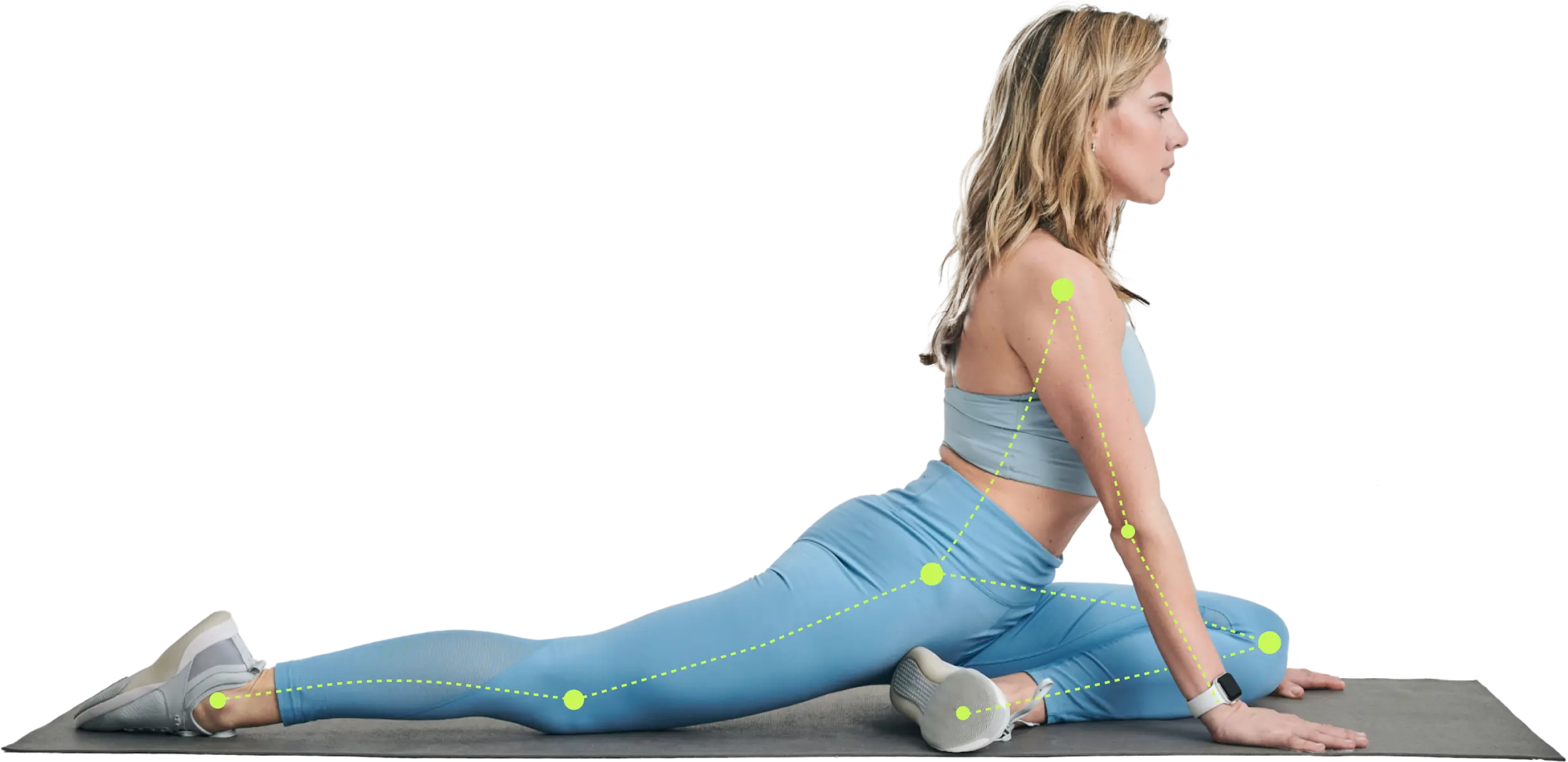
Learn how to lose 30 pounds in 6 months with a personalized plan for nutrition, training & recovery. Use Zing Coach AI to stay on track.
You want the scale to move, your clothes to fit differently, and your energy to come back. You also don’t want another plan that asks you to live on salads, do endless cardio, and hope motivation carries you for half a year.
That’s the right instinct. How to lose 30 pounds in 6 months isn’t about chasing a perfect week. It’s about building a system you can repeat when work gets busy, your schedule changes, or progress slows for a while. The people who get there usually don’t use harsher methods. They use better structure.
A solid plan has four parts: a calorie deficit you can sustain, meals that keep hunger under control, training that preserves muscle while driving fat loss, and recovery habits that stop plateaus and burnout from taking over. Technology can help with the execution, especially when it turns vague goals into daily decisions you can follow.
Your Blueprint for Losing 30 Pounds Safely
Losing 30 pounds in 6 months is realistic for many people, but only when the target is broken into something manageable. The safest pace is not dramatic. It’s consistent.
A calorie deficit of 500 to 750 calories per day supports safe, sustainable weight loss of 1 to 2 pounds per week, which lines up well with a 6 month goal. Since 1 pound of fat is about 3,500 calories, that moderate deficit creates steady fat loss without the aggressive restriction that can make adherence harder and slow metabolism, according to Healthline’s guide to losing 30 pounds.

Start with the right math
Individuals often fail because they either guess too loosely or cut too hard. Both create problems.
If your plan asks for constant hunger, low energy, and white-knuckle discipline, it’s not a six-month plan. It’s a short sprint that usually ends with overeating, missed workouts, and frustration. A moderate deficit works better because it leaves room for normal life.
Practical rule: Build your deficit from both sides. Eat a bit less, move a bit more, and avoid trying to force the whole gap through food alone.
That approach also protects performance. If your workouts improve while your body weight trends down, you’re usually doing this right. If your strength crashes, your steps plummet, and you feel drained all day, you’ve probably pushed too far.
Focus on body composition, not just body weight
The scale matters, but it doesn’t tell the full story. If you’re strength training well, sleeping better, and eating enough protein, you may lose fat while holding onto more lean tissue. That changes how you look, feel, and perform.
This is why some people benefit from learning about understanding DEXA scan accuracy before getting too attached to one body fat reading. Body composition tools can be useful, but they’re still tools. Trends matter more than one snapshot.
A better question is this: are your waist measurements, photos, strength numbers, and average weekly weight moving in the right direction? If yes, keep going.
Build your plan around three controllable levers
You don’t need a complicated fat-loss protocol. You need control over the basics.
- Food intake: Your meals need to create the deficit without leaving you ravenous.
- Activity: Walking, cardio, and training increase total energy burn and improve consistency.
- Recovery: Sleep, stress control, and rest days make the first two possible.
When people say they’re “doing everything right” but nothing is happening, one of those three is usually leaking. They’re snacking more than they realize, moving less outside workouts, or running on too little sleep and too much stress.
Keep the first month boring on purpose
The first month should feel sustainable, not heroic. You’re trying to establish a repeatable rhythm:
- Eat in a moderate deficit.
- Train on a schedule you can keep.
- Track enough data to spot patterns.
- Adjust slowly, not emotionally.
That’s where tools can reduce friction. A structured resource on losing weight safely can help you translate the big goal into daily habits without turning every meal and workout into a guess.
The biggest mistake at this stage is impatience. People want six months of results in two weeks, so they overcorrect. The better move is to start with a plan you can still follow on a stressful Wednesday, not just on a perfect Monday.
Building Your Personalized Nutrition Plan
Your nutrition plan needs to do two jobs at once. It has to create fat loss, and it has to make the rest of your life easier to manage.
If meals leave you hungry, low on energy, or constantly thinking about food, adherence gets shaky fast. A good fat-loss diet isn’t built around willpower. It’s built around satiety, routine, and simplicity.

Build meals that are easy to repeat
You don’t need endless variety. You need a small set of meals you’ll realistically prepare.
A practical plate for fat loss usually includes a lean protein source, high-fiber produce, a carb source matched to your activity, and enough fat to make the meal satisfying. That could look like eggs with fruit and oats, Greek yogurt with berries and seeds, chicken with rice and vegetables, or salmon with potatoes and salad.
What matters most is consistency in structure. When meals are predictable, it becomes much easier to stay in a deficit without obsessive tracking.
- Protein first: Start with chicken, fish, eggs, Greek yogurt, tofu, cottage cheese, lean beef, or legumes.
- Fiber second: Add vegetables, fruit, beans, or whole grains to increase fullness.
- Carbs with purpose: Keep rice, potatoes, oats, pasta, or bread around your active parts of the day.
- Fats for staying power: Use nuts, avocado, olive oil, or seeds in sensible portions.
Use a meal template instead of a strict menu
Rigid plans break the moment real life happens. Templates hold up better.
Try this framework across most meals:
| Meal part | What to choose | Why it helps |
|---|---|---|
| Main protein | Chicken, fish, eggs, tofu, yogurt, beans | Helps you stay full and supports training |
| High-volume produce | Salad, cooked vegetables, fruit | Adds fiber and meal size |
| Smart carb | Rice, oats, potatoes, whole grain bread | Supports energy and workout quality |
| Flavor layer | Salsa, herbs, spices, yogurt sauce | Makes repetition easier |
This approach leaves room for preferences, family meals, and eating out. You’re not trying to eat “clean.” You’re trying to eat in a way that keeps the plan alive for months.
A useful nutrition plan should survive travel, deadlines, and weekends. If it only works in a perfect routine, it won’t last.
Prep for the week you actually have
Busy professionals often know what to eat. The problem is timing. They get home late, they’re hungry, and convenience wins.
That’s why meal prep matters, but it doesn’t have to mean lining up identical containers for a week. Batch-cooking proteins, washing produce, and prepping a few grab-and-go meals is often enough. If you want a practical system, this guide on how to meal prep for fat loss is useful because it focuses on simplifying decisions rather than making food prep feel like a second job.
A few high-return habits work well:
- Keep defaults ready: cooked protein, chopped vegetables, fruit, yogurt, and a starch.
- Make the first meal easy: breakfast should require almost no thinking.
- Plan your danger zone: if evenings are hardest, prepare dinner and snacks ahead of time.
Hydration and timing still matter
Hydration won’t replace a calorie deficit, but it helps with appetite, training quality, and decision-making. Many people mistake fatigue or mild thirst for hunger, especially in the afternoon.
Meal timing matters less than consistency, but it still helps to place more satisfying meals around the times you usually overeat. If late-night snacking is your weak spot, a skimpy dinner is asking for trouble.
This walkthrough on healthy eating for fat loss is helpful if you want a cleaner framework for setting up daily eating patterns without turning every food choice into a rule.
A short visual can help tie the basics together:
What doesn’t work for long
Most failed fat-loss diets share the same traits. They remove too many foods, rely on motivation, and ignore hunger.
Watch for these traps:
- Skipping meals to “save calories” and then overeating at night.
- Liquid calories that don’t fill you up but still count.
- Cheat-day thinking that turns one flexible meal into an all-weekend reset.
- Eating too little protein or produce, which makes the deficit feel much harder than it needs to.
The best nutrition plan is the one you can repeat calmly. That’s usually less exciting than a trendy diet, but it works far better.
Your Progressive 6-Month Training Schedule
Six months is long enough to make real progress and long enough to get derailed by an overambitious plan. The schedule that works best is the one you can keep following when work gets busy, motivation dips, or your body feels a little beat up.
For fat loss, training needs to do three jobs at once. It should help increase daily energy output, keep as much lean muscle as possible, and stay repeatable for months. For many adults, that means a mix of 150 to 300 minutes of moderate cardio per week and 2 to 3 strength sessions, and this review on physical activity and weight management supports that combined approach for long-term weight control.
Why the mix works better than cardio alone
Cardio helps you spend more energy. Strength training gives your body a reason to hold onto muscle while you lose weight. That combination usually leads to a better result than cardio alone, especially if the goal is to look, feel, and function better at the end of the six months.
I see the same mistake often. Someone starts with daily cardio, loses some weight fast, then feels flatter, weaker, and more tired a few months later. The scale moves, but the body they are building is harder to maintain. Strength training fixes that problem before it starts.
Coach’s note: Train for the body you want to keep, not just the scale number you want to hit.
A phased plan works better than repeating the same month
Repeating the same routine for half a year usually leads to stalled progress, nagging aches, or boredom. A phased schedule gives you room to build capacity first, then push progress, then refine it.
| Phase | Strength Training Focus | Cardio Focus | Zing Coach Adaptation |
|---|---|---|---|
| Months 1 to 2 | Full-body basics, controlled tempo, exercise technique, consistent 2 to 3 sessions weekly | Brisk walking, cycling, or incline treadmill at moderate effort | Uses your quiz, fitness test, available equipment, and session length to set a realistic starting point and calibrate workload |
| Months 3 to 4 | Progressively heavier lifts, more total volume, split routines if recovery allows | Longer steady sessions or one harder interval session added carefully | Adjusts volume and exercise selection based on tracked fatigue, activity, and completed workouts |
| Months 5 to 6 | Stronger compound work, more demanding circuits, tighter rest periods when appropriate | Keeps moderate cardio in place and layers in selective interval work without hurting recovery | Refines progression, swaps exercises when needed, and uses form feedback to keep intensity productive and safe |
Months 1 and 2 should feel manageable
That is a feature, not a flaw.
Your first phase is about building rhythm. Show up, practice the main movement patterns, and leave enough in the tank to come back two days later and do it again. Focus on squat, hinge, push, pull, carry, and core work. Keep cardio at a pace where you can still talk in full sentences.
A simple weekly rhythm might look like this:
- Day 1: full-body strength
- Day 2: moderate walk or bike
- Day 3: full-body strength
- Day 4: recovery walk
- Day 5: full-body strength or longer cardio
- Weekend: lighter movement, steps, or mobility
This phase often feels too easy for people who are eager to lose weight fast. It is still the right move. Consistency built here makes the later phases work.
Months 3 and 4 should build momentum
Once your technique is steady and you are recovering well, increase the training stress gradually. Add a set to key lifts. Add reps before adding load if your form still needs work. Shorten rest periods a little on accessory work. Keep one cardio session a bit harder if your joints and recovery can handle it.
If running is part of your plan, use progression carefully. A guide on how to improve running stamina can help you build endurance without turning every run into a test.
A structured progression model helps here. This guide to progressive overload in training shows how to progress through more than just heavier weights. More reps, better control, cleaner technique, and more work completed in the same time all count.
This is also where many people hit their first plateau. The answer is rarely to pile on random extra workouts. The better move is to adjust one variable at a time and watch the response for two weeks. That is one of the practical benefits of Zing Coach. It can adapt sessions based on your logged fatigue, recent activity, available equipment, and workout history instead of forcing you to guess.
Months 5 and 6 are about precision
The final phase rewards discipline more than intensity. Many people get close to the goal, panic, and try to speed things up with too much cardio, too little recovery, or hard sessions stacked back to back. That usually creates inconsistent training and poorer adherence.
Keep the basics intact. Lift with intent. Keep cardio in the plan. Maintain a steady step count or daily movement target. Add intervals only if they are not dragging down your strength work or making your joints angry.
A strong final phase includes:
- Strength sessions that still prioritize quality and progression.
- Enough cardio to support the calorie deficit without draining recovery.
- Consistent daily movement outside formal workouts.
- Small adjustments based on performance, energy, and adherence.
Zing Coach is useful here because it simplifies the part that trips people up. It builds workouts from your goal, equipment, time available, and current level, then adjusts sessions using activity data, fatigue input, fitness testing, body composition tracking, and form feedback through computer vision. That makes the plan more personal and easier to sustain when life does not follow a perfect schedule.
Mastering Recovery and Staying Injury-Free
Many people treat recovery like a reward for hard training. That’s backwards. Recovery is what makes hard training useful in the first place.
If you want to lose fat for six months without breaking down, stalling out, or getting hurt, recovery has to become part of the plan. Not the optional part. The central part.
Weight loss plateaus are often tied to metabolic adaptation, where the body can reduce energy expenditure by 15 to 20% after initial loss. The practical response isn’t to slash calories harder. It’s to make smart adjustments, and strength training helps because it can boost resting metabolism by 5 to 7%, according to the source provided in this discussion of plateaus and training response.

Sleep protects your deficit
Poor sleep makes everything harder. Hunger feels louder. Workouts feel heavier. Patience disappears. Food decisions get worse.
A lot of people try to solve fatigue by pushing harder, adding caffeine, or skipping rest days. Usually they need the opposite. Better sleep hygiene, a more realistic training week, and fewer all-or-nothing decisions.
If your recovery is poor, your body doesn’t care how motivated you are. Performance drops first, then consistency follows.
Rest days are productive days
Rest days aren’t signs of weakness. They’re how you stay trainable.
A proper rest day might include a walk, mobility work, light stretching, or nothing structured at all. The point is to lower fatigue without becoming completely sedentary. This helps you return to the next session ready to move well.
Here are the warning signs that you need more recovery, not more intensity:
- Your normal weights feel unusually heavy
- You feel run down before the workout starts
- Nagging pain is changing your movement
- Your motivation collapses even though your goal still matters
Injury prevention starts with honesty
Injury usually doesn’t begin with one dramatic moment. It starts when people ignore small warnings because they don’t want to lose momentum.
That’s exactly how momentum gets lost.
If your knee hurts during lunges, don’t force lunges because they’re on the spreadsheet. Change the movement. Shorten range. Swap the exercise. Adjust the load. Smart training is flexible training.
A recovery framework, such as these workout recovery tips, can be helpful. You want a process for reading fatigue and making the next decision correctly, not guessing based on guilt.
Plateaus often signal adjustment, not failure
When weight loss slows, people assume the plan stopped working. Sometimes the plan is working and your expectations are off. Sometimes you’re retaining water, under-recovering, or moving less because fatigue is high.
Before changing everything, check the basics:
| What to review | What to ask |
|---|---|
| Sleep | Are you going into workouts tired every week? |
| Training fatigue | Have you added too much intensity too fast? |
| Recovery days | Are you actually taking them, or just calling them rest days? |
| Pain signals | Are you modifying movements early enough? |
The goal is to stay healthy enough to string months together. That’s what drives results. Not one savage week of training.
The Mental Game of Sustainable Weight Loss
The hardest part of fat loss usually isn’t learning what to do. It’s doing enough of it, for long enough, when life isn’t cooperating.
That’s why mindset matters, but not in the vague motivational sense. What matters is building systems that reduce friction, strengthen routines, and keep one rough day from becoming a lost month.
Psychological barriers are a major hurdle, with 70% of fitness dropouts citing motivation or stress, and gamified features like streaks and challenges have been shown to boost app retention by 40%, based on the source material in this article on losing 30 pounds and staying motivated.

Motivation is unreliable, systems are better
Many wait to feel ready. That’s a mistake. Reliable progress usually comes from routines that run even when motivation is flat.
The useful question isn’t “How do I stay fired up for six months?” It’s “How do I make the next good choice easier than the bad one?”
That could mean setting out workout clothes the night before, keeping a default lunch at work, scheduling walks on your calendar, or logging dinner before the evening gets chaotic.
Track what keeps you honest
Tracking works best when it gives feedback, not when it becomes punishment. A daily weigh-in, weekly photos, step count, workout log, and a few food notes can show you whether your habits match your goal.
What you’re looking for is pattern recognition:
- Scale up for a few days, but nutrition stayed on track? That may be water retention.
- Workouts are slipping and evening snacks are rising? Stress may be driving both.
- Strength is steady, waist is shrinking, scale is slow? Progress is still happening.
Progress rarely feels linear while you’re in it. That doesn’t mean it isn’t real.
Use non-scale wins to protect momentum
If the scale is your only source of encouragement, your motivation will get fragile. Fat loss includes visible and invisible wins.
Notice things like:
- Better workout performance
- Less breathlessness during daily life
- Clothes fitting differently
- Improved consistency with meals
- More confidence walking into the gym
Those markers matter because they show the process is changing you before the final number arrives.
Stress management needs a plan
Stress doesn’t just affect mood. It changes behavior. People skip workouts, order takeout, snack mindlessly, and stay up too late when their stress load climbs.
You don’t need a perfect stress-management practice. You need a few alternatives to stress eating and stress quitting. A short walk, a shower, journaling, breathing drills, going to bed earlier, or calling a friend all work better than pretending stress won’t affect the plan.
Habit support is vital. A resource on how to make exercise a habit can help anchor your routine to cues and repetition instead of depending on enthusiasm.
Handle slip-ups like a coach, not a critic
One missed workout is normal. One high-calorie meal is normal. One rough weekend is normal.
What causes real damage is the story people attach to those moments. They decide they blew it, then act like someone who blew it. That’s what turns a small detour into regression.
A better response is simple:
- Identify what happened.
- Remove the drama.
- Resume the next planned action.
That mindset is what makes six months possible. The goal isn’t perfect compliance. It’s fast recovery from imperfect days.
Your Path Forward to a Healthier You
Losing 30 pounds in 6 months comes down to doing ordinary things with unusual consistency. Eat in a moderate deficit. Build meals that control hunger. Train with purpose. Recover before fatigue turns into injury or drift. Keep your mindset steady enough to continue when progress feels slow.
That combination works because it respects real life. You don’t need to become obsessed with weight loss. You need a structure that holds when work gets busy, motivation dips, or the scale pauses. That’s the difference between a temporary push and a lasting change.
Use the tools that make execution easier. Keep the plan flexible enough to survive imperfect weeks. Judge progress across months, not moods.
The result isn’t just a lower body weight. It’s better fitness, better decision-making, and a routine you can live with after the six months are over.
If you want help turning this into a day-by-day system, Zing Coach can give you a personalized starting point with adaptive workouts, nutrition targets, progress tracking, and built-in accountability so you’re not trying to figure out every decision on your own.
Share this article


Authors