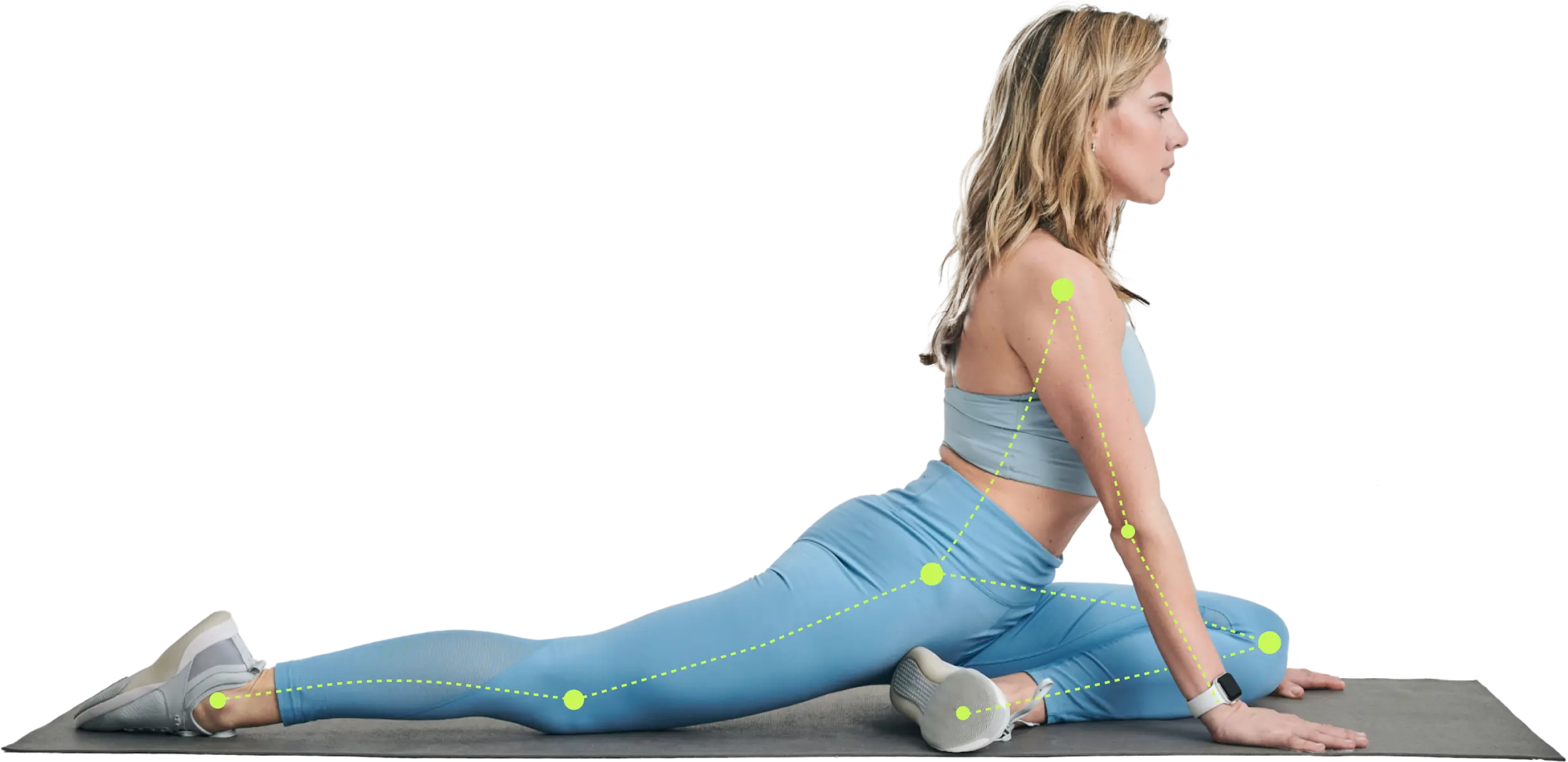
Discover a proven 3 day workout plan to boost muscle growth and strength. Get concise splits, sample routines, and practical nutrition tips.

A well-structured 3 day workout plan is one of the most effective ways to build serious muscle and strength. It’s solid proof that you don't need to live in the gym to see significant results. This approach perfectly balances intense training with crucial recovery, making it a sustainable choice for everyone from total beginners to seasoned lifters.
Why Three Workouts a Week Is the Sweet Spot for Growth
It's a common myth that more gym time automatically equals more muscle. The truth? Growth happens during recovery, not during the workout itself. A three-day-a-week schedule is so powerful because it nails the balance between stimulating your muscles and giving them the downtime they need to repair and get stronger.
This setup is also a game-changer for preventing burnout, which is a major reason so many people fall off their fitness routines. Instead of feeling constantly sore and drained, you walk into each session energized and ready to give it your all. This focus on quality over sheer quantity is what really drives consistent, long-term progress.
Maximizing Recovery and Preventing Overtraining
When you lift weights, you're creating microscopic tears in your muscle fibers. It’s during the recovery process that your body repairs these tears, making the muscle bigger and stronger than before. This whole cycle is driven by something called muscle protein synthesis (MPS).
Training a muscle group and then allowing 48-72 hours for recovery aligns perfectly with the MPS timeline. A 3 day workout plan naturally builds this recovery window right in, ensuring your body has plenty of time to adapt and grow before you hit it again. This structure is key to avoiding overtraining, which can stall your progress and jack up your injury risk. To get the volume just right, it helps to understand how many exercises you should do per muscle group.
The biggest advantage of a 3 day workout plan is its sustainability. It fits into a busy lifestyle, promotes consistent effort, and prioritizes the recovery that is absolutely essential for building strength and preventing injury.
The Science Backs It Up
The research really reinforces how effective this frequency is. For example, a 2023 study compared groups training two versus three days per week and found that strength gains were substantial in both. Upper body strength shot up by at least 15%, and lower body strength increased by an impressive 35%.
What's more, the body fat reduction was nearly identical between the groups. This shows that a three-day schedule delivers exceptional results without demanding more of your precious time. You can read the full research about these training frequency findings to see the data for yourself.
Finding the Right 3-Day Workout Split for Your Goals
Okay, so you’re on board with training three times a week. Now comes the fun part: picking a "split," which is just the fancy term for how you structure your workouts. This decision is more important than you might think. How you organize your sessions dictates how often you hit each muscle and how much rest it gets—two of the biggest levers we can pull to make progress.
Not all 3-day plans are built the same. We're going to look at the three most common and effective splits: Full Body, Push/Pull/Legs (PPL), and a clever Upper/Lower/Full hybrid. Each has its own vibe and is better suited for different goals and experience levels.
This little decision tree can help you see where you might fit in.
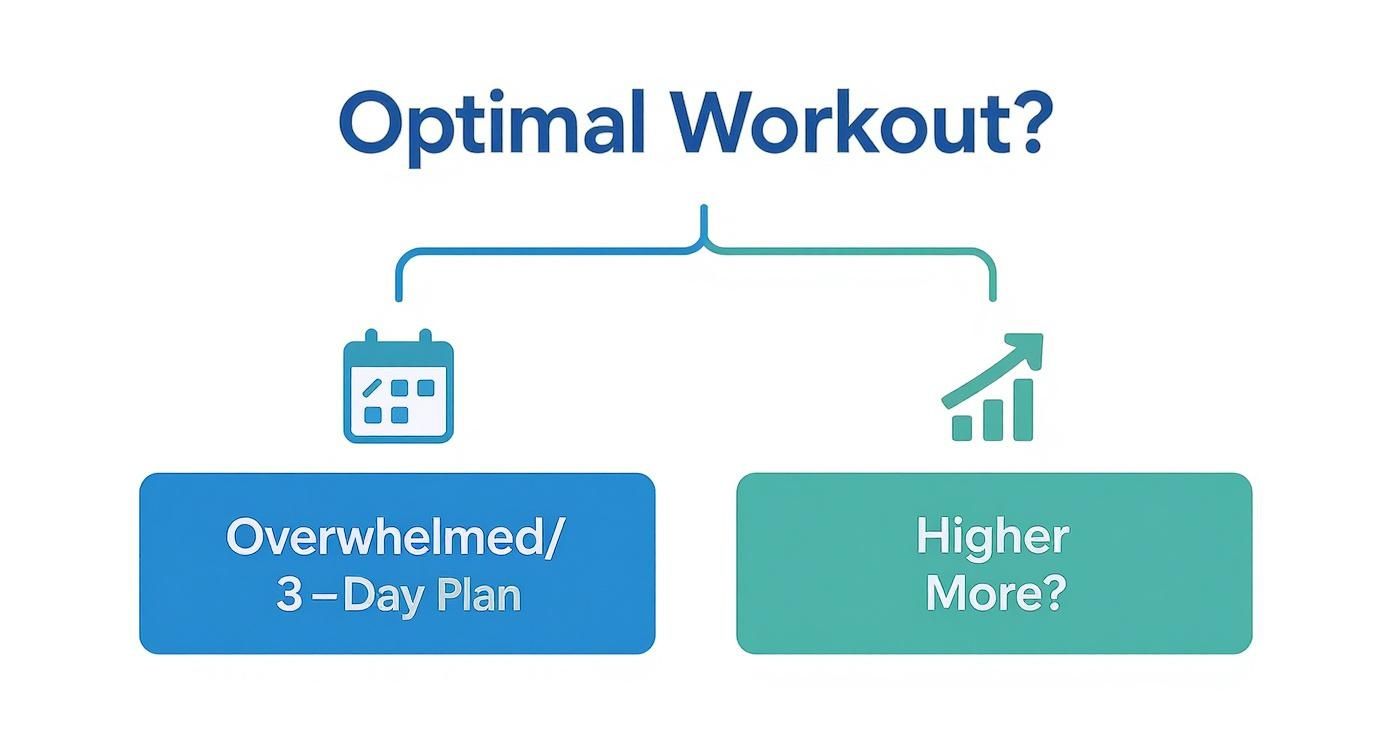
As you can see, a three-day plan often hits that sweet spot. It’s perfect for anyone feeling swamped but still wanting a structured, manageable path forward.
Choosing the right split is a game-changer for your results. To make it easier, here’s a quick comparison of the big three, breaking down who they're for and what to expect.
Which 3-Day Workout Split Is Right For You?
| Workout Split | Best For | Primary Benefit | Potential Drawback |
|---|---|---|---|
| Full Body | Beginners, fat loss, or time-crunched individuals. | High frequency (hitting muscles 3x per week) maximizes muscle growth signals and calorie burn. | Less focus on individual muscles per session; can be tiring. |
| Push/Pull/Legs (PPL) | Intermediate lifters wanting to focus on specific muscle groups. | Allows for higher volume and intensity on targeted muscles each day. | Lower frequency (hitting muscles only 1x per week) might be suboptimal for some. |
| Upper/Lower/Full Hybrid | Intermediate to advanced lifters looking for a balance of frequency and volume. | Combines the high frequency of full body with the focused volume of a body-part split. | Can be complex to program correctly to manage recovery. |
Think of this table as your starting point. No single split is "best"—the best one is the one that fits your life, keeps you consistent, and gets you excited to train. Let's dig a little deeper into each one.
Full Body Workouts
This is the classic starting point for most beginners, and for good reason. A full body routine is exactly what it sounds like: you train all your major muscle groups in every single workout. Instead of having a dedicated "chest day," you'll do exercises for your entire body—like squats, rows, and presses—each time you train.
The magic here is frequency. By stimulating your muscles three times per week, you give them more opportunities to grow. It’s also an incredible way to get good at the main lifts, since you’re practicing the movements so often. In fact, some analyses of workout splits show that a 3-day full-body plan can boost strength gains by around 50% compared to a PPL split, even with the same total weekly work, all thanks to that repeated stimulation.
Push Pull Legs (PPL) Split
The PPL split is a bodybuilder's bread and butter. It’s an intuitive way to organize your training around fundamental movement patterns:
- Push Day: All the exercises where you push a weight away from you (think bench press, shoulder press, triceps extensions).
- Pull Day: All the movements where you pull a weight toward you (like pull-ups, rows, and bicep curls).
- Leg Day: Pretty self-explanatory—squats, deadlifts, lunges, and all other lower-body work.
This setup lets you hammer related muscle groups with more exercises and intensity than you could in a full-body session. The trade-off? Each muscle group only gets attention once a week, which some people find isn't quite enough to maximize growth.
A PPL split is a fantastic option for intermediate lifters who are ready to add more focused work to specific body parts. It's simple, brutally effective, and ensures no muscle gets left behind.
Upper Lower and Full Body Hybrid
Think of this as the "best of both worlds" approach. This hybrid split blends the high frequency of a full-body routine with the focused volume of a body-part split.
It works like this: you have one day dedicated to your upper body, one day for your lower body, and a third day that’s a full-body session. This gives you more training frequency than PPL but still allows for more targeted work than a pure full-body plan. It’s a smart way to structure your week once you have some solid training experience under your belt.
Actionable 3-Day Workout Routines You Can Start Today
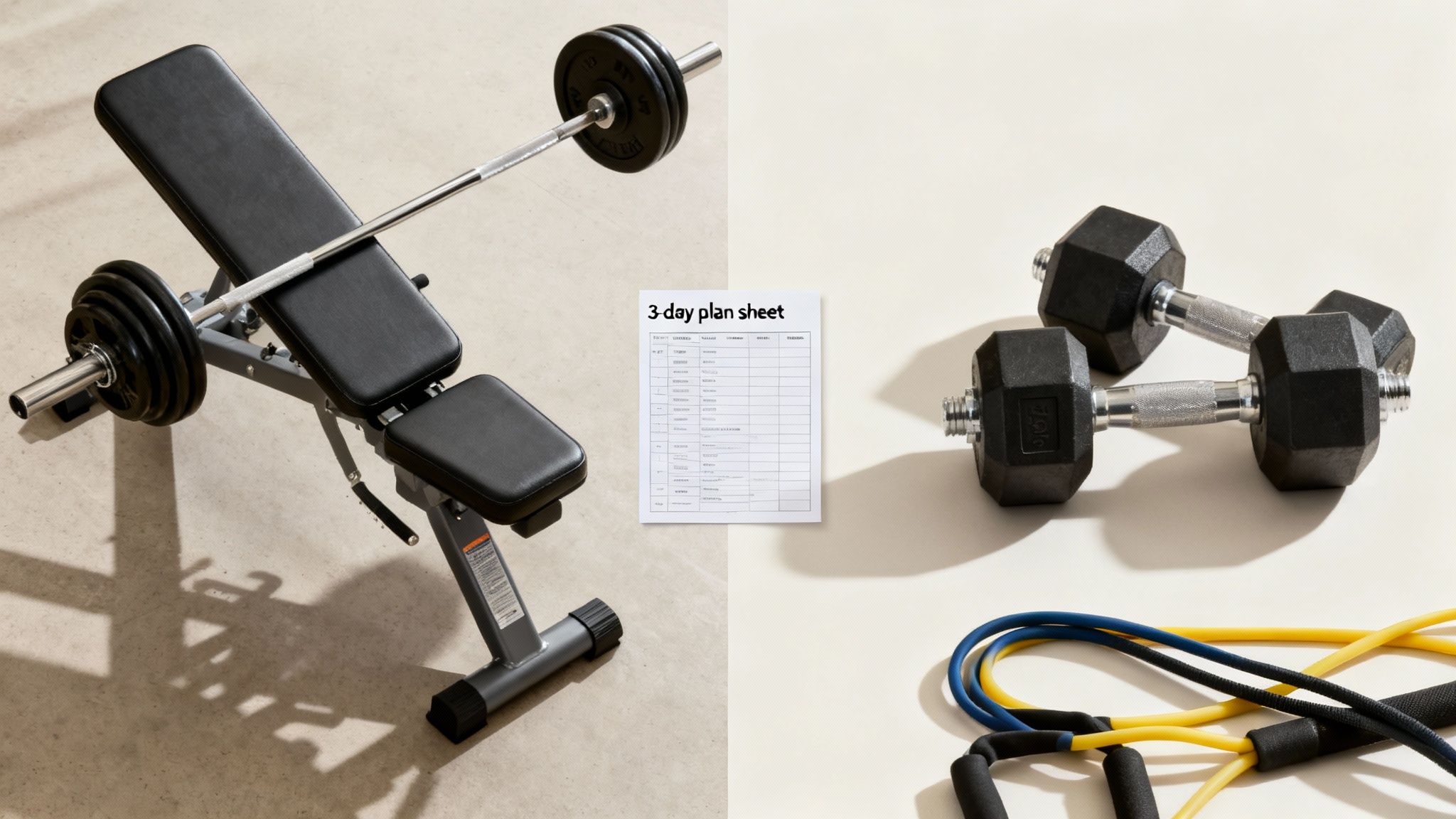
Alright, let's move from theory to action. Below are two complete, ready-to-go full-body workout routines designed to build muscle and strength. I’ve put together a plan for a fully-equipped gym and another one you can do right in your living room.
Both of these 3-day workout plans are built around the big, compound movements—exercises that hit multiple muscle groups at the same time. This is the most efficient way to train, giving you the best possible results for the time you put in.
Full-Body Gym Workout Plan
This routine takes full advantage of the equipment you'd find in a typical commercial gym, allowing you to hit your muscles from all angles. Your main job is to focus on great form and choose a weight that feels challenging. Give yourself 60-90 seconds of rest between sets.
Day 1
- Barbell Back Squats: 3 sets of 6-8 reps
- Dumbbell Bench Press: 3 sets of 8-10 reps
- Bent-Over Barbell Rows: 3 sets of 8-10 reps
- Seated Dumbbell Shoulder Press: 3 sets of 10-12 reps
- Leg Press: 3 sets of 10-12 reps
- Plank: 3 sets, hold for 30-60 seconds
Day 2
- Deadlifts: 3 sets of 5-6 reps
- Pull-Ups (or Lat Pulldowns): 3 sets of 6-10 reps
- Incline Dumbbell Press: 3 sets of 10-12 reps
- Leg Curls: 3 sets of 10-12 reps
- Dumbbell Lateral Raises: 3 sets of 12-15 reps
- Hanging Knee Raises: 3 sets of 10-15 reps
Day 3
- Barbell Bench Press: 3 sets of 6-8 reps
- Goblet Squats: 3 sets of 10-12 reps
- Seated Cable Rows: 3 sets of 10-12 reps
- Romanian Deadlifts: 3 sets of 10-12 reps
- Face Pulls: 3 sets of 15-20 reps
- Tricep Pushdowns: 3 sets of 10-12 reps
Effective At-Home Workout Plan
No gym membership? No sweat. This plan is designed around a pair of adjustable dumbbells and some resistance bands, making it perfect for an at-home setup. Here, the name of the game is control and maximizing tension. Aim for about 60 seconds of rest between sets.
Remember, the key to a great at-home workout is the mind-muscle connection. Since the weights might be lighter, you really have to concentrate on squeezing the target muscle on every single rep. That’s how you create the stimulus for growth.
Day 1
- Dumbbell Goblet Squats: 3 sets of 10-15 reps
- Dumbbell Floor Press: 3 sets of 10-12 reps
- Dumbbell Rows: 3 sets of 10-12 reps per arm
- Dumbbell Lunges: 3 sets of 10-12 reps per leg
- Banded Pull-Aparts: 3 sets of 15-20 reps
- Glute Bridges: 3 sets of 15-20 reps
Day 2
- Dumbbell Romanian Deadlifts: 3 sets of 12-15 reps
- Push-Ups (on knees or toes): 3 sets to failure
- Banded Rows: 3 sets of 15-20 reps
- Dumbbell Overhead Press (seated or standing): 3 sets of 10-12 reps
- Bicep Curls: 3 sets of 12-15 reps
- Plank: 3 sets, hold for 30-60 seconds
Day 3
- Bulgarian Split Squats: 3 sets of 10-12 reps per leg
- Incline Push-Ups (hands on a chair or couch): 3 sets to failure
- Single-Arm Dumbbell Rows: 3 sets of 10-12 reps per arm
- Dumbbell Lateral Raises: 3 sets of 15-20 reps
- Banded Tricep Extensions: 3 sets of 15-20 reps
- Bird-Dog: 3 sets of 10-12 reps per side
Smart Substitutions and Tracking
Don't ever feel locked into an exercise. If a squat rack is taken or a certain movement just doesn't feel right for your body, swap it out. For example, you could easily do goblet squats instead of barbell squats or use a machine press if dumbbells aren't available.
For excellent form tutorials and swap ideas, check out the Zing Coach exercise library. It's a great resource for making sure you always have an option.
What really matters is consistency. Log your workouts—whether in a notebook or an app like Zing Coach—to see your progress. This is how you apply progressive overload by gradually adding weight, reps, or sets over time. That’s the real secret to getting long-term results.
How to Keep Making Progress and Avoid Plateaus
Kicking off a new 3 day workout plan is exciting. You feel the motivation, you're hitting the gym, but how do you turn that initial push into real, lasting results? The secret isn't constantly switching up your routine—it's mastering the principle of progressive overload.
Think of progressive overload as the engine that drives all your muscle growth and strength gains.
In short, it means you have to consistently challenge your muscles just enough to force them to adapt and get stronger. If you're lifting the same weights for the same number of reps week after week, your body has absolutely no reason to change. You've got to give it a new stimulus to overcome.
Luckily, this doesn't always mean you need to pile more plates onto the bar. There are several smart ways to put this principle into action and keep your progress from grinding to a halt.
Simple Ways to Apply Progressive Overload
Progressive overload is way more than just lifting heavier. Here are the main methods you can rotate through to keep making gains without hitting a wall:
- Increase the Weight: This is the most obvious one. Once you can comfortably hit the top end of your target rep range (say, 10 reps) with perfect form, it's time to bump up the weight. Even the smallest possible increment counts.
- Add More Reps: Can't increase the weight just yet? No problem. Focus on squeezing out more repetitions with the same weight. If you managed 8 reps last week, shoot for 9 or 10 this week.
- Add Another Set: Performing an extra set of an exercise is a powerful way to increase your total training volume, which is a huge signal for muscle growth.
- Decrease Rest Time: Want to up the intensity? Shorten your rest periods between sets. Try shaving just 15 seconds off your usual rest time to challenge your muscular endurance.
It's this consistent, gradual increase in demand that really compounds over time. Research has shown that training a muscle group three times a week can lead to about a 7% increase in muscle size, which modestly outperforms training less often. Small, consistent steps forward are what lead to big long-term wins.
The key is to focus on improving just one of these variables at a time. Trying to increase weight, reps, and sets all at once is a recipe for burnout, not progress. Pick one and own it.
Recognizing and Breaking Through Plateaus
Sooner or later, it happens to everyone: you hit a plateau. Your numbers stall, your lifts feel heavy, and your motivation can start to dip. Don't panic. This is a completely normal part of training and is simply your body's signal that it has adapted to your current routine.
Before you decide to tear up your entire plan, ask yourself a few honest questions. Are you getting enough sleep? Is your nutrition actually supporting your recovery? More often than not, the real culprits are factors outside the gym.
If all that is in check, it might be time for a strategic change. One of the most powerful tools in your arsenal is a deload week. This is where you intentionally dial back your training intensity or volume for a week, giving your body a much-needed chance to fully recover and come back stronger. Our guide on how to prevent plateaus dives into more strategies to keep you moving forward.
Remember, progress isn't a straight line. You'll have amazing weeks and weeks where you feel like you're spinning your wheels. The goal is to track your workouts, listen to your body, and make small, intelligent adjustments to ensure your long-term trend is always pointing up. With a smart approach to progressive overload, your 3-day workout plan can keep delivering results for months and even years to come.
Fueling Your Body for Muscle Growth and Recovery
Your hard work following a 3 day workout plan is only one piece of the puzzle. Let’s be real: the magic of muscle growth and strength actually happens outside the gym, and it's all driven by smart nutrition and solid recovery. Without them, you're just spinning your wheels, no matter how hard you train.
Think of your body like a construction site. Your workouts are the demo crew, breaking down muscle fibers. Nutrition provides the raw materials—like lumber and concrete—to rebuild everything bigger and stronger. And recovery? That's the expert crew doing the actual building.
Nail Your Nutritional Priorities
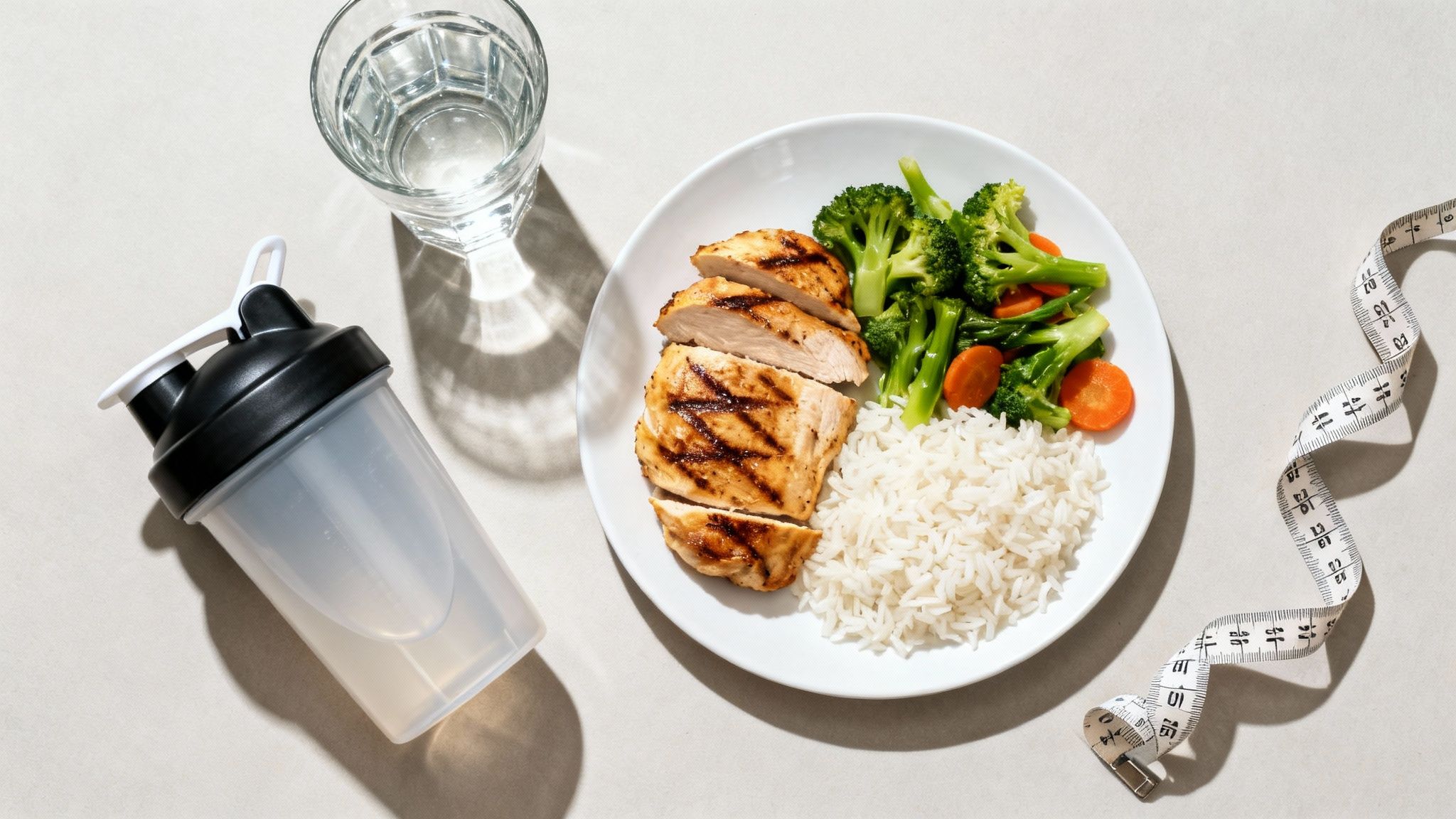
You don’t need a complicated, restrictive diet to see results. Just focus on getting these three core components right, and you’ll be well on your way to fueling serious gains.
- Prioritize Protein: This is the absolute non-negotiable for muscle repair. A simple and effective target is to aim for roughly 1 gram of protein per pound of your target body weight each day. For a lot of people, supplementing with protein shakes is a super easy way to hit this goal. If you're looking for guidance, our overview of protein shakes and supplements can help clear up any confusion.
- Eat Enough Calories: Your body can't build new muscle tissue out of thin air; it needs a slight energy surplus. If you consistently undereat, you’re robbing your body of the fuel it needs for growth. Use an online calculator or an app like Zing Coach to get a ballpark estimate of your daily needs so you know you're eating enough to support your training.
- Use Carbs for Fuel: Carbohydrates are your body’s go-to energy source. Eating carbs around your workouts helps you perform better in the gym and then replenishes your energy stores afterward, which is a huge part of recovery. To get the most out of your efforts, it's worth exploring the best post-workout snacks for smart recovery.
Master Your Recovery Habits
Those four days you spend outside the gym are just as crucial as the three days you spend inside it. This is when your body actually adapts and gets stronger.
Recovery isn't just about not being sore; it's the biological process that turns your effort into actual results. Neglecting it is like doing all the work but never cashing the paycheck.
Make these recovery pillars a non-negotiable part of your routine:
- Sleep: Seriously, aim for 7-9 hours of quality sleep a night. This is prime time for your body to release growth hormone and get to work repairing all that muscle tissue you broke down.
- Hydration: Water is king. It's essential for pretty much every bodily function, including getting nutrients where they need to go. Being even slightly dehydrated can tank your performance and slam the brakes on recovery.
- Active Recovery: On your off days, don't just become one with the couch. Light activity like walking, stretching, or foam rolling is perfect. It increases blood flow to your muscles, which can help reduce soreness and speed up the repair process, making sure you're fired up and ready for your next workout.
Your 3 Day Workout Plan Questions Answered
Starting a new routine always brings up a few questions. Even a straightforward 3 day workout plan can get complicated when real life throws you a curveball. Let’s walk through some of the most common issues people run into so you can stay confident and keep making progress.
One of the biggest worries is what to do when you miss a workout. Life gets hectic, it's bound to happen. The best thing you can do is... not much. Don't panic, and definitely don't try to cram two workouts into one day to "catch up." That’s a fast track to sloppy form and a potential injury.
Instead, just pick up right where you left off. If you missed Day 2, your next trip to the gym is Day 2. Simple. Consistency over the long haul is what builds results, not chasing short-term perfection.
How Long Should I Follow This Plan?
A classic mistake is "program hopping" — bouncing between different routines every few weeks because you're bored. You should stick with the core exercises in your 3 day workout plan for as long as you're seeing progress. This could be anywhere from 8 to 12 weeks, or even longer for some people.
The goal isn't just variety; it's progressive overload. Your focus should be on adding a little weight, squeezing out an extra rep, or simply perfecting your form on those same key movements. The only time you should swap an exercise is if you've genuinely stalled for a few weeks or if something starts causing pain.
Can I Still Do Cardio On My Off Days?
Absolutely. In fact, it's a fantastic idea for your overall health and can even help with recovery. Getting some light to moderate-intensity cardio in on your non-lifting days is a great way to boost your fitness without burning yourself out.
Here are a few solid options for your "rest" days:
- A brisk walk for 30-45 minutes
- Cycling at a steady, conversational pace
- A light swim or some water aerobics
Just be careful not to overdo it. Smashing a high-intensity interval training (HIIT) session on an off day might interfere with muscle repair and leave you feeling wiped out for your next strength workout. And if you're ever feeling unusually sore, understanding the difference between good soreness and pain is crucial for recovering smartly.
Ready to stop guessing and start seeing real progress? The Zing Coach app builds a personalized 3 day workout plan based on your unique goals and available equipment, and it adapts as you get stronger. Download Zing Coach and get your custom plan today!
Share this article


Authors