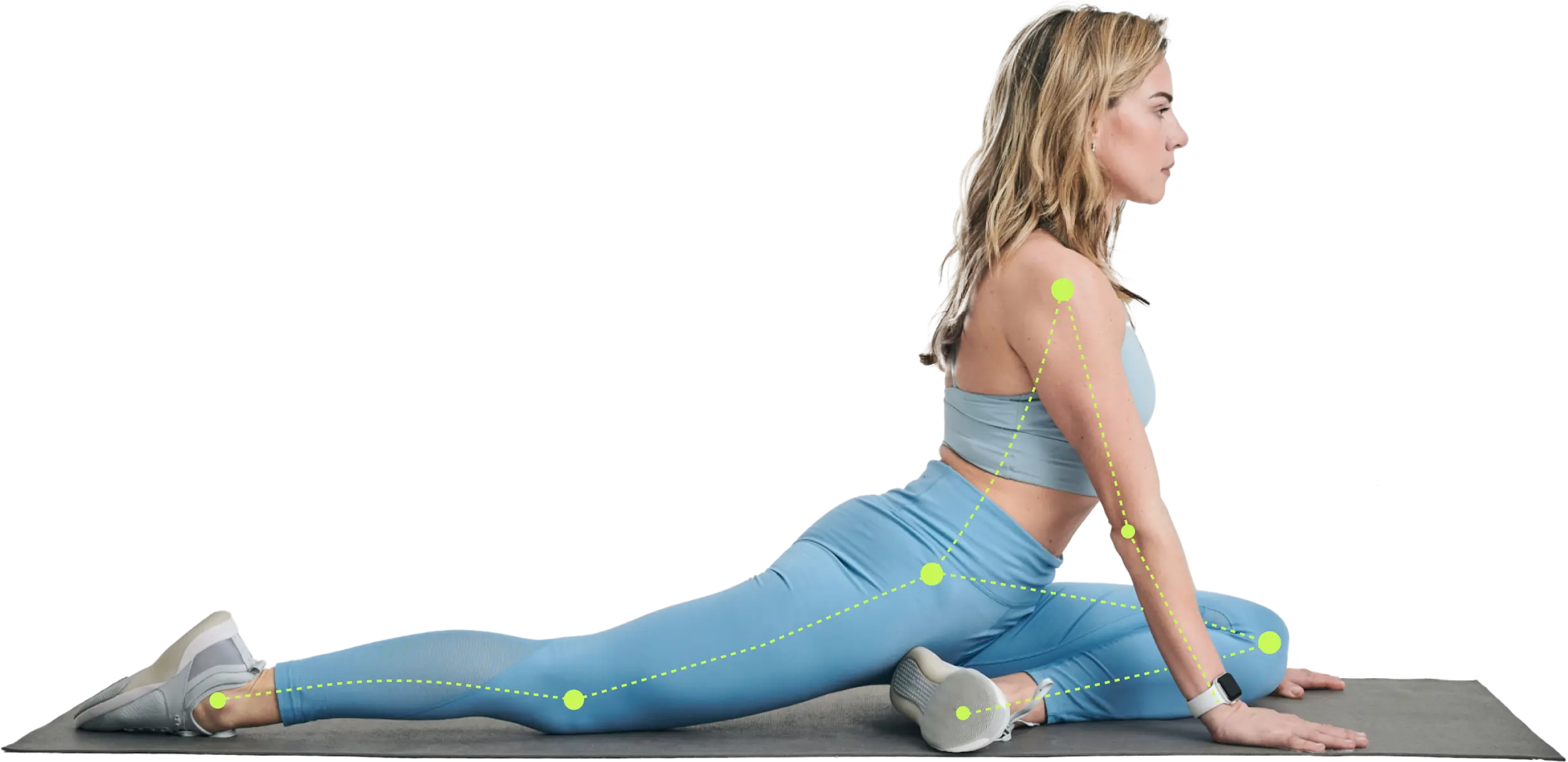
Master running and lifting together. Our guide provides weekly schedules, sample workouts, and nutrition tips for fat loss, muscle gain, or endurance goals.

You go for a run, come back smoked, and tell yourself you'll lift later. Later never happens. Or you hit a hard lower-body session, then spend the next two runs feeling like you're dragging a sled.
That is the central issue with running and lifting for many athletes. It is not motivation. It is poor integration.
A good hybrid plan doesn't treat running and strength work like two separate fitness hobbies crammed into the same week. It treats them like one system. Done well, they support each other. Done badly, they fight for recovery, flatten performance, and make you feel like you're always behind.
That's why the all-or-nothing advice misses the point. You don't need to choose one forever. You need to decide what matters most right now, then build the rest around it.
The Runner and Lifter Dilemma
Many athletes trying to combine running and lifting make the same mistake. They copy a lifting split from someone chasing size, add a few random runs, and hope their body figures it out.
It won't.
Running has a cost. Lifting has a cost. Your legs, connective tissue, nervous system, and sleep all pay for both. If you don't manage that cost, one session steals from the next. The result is familiar: heavy legs, stalled lifts, flat runs, and the feeling that you're always training but not improving.
The upside is that the two modes pair better than people think when you organize them around a clear priority. Strength work doesn't just help you look stronger. It can improve how you run. Structured strength training over 6 to 20 weeks improved running economy by 2% to 8%, while also improving time trial performance and sprint speed, according to this ISSA review on strength training for runners.
Practical rule: If your lifting makes your key runs worse every week, or your running makes every lift feel half-finished, your plan isn't balanced. It's just crowded.
That matters whether you care most about body composition, performance, or general health. Running remains one of the most accessible forms of exercise, and lifting fills in the gaps that running alone leaves behind. Strength helps with force production, tissue tolerance, and posture under fatigue. Running gives you a scalable conditioning tool that can range from recovery work to hard aerobic development.
The trick is sequencing. Not cramming.
A smart plan also respects the reality that your week has limits. Work stress, poor sleep, long commutes, kids, old injuries, and limited gym access all shape what you can recover from. The plan has to fit your life, not the other way around. If you need help sorting the balance, this guide on how to balance cardio and strength training is a useful starting point.
What actually works
Three principles hold up in practice:
- Pick a lead goal: Fat loss, muscle gain, or endurance. One has to drive the week.
- Protect key sessions: Your highest-priority run or lift should happen when you're freshest.
- Use support work on purpose: Easy runs can support recovery and conditioning. Strength can support resilience and performance. Neither should be random.
If you build your week this way, you stop feeling torn between identities. You're not choosing between being a runner or a lifter. You're training like someone who understands trade-offs.
First Define Your Primary Training Goal
Trying to maximize fat loss, add muscle, and improve endurance at the same time sounds ambitious. In practice, it usually turns into mixed signals and mediocre results.
The fix is simple. Choose one outcome as your primary training goal for the next block. Your other work still matters, but it takes a supporting role.

Running should stay in the conversation even if it isn't your main focus. Research cited in these running participation and health statistics notes that runners live an average of 3 years longer than non-runners and show a 30% lower risk of death than sedentary individuals. That doesn't mean everyone needs marathon training. It means running has real baseline value.
If fat loss is the priority
Use lifting to preserve muscle and use running to increase energy output and conditioning. People often overdo cardio and underdose strength in this context.
A better approach is to keep resistance training structured and progressive, then use running as a tool instead of punishment. Easy runs, short intervals, and brisk conditioning sessions work. Endless hard efforts usually backfire because they increase fatigue and make it harder to train well the next day.
Signs this is your lane:
- You want body recomposition: You care about dropping body fat without looking flat or weak.
- You need efficient training: You don't have time for long gym sessions and separate cardio blocks every day.
- You recover decently: You can tolerate a few varied sessions each week without feeling wrecked.
If muscle gain is the priority
Your lifting drives the week. Running stays in, but in smaller doses and at intensities that don't sabotage lower-body training.
Keep most runs easy. Think of them as support for work capacity, heart health, and appetite regulation. If every run turns into a race, your squat, deadlift, split squat, and pressing work will usually suffer.
If endurance is the priority
Your key runs come first. Lifting still matters, but it's there to support posture, economy, tendon health, and force production.
Many runners get this wrong. They perform circuit-style lifting with light weights and high repetitions because it “feels athletic.” That frequently generates extra fatigue without significant strength benefits. If endurance is your focus, your gym work should help you run better, rather than leaving you sore for your next quality session.
The right goal isn't the one that sounds most impressive. It's the one you're willing to organize your week around for the next training block.
A useful gut check is this: if progress stalls in one area, which result would bother you most? That answer usually reveals your real priority. If you need help sorting that out before you write a program, use a structured framework for how to set fitness goals.
How to Schedule Your Running and Lifting
Scheduling matters more than exercise selection for most hybrid athletes. You can choose solid lifts and sensible runs, then ruin the whole week by placing them in the wrong order.
The first rule is recovery spacing. For most runners, lifting and running should be separated by 24 to 48 hours when possible, and strength training is usually capped at twice weekly to avoid performance drop-off, as outlined in this guide to lifting weights for runners.

Non-negotiable scheduling rules
These rules solve most problems before they start:
- Protect your hardest session: Don't place heavy lower-body lifting right before your long run, interval day, or race-specific workout.
- Pair stress with purpose: If you must stack demanding work in one day, do it intentionally so easier days can stay easy.
- Keep easy days easy: Recovery runs, walks, mobility, and lighter upper-body work help you absorb harder training.
- Trim volume before intensity: If your run quality drops, reduce total lifting work first rather than making every gym session light and meaningless.
If you train twice in one day, this article on working out twice a day gives a practical framework for deciding when that setup makes sense.
Three workable weekly templates
Here's the part that is often required. Real examples.
| Focus | Best weekly shape | What to protect |
|---|---|---|
| Fat loss | Balanced mix of runs and full-body lifting | Consistency across the whole week |
| Muscle gain | More lifting days, fewer easy runs | Lower-body strength sessions |
| Endurance | More running days, fewer targeted lifts | Long run and quality run sessions |
Three-day training week
This is enough if your schedule is tight.
Fat loss option
- Day 1: Full-body lift
- Day 2: Run with short controlled efforts
- Day 3: Full-body lift plus a short easy finisher
Muscle gain option
- Day 1: Upper body
- Day 2: Lower body
- Day 3: Easy run plus brief accessory work
Endurance option
- Day 1: Quality run
- Day 2: Full-body strength
- Day 3: Long easy run
Four-day training week
This is the sweet spot for many busy adults.
Fat loss option
- Day 1: Full-body lift
- Day 2: Easy run
- Day 3: Full-body lift
- Day 4: Tempo-style run or intervals
Muscle gain option
- Day 1: Upper body
- Day 2: Lower body
- Day 3: Easy run
- Day 4: Full-body or upper/lower emphasis based on recovery
Endurance option
- Day 1: Intervals
- Day 2: Strength
- Day 3: Easy run
- Day 4: Long run
Five-day training week
Only use this if your recovery supports it.
- Fat loss option
- Lift, run, lift, easy run, lift
- Muscle gain option
- Upper, lower, easy run, upper, lower
- Endurance option
- Easy run, strength, quality run, easy run, long run
Hard days should have a reason. Easy days should have restraint.
One useful tool for this is automation. If you log training consistently, Zing Coach can build schedules around your goal, available time, equipment, Apple Health data, and recovery signals so the week adjusts instead of staying fixed when fatigue changes. That's useful for people who don't just need a plan. They need a plan that reacts.
Sample Workouts and Intensity Management
Most hybrid athletes don't fail because they picked the wrong exercises. They fail because they use the wrong dose.
A runner starts lifting with random bootcamp circuits and never gets stronger. A lifter adds hard runs on top of hard leg days and wonders why their knees feel beat up. The answer in both cases is better structure.

Build strength in phases
Runners who lift seriously don't stay on the same plan year-round. A 6 to 8 week foundational phase builds stability, then a strength phase uses heavier loads in the 3 to 6 rep range, and a final power phase adds explosive work before competition, according to McMillan Running's guide to strength training periodization.
That sequence matters. Stability first. Force second. Speed last.
If you jump straight into jumps, cleans, or aggressive plyometrics without enough base strength, you're usually borrowing from joints and tendons instead of building usable power.
A simple lifting menu that pairs well with running
You don't need twenty exercises. You need a few patterns trained well.
Session A
- Primary lower-body lift: Back squat or trap-bar deadlift
- Unilateral work: Reverse lunge or split squat
- Posterior chain: Romanian deadlift
- Core: Anti-rotation press or dead bug
- Calves or foot strength: Controlled raises or isometric work
Session B
- Primary hinge or squat variation: Deadlift or front squat
- Single-leg pattern: Step-up or walking lunge
- Upper-body push: Dumbbell press or overhead press
- Upper-body pull: Row or pull-down
- Core: Plank variation or loaded carry
A good rule is to leave the gym feeling trained, not trashed. If your form falls apart and your next run suffers, the session was too much.
Match the run to the goal
Run types have different jobs.
| Run type | Best use in a hybrid plan | Watch out for |
|---|---|---|
| Easy run | Recovery, aerobic base, extra movement | Turning it into a moderate grind |
| Tempo run | Threshold development, race support | Doing it too often when lifting is heavy |
| Intervals | Speed and high-end aerobic work | Pairing them near hard leg sessions |
| Long run | Endurance and pacing skill | Scheduling heavy lower body before it |
For classes, partner sessions, or home circuits where timing matters, interval tools can keep the session tight. If you coach groups or want a clean timer setup for mixed conditioning blocks, Fitness GM shows how to create powerful workouts for packed classes.
Here's a useful visual on pacing aerobic work and intensity progression:
Use RPE so the week stays manageable
RPE keeps hybrid training honest. If your planned “easy” run feels hard because yesterday's deadlifts still live in your hamstrings, the body doesn't care what the spreadsheet says.
Use it like this:
- Easy runs: Conversational, controlled, low strain
- Hard runs: Challenging, but not a race every week
- Main lifts: Technically sharp, tough effort, a couple of reps left when appropriate
- Accessory work: Hard enough to matter, not sloppy enough to create junk fatigue
If your bigger goal is better conditioning and aerobic development, this VO₂ max training plan guide can help you place harder run sessions more intelligently.
Fueling and Recovery for Hybrid Athletes
Most hybrid athletes blame programming for problems that come from poor recovery. They're underfed, underhydrated, and sleeping poorly, then wondering why both running and lifting feel harder by Thursday.
This is not optional. If you ask your body to adapt to two training modes, you need to support both.

Research and coaching commentary summarized in this RunWell recovery discussion point out a real issue for beginners. Lifting and running compete for systemic recovery resources, and poor session timing can derail progress in both. That's why fueling and sleep can't be treated like extras.
Eat for the goal you chose
You don't need nutrition dogma. You need alignment.
For fat loss, create a diet that you can sustain while still training with intent. Keep meals built around protein, produce, and consistent meal timing. If your deficit is too aggressive, run quality drops and lifting numbers usually slide first.
For muscle gain, don't use running as an excuse to eat randomly. Keep intake steady, especially around your lifting days. If lower-body sessions feel flat every week, underfueling is often part of the problem.
For endurance, don't fear carbohydrates around key run sessions. When people try to “eat clean” but underfuel longer or harder runs, they often end up recovering poorly and lifting without any snap.
Recovery habits that actually move the needle
You don't need a recovery gadget collection. You need repeatable basics.
- Sleep first: Bedtime consistency beats occasional catch-up sleep.
- Hydration daily: Don't wait until hard sessions to pay attention.
- Active recovery: Walking, mobility, and light movement often help more than complete inactivity between demanding days.
- Session spacing: If both workouts matter, don't jam them together without a reason.
- Post-training meals: Eat in a way that supports the next session, not just the current one.
A hard session only counts if you can recover from it and train well again.
Sleep is where a lot of people lose progress. If your routine is messy, a simple resource like the New Zealand Bed Company natural sleep guide can help you clean up the basics without overcomplicating it.
For food tracking, most beginners do better with a simple macro framework than with guessing. This guide on how to count macros for beginners is a practical place to start if you want more structure.
Tracking Progress and Adapting Your Plan
A hybrid plan works when the right things trend in the right direction. That doesn't mean every run feels great and every lift goes up every week. It means the overall pattern makes sense.
You need three lenses: performance, body feedback, and movement quality.
What to track each week
Use a short review, not a giant spreadsheet.
- Performance markers: Run pace at a given effort, long-run durability, bar speed, load used, rep quality
- Recovery markers: Sleep quality, appetite, soreness, motivation to train
- Body markers: Photos, measurements, how clothes fit, and general composition trends
- Joint and tissue feedback: Feet, calves, knees, hips, low back
If one bad session makes you panic, you'll change things too early. If three weeks show the same pattern, pay attention.
How to adjust without wrecking the plan
Here's the decision sequence I use most often:
| Problem showing up | First adjustment | Avoid doing first |
|---|---|---|
| Runs feel flat | Reduce lifting volume | Cutting all quality runs immediately |
| Lifts stall | Pull back hard running intensity | Adding more accessory junk |
| Nagging aches build | Review exercise choice and weekly layout | Training through it because fitness is “good” |
| Energy crashes | Check food, sleep, and schedule density | Assuming you need more discipline |
This is also where generic plans usually break down. As noted in this discussion of underrated strength exercises for runners, one runner may need more lateral work for hip stability, while another needs eccentric hamstring work. Those are not interchangeable fixes. Good programming matches exercises to the athlete in front of you.
If the plan is good on paper but your body keeps giving the same warning sign, the plan needs editing.
That's the coaching mindset to develop. Don't just ask, “Am I doing enough?” Ask, “Is this dose solving the problem I have?”
If you want help building a hybrid plan that adjusts as your training, recovery, and available time change, Zing Coach offers personalized programming, nutrition targets, progress tracking, and form feedback in one place. It's a practical option for people who want running and lifting to work together instead of competing every week.
Share this article


Authors