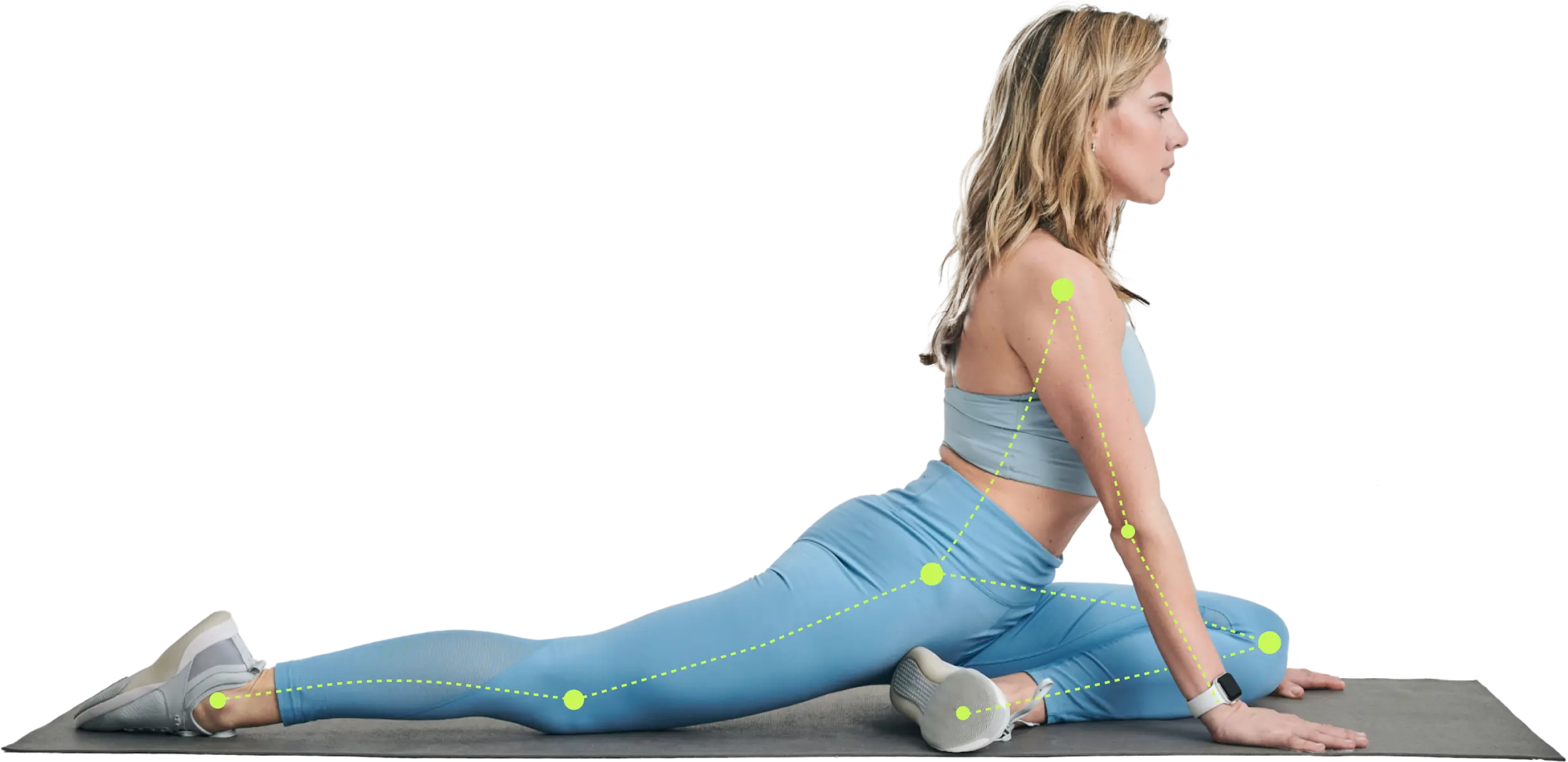
Master how to do hack squats with our 2026 guide on proper form, machine setup, and expert tips to build stronger quads while staying injury-free.
You're standing in front of the hack squat machine, looking at the angled sled, the shoulder pads, and the platform, and thinking one of two things. Either, “That looks like something advanced lifters use,” or, “I'm not trying to wreck my knees today.”
That hesitation is common. The hack squat looks simple once you know it, but the first few reps can feel awkward if nobody has shown you how to set your feet, how deep to go, or how to tell whether the load is helping your legs or just beating up your joints.
The good news is that how to do hack squats is much more teachable than commonly believed. It's a machine-based squat pattern with a clear setup, clear checkpoints, and clear ways to adjust it for your goal. If you want more quad growth, a safer path back into leg training, or a lower-back-friendly squat option, this is one of the best tools in the gym. If you also want support outside the gym, this guide to build leg muscle effectively is useful context for putting hack squats into a bigger lower-body plan.
Why Hack Squats Deserve a Spot in Your Leg Day
A lot of lifters skip the hack squat for the wrong reason. They assume a machine is automatically less effective than a free-weight squat.
That's not how this exercise works.
The hack squat machine puts you on a 45-degree path and supports your torso so your legs can do more of the work. That setup gives the exercise a strong quad emphasis and usually takes pressure off the lower back compared with free-weight squatting. For beginners, returning lifters, and people who don't feel stable under a barbell, that matters.
The machine also solves a real problem that most tutorials ignore. Foot placement isn't one-size-fits-all, especially if you're new, stiff through the ankles, or nervous about your knees. A Gymshark article on hack squats cites a 2024 REP Fitness survey showing 62% of users report knee discomfort on hack squats due to foot misplacement, while 15% of online tutorials address personalized stance adjustments for beginners or those with mobility limitations. The same source notes that AI form analysis can adapt stance recommendations based on user history, and beta metrics showed dropout rates reduced by 35%.
Why this matters: the exercise usually isn't the problem. The setup is.
That's why hack squats deserve more respect than they get. They're not just for bodybuilders chasing a pump. They're for anyone who wants a squat variation that is easier to learn, easier to standardize, and easier to repeat with confidence.
If fat loss is part of your goal and you need lower-impact options alongside strength work, this guide to safe workouts for GLP-1 weight loss is worth reading too. The big win is building a plan you can stick with, and hack squats often fit that better than more technical squat variations.
Setting Up and Performing the Machine Hack Squat
You walk up to the hack squat for the first time, load plates that look manageable, and the machine still feels awkward. That usually comes from setup errors, not a lack of strength.

Start with your position before you touch the weight
Step onto the platform, bring your shoulders snugly under the pads, and set your whole back against the support. Keep your head neutral. Looking down and reaching your chin forward usually pulls the rest of your body out of position.
Place your feet about shoulder-width apart, around the middle to lower half of the platform for a standard quad-biased setup. Let your toes turn out slightly so your knees can track naturally. The PMC reference on machine squat mechanics describes a standard toe-out setup in the 15 to 30 degree range, and the same source also notes that guided squat patterns can produce higher peak force and power output than free-weight squats under heavy loading. That helps explain why the machine often feels more stable and easier to repeat set after set.
Start lighter than you think you need. If you cannot lower the sled smoothly, keep your heels down, and stay glued to the pad, the load is already too heavy for clean reps.
If you train alone, this is also where modern tools help. AI form tracking in apps like Zing Coach can flag the setup mistakes beginners miss, such as feet drifting too low, knees collapsing inward, or depth changing rep to rep. That kind of feedback makes it easier to progress safely instead of guessing. If you want a second fixed-path lower-body option to compare against hack squats, these Smith machine exercise ideas are a useful reference.
Perform each rep with control
Once you are set, release the handles and brace before the sled moves. Lower by bending your knees and hips together while keeping your full foot planted and your spine neutral against the pad.
A good target for many lifters is lowering until the knees reach about 90 degrees of flexion, or until your thighs are roughly parallel to the platform. Go only as deep as you can stay organized. If your lower back rounds, your heels lift, or your hips shift, shorten the range and clean that up first.
Use a controlled descent of about 2 to 3 seconds. Pause briefly if you need to own the bottom position, then drive up through your midfoot and heels. Finish tall through the legs without slamming into lockout.
A simple cue works well here. Sit down under control, then push the platform away.
Your first set should feel repeatable
The hack squat is a machine, but it still rewards discipline. Treat each rep like a squat pattern, not like a sled you drop into the bottom.
Use this quick checklist before every working set:
- Shoulders secure: The pads should feel firm against you, without shrugging up or sliding around.
- Full foot pressure: Keep heel, midfoot, and forefoot in contact instead of rocking onto your toes.
- Brace first: Get tight before you release the sled, not halfway through the descent.
- Controlled lowering: If the machine is pulling you down faster than you want, reduce the load.
- Clean finish: Stand up strongly, but stop short of jamming the knees hard at the top.
Beginners usually improve fast once the setup becomes consistent. Intermediate lifters do too, especially when they use real-time feedback to track depth, stance, and rep quality instead of adding weight blindly.
Mastering Your Form for Targeted Results
A beginner's first clean hack squat set usually feels the same. The machine finally feels stable, the knees stop wandering, and the rep lands in the quads instead of the lower back. That is the point where form starts deciding results, not just safety.
Once the movement is repeatable, small setup changes matter. Foot height, stance width, toe angle, and tempo all shift where you feel the exercise and how well you can progress without beating up your joints. This is also where real-time feedback helps. An AI form tracker like Zing Coach can catch changes in depth, knee path, and rep consistency that are easy to miss once the set gets hard.
Foot placement changes the training effect
Foot position on the platform changes the joint angles you train through. Set your feet a bit lower and the knees usually travel farther forward, which increases quad demand. Set them a bit higher and many lifters feel more work through the glutes and adductors, with less knee travel.
Use that adjustment with some common sense. Lower foot placement can be great for building the quads, but only if you can keep your full foot down and stay connected to the pad. Higher placement can feel better for lifters with cranky knees or longer femurs, but going too high often turns the rep into a shortened, hip-dominant press.
A simple starting point works well:
Quad-biased setup: feet lower on the platform, around shoulder width, toes slightly out, knees allowed to travel naturally.
Glute-biased setup: feet higher on the platform, same balanced stance, depth limited to the range you can control without your pelvis rolling.
Neither option is better across the board. Pick the version that matches your goal and lets you keep the rep clean for the whole set.
Tempo tells you whether you own the rep
Tempo is one of the fastest ways to improve the hack squat. Lifters who rush the descent usually miss the same details. Heels get light, the hips tuck under, and the sled bounces out of the bottom.
Slow the lowering phase to about 3 seconds. That gives you time to feel where the pressure is on your foot, notice if one knee is drifting, and stop the rep before it turns sloppy. Then drive up hard, but with the same body position you had on the way down.
If you want to sharpen the basic squat pattern alongside your machine work, this guide on how to do squats correctly is a useful refresher.
Width and toe angle should fit your build
There is no perfect stance that fits everyone. Shoulder width with a slight toe-out is a solid default because it gives most lifters enough room to hit depth without forcing the knees inward.
From there, adjust based on what the rep shows you:
- Slightly narrower stance: often feels cleaner for shorter lifters or beginners who struggle to stay centered.
- Slightly wider stance: can help taller lifters create space at the bottom and keep the knees tracking better.
- Modest toe-out: usually makes it easier for the knees to follow the toes without twisting through the foot.
If a stance only works for your first few reps, it is not your stance.
What good hack squat form looks like under load
A strong rep is consistent, especially when fatigue starts to build. The back stays in contact with the pad. The knees track in line with the toes. The whole foot stays planted. Depth matches from rep to rep. The sled moves smoothly instead of dropping and rebounding.
Technology offers real value here. Video and AI feedback can show whether rep six still looks like rep one, which is the part many lifters guess at. That makes progression safer because you can add load after your position is stable, not before.
If your setup feels right but you still get recurring symptoms, read more about pain when squatting. Pain changes how people move, and that can hide form problems that are easy to miss in the moment.
Common Hack Squat Mistakes and How to Fix Them
A hack squat usually goes wrong before it looks wrong. The rep still moves, but the pressure shifts into the knees, the heels start peeling up, or the sled drops faster than you meant it to. Catch those changes early and the machine becomes much safer to progress on.

Knees cave inward
If your knees drift inward on the descent or as you drive out of the bottom, you are losing control of the position you set at the top. The BarBend guide to hack squat mechanics points to knee valgus as a common breakdown, especially when lifters rush the eccentric and let the sled pull them down.
A simple fix is to treat the lowering phase like work, not a waiting room before the hard part.
Fix it like this:
- Reduce the load: If you cannot keep the knees tracking with the toes, the set is too heavy for clean reps.
- Slow the descent slightly: Give yourself time to keep pressure through the full foot.
- Drive knees and toes in the same direction: Do not shove the knees out hard. Keep them stacked over the line of the foot.
If you train alone, this is one of the easiest mistakes to miss. AI form tracking can help by showing whether your knee path changes as fatigue builds, which matters more than how the first rep looks.
If you get recurring discomfort and want more context on squat-related symptoms, this article on pain when squatting can help you think through what may be contributing.
Heels lift off the platform
Heel lift usually means you are running out of ankle motion for the foot position you chose, or you are sinking into a bottom position you cannot own. Either way, force shifts forward and the rep gets shaky fast.
Start with the simple fixes first:
- Move your feet a little lower or higher and test which position lets the whole foot stay down.
- Lower the load and clean up the rep path.
- Add a small heel wedge if your gym allows it and your ankles are the limiting factor.
If sensitive knees are part of the problem, the quad exercises for knee pain guide can help you keep training hard without forcing a setup that irritates them.
You cut the depth short
Shortening the range is one of the fastest ways to make the set feel stronger than it is. The problem is consistency. If rep one reaches a clear bottom position and rep eight stops three inches higher, you did not just get tired. You changed the exercise.
Use a depth target you can repeat under fatigue. For many lifters, that means lowering until the thighs are around parallel to the platform, or as deep as they can go while keeping the back planted and the feet flat.
Practical rule: repeated depth beats occasional depth.
A quick visual demo helps here:
Your lower back rounds or lifts away from the pad
Once your back loses contact with the pad, the machine stops giving you one of its main benefits. You are no longer using stable support to load the legs. You are fighting the sled while trying to find your position again.
This usually happens for one of three reasons:
- The load is too heavy
- Your foot placement does not match your build
- You are chasing more depth than you can control
The fix is straightforward. Shorten the range, reset the feet, and build back up only when the pelvis and back stay quiet against the pad. That is also where real-time feedback helps. If an app flags that your hip position changes on later reps, you have a clear sign to hold the weight steady instead of adding more too soon.
Hack Squat Variations for Any Gym Setup
Not every gym has a hack squat machine. Some home gyms don't even have a sled or a leg press. That doesn't mean you're stuck.
What matters most is preserving the main purpose of the movement. You want a squat pattern that biases the quads, keeps you upright enough to load the legs well, and matches your equipment and skill level.

If you don't have a hack squat machine
The closest substitutes are usually the ones that reduce balance demands and let you focus on leg drive.
Dumbbell squat
This is the easiest entry point if you train at home or in a basic gym. Hold two dumbbells at your sides or at shoulder level. It won't mimic the machine perfectly, but it lets you train depth, control, and leg tension with simple equipment.
Smith machine squat
A Smith machine gives you a fixed bar path, which makes it the closest feel for many lifters who like the stability of hack squats. It's often a strong option for heavier leg work when you want support from the machine path.
Goblet squat
This is the beginner-friendly variation. Holding one weight at your chest helps you stay upright and learn depth, bracing, and knee tracking without much setup complexity.
How to choose the right variation
Use the variation that removes your biggest limiting factor.
If balance is the issue, choose the Smith machine. If setup simplicity is the issue, choose goblet squats. If available load is the issue and you don't have a machine, dumbbells may work well until they become too light.
Here's the quick comparison.
| Variation | Primary Muscle Focus | Stability Demand | Best For |
|---|---|---|---|
| Hack squat machine | Quads, with setup-dependent glute involvement | Low | Lifters who want heavy, repeatable leg training with a fixed path |
| Dumbbell squat | Quads and glutes | Moderate | Home gyms, beginners, general lower-body training |
| Smith machine squat | Quad-focused with stable bar path | Low to moderate | Lifters who want machine support for heavier sets |
| Goblet squat | Quads, glutes, core | Moderate | Beginners learning squat mechanics and depth |
Trade-offs that matter
Each variation gives you something and takes something away.
- Machine hack squat: Best for locking in a repeatable movement, but only if your gym has a good machine.
- Dumbbell squat: Accessible and versatile, but load can become the limiting factor.
- Smith machine squat: Stable and useful, but some lifters need to experiment with foot placement to make the bar path feel natural.
- Goblet squat: Excellent teacher, but not usually the best long-term option for heavy quad overload.
The best variation is the one you can perform hard, safely, and consistently for months.
Intermediate lifters sometimes make the mistake of chasing the fanciest setup. In practice, the smartest choice is usually the one that lets you hit full-depth reps with clean mechanics and recover well enough to repeat them later in the week.
Programming Hack Squats for Strength and Growth
A lot of lifters use hack squats hard but not intelligently. They load the machine, chase fatigue, and wonder why their numbers stall or their knees start talking back.
Hack squats work best when you assign them a job in your week.

Use them with a purpose
For hypertrophy, put hack squats early enough in the session that your quads still have real output. They are usually a strong first or second lower-body movement, especially if you want hard quad work without the balance and spinal loading demands of free-weight squats.
For strength, keep the sets tighter and the reps honest. Heavy hack squats still need full control on the way down, a clear bottom position, and the same foot pressure from rep one to rep five.
A simple setup looks like this:
- For growth: 3 to 5 working sets of 6 to 12 reps, with controlled lowering and a consistent depth target
- For strength: 4 to 6 working sets of 3 to 6 reps, with longer rest periods and no sloppy grinders
- For general fitness: 2 to 4 hard sets in the 8 to 15 rep range as your main machine-based leg lift
If you want a practical system for adding reps, load, or total work over time, this progressive overload training guide lays out the process clearly.
Progress safely, not emotionally
Most beginners add weight too soon. A lot of intermediate lifters make a different mistake. They keep adding weight after their depth shortens, hips roll off the pad, or the bottom turns into a bounce.
Use a double-progression approach instead. Pick a rep range, stay with the same setup for a few weeks, and add load only after you hit the top of the range with clean reps across all working sets. That keeps progress measurable and keeps your joints out of the argument.
A good rule is simple.
If your last rep looks different from your first, the set may be too heavy to count as progress.
Modern tracking proves beneficial. AI-powered form feedback in apps like Zing Coach can catch the changes lifters miss in real time, such as shortened depth, shifting foot pressure, or a descent that speeds up as fatigue builds. That matters on hack squats because the fixed path makes small breakdowns easy to repeat set after set.
Match the rep target to the result you want
Hack squats respond well to both heavy work and high-tension volume. The trade-off is fatigue.
Lower reps let you push load and practice bracing, but they can also tempt you to turn every set into a max-effort grind. Higher reps are excellent for quad growth, but they create a lot of local burn and can wreck the rest of the session if you overshoot.
For many lifters, the sweet spot sits in the middle. Use moderate reps for most of your training block, then push heavier for a few weeks if strength is the priority, or push higher reps if size is the goal.
Recovery still decides what works. If your hack squat numbers go up but your next leg day falls apart, the program needs adjustment.
Small programming choices that pay off
Keep your foot placement, stance width, and depth standard consistent during a training block. Changing all three while also adding weight makes it hard to tell whether you got stronger or just found a shorter rep.
Pair hack squats with movements that fill the gaps. Leg curls, Romanian deadlifts, split squats, and calf work usually fit well because they train what the machine does not emphasize as much.
If you are also trying to improve training performance through nutrition and supplements, VitzAi's research on creatine and strength is a useful plain-English read.
The best hack squat program is one you can repeat for weeks with clean mechanics, clear progression, and recovery that stays under control.
Frequently Asked Questions about Hack Squats
Are hack squats bad for your knees
Not necessarily. They're often well tolerated when your foot placement matches your build, your full foot stays planted, and you control the descent. If your knees hurt, the first things to check are setup, depth control, and load.
Can hack squats replace back squats
They can replace them for many people, especially if your main goal is leg growth, easier setup, or less lower-back demand. If you compete in a barbell sport, you'll still need barbell squat practice.
How much weight should a beginner use
Start with a load you can lower slowly and control at the bottom. If you're unsure, start lighter than you think you need and build from there.
Should I take creatine if I want stronger hack squats
Creatine can be useful for strength training in general. If you want a plain-English overview, this summary of VitzAi's research on creatine and strength is a helpful starting point.
If you want a training plan that tells you exactly when to do hack squats, how to progress them, and how to adjust around your equipment, schedule, and recovery, Zing Coach can help. It builds personalized workouts, tracks progress, and gives real-time form feedback so you can train with more confidence and fewer wasted sessions.
Share this article


Authors