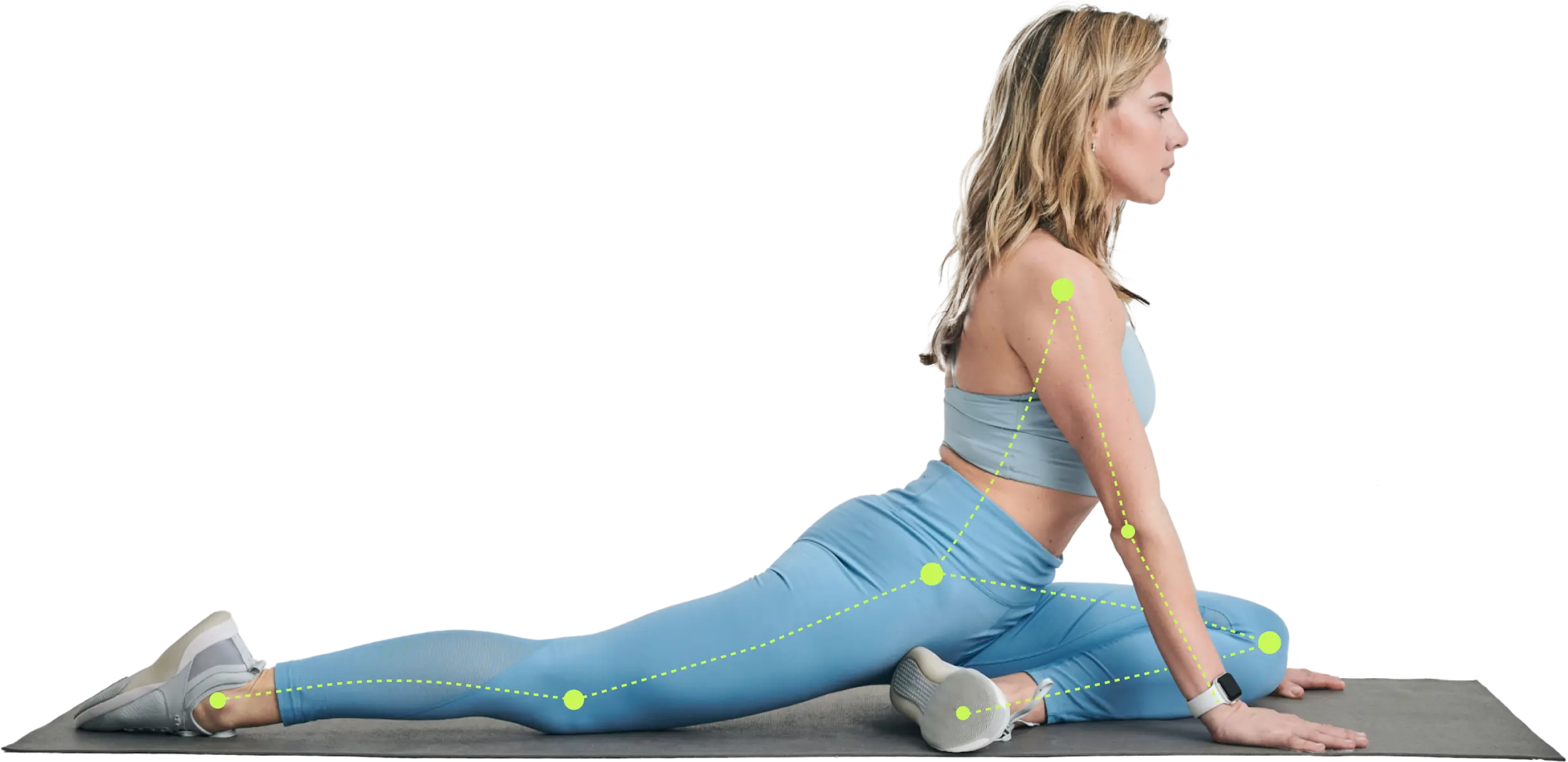
Discover 8 physical therapist-approved quad exercises for knee pain. Safely strengthen your legs and find relief with our step-by-step guide and expert tips.

Knee pain can feel like a major roadblock, especially when you're trying to stay active. The common advice to "strengthen your quads" often backfires, leading people to exercises like deep squats or lunges that only aggravate the discomfort. The issue isn't the goal of strengthening the quadriceps, but rather the method used to achieve it. Pushing through painful movements can worsen inflammation and set back your progress, creating a frustrating cycle of stop-and-start training.
This guide cuts through that noise. We are providing a curated list of eight meticulously chosen quad exercises for knee pain, each designed to build strength around your discomfort, not through it. Instead of forcing your joints into painful positions, these movements focus on safely activating the right muscles, utilizing pain-free ranges of motion, and constructing a resilient foundation for long-term knee health and stability. The goal is to isolate and fortify the quadriceps without placing excessive stress on the patellofemoral joint, which is often the source of the pain.
Whether you are recovering from an injury, managing chronic conditions like arthritis, or simply searching for a smarter, more sustainable way to train your legs, this list offers a clear and effective path forward. For a truly personalized approach, AI-powered fitness apps can adapt these movements to your specific needs, using computer vision to monitor your form and ensure progress is steady, helping to prevent flare-ups before they start. Let's begin the journey to building stronger, more resilient, and happier knees.
1. Quadriceps Sets (Isometric Quad Contractions)
Quadriceps sets, also known as isometric quad contractions, are a foundational exercise and often the first line of defense in rehabilitating knee pain. This movement involves tensing the quadriceps muscle group without moving the knee joint itself. It's an isometric hold, meaning the muscle generates force without changing its length, making it one of the safest yet most effective quad exercises for knee pain, especially during acute flare-ups or post-surgery.

The primary goal is to re-establish the mind-muscle connection and activate the vastus medialis obliquus (VMO), the teardrop-shaped muscle on the inner part of your thigh. A strong VMO is critical for proper kneecap tracking and overall joint stability. By performing quad sets, you can maintain muscle mass and neurological control without placing any strain on the compromised knee joint.
How to Perform Quadriceps Sets
- Setup: Lie on your back or sit on the floor with your legs extended straight in front of you. Place a small, rolled-up towel under the knee of the leg you intend to work. This slight bend facilitates better VMO activation.
- Contraction: Gently press the back of your knee down into the towel. You should feel the muscles on the top of your thigh tighten and see your kneecap pull slightly upward. The focus should be on isolating the quadriceps.
- Hold and Release: Hold this contraction for 5 to 10 seconds, breathing normally. Ensure your glutes and hamstrings remain relaxed. Slowly release the contraction and rest for a few seconds.
- Repetitions: Aim for 3 sets of 15 repetitions on each leg.
Common Mistakes to Avoid
- Holding Your Breath: This can increase blood pressure. Breathe steadily throughout the hold.
- Engaging Other Muscles: Avoid tensing your glutes, hamstrings, or back. The work should be isolated entirely in your quadriceps.
- Flexing Your Foot: Keep your ankle in a neutral, relaxed position. Pointing or flexing your toes can engage your shin or calf muscles unnecessarily.
When to Use This Exercise
This exercise is ideal for the initial stages of knee rehabilitation, for managing chronic conditions like patellar tendinitis, or for anyone experiencing pain with dynamic movements like squats or lunges. An office worker might perform them hourly at their desk to combat stiffness, while someone post-ACL surgery would use them to prevent muscle atrophy. If you're looking for more ways to support your joints, explore these additional knee-friendly leg exercises to build a comprehensive, safe routine.
2. Straight Leg Raises (SLR)
Straight Leg Raises (SLR) are a crucial step up from static contractions, serving as a bridge between purely isometric exercises and more dynamic movements. This exercise strengthens the quadriceps, hip flexors, and core by lifting the entire leg against gravity while keeping the knee locked in full extension. Because the knee joint itself doesn't bend, this movement avoids compressing the structures behind the kneecap, making it one of the most effective quad exercises for knee pain when you're ready to progress.
The primary benefit of the SLR is its ability to build functional quad strength without aggravating sensitive knee tissues. It challenges the quads to stabilize the knee in a straight position, a key function for walking, climbing stairs, and standing. This makes it an essential exercise for anyone recovering from knee surgery or managing conditions like patellar tendinitis, as it safely reintroduces load and improves muscle endurance.
How to Perform Straight Leg Raises
- Setup: Lie on your back on a firm surface. Bend one knee, placing your foot flat on the floor for stability. Extend the other leg straight out.
- Engagement: Tighten the quadriceps muscle of your straight leg, pressing the back of your knee toward the floor. Engage your core by pulling your belly button toward your spine to keep your lower back flat.
- Lift and Hold: Slowly lift your straight leg about 6 to 12 inches off the floor. Keep the knee completely locked and the quad muscle tight throughout the movement. Hold at the top for 3 to 5 seconds.
- Lower and Repeat: Gently lower the leg back to the starting position with control. Do not let it just drop. Aim for 3 sets of 15 repetitions on each leg.
Common Mistakes to Avoid
- Bending the Knee: The most common error is allowing the knee to bend during the lift. This defeats the purpose of the exercise. If you can't keep it straight, lift the leg lower.
- Arching Your Back: If your lower back lifts off the floor, it means your core is not engaged and your back is compensating. Press your lower back into the floor throughout the exercise.
- Using Momentum: Avoid swinging your leg up. The movement should be slow, deliberate, and controlled by your quad and hip flexor muscles.
When to Use This Exercise
This exercise is perfect for the stage of rehab after you've mastered isometric contractions like quad sets. A post-knee surgery patient might progress to SLRs after a couple of weeks, while a runner with patellofemoral pain could use them to maintain quad strength without the impact of running. For office workers, performing a few sets during a break can help reactivate dormant quad and glute muscles.
3. Terminal Knee Extensions (TKE)
Terminal knee extensions (TKEs) are a highly targeted exercise that bridges the gap between static holds and dynamic, full-range movements. This exercise isolates the final degrees of knee extension, the "terminal" phase, using a resistance band to specifically challenge and strengthen the vastus medialis obliquus (VMO). It's a cornerstone exercise in physical therapy for improving knee stability and control without loading the entire joint.
The primary goal of TKEs is to activate the VMO muscle, which is crucial for proper patellar (kneecap) tracking and overall knee joint health. By strengthening the VMO's ability to "lock out" the knee, this movement helps counteract imbalances that often lead to patellofemoral pain syndrome and other common knee ailments. It's a powerful tool for rebuilding neuromuscular control and endurance in the quads with minimal joint stress.
How to Perform Terminal Knee Extensions
- Setup: Secure a resistance band to a sturdy anchor point, like a squat rack or a doorknob anchor, at about knee height. Step inside the loop and position the band just above the crease of the knee you intend to work. Take a step back until there is light tension on the band, causing your knee to be slightly bent.
- Extension: Keeping your heel on the floor, engage your quadriceps to straighten your leg against the band's resistance. Focus on squeezing the muscle at the top of your thigh until your knee is fully extended or "locked out."
- Hold and Release: Hold the fully extended position for 2 to 3 seconds, feeling a strong contraction in the VMO. Slowly allow the band to pull your knee back to the slightly bent starting position in a controlled manner.
- Repetitions: Aim for 3 sets of 15 to 20 repetitions on each leg.
Common Mistakes to Avoid
- Using Momentum: Avoid rocking your body or using your hips to straighten your leg. The movement should be slow, deliberate, and originate solely from the quadriceps.
- Hyperextending the Knee: While you want to achieve full extension, do not force the knee into a hyperextended or backward-bending position. Stop once the leg is straight.
- Letting the Band Snap Back: The return phase is just as important as the extension. Control the movement as your knee bends back to the start, resisting the band's pull.
When to Use This Exercise
TKEs are perfect for those who have mastered isometric exercises but still experience pain with deeper movements like squats. They are a standard protocol for rehabilitating patellofemoral pain and are often used by athletes, like basketball players, to prevent anterior knee pain. An individual recovering from jumper's knee might perform these three times a week to rebuild VMO strength and control. For a wider range of safe movements, you can find more exercises for bad knees to create a balanced routine.
4. Step-Ups (Modified/Shallow)
Modified step-ups are a crucial functional exercise that bridges the gap between isolated strengthening and real-world movements like climbing stairs or getting up from a chair. By using a low platform, this exercise builds quadriceps strength in a controlled range of motion, minimizing stress on the patellofemoral joint. It’s an excellent way to improve single-leg stability and coordination, which are vital for protecting the knee during daily activities.

The primary goal is to train the quadriceps, glutes, and hamstrings to work together, enhancing dynamic knee control. For those with knee pain, starting with a very low step (4-6 inches) ensures the knee joint stays within a pain-free angle while still effectively engaging the target muscles. This makes it one of the most practical quad exercises for knee pain, directly translating to improved function and confidence.
How to Perform Modified Step-Ups
- Setup: Stand facing a low, stable platform, box, or step, about 4 to 6 inches high. Keep your feet hip-width apart and your core engaged.
- Step Up: Place your entire right foot firmly onto the center of the step. Press through your right heel to lift your body up, bringing your left foot to meet your right on the step. The power should come from your right leg, not from pushing off with your left foot.
- Hold and Descend: Briefly pause at the top, maintaining your balance. Slowly and with control, lower your left foot back to the floor, followed by your right.
- Repetitions: Aim for 3 sets of 8 to 12 repetitions on each leg. Complete all reps on one side before switching to the other.
Common Mistakes to Avoid
- Pushing Off the Back Leg: The work should be done by the leg on the step. Avoid using the trailing leg for momentum, as this reduces the load on the targeted quad.
- Knee Caving Inward (Valgus): Ensure your knee tracks directly over your second and third toes as you step up. Do not let it collapse inward.
- Leaning Forward Excessively: Keep your torso upright and your core tight to maintain proper alignment and prevent strain on your lower back.
- Stepping Down Uncontrolled: The lowering phase (eccentric portion) is just as important. Control your descent to build stability and prevent jarring the knee.
When to Use This Exercise
This exercise is perfect for those transitioning from basic isometric work to more dynamic, weight-bearing activities. A person with knee osteoarthritis might use a 4-inch step to regain the strength needed for stair climbing. Similarly, a runner with anterior knee pain can use it as a low-impact way to rebuild quad endurance. To progress, you can gradually increase the step height by 2 inches or add light dumbbells once you can perform the exercise with perfect form.
5. Wall Sits
The wall sit is a classic isometric exercise renowned for building quadriceps endurance and stability without requiring any dynamic joint movement. By holding a seated position with your back against a wall, you create a sustained, static contraction in your quads. This makes it an exceptional exercise for strengthening the muscles that support the knee, improving muscular tolerance in a loaded position without the impact or motion that can aggravate knee pain.
The primary benefit of wall sits is developing muscular endurance and stability around the patellofemoral joint (the kneecap). This is crucial for anyone managing conditions like patellar tendinitis or chondromalacia patellae. A basketball player might use wall sits in their recovery program to rebuild quad strength, while a busy professional could perform them in their office for a quick, effective workout that doesn't strain their knees.
How to Perform Wall Sits
- Setup: Stand with your back flat against a smooth, sturdy wall. Place your feet shoulder-width apart, about two feet away from the wall.
- Descent: Slowly slide your back down the wall until your thighs are parallel to the floor, as if you are sitting in a chair. Your knees should be bent at a 90-degree angle.
- Hold and Breathe: Hold this position, keeping your back and head flat against the wall and ensuring your weight is evenly distributed through your heels. Breathe steadily and deeply throughout the hold.
- Duration: Aim to hold for 20 to 60 seconds. To finish, gently slide back up the wall to a standing position. Perform 2 to 3 sets with a 60 to 90-second rest in between.
Common Mistakes to Avoid
- Leaning Forward: Avoid resting your hands on your thighs or leaning your torso forward. This takes the load off the quadriceps and reduces the exercise's effectiveness.
- Knees Past Toes: Ensure your knees are aligned directly over your ankles. Allowing them to drift past your toes can place unnecessary stress on the knee joint.
- Holding an Unsafe Angle: Do not slide down so far that your hips are lower than your knees. A 90-degree angle is the target; going deeper can strain the joint.
When to Use This Exercise
Wall sits are perfect for building foundational quad strength once the acute phase of pain has subsided. They are excellent for individuals who can bear weight but find dynamic movements like squats painful. If you have patellar tendinitis, start with a shallower angle (e.g., a 60-degree bend) and a shorter hold time (20 seconds), gradually progressing as you get stronger. For a broader range of safe and effective movements, you can explore other low-impact strength training exercises to build a well-rounded routine.
6. VMO-Focused Leg Press (Machine or Angle-Specific)
The VMO-focused leg press is a machine-based exercise specifically adapted to target the vastus medialis obliquus (VMO), the teardrop-shaped muscle crucial for kneecap stability. By adjusting foot placement on the leg press platform, you can shift the emphasis to this inner quad muscle, making it one of the best quad exercises for knee pain when you're ready to add resistance. This modification allows for controlled, targeted strengthening without the instability challenges of free-weight squats.
This exercise is perfect for those who have access to gym equipment and are past the initial, acute phase of knee pain. The goal is to build functional quad strength in a guided and supportive manner. A gym user with patellar tracking disorder might use this as their primary lower body strength exercise, while an athlete returning from an injury can rebuild quad mass with significantly reduced pain compared to a standard leg press or squat.
How to Perform a VMO-Focused Leg Press
- Setup: Sit in a leg press machine. Place your feet slightly higher on the platform than you normally would, with a narrow stance (hip-width or slightly closer). Angle your toes slightly outward, around 15 to 30 degrees.
- Execution: Un-rack the weight and slowly lower it by bending your knees. Descend only as far as you can without pain, typically to a 90-degree knee bend initially. Keep your back and hips firmly planted against the seat.
- Contraction: Press the weight back to the starting position by driving through your heels, focusing on squeezing your inner quadriceps. Avoid locking your knees at the top of the movement; maintain a slight bend to keep tension on the muscles.
- Repetitions: Perform 3 sets of 10 to 15 repetitions. Prioritize slow, controlled movement over heavy weight.
Common Mistakes to Avoid
- Lifting Hips Off the Pad: This transfers stress from the quads to the lower back and can cause injury. Keep your glutes and lower back glued to the seat.
- Knees Caving Inward (Valgus Collapse): Actively push your knees outward to align with your feet throughout the entire movement.
- Using Too Much Weight or Range of Motion: Starting too heavy or going too deep too soon can aggravate knee pain. Begin with a light weight and a shallow range of motion.
When to Use This Exercise
This movement is ideal for the intermediate phase of knee rehabilitation, when bodyweight exercises are no longer challenging but full-depth squats are still painful. It's a fantastic bridge for safely reintroducing load to the quadriceps. For example, someone progressing from bodyweight terminal knee extensions could move to a light VMO leg press to build foundational strength. For a more complete understanding of how to build your leg muscles, explore these other effective quadriceps exercises.
7. Short Arc Quads (SAQ) / Short Arc Extensions
Short Arc Quads (SAQ), also called short arc extensions, are a crucial progression from static exercises like quad sets. This movement strengthens the quadriceps through a limited and controlled range of motion, typically the final 30 to 45 degrees of knee extension. This specific arc is targeted because it minimizes pressure on the back of the kneecap (patellofemoral joint) while effectively isolating and strengthening the VMO and other quad muscles.
The primary advantage of SAQs is their ability to build quad strength without aggravating sensitive knee structures. This makes them one of the most effective quad exercises for knee pain during early to mid-stage rehabilitation. For someone recovering from ACL surgery or managing significant patellofemoral pain, SAQs provide a safe bridge between isometric holds and more dynamic, full-range movements like squats.
How to Perform Short Arc Quads
- Setup: Lie on your back on the floor or a firm bed. Place a firm bolster, such as a foam roller or several rolled-up towels, under the knee of your working leg. Your knee should be bent at approximately a 30 to 45-degree angle, with your heel resting on the ground.
- Extension: Slowly and with control, tighten your quadriceps to lift your heel off the floor and straighten your leg completely. Focus on achieving full extension without lifting your thigh off the bolster.
- Hold and Lower: Hold the fully straightened position for 3 to 5 seconds, squeezing your quad muscle. Gently and slowly lower your heel back to the starting position.
- Repetitions: Aim for 3 sets of 10 to 15 repetitions on each leg.
Common Mistakes to Avoid
- Using Momentum: Avoid swinging your leg up quickly. The movement should be slow and deliberate to maximize muscle engagement and protect the joint.
- Lifting Your Thigh: The back of your thigh should remain in constant contact with the bolster. Lifting it means you are using your hip flexors instead of isolating the quadriceps.
- Dropping Your Leg: Control the lowering (eccentric) phase of the movement. Letting your leg drop removes a key strengthening component of the exercise.
When to Use This Exercise
This exercise is a staple in physical therapy, especially for post-operative recovery or for individuals with conditions like chondromalacia patella or patellofemoral pain syndrome. A patient in the first few weeks post-ACL surgery might use SAQs to re-engage the quads before they are cleared for weight-bearing exercises. Similarly, someone with severe kneecap pain can use this controlled movement to build strength without causing a flare-up. To progress, you can gradually increase reps, add light ankle weights (1 to 2 lbs), or increase the starting angle by using a smaller bolster.
8. Spanish Squats (Suspension-Assisted)
The Spanish squat is an innovative squat variation that uses a suspension trainer (like a TRX) to offload the knee joint, making it one of the most effective quad exercises for knee pain when traditional squats are too provocative. By anchoring a strap behind the knees, the exercise shifts your center of gravity backward, which reduces patellofemoral compression and transfers more of the workload to the posterior chain, including the glutes and hamstrings. This allows you to build quad strength through a functional range of motion without aggravating sensitive knee tissues.

This technique is excellent for reintroducing the squat pattern safely while still challenging the quadriceps. The suspension strap provides external stability, essentially acting as a counterbalance that allows you to sit back deeper and with more control. It's a bridge between basic isometric holds and more dynamic, loaded movements like goblet squats, making it a critical tool for progressive rehabilitation.
How to Perform Spanish Squats
- Setup: Anchor a suspension trainer to a sturdy, low anchor point (about calf height). Step into the handles or foot cradles so the strap rests just below the crease of your knees. Walk backward until there is significant tension on the straps, and set your feet shoulder-width apart.
- Descent: Keeping your chest up, initiate the squat by pushing your hips back and down. Lean back against the tension of the straps, allowing your shins to remain nearly vertical.
- Hold and Ascend: Lower yourself to a comfortable depth, aiming for your thighs to be parallel to the floor if possible. Hold for a moment at the bottom, then drive through your heels to return to the starting position, keeping tension in the quads.
- Repetitions: Aim for 3 sets of 8 to 12 repetitions.
Common Mistakes to Avoid
- Letting Shins Travel Forward: The purpose is to keep the shins vertical. If your knees drift far past your toes, you lose the unloading benefit.
- Placing the Strap on the Kneecap: The strap should be securely in the crease behind the knee, never directly on the patella, to avoid discomfort and improper mechanics.
- Losing Tension in the Strap: If you don't step back far enough, the strap will be slack, offering no support and defeating the purpose of the exercise.
When to Use This Exercise
This exercise is ideal for individuals who experience pain during the descent phase of a regular squat, such as those with runner's knee or patellofemoral pain syndrome. A CrossFit athlete might use it to rebuild squatting capacity after knee surgery, while a runner could use it to maintain leg strength without irritating their knees. Because it reinforces proper squat mechanics while offloading the joint, it’s a powerful tool for anyone looking to build a resilient lower body. To further support your knees, consider adding these glute exercises for bad knees to your routine.
8-Exercise Quad Comparison for Knee Pain
| Exercise | Implementation complexity | Resource requirements | Expected outcomes | Ideal use cases | Key advantages |
|---|---|---|---|---|---|
| Quadriceps Sets (Isometric Quad Contractions) | Very low — simple isometric holds | None (towel optional) | VMO activation, reduced swelling, preserve neuromuscular connection; minimal strength gain | Early-stage rehab, immediate post-op, acute knee pain | Safest entry point, no equipment, frequent use possible |
| Straight Leg Raises (SLR) | Low — lying movement with attention to form | None initially; ankle weights optional | Unilateral quad strength, bridge to dynamic exercises, limited knee stress | Early-to-mid rehab, prevent atrophy, progressing from isometrics | Visible progression with load, builds hip flexor + quad strength |
| Terminal Knee Extensions (TKE) | Moderate — proper band setup and positioning required | Resistance band and secure anchor | Targeted VMO activation, improved knee stability, reduced anterior knee pain | Patellofemoral pain, functional stability training, bridge to dynamic work | Highly specific VMO targeting, low-cost, adjustable resistance |
| Step-Ups (Modified/Shallow) | Moderate — requires balance and controlled mechanics | Low platform (4–8 in) | Functional single-leg strength, balance, stair confidence | Mid-stage rehab, returning to daily activities and stairs | Functional carryover, engages glutes and hip stabilizers |
| Wall Sits | Low — isometric hold with position control | Wall only | Increased quad endurance and tolerance to loaded positions | Building endurance, time-efficient sessions, pain-tolerance training | No equipment, easily scalable by depth/time |
| VMO-Focused Leg Press (Machine or Angle-Specific) | Moderate–high — requires machine setup and foot positioning | Leg press machine, gym access | Strong VMO-specific strength gains, controlled progressive overload | Mid-to-late rehab, gym users prioritizing knee stability | Machine guidance, significant resistance progression, research-supported |
| Short Arc Quads (SAQ) / Short Arc Extensions | Low — limited ROM dynamic movement | Towel/bolster; ankle weights optional | Controlled quad strengthening with minimal patellofemoral compression | Acute post-injury/post-op phases, severe pain management | Safest dynamic quad exercise, clear gradual progression |
| Spanish Squats (Suspension-Assisted) | High — suspension setup and advanced form required | Suspension trainer (TRX or equivalent) | Squat strength with reduced patellofemoral load; posterior chain emphasis | Athletes returning to squats, users needing deep-squat tolerance with less knee pain | Allows deeper squat patterns with less knee stress, builds glutes/hamstrings |
Your Next Steps to Pain-Free Movement
You now have a comprehensive toolkit of eight powerful yet safe quad exercises for knee pain. The path to stronger, more resilient knees isn't about pushing through agonizing workouts; it's about intelligent, consistent, and mindful training. From foundational isometric holds like Quadriceps Sets to controlled dynamic movements like Modified Step-Ups and Spanish Squats, each exercise serves a specific purpose in rebuilding strength without aggravating your joints.
The central theme woven through this guide is the principle of progressive, pain-free loading. This is your most important takeaway. Your body's feedback is the ultimate guide. A sensation of muscle fatigue is a sign of progress, while sharp, shooting, or increasing joint pain is a signal to stop, reassess your form, or choose an easier variation.
Mastering the Fundamentals for Long-Term Success
True progress comes from mastering the basics before advancing. Don't rush past the seemingly simple exercises like Straight Leg Raises or Terminal Knee Extensions. These movements are crucial for re-establishing the mind-muscle connection and activating the specific quadriceps fibers, like the VMO, that are so vital for patellar tracking and knee stability.
Remember to integrate these exercises strategically:
- Start Small: Choose two or three foundational exercises (e.g., Quad Sets, SLRs, and Wall Sits) to perform 3-4 times per week.
- Focus on Form: Quality is always more important than quantity. Ten perfect repetitions are far more beneficial than twenty sloppy ones. Film yourself or use a mirror to check your alignment.
- Listen and Adapt: If an exercise causes pain, try a regression or reduce the range of motion. If it feels too easy and is completely pain-free, consider a progression to continue challenging the muscle.
A Holistic Approach to Recovery and Well-being
Building strength is a cornerstone of knee health, but it's only one piece of the puzzle. True, lasting relief comes from a holistic approach that supports your body's overall ability to repair and recover. Factors like nutrition, stress management, and especially sleep play a massive role in how your body adapts to exercise and heals tissue. For a holistic approach to recovery and overall well-being, consider the broader factors that influence your physical state, such as the crucial connection between exercise and sleep quality. Prioritizing restorative sleep can amplify the benefits of your physical efforts, helping to reduce inflammation and accelerate muscle repair.
By combining the targeted quad exercises for knee pain outlined in this article with a commitment to overall wellness, you create a powerful synergy for healing. You are not just managing symptoms; you are building a more robust and resilient system from the ground up. This journey requires patience and consistency, but every controlled, pain-free repetition is a step toward a more active and fulfilling life.
Ready to take the guesswork out of your recovery? Let the AI-powered Zing Coach build a personalized workout plan that incorporates these safe quad exercises, adapts to your pain feedback, and uses your phone's camera to analyze your form. Start your journey to stronger, pain-free knees today by visiting Zing Coach.
Share this article


Authors