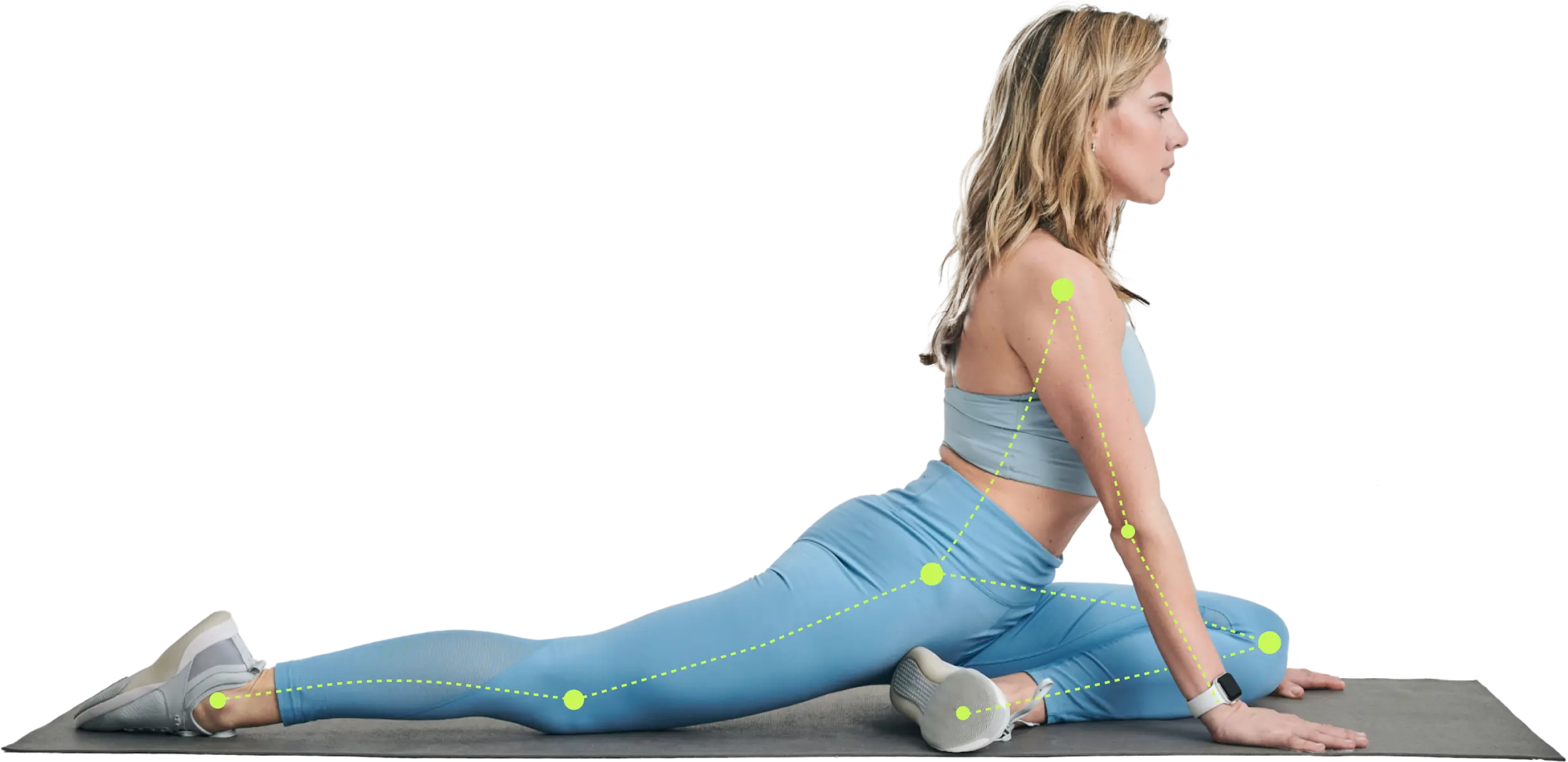
Stop guessing and learn how to create a workout plan for beginners. This guide offers practical steps for building a sustainable routine you'll stick with.
Creating a workout plan from scratch can feel like staring at a puzzle without the box lid. You know all the pieces are there, but how do they fit together? To make it click, you need to start with three things: defining your real goals, getting an honest look at where you are now, and then picking the right moves for the job.
Getting this foundation right is everything. It’s what makes a plan stick versus one that gets abandoned by February.
Building Your Foundation for Lasting Success
Let's cut through the noise and focus on what actually works. This approach ensures the plan you build is one you can actually follow, week in and week out.

Set Meaningful Goals
Before you even think about lifting a weight, you need a powerful "why." Generic goals like "get in shape" just don't cut it—they’re too vague and lose their power fast.
Instead, connect your fitness to real-life wins. Maybe you want enough energy to keep up with your kids at the park. Maybe it's feeling strong enough to haul all the groceries inside in one trip. Or maybe you just want to boost your mood and feel more confident.
These are the kinds of goals you can feel every single day, making them way more motivating than a number on the scale.
Your goal isn't just a finish line; it’s the fuel for every workout. Make it personal and powerful, and you’ll find the motivation to keep going even on tough days.
Perform an Honest Self-Assessment
Next, you need a clear starting line. This isn't about judging yourself; it's about gathering some simple data to build a plan that's both safe and effective.
You can do this right at home. See how many push-ups you can do (from your knees is totally fine!), how many bodyweight squats you can manage with good form, or how long you can hold a plank.
Jot these numbers down. This baseline is your most important tool because it ensures you start at a level that's challenging but not defeating. It's a huge step in forming habits that stick because you start building confidence from day one.
Use this quick table to get a clear picture of your starting point. No judgment, just honest numbers.
Your Fitness Starting Line Self-Assessment
Use this table to establish a clear baseline for key bodyweight exercises. This is your personal starting point, not a test.
| Exercise | How to Measure | Your Starting Point (Record Here) |
|---|---|---|
| Bodyweight Squats | Max reps with good form in 1 minute | |
| Push-ups | Max reps with good form (on toes or knees) | |
| Plank | Max time held with good form | |
| Glute Bridges | Max reps with good form in 1 minute | |
| Wall Sit | Max time held with good form |
This data isn't for comparison; it's your personal map to track progress and celebrate how far you've come.
Understand the Modern Fitness Landscape
If you're just starting, you're in good company. Post-pandemic health awareness has sparked a huge interest in fitness, with U.S. health club memberships reaching a record 77 million.
But here's the reality check: while 12% of gym sign-ups happen in January, only about 30-40% of new members are still showing up three months later. The key to beating those odds is a simple, progressive plan that feels manageable.
And don't forget nutrition—it’s the other half of the equation. Understanding which foods that support muscle recovery can make a massive difference in how you feel between workouts, which is critical for staying consistent.
Designing a Schedule You Can Actually Stick With
The best workout plan in the world is completely useless if it just sits in your notes app. The real secret to getting results is building a schedule that fits into your life, not the life of a fitness influencer who has all day to train.
When you're starting out, consistency beats intensity. Every single time.
This means you have to be brutally honest with yourself about your time and energy. If you're juggling a demanding job and family life, planning five grueling gym sessions a week is just setting yourself up for failure. A much smarter—and more sustainable—goal is to aim for three solid workouts a week. That's a target you can actually hit.

Full-Body Routines vs. Split Training
One of the first forks in the road is deciding how to structure your training days. The two main paths are full-body workouts and split routines.
Full-Body Workouts: This is exactly what it sounds like—you train all your major muscle groups (legs, back, chest, shoulders, arms) in one session. For beginners, this is my top recommendation. It's incredibly efficient, and hitting your whole body 2-3 times per week is the perfect sweet spot for building strength without frying your system.
Split Routines: This approach carves up your body, dedicating different days to specific muscle groups, like an "upper body day" followed by a "lower body day." While popular, splits demand more days in the gym (usually four or more) to make sure every muscle gets the work it needs. That can be tough to manage when you're just getting started.
For most people finding their footing, the full-body approach is the undisputed champ. It’s easier to schedule, more forgiving if you have to miss a day, and fantastic for building that initial foundation of strength. A simple and effective model like a 3-day split is a perfect example, giving you a great balance of work and recovery.
The Power of Rest Days
It's easy to fall into the "more is better" trap. But here's the thing: you don't build muscle in the gym. You build it when you rest.
Workouts create tiny tears in your muscle fibers. Rest days are when your body gets to work repairing those fibers, building them back bigger and stronger. If you skip rest, you're just breaking your body down without giving it a chance to rebuild. This leads to overtraining, fatigue, and a fast track to injury.
Make sure you schedule at least one full rest day between full-body sessions. It's non-negotiable.
Think of rest days as an active part of your training. They are just as crucial for making progress as any set of squats or push-ups. Your body needs that downtime to adapt.
Here are a couple of practical weekly schedules to show you how this looks in the real world:
Scenario 1: The Busy Professional (3 Days/Week)
This full-body routine delivers maximum bang for your buck with a minimal time investment.
- Monday: Full-Body Workout
- Tuesday: Rest or Active Recovery (like a brisk walk)
- Wednesday: Full-Body Workout
- Thursday: Rest
- Friday: Full-Body Workout
- Saturday/Sunday: Rest or Active Recovery
Scenario 2: More Flexibility (4 Days/Week)
For those who have a bit more time, this simple upper/lower split is a great next step.
- Monday: Upper Body
- Tuesday: Lower Body
- Wednesday: Rest or Active Recovery
- Thursday: Upper Body
- Friday: Lower Body
- Saturday/Sunday: Rest
Selecting Exercises That Deliver Real Results
The internet is an endless buffet of exercises, and it's shockingly easy to fall into "analysis paralysis." But here's the secret: you don't need a million different moves. You just need to master the handful that give you the biggest bang for your buck.
Your body is built to perform a few core movements. It pushes, it pulls, it squats, and it hinges. Building your plan around these fundamental patterns is the fastest, most effective way to build real-world, functional strength.
The Four Pillars of Movement
Every solid workout plan is built on these four categories. They are the non-negotiables for a strong, balanced body.
- Push: Think about pushing a heavy door open or lifting a box onto a high shelf. These movements work the chest, shoulders, and triceps.
- Pull: This is the exact opposite—pulling something toward you, like starting a lawnmower or doing a pull-up. This hits your back and biceps.
- Squat: Simply bending at the knees to lower your hips, just like sitting in a chair. It’s a fantastic lower-body builder, focusing on your quads.
- Hinge: Bending at your hips while keeping your back straight. Picture picking up a heavy box off the floor. This targets your glutes and hamstrings—the powerhouses of your lower body.
By picking at least one exercise from each of these categories for your full-body workouts, you ensure no muscle group gets left behind. For a complete library of movements with video guides to nail your form, you can explore hundreds of beginner-friendly exercises and see what feels right.
Core Exercises for a Balanced Workout
To get you started, here’s a simple breakdown of cornerstone exercises for each movement pattern. You can start with just your bodyweight and then add dumbbells as you get stronger. The final column gives you a clear path for making things more challenging over time.
| Movement Pattern | Bodyweight Exercise | Dumbbell Exercise | How to Progress |
|---|---|---|---|
| Push | Wall Push-Up | Dumbbell Bench Press | Move to incline, then knee, then full push-ups. |
| Pull | Inverted Row | Dumbbell Bent-Over Row | Increase the angle on rows; use heavier dumbbells. |
| Squat | Bodyweight Squat | Goblet Squat | Squat deeper (past parallel); add weight. |
| Hinge | Glute Bridge | Dumbbell Romanian Deadlift | Progress to a single-leg bridge; add weight. |
These moves are your foundation. Mastering them will build a base of strength that translates to almost any other physical activity you can think of.
Mastering Progressive Overload
This is the single most important principle in all of strength training. Progressive overload sounds complicated, but it just means you have to gradually ask your body to do a little more over time. If you do the exact same workout forever, your body gets comfortable and stops adapting.
Progressive overload is the secret sauce. It’s not about destroying yourself every session. It’s about consistently challenging your muscles to do just a tiny bit more than they did last time.
And "more" doesn't always mean lifting heavier weights, which is great news for beginners. Here are a few simple ways to apply this principle:
- Add Reps: Did 8 squats last week? Shoot for 10 this week with the same solid form.
- Add a Set: Once you can hit your target reps for 2-3 sets, add a fourth set to the mix.
- Improve Form or Range of Motion: Maybe you can squat an inch deeper this week or slow down the negative on your push-ups for more control.
- Decrease Rest Time: Shaving 15 seconds off your rest period between sets will make the same workout feel much harder.
- Increase Difficulty: This is where you graduate to a tougher variation of an exercise.
For example, a push-up progression is a perfect illustration. You might start with wall push-ups. Once you can easily knock out 15 reps, you move to incline push-ups on a sturdy bench. From there, you go to push-ups on your knees, and finally, full push-ups. This step-by-step approach keeps you challenged enough to grow without getting hurt or burning out.
Bringing It All Together with Sample Workout Plans
Theory is great, but nothing makes it click quite like seeing a plan in action. To take the guesswork out of the equation, I've put together three complete, ready-to-use templates for the most common situations beginners find themselves in. Think of these as your starting blueprint—follow them with confidence from day one.
Each template lays out the exact exercises, sets, reps, and rest periods. Your only job is to show up and get it done.
The Zero-Equipment Home Workout
This one’s for anyone who wants to start right now, no gym required. All you need is a bit of floor space. The goal here is simple: master the fundamental bodyweight movements to build a solid foundation of strength.
If you're looking for more ideas, you can also check out these 8 at-home exercises to stay fit without the gym.
Frequency: 3 non-consecutive days per week (e.g., Monday, Wednesday, Friday)
| Exercise | Sets | Reps | Rest |
|---|---|---|---|
| Bodyweight Squats | 3 | 10-15 | 60 sec |
| Push-ups (on knees or toes) | 3 | As Many as Possible | 60 sec |
| Glute Bridges | 3 | 15-20 | 60 sec |
| Plank | 3 | Hold for 30-60 sec | 60 sec |
| Jumping Jacks | 3 | 30 sec | 60 sec |
Deciding which exercises to focus on can feel overwhelming, but a simple flowchart can really clarify the process.

The main takeaway here is that your goal—whether it's raw strength or just mastering bodyweight fitness—should be the primary driver behind the exercises you choose.
The Fundamental Gym Program
Got access to a gym with some basic dumbbells and machines? Perfect. This full-body routine is a fantastic way to start introducing progressive overload with actual weights. It’s designed to hit all the major muscle groups efficiently, so you get the most bang for your buck.
Frequency: 3 non-consecutive days per week
- Goblet Squats: 3 sets of 8-12 reps
- Dumbbell Bench Press: 3 sets of 8-12 reps
- Seated Cable Rows: 3 sets of 10-15 reps
- Dumbbell Lunges: 3 sets of 10 reps per leg
- Dumbbell Overhead Press: 3 sets of 8-12 reps
- Rest: 60-90 seconds between all sets
The Time-Saver Full Body Routine
For those with a jam-packed schedule, this workout is all about maximum efficiency. We’ll get you in and out of the gym in under 45 minutes by pairing exercises into supersets—doing two moves back-to-back with almost no rest. It's a game-changer.
Frequency: 2-3 non-consecutive days per week
Perform exercises A1 and A2 back-to-back, rest for 60 seconds, then repeat for 3 total sets. Do the same for B1 and B2. This "superset" structure is a game-changer for saving time.
A1: Dumbbell Romanian Deadlifts: 3 sets of 10-12 reps
A2: Dumbbell Rows: 3 sets of 10-12 reps per arm
(Rest 60 seconds after completing A2)
B1: Bodyweight Squats: 3 sets of 15-20 reps
B2: Push-ups: 3 sets to failure (as many as you can)
(Rest 60 seconds after completing B2)
How to Track Your Progress and Stay Motivated
Building a workout plan is a fantastic start, but let's be honest—the real magic happens when you see proof that your effort is actually working. That's what keeps you coming back. Seeing tangible progress is the single biggest motivator for sticking with it for the long haul.
The trick is to look beyond the number on the scale. Seriously. While it’s one piece of the puzzle, the scale can be incredibly misleading and frustrating, especially when you're just starting out. Here’s why: muscle is denser than fat. As you get stronger, you might see your weight stay the same or even tick up slightly, even while your body is getting leaner and more toned. This is exactly why tracking a few different things is so important.
Redefining What Progress Looks Like
Your main goal might be to lose weight, but the victories that really light a fire under you are the ones you can feel day-to-day. We call these "non-scale victories," and they are undeniable signs that you're getting fitter.
Try focusing on these performance wins:
- More Reps: A month ago, you could barely manage 8 bodyweight squats. Now, you’re breezing through 12 with perfect form. That’s a huge win.
- Heavier Weight: Those 10-pound dumbbells you used for lunges now feel way too light. You've graduated to the 15-pounders. This is solid proof you're building real strength.
- Better Endurance: Remember when a 30-second plank felt like torture? Now you can hold it strong for a full minute. Your endurance is clearly improving.
These small, consistent improvements are what a successful workout plan is built on. They show your body is adapting and becoming more capable every week.
Simple and Effective Tracking Methods
You don't need fancy gadgets to see how far you've come. A simple notebook and pen are often the best tools for the job. After each workout, just take 60 seconds to jot down what you did—the exercises, the weight, and your sets and reps. Over time, this log becomes a powerful record of your achievements.
Of course, we live in a digital world, and technology has made tracking easier than ever. The fitness app market is massive, with downloads expected to hit 5 billion. And wearables are everywhere—owned by 36-44% of adults—helping people hit daily goals like 10,000 steps. That simple target alone helps 80% of beginners achieve a 5-10% loss in body weight within three months. This tech-fueled approach is a big part of why the fitness industry is projected to grow 6.3% between 2020-2027.
Don’t just track what you do in the gym. Pay attention to how you feel outside of it. Are you sleeping better? Do you have more energy? Are your clothes fitting a little differently? These are the real rewards.
Monitoring changes in your body composition can also offer incredible insight. To get a much clearer picture than the scale can provide, check out our guide on how to measure body fat percentage.
And don't forget about recovery—it's just as important as the workout itself. To help your body heal and keep your motivation high, looking into post-workout sauna benefits for peak recovery could be a game-changer for your routine.
Got Questions? We've Got Answers
Stepping into the world of fitness for the first time can feel like learning a new language. You're bound to have questions, and that's a good thing! Getting clear on the basics from the get-go builds confidence and makes sure you're starting on the right foot. Let's tackle some of the most common questions we hear from beginners.
How Long Should My Workouts Be?
Forget the idea that you need to spend hours in the gym. For beginners, the sweet spot is usually between 30 and 60 minutes.
Honestly, what you do in that time matters way more than how long you're there. Three focused, 45-minute sessions a week will do more for your strength and endurance than one marathon 90-minute workout that leaves you too wiped to move for days. The goal is quality over quantity. As you get fitter, you can think about adding more time or bumping up the intensity.
What's the Deal with Reps and Sets?
You'll see "reps" and "sets" in every workout plan, so let's clear this up. It's simple once you get it.
- A rep (short for repetition) is doing an exercise one single time. Think one push-up or one squat.
- A set is a group of those reps done back-to-back before you take a rest.
So, if you see "3 sets of 10 reps" for squats, you'll do 10 squats in a row, rest for a minute or so, and then repeat that whole cycle two more times. A great starting point for most people is 2-3 sets of 8-12 reps for each exercise. This range is perfect for building a solid foundation of muscle and endurance.
The real magic happens in those last few reps of a set. They should feel tough—but not so tough that your form falls apart. That's the challenge zone where your body starts to change.
How Do I Know When to Lift Heavier?
This is the million-dollar question, and the answer is a core principle of getting stronger: "progressive overload." You have to give your muscles a slightly bigger challenge over time so they have a reason to adapt and grow.
An easy-to-remember guideline is the "2 for 2" rule. If you can hit two more reps than your target on your very last set for two workouts in a row, it's a clear signal that you're ready for more.
Let's say your plan has you doing dumbbell bench presses for 10 reps. If you manage to squeeze out 12 reps on your final set on both Monday's and Wednesday's workouts, it’s time to reach for the next pair of dumbbells up.
Is It Normal to Be This Sore?
Oh yeah. A little muscle soreness is a rite of passage when you're starting out or trying something new. It's officially called Delayed Onset Muscle Soreness (DOMS), and it usually shows up 24 to 48 hours after your workout.
DOMS should feel like a general, dull ache in the muscles you worked—not a sharp, shooting pain in a joint. If you're so sore you can barely walk or it lasts more than a few days, you might have overdone it. The best way to manage it is to always warm up properly and make sure you're giving yourself enough time to recover between sessions.
Ready to stop guessing and start training with a plan that adapts to you? Zing Coach uses AI to build personalized workouts based on your goals, equipment, and real-time progress. Get form feedback, track your results, and build lasting habits with a coach that's always in your pocket. Start your journey with Zing Coach today!
Share this article


Authors