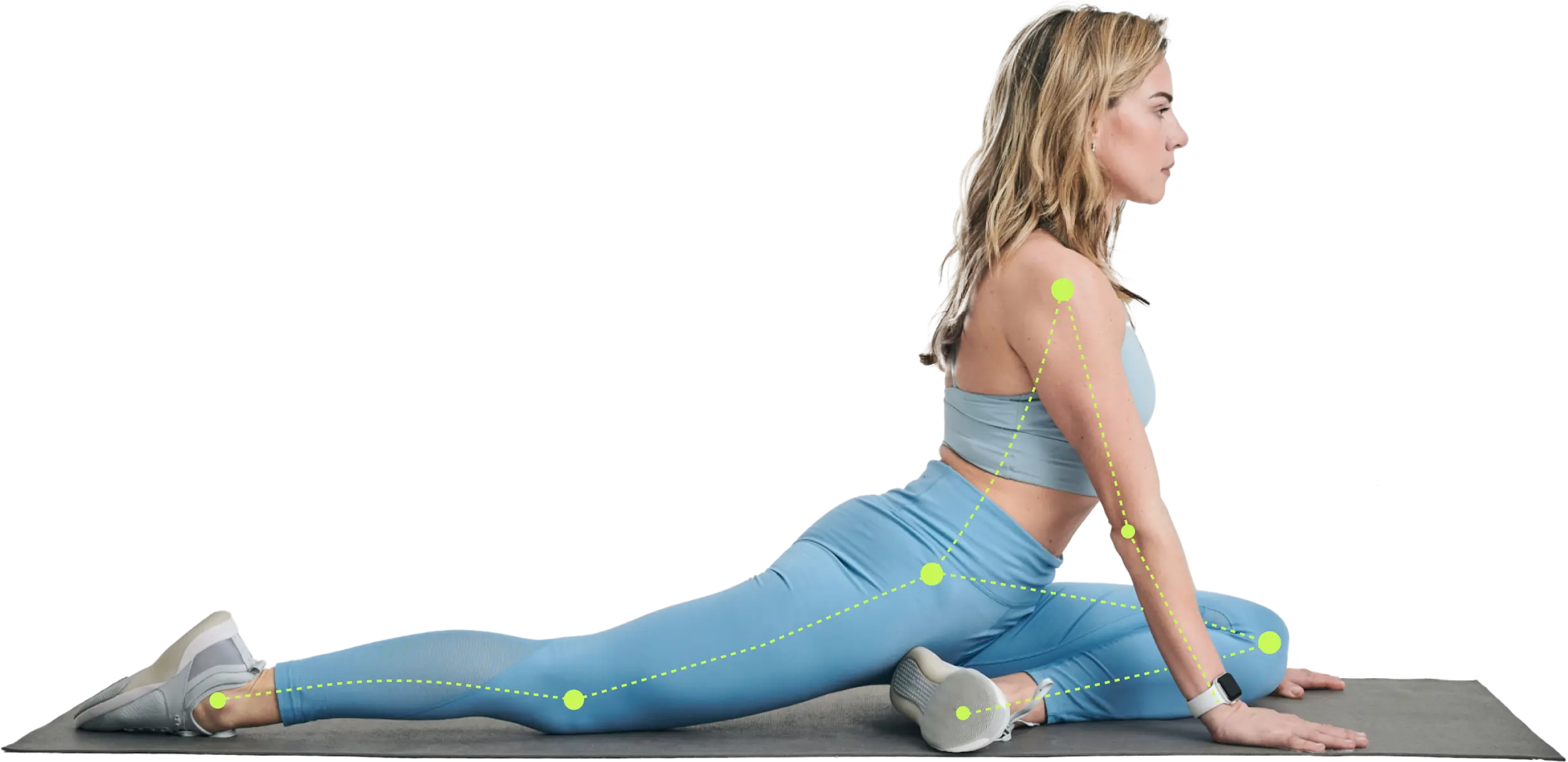
Tired of feeling lost at the gym? Discover a beginner gym routine for women designed to build strength and confidence, with step-by-step workout plans.
For most women starting out, a solid 3-day full-body workout plan is the perfect way to begin. This approach focuses on big, compound exercises that build a strong foundation, kick your metabolism into a higher gear, and help you feel more confident, all without feeling overwhelming.
From day one, the goal is simple: consistency over intensity. Master the form, and the rest will follow.
Starting Your Gym Journey Without the Intimidation

Let's be real: walking into a gym for the first time can feel like you've landed in a foreign country. You're surrounded by clanking weights, complicated-looking machines, and people who seem to know exactly what they're doing. It's enough to make anyone feel a little out of place.
This feeling—often called 'gymtimidation'—is incredibly common, especially for women. In fact, it affects a staggering 17% of women, a number that's been on the rise. Compare that to just 5% of men, and you can see why having a clear, approachable plan is so important for breaking down those initial barriers.
Why a Structured Routine Is Your Best Friend
Wandering from the treadmill to the leg press without a clear purpose is a fast track to feeling frustrated and seeing zero results. Think of a structured routine as your personal roadmap; it gives every single session direction and makes sure you’re hitting all your major muscle groups for balanced, functional strength.
Once you have that plan, the real magic of strength training starts to happen:
- A Higher Metabolism: Building lean muscle actually increases how many calories you burn while at rest. So, you're burning more calories even when you're just sitting on the couch.
- Stronger Bones: Resistance training puts just the right amount of stress on your bones, signaling your body to beef them up. This is a huge deal for long-term health.
- Confidence That Lasts: There's nothing quite like mastering a new lift or seeing yourself get stronger week after week. That confidence doesn't just stay in the gym—it follows you everywhere.
The most important philosophy for any beginner is this: consistency over intensity. Showing up and getting your planned workout done, even with light weights, is so much more valuable than one crazy, all-out session that leaves you too sore to come back for a week.
Any time you start a new fitness program, your first priority should always be learning how to implement safe and effective exercise routines, especially if it’s been a while. If you're trying to get back into the swing of things after a break, our guide on how to start working out again has you covered. Building these foundational habits is the key to creating a positive relationship with fitness that actually lasts.
Your 3-Day Full-Body Workout Plan

Alright, this is where the magic happens. We’ve put together a 3-day full-body workout plan that’s simple, incredibly effective, and designed specifically for women who are just getting started with strength training.
The plan has you hitting every major muscle group three times a week. From my experience, this is the sweet spot for beginners. It’s frequent enough to kickstart muscle growth and help you see results quickly, but not so much that you feel like you have to live in the gym.
We’re focusing on compound exercises—think big movements like squats and rows that work multiple muscle groups at once. This approach builds balanced, functional strength and torches more calories than just doing isolated exercises like bicep curls. It’s all about getting the most bang for your buck.
Structuring Your Week For Success
A good plan is one you can actually stick to, and that means building in time for rest. Remember, your muscles don't get stronger during the workout; they grow during the recovery period afterward. Giving yourself a rest day between lifting sessions is non-negotiable.
Here’s a look at how you can lay out your week.
Your Weekly Beginner Gym Schedule
| Day | Activity |
|---|---|
| Monday | Workout Day 1 (Full Body) |
| Tuesday | Active Recovery (e.g., walk, yoga) |
| Wednesday | Workout Day 2 (Full Body) |
| Thursday | Active Recovery (e.g., walk, yoga) |
| Friday | Workout Day 3 (Full Body) |
| Saturday | Rest or Light Activity |
| Sunday | Rest or Light Activity |
This Monday-Wednesday-Friday schedule is a classic for a reason—it works. It creates a great rhythm of work and recovery that lets your body adapt and get stronger.
Of course, life happens. If a Tuesday-Thursday-Saturday split works better for your schedule, go for it! The most important thing is keeping that day of rest between your strength workouts. If you want to explore other scheduling options, check out our guide on the 3-day split workout routine.
Your Workout Day Breakdown
Each of your three workout days will look a little different. By switching up the exercises, we keep your muscles guessing, which prevents frustrating plateaus and keeps things from getting boring.
Your focus should always be on quality over quantity. Move with intention, concentrate on your form, and choose a weight that feels challenging by the last couple of reps but doesn't cause your technique to break down.
Beginner's Tip: For your very first week, go lighter than you think you need to. Seriously. The goal is just to learn the movements and feel the right muscles firing. You can—and will—increase the weight as you build confidence.
Workout Day 1
Today is all about building a solid foundation. We're starting with the absolute fundamentals of pushing, pulling, and squatting.
Goblet Squats
- Sets: 3
- Reps: 10-12
- Rest: 60 seconds
- Why it's great: This is the perfect way to learn how to squat. Holding the dumbbell in front of you acts as a counterbalance, which naturally helps you keep your chest up and sink your hips down.
Dumbbell Bench Press
- Sets: 3
- Reps: 10-12
- Rest: 60 seconds
- Why it's great: Using dumbbells forces each arm to work independently, which builds shoulder stability and prevents one side from doing all the work.
Dumbbell Rows
- Sets: 3
- Reps: 10-12 per arm
- Rest: 60 seconds
- Why it's great: An absolute powerhouse for building a strong back and fixing that "desk posture" so many of us have.
Plank
- Sets: 3
- Reps: Hold for 30-45 seconds
- Rest: 45 seconds
- Why it's great: The plank teaches you a critical skill: how to brace your core. This is what protects your spine when you start lifting heavier.
Glute Bridges
- Sets: 3
- Reps: 15
- Rest: 45 seconds
- Why it's great: This move specifically targets and "wakes up" your glutes, which can get lazy from sitting all day.
Workout Day 2
Now we'll introduce some new movements that challenge your balance and work your muscles from different angles.
Romanian Deadlifts (RDLs) with Dumbbells
- Sets: 3
- Reps: 12
- Rest: 60 seconds
- Why it's great: RDLs are incredible for strengthening your hamstrings and glutes—the muscles running down the back of your legs.
Incline Push-Ups (on a bench or bar)
- Sets: 3
- Reps: As many as you can with good form
- Rest: 60 seconds
- Why it's great: This variation makes push-ups achievable for everyone. By elevating your hands, you reduce the amount of bodyweight you're lifting, allowing you to build strength progressively.
Lat Pulldowns
- Sets: 3
- Reps: 10-12
- Rest: 60 seconds
- Why it's great: This machine helps you isolate your lats (the big "wing" muscles in your back) and is the perfect stepping stone to eventually doing pull-ups.
Overhead Press with Dumbbells (Seated)
- Sets: 3
- Reps: 10-12
- Rest: 60 seconds
- Why it's great: This move is key for sculpting strong, toned shoulders and building upper-body confidence.
Leg Raises
- Sets: 3
- Reps: 15
- Rest: 45 seconds
- Why it's great: A fantastic exercise for honing in on the lower part of your abs.
Workout Day 3
Your last workout of the week brings everything together with more compound movements to really drive home those strength gains.
Walking Lunges with Dumbbells
- Sets: 3
- Reps: 10-12 per leg
- Rest: 60 seconds
- Why it's great: Lunges are a unilateral exercise, meaning they work one leg at a time. This is amazing for improving your balance and evening out any strength differences between your left and right sides.
Assisted Pull-Ups (or Bodyweight Rows)
- Sets: 3
- Reps: As many as you can with good form
- Rest: 60 seconds
- Why it's great: This is the gold standard of upper-body pulling exercises. Use the assisted machine or bands to give you a boost as you build up the required strength.
Hip Thrusts (with a dumbbell or bodyweight)
- Sets: 3
- Reps: 12-15
- Rest: 60 seconds
- Why it's great: The hip thrust is arguably the single best exercise for directly developing your glutes. It builds both strength and shape like nothing else.
Face Pulls (with cable machine)
- Sets: 3
- Reps: 15
- Rest: 45 seconds
- Why it's great: I consider this a non-negotiable for shoulder health and posture. It's the perfect antidote to all the time we spend hunched over desks and phones.
Pallof Press
- Sets: 3
- Reps: 10 per side
- Rest: 45 seconds
- Why it's great: This anti-rotation core move builds incredible stability through your entire midsection. It looks simple, but you'll feel it working immediately.
Nailing the Form on Your Key Lifts
Having a solid workout plan is a great start, but how you actually perform the exercises is what unlocks real results. Proper form isn’t just about avoiding injury—it’s the secret sauce that guarantees you’re working the muscles you mean to. When form breaks down, other muscles jump in to compensate, which can lead to imbalances and frustrating plateaus.
Think of every single rep as a chance to teach your body how to move efficiently and build strength exactly where you want it. Let's break down the key movements in your new routine, focusing on the simple cues and quick fixes that make all the difference.
The Goblet Squat: Your Foundation
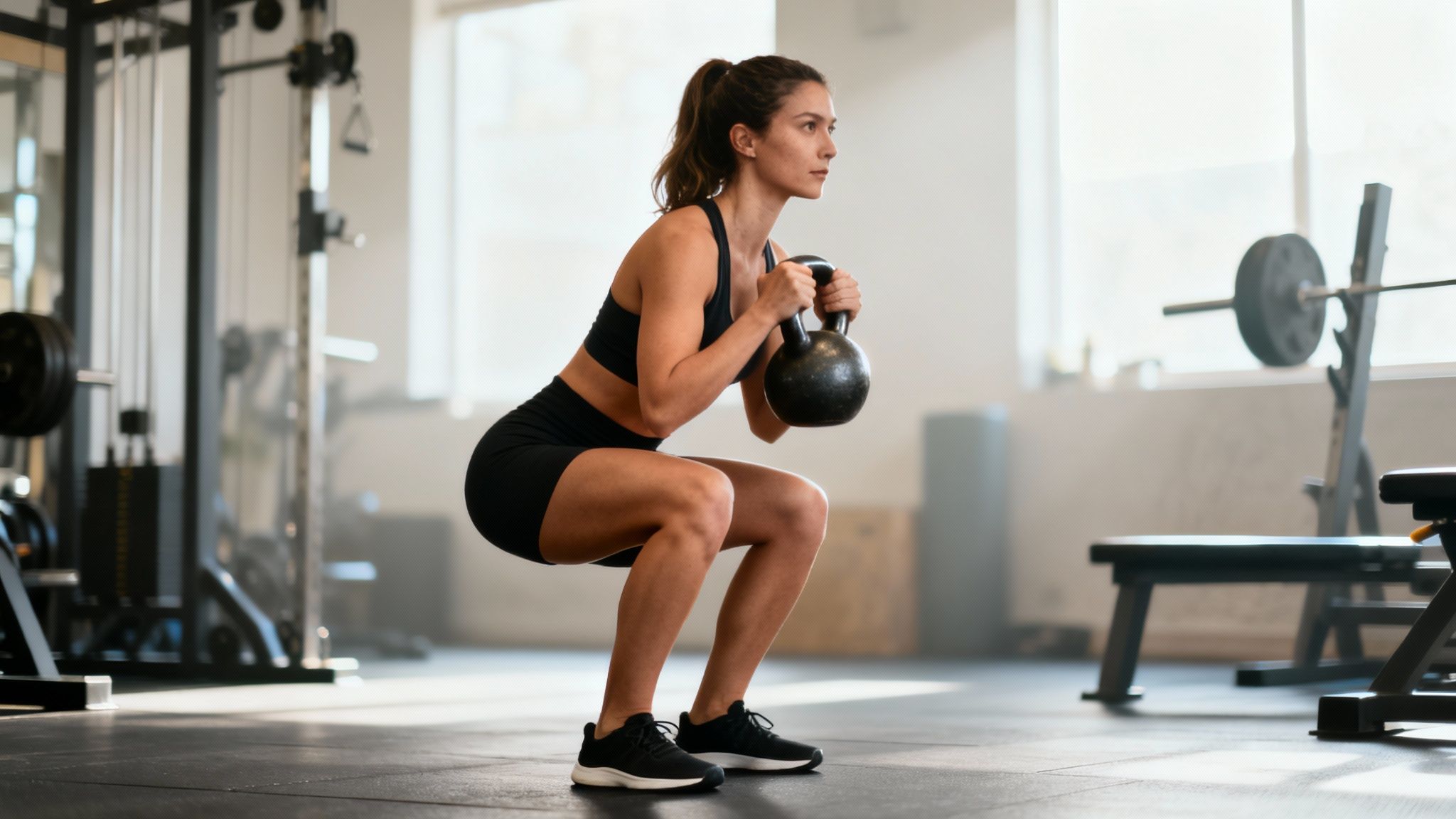
The Goblet Squat is hands-down the best way to learn how to squat. Holding a weight at your chest works as a brilliant counterbalance, making it almost second nature to keep your torso upright and sink into a deep, controlled squat.
How to Do It:
- Stand with your feet set just a bit wider than your shoulders, with your toes pointing slightly out.
- Cup the top of a dumbbell with both hands, holding it vertically against your chest. Keep your elbows tucked in, not flared out.
- Take a deep breath and brace your core—imagine you’re about to get poked in the stomach.
- Start the move by pushing your hips back and then down, like you're aiming for a chair behind you.
- Keep your chest held high and your back straight. Go as low as you can, aiming to get your thighs at least parallel to the floor.
- Powerfully drive through your heels to stand back up, giving your glutes a good squeeze at the top.
Common Mistakes & Quick Fixes:
- Knees Caving In: This is super common and puts a lot of stress on your knee joints. The Fix: Actively think about pushing your knees out over your pinky toes during the entire movement.
- Leaning Too Far Forward: This usually happens when your hips shoot up faster than your chest on the way up. The Fix: Focus on keeping your chest proud. Lead the upward movement with your head and shoulders.
- Heels Lifting Off the Floor: This throws off your balance by shifting weight onto your toes. The Fix: Concentrate on keeping your whole foot—heel, midfoot, and toes—glued to the ground.
Want to dive even deeper? Our guide to proper squat form is packed with more detailed tips and variations to help you master this essential lift.
The Dumbbell Row: For a Stronger Back
This is a fantastic exercise for building a strong upper back, which is non-negotiable for better posture and creating a balanced, toned look. Using a single dumbbell forces each side of your body to work on its own, quickly showing you—and fixing—any strength imbalances.
How to Do It:
- Set up by placing your left knee and left hand on a flat bench. Your back should be flat and run parallel to the floor. Plant your right foot firmly on the ground for stability.
- Grab a dumbbell in your right hand with your palm facing your body (a neutral grip) and let it hang straight down.
- Tighten your core to keep your spine from twisting.
- Pull the dumbbell straight up towards your hip, keeping that elbow tucked in close to your side. The key is to squeeze your back muscles to start the lift, not just yank it up with your arm.
- Pause for a second at the top, then slowly lower the dumbbell back down with control.
- Finish all your reps on one side before switching.
Pro Tip: Imagine a rope is tied to your elbow and someone is pulling it straight up to the ceiling. This mental cue is a game-changer for making sure your back muscles are doing the work, not just your bicep.
The Romanian Deadlift (RDL): Mastering the Hip Hinge
The RDL is an absolute powerhouse for targeting your hamstrings and glutes. It’s different from a conventional deadlift because it really focuses on the "hinge" pattern—pushing your hips back while keeping your legs relatively straight.
How to Do It:
- Stand up straight with your feet about hip-width apart. Hold a dumbbell in each hand right in front of your thighs, with your palms facing you.
- Keep a small, soft bend in your knees the whole time. They should never be locked out.
- Start the movement by pushing your hips straight back. Think about trying to touch the wall behind you with your butt.
- Let the dumbbells slide down the front of your legs, keeping them super close to your body. Your back must stay flat—no rounding!
- Lower the weights until you feel a really good stretch in your hamstrings, which for most people is around mid-shin.
- Reverse the movement by driving your hips forward and squeezing your glutes hard to stand back up.
Common Mistakes & Quick Fixes:
- Rounding Your Back: This is the biggest no-no and puts your lower back at risk. The Fix: Keep your gaze a few feet in front of you on the floor and actively pull your shoulder blades down and back.
- Squatting Instead of Hinging: Remember, this isn't a squat. The Fix: Focus on the back-and-forth motion of your hips, not an up-and-down motion. Your shins should stay more or less vertical.
The Incline Push-Up: Building Upper Body Strength
Let's be real, standard push-ups are tough when you're just starting out. The incline push-up is the perfect workaround. By elevating your hands, you reduce how much bodyweight you have to lift, letting you build foundational strength in your chest, shoulders, and triceps. As you get stronger, you just find a lower surface. Simple.
How to Do It:
- Place your hands slightly wider than your shoulders on a raised surface—a bench, a sturdy box, or even the bar in a Smith machine will work. The higher the surface, the easier it will be.
- Walk your feet back so your body forms one long, straight line from your head to your heels.
- Squeeze your core and your glutes. This is crucial for preventing your hips from sagging.
- Lower your chest toward the bench by bending your elbows. Try to keep your elbows at roughly a 45-degree angle from your body, not flared straight out to the sides.
- Press back up to the starting position until your arms are fully extended.
By really focusing on these form cues, you won’t just stay safer—you’ll get so much more out of every single workout. Always remember that quality beats quantity. A handful of perfect reps will do more for you than a dozen sloppy ones.
Fueling Your Body for Strength and Recovery
What you do in the gym is only half the story. The other half—the part that actually builds a stronger, more resilient body—happens in your kitchen and while you're asleep.
Think of your workouts as the spark. Proper nutrition and smart recovery are the fuel that turns that spark into real, lasting change. This isn’t about getting bogged down in complicated diets or restrictive rules. It's about giving your body the simple, essential building blocks it needs to repair muscle, restock your energy, and have you walking into your next session feeling even better than the last.
Simple Nutrition for Better Workouts
You really don't need to start tracking every single calorie or gram of protein to see results. Right now, let's just focus on the two main players on your nutritional team: protein and carbohydrates. Each one has a critical job.
- Protein is for Repair: When you lift weights, you create tiny micro-tears in your muscle fibers. That sounds bad, but it's actually how you get stronger! Protein provides the raw materials (amino acids) to patch up that damage, building your muscles back bigger and stronger than before. A good starting point is to include a palm-sized portion of a lean protein source like chicken, fish, tofu, or Greek yogurt with your main meals.
- Carbohydrates are for Energy: Carbs are your body’s go-to fuel source. They’re quick, accessible, and exactly what you need to power through your workouts. Eating some carbs before you train tops off your energy stores so you can push harder. Eating them afterward helps replenish what you’ve burned and helps shuttle protein into your muscles to kickstart the repair process.
Timing your food can make a surprising difference in your energy and performance. For a deeper look at this, check out our guide on whether it's better to eat before or after working out.
Why Recovery Is Not Optional
So many beginners fall into the trap of thinking that more is always better. But your rest days are when the real magic happens. Skipping recovery is a one-way ticket to burnout, injury, and hitting a frustrating plateau. It’s a non-negotiable part of getting stronger.
Rest isn’t laziness; it’s a vital part of the strength-building process. Your muscles don't get stronger while you're lifting—they get stronger while you're resting and repairing from the work you've done.
Good, quality sleep is hands-down your most powerful recovery tool. When you aim for 7-9 hours a night, you give your body the time it needs to release growth hormone, which is absolutely essential for muscle repair.
Beyond just sleep, making sure your body is supported can prevent nagging pains from derailing your progress. If you find aches and pains are holding you back, it might be worth looking into optimizing your sleep environment to alleviate back pain.
Don't underestimate the power of "active recovery" either. On your rest days, doing something gentle like a 20-minute walk, some light stretching, or foam rolling can work wonders. These activities boost blood flow, which helps shuttle nutrients to your tired muscles and clear out waste products, leaving you feeling less sore and ready for your next big gym session.
How to Keep Progressing and Stay Motivated
The real magic of a great gym routine isn't just about those first few exciting weeks. It’s about building something that can grow right along with you. To see lasting change, you need to consistently give your body a reason to adapt, and that's where the principle of progressive overload comes into play.
Simply put, progressive overload means gradually increasing the demands you place on your muscles over time. Think of it as the secret sauce that stops you from hitting that frustrating wall where your progress just stalls out. Without it, your body gets comfortable, and when your body gets comfortable, it stops changing.
The Art of Progressive Overload
Making your workouts a little bit harder doesn't always mean piling more plates onto the barbell. There are several smart, effective ways to apply progressive overload, especially when you're just starting out.
Let's break down the most common methods. Each one is a tool in your toolkit, and knowing when to use them is key to making consistent gains without burning out.
Methods of Progressive Overload
| Method | Description | When to Use It |
|---|---|---|
| Increase the Weight | The classic approach. Adding a small amount of weight (like 2.5 or 5 pounds) to an exercise. | When you can comfortably hit all your reps and sets with perfect form. |
| Add More Reps | Doing one or two more reps with the same weight you used in your last session. | When you don't have access to smaller weight increments or want to build muscular endurance. |
| Perform More Sets | Adding an entire extra set to a specific exercise, like doing 4 sets of squats instead of 3. | Great for boosting total workout volume for a target muscle group. |
| Decrease Rest Time | Shortening your rest periods between sets, for example, resting for 45 seconds instead of 60. | When you want to increase workout intensity and improve your conditioning. |
The trick is to focus on just one of these methods at a time for any given exercise. Trying to do too much at once is a surefire way to compromise your form and risk burnout. For more ideas on keeping things fresh, check out these helpful tips to prevent plateaus.
Track Everything You Do
So, how do you know when it's time to add more weight or another rep? You track it.
A simple workout log—whether it's a dedicated notebook or an app on your phone—is one of the most powerful tools you have. It takes all the guesswork out of the equation and turns your training into a clear, data-driven plan.
Before each session, just glance at what you did last time. If you squatted 20 pounds for 3 sets of 10 reps, your goal for today is crystal clear. Maybe you'll aim for 11 reps with that same weight, or maybe you'll try 22.5 pounds for 8-10 reps.
Your workout log is your objective proof of progress. On days when you don't 'feel' stronger, looking back at where you started a month ago provides an undeniable motivational boost.
Tracking removes emotion and replaces it with cold, hard facts. It shows you that even on a bad day, you're still miles ahead of where you were when you first started.
Staying Motivated for the Long Haul
Motivation isn't something you just have—it's something you build through consistent habits. In 2025, the most successful beginner routines are built on a solid foundation of 2-3 full-body sessions per week. This frequency is the sweet spot; it allows for steady progress while giving your body plenty of time to recover and get stronger.
Science-backed approaches consistently show that starting with big, compound lifts like squats and deadlifts for 1-3 sets of 8-12 reps is the most efficient way to build both skill and muscle. You can discover more about this effective strategy for strength training for women on StrengthLog.com.
This infographic is a simple visual reminder of the three pillars that support all the hard work you put in at the gym.
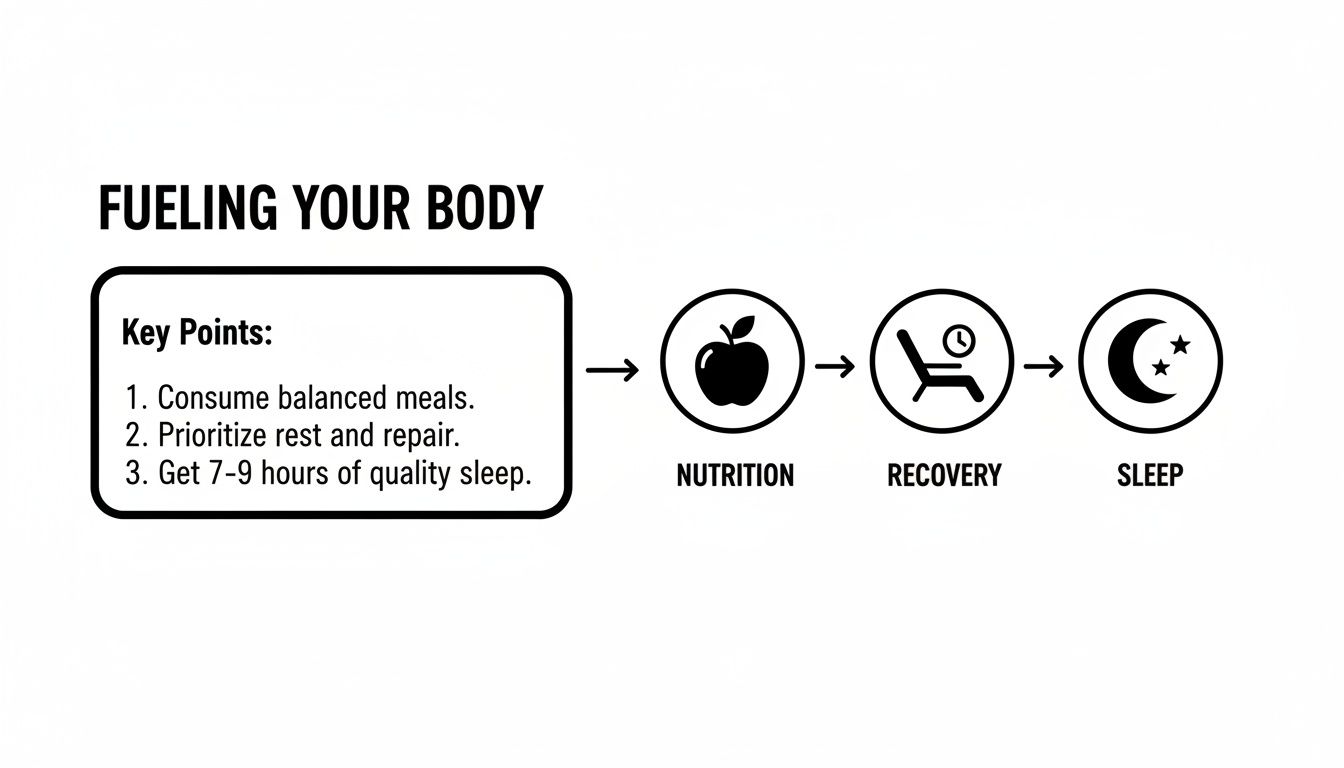
It’s a great reminder that your progress depends just as much on smart nutrition, solid recovery, and quality sleep as it does on lifting weights.
Finally, remember to celebrate your wins, no matter how small they seem. Did you add 5 pounds to your row? Did you hold your plank for 10 seconds longer than last week? Acknowledge it. This kind of positive reinforcement creates a powerful feedback loop that will make you genuinely excited to come back and see what else you're capable of.
Got Questions About Starting at the Gym? Let's Clear Things Up.
Stepping into the world of strength training for the first time is exciting, but it almost always comes with a bunch of questions. That’s completely normal. Getting straight answers can be the difference between feeling intimidated and feeling empowered. Let's tackle some of the most common things women wonder about when they're just starting out.
"But Won't Lifting Weights Make Me Bulky?"
This is easily the biggest myth in women's fitness, and I’m here to tell you: it’s just not true. The answer is a hard no.
The main reason men can pack on huge amounts of muscle is testosterone, and women simply don't have enough of it to get "bulky" by accident. What a consistent strength program will do is build lean muscle. That’s the magic ingredient for creating that toned, defined, and athletic look many women are after.
Here's something else to consider: muscle is way denser than fat. You might find your jeans fitting better and your body looking firmer, even if the number on the scale doesn't move much at first.
"Okay, So How Long Until I Actually See Results?"
Progress happens in two waves: how you feel and what you see. You'll probably start feeling stronger, more capable, and more energetic within the first 2 to 4 weeks. This isn't just in your head; it's your brain getting way more efficient at telling your muscles what to do—a process called neuromuscular adaptation.
Visible changes, like seeing more muscle definition or noticing a real shift in your body composition, usually take a bit longer. You can expect to see these start popping up after about 8 to 12 weeks of consistent effort. And by consistent, I mean hitting your workouts at least 2-3 times a week and backing it up with decent nutrition.
My Favorite Tip: Forget the scale being your only report card. Seriously. Take progress photos every four weeks. They show you the real story of how your body is changing in ways the scale completely ignores. It's way more motivating and a much truer picture of your hard work.
"What if I Can't Do a Certain Exercise?"
Then you're just like everyone else when they first started! This is completely fine and totally expected. The goal isn't perfection on day one; it's just about showing up and moving with good, safe form. Every single exercise has a workaround.
Here are a few real-world examples:
- Struggling with a standard push-up? No problem. Start with incline push-ups. Place your hands on a bench, a box, or even a wall. The higher your hands are, the more manageable the exercise becomes.
- A dumbbell feels way too heavy? Put it down and grab a lighter one. There is absolutely zero shame in starting light. Mastering the movement pattern first is what builds real, long-term strength.
- Something just feels awkward or wrong? Never just push through it. Don't be shy about asking a trainer for a quick form check, or even just pulling up a tutorial video on your phone.
Always, always listen to your body. You want to challenge your muscles, but you should never, ever push through sharp pain.
Ready to stop guessing and start progressing with a plan that adapts to you? The Zing Coach app removes the uncertainty with AI-powered workouts tailored to your goals and fitness level. Get your personalized plan and start your strength journey with confidence at https://zing.coach.
Share this article


Authors