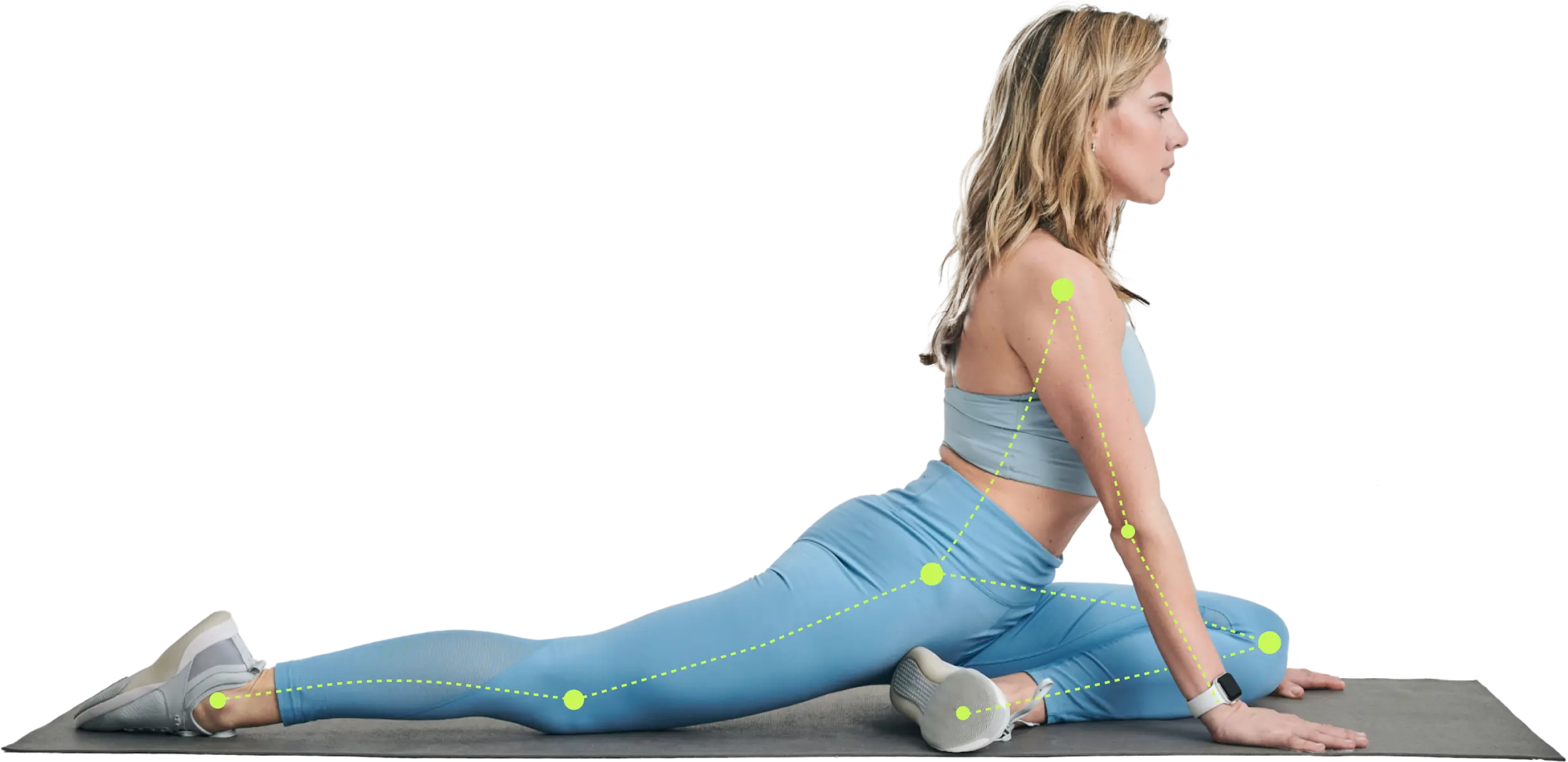
Master the knee raises exercise! Learn correct form for hanging, lying, & standing variations to build a stronger core & avoid common mistakes.
You've probably done this before. You finish a workout, add a few crunches, maybe hold a plank, and still feel like your core work isn't going anywhere. Your abs burn, but your posture doesn't feel stronger, your lower back still gets cranky, and hanging leg work at the gym still looks out of reach.
That's where the knee raises exercise can change things.
It looks simple. Lift your knees, lower them back down, repeat. But this movement is one of the most useful ways to build core control because it can meet you where you are. You can start standing beside a wall for balance, move to the floor for stricter abdominal work, and eventually progress to a hanging version that demands much more control.
Your Path to a Stronger Core Starts Here
A lot of people get stuck in the same core routine for months. They do exercises that feel familiar, but not exercises that teach the body to control the pelvis, ribs, and hips together. That's often why the work feels tiring without feeling useful.
Knee raises solve that problem well because they're simple enough to learn and flexible enough to progress. A beginner can practice balance and posture with a standing version. Someone returning to training can use lying knee raises to relearn abdominal bracing. A gym-goer who wants a harder challenge can use hanging knee raises to build trunk control under more demand.
If you've been trying to strengthen your midsection with random ab circuits, it helps to zoom out and think in patterns instead of just exercises. A strong core usually comes from repeatable movement quality, not from chasing exhaustion. If you want a broader map of movements that support that goal, this guide to core exercises is a useful companion.
Some people also pair exercise with body-composition support, especially when they care about both function and appearance. If that's part of your thinking, it can help to understand what options exist outside the gym too, such as non-surgical aesthetic body sculpting, while keeping your training focused on movement quality and strength.
Practical rule: If an exercise feels easy to copy but hard to feel in the right place, the answer usually isn't more reps. It's better positioning.
The good news is that knee raises give you clear checkpoints. You can tell when your torso is steady, when your hips are taking over, and when you're ready for a tougher version. That makes them a great exercise to personalize instead of just survive.
Beyond the Six-Pack What Knee Raises Really Do
People often treat knee raises like a lower-ab vanity exercise. That sells them short.
Nuanced guidance shows that knee raises strongly involve the rectus abdominis, obliques, and hip flexors, which makes them especially useful as a core-control and hip-flexion drill, not just a pure ab-size exercise, as noted in this breakdown of vertical knee raises.

What that means in real life
When you do knee raises well, you're not just folding your legs upward. You're teaching your trunk to stay organized while your hips move. That matters when you walk, run, climb stairs, lift weights, and even when you try to keep your lower back from doing extra work.
A few practical carryovers:
- Better trunk control: Your torso learns to resist wobbling while the legs move.
- Cleaner hip motion: You practice lifting the knee without twisting or leaning.
- More useful ab training: The abs work as stabilizers and movers, not just as muscles you try to “burn out.”
That's also why many people feel a huge difference between sloppy reps and strict reps. In a sloppy set, the legs swing and the hip flexors dominate. In a strict set, the ribs stay more controlled, the pelvis stays more intentional, and the movement feels smaller but more demanding.
Why they aren't always the right first choice
Knee raises are excellent, but they aren't magic. If someone can't brace well on the floor yet, a hanging version may just turn into swinging from the shoulders while yanking the knees up. In that case, a simpler variation usually teaches more.
If you want to compare this family of movements with a related core pattern, these leg raises help show how changing lever length changes the challenge.
Knee raises work best when you think “move the hips with a stable trunk,” not “throw the knees up as high as possible.”
That shift in mindset is what turns the exercise from basic ab work into something much more useful.
Mastering the Three Core Variations of the Knee Raise
The easiest way to learn knee raises is to treat them like a ladder. Start with the variation that lets you control your body best. Don't start with the version that looks toughest.

Standing knee raises
This is the friendliest starting point for many beginners, older adults, and anyone rebuilding coordination.
For a practical standing standard, lift one knee until the thigh is parallel to the ground while keeping the torso upright and the hips square, according to this guide on standing knee raises.
Use these steps:
- Stand tall with your feet about hip-width apart.
- Brace your midsection lightly, like you're preparing for a poke to the stomach.
- Lift one knee until your thigh reaches about parallel.
- Pause briefly without leaning back.
- Lower with control and switch sides.
What should you feel? Mostly your lower abs working to steady your trunk, plus your hip flexors lifting the leg. If you're wobbling all over the place, hold a wall or chair and clean up the motion before adding speed.
A cardio-focused version can also work well here, but only after your posture is solid.
Lying knee raises
This version strips away balance demands and makes it easier to focus on your abs.
For strict lying knee raises, keep the lower back pressed to the floor, start on your back with your body grounded, brace your abs, lift the heels slightly, then draw the knees toward the chest and lower slowly while keeping the shins parallel to the floor, based on Hevy's guide to lying knee raises.
That one detail changes everything. If your lower back peels off the floor, the rep usually stops being a clean core rep.
A simple setup:
- Start position: Lie on your back with arms by your sides.
- Leg position: Bend the knees and float the feet off the floor.
- Core cue: Gently flatten your lower back into the ground.
- Movement: Bring the knees in, then lower slowly without letting your feet fully rest.
“Press your low back down first. Then move your legs.”
That cue helps people stop leading with the thighs and start leading with the trunk.
Here's a short demo if you learn better by watching movement in action:
Hanging knee raises
This is the most demanding of the three because the bar adds grip and shoulder demands, and your body wants to swing.
Set up by hanging from a pull-up bar with your shoulders active, not shrugged into your ears. From there, lift your knees with control instead of kicking them upward. Lower slowly and let the swing settle before the next rep.
The key feeling here is not “I got my knees high.” It's “I stayed in charge of the whole body.”
A quick comparison can help:
| Variation | Best for | Main focus |
|---|---|---|
| Standing | Beginners, balance practice | Posture and controlled hip lift |
| Lying | Learning abdominal bracing | Pelvic control and low-back position |
| Hanging | More advanced trainees | Full-body stability and anti-swing control |
If you're already eyeing harder progressions, movements like toes-to-bar show where this path can eventually lead. But it's generally more beneficial to master the basics first.
Common Mistakes That Sabotage Your Knee Raises
Most knee raise problems come from the same issue. People move the legs first and forget to organize the trunk.

The four errors I see most often
- Using momentum: In hanging reps especially, people swing the body and let the swing complete the rep. That reduces the core challenge and makes every rep look bigger than it really is.
- Arching the lower back: This often shows up on the floor. The knees come in, but the abs lose tension and the low back takes stress.
- Letting the hip flexors dominate: You feel the front of the hips doing everything while the abs barely seem involved.
- Rushing the lowering phase: The return is where control is built. Dropping the legs quickly throws away half the point of the exercise.
Simple fixes that work fast
For those with back or hip limitations, regressions matter. Emphasizing a posterior pelvic tilt, slower control, and bent-knee or one-leg variations can help protect the spine and stop the hip flexors from taking over, as explained in this article on hanging knee raise regressions.
Try these corrections:
- If you swing: Pause at the bottom and wait for stillness before the next rep.
- If your back arches: Shorten the range and focus on keeping the ribs and pelvis connected.
- If your hips pinch: Switch to a bent-knee version, or train one side at a time.
- If your neck tenses up: Relax the jaw, keep the gaze neutral, and stop trying to “curl” with your head.
Check this first: If you can't lower the legs slowly, the exercise is too advanced in its current form.
Pain is the part that confuses people most. Muscle effort in the abs or front of the hips can be normal. Sharp pinching, low-back strain, or pulling in the hip crease usually means the setup needs to change. That's not failure. It's useful feedback.
Building Your Knee Raise Progression Plan
A smart progression plan gives you a starting point, a target, and a reason to move on. Knee raises are especially good for this because they scale across different environments and skill levels.

Rep ranges that make sense
Across coaching guidance, standing knee raises are commonly prescribed for 10 to 15 repetitions per side, hanging knee raises often show up for 10 to 15 repetitions, and one progression framework lists hanging work at 3 sets of 7 reps for beginners, 4 sets of 7 to 9 reps for intermediates, and 4 sets of 8 to 10 reps for advanced trainees in this knee raise progression guide.
That range matters because it tells you something important. You don't need huge rep totals to make this exercise productive. You need controlled reps that match your current ability.
How to choose your starting point
Use this decision guide:
- Start with standing knee raises if balance, coordination, or confidence is your main issue.
- Start with lying knee raises if you need to learn how to brace and control your low back.
- Start with hanging knee raises only if you can hang comfortably and keep your body from swinging.
A simple progression path looks like this:
- Own the standing version with upright posture and minimal sway.
- Move to lying knee raises and keep the low back pinned through the full rep.
- Progress to hanging reps once you can control both the lift and the descent.
A harder variation only counts as progress if you can keep the same quality of control.
If you like training frameworks from other sports, the logic is similar to what coaches use in BJJ strength and conditioning strategies. Build the pattern, then add difficulty without losing position.
For people who want structure without guessing, tools that adapt volume over time can help. Progressive overload training is the principle to keep in mind, and Zing Coach is one example of a system that adjusts training around your level, equipment, and recovery instead of forcing the same progression on everyone.
Quick Knee Raise Workouts to Get You Started
You finish a workout and want five extra minutes of core work, but you are not sure what version of knee raises fits your level. That is where a short, targeted plan helps. The right mini-workout should feel like a clear next step, not a test you have to survive.
Use these options like a choose-your-own starting point. Pick the one that matches your current control, then stay with it until the reps look clean and feel repeatable. That is how you build momentum without guessing.
Starter finisher
Use this after a walk, strength session, or short home workout if you are new to knee raises or returning after time off.
- Standing knee raises: 2 controlled sets, alternating sides, with posture and balance as the goal
- Lying knee raises: 1 to 2 short sets, stopping before your low back starts to arch
- Easy plank hold: A brief hold with steady breathing and ribs down
If your hips feel tight or your balance is shaky, that is okay. This workout teaches the pattern first. Treat it like learning the brakes before you drive faster.
Control builder
Use this if you can already brace well on the floor and want more challenge without losing form.
- Lying knee raises: Smooth reps with a slow lowering phase
- Hanging knee raises: Short sets with no swinging
- Bird-dogs: Alternating reps to reinforce trunk stability
A good rule is to stop each set while you still own the movement. If your knees come up but your torso folds, you are no longer training the rep you want.
If you enjoy athletic-style conditioning, the Korfhage BJJ workout guide offers ideas for mixing trunk training with movement and work capacity.
Cardio and core combo
Use this when you want your core work to feel more dynamic.
- Standing knee raises: Rhythmic reps with tall posture
- March or light jog in place: Easy pace, relaxed shoulders
- Short floor core set: Controlled reps to finish, not rushed ones
This option works well on days when you want a little more energy without turning the session into sloppy high-speed ab work. For a similar blend of conditioning and trunk training, this running ab workout for core and cardio balance is a useful next read.
If knee raises ever cause pinching in the front of the hip or discomfort in the low back, scale the workout down right away. Shorter ranges, fewer reps, or an easier variation usually solve the problem faster than pushing through it.
The best starting workout is the one you can repeat with confidence. Begin where your form stays solid, then add reps, time, or difficulty one step at a time.
If you want a plan that adjusts to your level instead of making you guess, Zing Coach can help you build workouts around your current strength, available equipment, and movement quality, so exercises like knee raises fit into a routine you can keep doing consistently.
Share this article


Authors