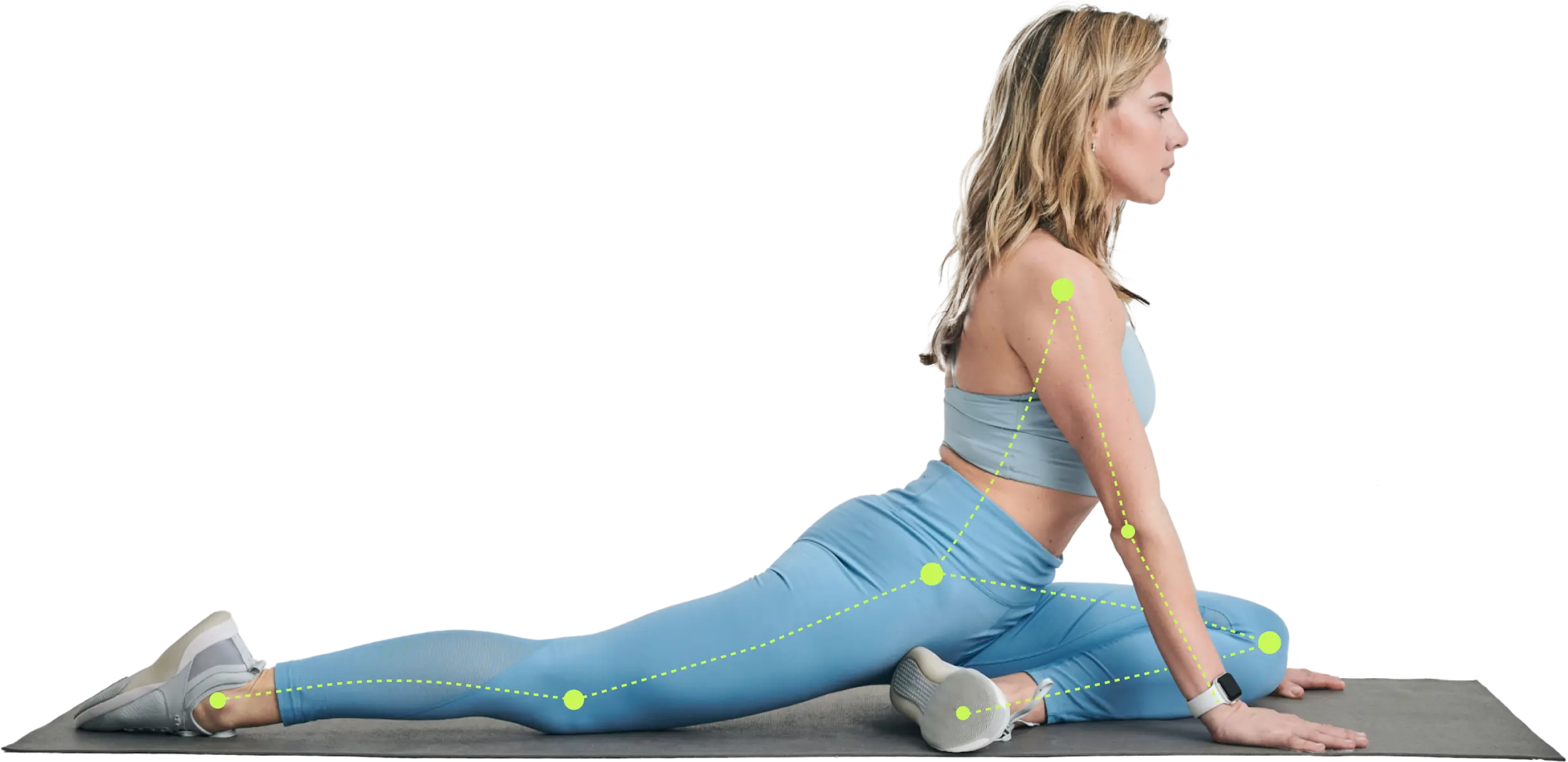
Start your home workout plan to build muscle today. This guide provides a 12-week program, exercise substitutions, and nutrition tips to gain strength at home.
You're probably in one of three spots right now. You want to build muscle, but you don't want to commute to a gym, wait for equipment, and organize your week around a facility you barely use. Or you used to train consistently, life got busy, and now you need a plan that fits your home, your schedule, and the equipment you own.
That's exactly where a good home workout plan to build muscle matters. Not a random list of push-ups and squats. A real plan with structure, progression, and enough flexibility to work whether you've got nothing but floor space or a rack in the garage.
The good news is simple. You can build muscle at home. The bad news is also simple. You can waste months doing easy circuits, changing exercises every few days, and wondering why your body looks the same. We're going to avoid that.
Foundations of Muscle Growth at Home
A lot of people still assume muscle growth only happens in a gym. That idea falls apart fast once you understand what drives hypertrophy.

What builds muscle in practice
Three forces matter most.
Mechanical tension
Your muscles need to work hard against resistance. That resistance can come from dumbbells, bands, a backpack, your bodyweight, or a barbell. The source matters less than whether the set is hard enough.Metabolic stress
This is the deep burn and fatigue you feel when a set gets challenging. It's not magic by itself, but it often shows up when a set is long enough and difficult enough to force your muscles to keep producing effort.Muscle damage
This gets overhyped. You don't need to chase soreness. But when you challenge tissue through a meaningful range of motion, especially with controlled lowering, your body responds by repairing and adapting.
At home, people usually underdose the first one. They move a lot, sweat a lot, and still don't create enough tension to tell the body, “Build more muscle here.”
Practical rule: If a set feels comfortable from start to finish, it's probably doing more for general activity than for muscle growth.
Why full-body training works so well at home
For most beginners and busy adults, a full-body setup is the smartest place to start. It's efficient, easy to recover from, and it lets you practice key movement patterns often enough to get better quickly.
That approach also holds up well in research. In an 8-week randomized study of 67 untrained adults, a full-body routine produced muscle gains similar to a split routine when weekly training volume was consistent. The full-body group trained each muscle group 4 times per week, while the split group trained each muscle group 2 times per week. Both used 8 to 12 repetitions per set with 60 seconds of rest between sets. The practical takeaway is that frequency and total workload matter more than whether a plan looks like a traditional gym split (study details on PubMed Central).
That's why home training doesn't need to imitate a bodybuilding magazine split to work. It needs enough hard work, repeated consistently.
What home training gets right
Home training has trade-offs, but it also solves real problems.
- You skip friction
No commute, no packed schedule, no waiting around. - You can train more consistently
Consistency beats intensity spikes followed by missed weeks. - You learn to progress with intent
A smaller equipment menu forces better programming.
If you want a broader look at how a structured home setup can support muscle gain, this guide on how to build muscle at home is a useful companion. If you enjoy blending strength, athletic movement, and repeatable progress, a 2026 functional bodybuilding program is another useful model to study for exercise selection and training flow.
Designing Your Weekly Workout Template
The right weekly template is the one you can recover from and repeat. There is no need for a complicated split; rather, a calendar that survives work, family, bad sleep, and real life is what's required.

Two templates that work
The cleanest options are a 3-day full-body split and a 4-day upper/lower split. Both can build muscle. The difference is mostly about schedule, exercise tolerance, and how much focus you want per session.
| Split Type | Frequency | Best For | Considerations |
|---|---|---|---|
| 3-day full-body | Three training days across the week | Beginners, busy professionals, people returning after time off | Each session covers more muscle groups, so exercise selection has to stay focused |
| 4-day upper/lower | Four training days across the week | Intermediates, people with more training time, lifters who want more per-muscle focus | Requires more scheduling discipline and slightly better recovery habits |
If you're torn between them, this full-body vs split workout guide helps clarify the trade-offs.
The 3-day option
This is the template I'd give most new clients first. You train often enough to build momentum, but you still get plenty of recovery.
A typical week looks like this:
Day 1 Full Body A
Squat pattern, horizontal push, horizontal pull, hinge, coreDay 2 Recovery
Walk, mobility work, light cycling, or total restDay 3 Full Body B
Lunge pattern, vertical push, pull variation, glute movement, coreDay 4 Rest
Full rest or very easy movementDay 5 Full Body C
Step-up or squat variation, push variation, row variation, hamstring work, coreDay 6 and Day 7
Rest and reset
This setup works especially well if your equipment is limited. You hit each pattern repeatedly, and that repetition helps your form improve fast.
The 4-day option
This one gives more room for volume and exercise variety.
A clean weekly flow:
- Day 1 Upper body
- Day 2 Lower body and core
- Day 3 Rest
- Day 4 Upper body variation
- Day 5 Lower body and core variation
- Day 6 and Day 7 Rest
Choose the split that makes you more consistent, not the one that looks more advanced on paper.
What every session should include
No matter which template you choose, keep the session structure stable.
Warm-up
Use a short dynamic warm-up. Think shoulder circles, bodyweight squats, hip hinges, lunges, scapular push-ups, and a few easier reps of the first movement.
Main lifts
Put the hardest compound work first. Place squats, split squats, push-ups, rows, presses, hinges, and pull-up variations at the beginning.
Accessory work
Add focused work after the main lifts. Good options include curls, lateral raises, calf raises, glute bridges, triceps extensions, and direct core training.
Cool-down
Keep it simple. Walk around, breathe, and do light mobility if it helps you feel better. Don't turn cool-downs into another workout.
A strong template doesn't need novelty. It needs enough structure that you can measure whether you're getting stronger.
The Ultimate Home Exercise Library
A useful home workout plan to build muscle has to fit your setup. If you only have bodyweight, the plan should still work. If you have dumbbells, bands, a bench, rings, or a rack, the same movement patterns should scale up.

Push movements
Your push category trains chest, shoulders, and triceps.
Bodyweight only
Push-ups, decline push-ups, diamond push-ups, pike push-upsBands and dumbbells
Dumbbell floor press, standing band press, dumbbell overhead pressMore equipment
Bench press, dip station dips, ring push-ups, landmine press
For chest emphasis, standard and decline push-up variations work well. For shoulders, pike push-ups and overhead pressing variations usually do more.
Pull movements
Many home plans fall apart because of this imbalance. People push a lot and barely train their back.
Bodyweight only
Inverted rows under a sturdy table, towel rows, doorway rows if the setup is secureBands and dumbbells
One-arm dumbbell row, band row, band pulldown, rear-delt flyMore equipment
Pull-ups, chin-ups, barbell rows, chest-supported rows, cable pulldowns
If you can't do a pull-up, don't worry. Rows can carry a lot of the workload early on.
Here's a visual demo you can use for movement ideas and setup cues.
Lower-body patterns
Don't reduce leg training to endless air squats. Home leg work can build muscle if you use unilateral work, longer ranges of motion, and enough effort.
Squat and lunge patterns
Bodyweight only
Squats, split squats, Bulgarian split squats, step-ups, assisted pistol squatsBands and dumbbells
Goblet squats, dumbbell split squats, loaded step-ups, front-foot raised split squatsMore equipment
Front squats, back squats, hack squat variations, safety bar squats
Hinge and hamstring patterns
Bodyweight only
Glute bridges, single-leg glute bridges, sliding hamstring curlsBands and dumbbells
Romanian deadlifts, dumbbell deadlifts, band pull-throughsMore equipment
Barbell Romanian deadlifts, deadlifts, hip thrusts, machine leg curls
Core and trunk work
Core training at home should support better lifting, not just burn your abs.
Static options
Planks, side planks, hollow holdsDynamic options
Leg raises, dead bugs, reverse crunches, controlled mountain climbers
If you want a searchable bank of movements and variations, the Zing Coach exercise library is useful for matching exercises to the equipment you already have.
How to make bodyweight work hard enough
This is the key point. Bodyweight exercise only builds muscle when the set is challenging.
A science-based guide to home hypertrophy notes that resistance should be at least about 30 to 40% of one-repetition maximum, which often translates to roughly 30 to 40 repetitions per set for bodyweight exercises, unless you use a harder variation to keep reps lower and effort high. The same guide recommends about 2 minutes of rest between sets and includes a total-body session built around diamond push-ups, inverted rows, pike push-ups, sliding lat pulldowns, assisted pistol squats, Bulgarian split squats, and hamstring leg curls (home workout guide from Built With Science).
If you can casually chat through a set of push-ups or split squats, the movement probably needs a tougher variation, a slower tempo, a pause, or added load.
Use these tools to increase challenge without fancy equipment:
- Slow the lowering phase to increase tension
- Pause at the hardest point of the rep
- Raise the feet or increase range of motion
- Add a backpack with books or plates
- Move to single-leg or harder mechanical variations
That's how bodyweight training stops being “exercise” and starts becoming muscle-building training.
The Science of Getting Stronger Over Time
Most home programs fail for one reason. The workouts never get harder.

Progressive overload is the engine
Progressive overload means asking your muscles to do a little more over time. Not randomly. Deliberately.
That can mean more load, more reps, more control, a harder variation, or a cleaner set taken closer to failure. If week after week looks identical, your body has no reason to adapt further.
A practical way to learn this skill is to use a progressive overload training guide and pair it with a logbook. The program matters, but your notes matter too. If you don't track performance, you're guessing.
What counts as progress at home
At home, progression isn't limited to adding plates.
Try these methods:
Add reps
If last week you got 8 strong push-ups per set, aim for 9 or 10 before changing the variation.Add a set
Once your current workload feels repeatable, add one more hard set.Increase resistance
Use a heavier dumbbell, thicker band, weighted backpack, or tougher body position.Improve tempo
A slower lowering phase can turn an easy set into a demanding one.Clean up form
Better range of motion and stricter control often reveal that you weren't really progressing before.Increase frequency carefully
An extra exposure to a movement can help, if recovery is still solid.
How hard your sets should feel
At this stage, many people either sandbag or overdo it.
Research syntheses indicate that muscle growth can happen across a broad loading spectrum, from roughly 30% of 1RM up to about 30 reps per set, provided the set is taken to within about 1 to 2 reps of failure. The same review notes that hypertrophy benefits tend to level off around 11 sets per muscle group per session, while strength gains show diminishing returns after about 2 direct sets per session. The practical takeaway is to prioritize a few hard, high-quality sets over long, easy circuits (research summary discussed here).
Hard sets build muscle. Long, distracted circuits often just build fatigue.
A simple rule works well. End most working sets knowing you might have had one or two good reps left. Not five. Not zero every time.
A usable progression model
Pick a rep range for each movement. When you hit the top of that range across your sets with good form, make the exercise harder.
For example:
- Start with split squats for a moderate rep range.
- Add reps over a few sessions.
- Once the top of the range is solid, hold dumbbells or wear a backpack.
- Repeat.
That cycle is the whole game. It's not glamorous, but it works.
Fueling Your Growth and Maximizing Recovery
Training is the signal. Recovery is where your body builds.
Many fitness enthusiasts accept that workouts matter, then treat food and sleep like optional extras. That's one of the fastest ways to stay stuck. If you want muscle gain, your recovery habits have to support it.
Eat to support training
You don't need a perfect diet. You need a repeatable one.
Build most meals around a solid protein source, a carbohydrate source that helps training performance, and enough overall food to support growth. If your bodyweight, strength, and workout quality stay flat for too long, you're probably under-eating or recovering poorly.
For post-workout nutrition basics, this guide on best protein for post-workout is a helpful starting point. Keep it simple. Hit your protein consistently, and don't treat recovery meals like an afterthought.
Respect rest days
Rest days aren't lost days. They're part of the program.
Your muscles don't grow while you're doing reps. They grow when your body repairs the training stress you created. That means rest days should include low-friction recovery habits:
- Walk to improve circulation and reduce stiffness
- Hydrate consistently across the day
- Eat regular meals instead of “making up for it tomorrow”
- Sleep on a schedule instead of chasing one good night on the weekend
If you want a practical recovery checklist, these strategies to recover faster from workouts are a useful companion.
Keep recovery boring and reliable
You don't need a cabinet full of supplements, an ice bath setup, or a complicated recovery protocol. Fitness enthusiasts often get further with boring consistency than with recovery gadgets.
Here's what usually works:
Go to bed earlier. Eat enough protein. Stop turning every rest day into extra cardio.
If your joints feel beat up, your sleep is poor, and your motivation is dropping, adding more exercise usually isn't the fix. Better recovery usually is.
Your 12-Week Plan and Troubleshooting Common Issues
Here's a simple way to run your next training block.
The 12-week roadmap
Weeks 1 to 4
Learn the movements, keep exercise selection stable, and stop every set with a little control left. Focus on clean reps, repeatable sessions, and tracking.Weeks 5 to 8 Start pushing progression. Add reps, load, or a harder variation. At this stage, your logbook should show clear movement.
Weeks 9 to 12
Keep the core lifts in place and push your best variations hard. Don't suddenly rewrite the program because you're bored.
Practitioner guidance is very clear on the common failure points in home muscle-building. The biggest issues are lack of progressive overload, poor form, and insufficient recovery. Guidance also advises choosing a resistance that makes the target muscle fatigue by the last two reps while maintaining good form, allowing at least 48 hours of recovery between strength sessions for the same muscle group, and avoiding constant exercise changes before 6 to 8 weeks because inconsistency makes adaptation harder to measure (practical overview here).
Fixing the problems that usually show up
You hit a plateau
Keep the exercises. Change the demand. Add reps, slow the tempo, add load, or improve range of motion.
You feel unmotivated
Motivation drops when progress becomes vague. Track each session. A visible plan beats relying on mood.
You have minor aches
Check your form first. Then reduce range, swap the variation, and give the area time to calm down. Don't train through sloppy pain just to feel productive.
If you want help turning this into a plan that matches your exact schedule, equipment, fitness level, and recovery, Zing Coach can build and adjust your training automatically after a quick assessment. That gives you structure without forcing a one-size-fits-all routine, which is often what home lifters need most.
Share this article


Authors