6 day workout split - Unlock fitness potential with this 6 day workout split guide. Discover proven templates, expert nutrition advice, and build your perfect t
A 6 day workout split can seem like a huge jump in commitment, but for many lifters, it's the very thing that unlocks new levels of progress. This approach means you’re training six times a week, hitting your muscles more often with shorter, more focused sessions.
Is a 6 Day Workout Split Right for You?
Committing to a six-day training week sounds like something only pro bodybuilders do, right? While it is intense, this structure is surprisingly flexible. For many intermediate lifters, it’s one of the best ways to smash through plateaus and get growing again.
The real magic isn't just about spending more time in the gym. It’s about making that time count.
Instead of dragging yourself through a two-hour marathon session that leaves you sore for days, a 6 day split carves your week into manageable, laser-focused workouts. Each one is typically a quick 45 to 60 minutes, zeroing in on specific muscle groups. This high-frequency schedule lets you stimulate muscles for growth twice a week—a well-known recipe for better hypertrophy.
Who Benefits Most from This Split?
This split isn't for the complete newbie still getting the hang of a squat. But if you’ve got some experience under your belt, it can be a game-changer. It's perfect for:
- Intermediate to Advanced Lifters: Got at least a year of solid training behind you? If your gains have slowed to a crawl, this split provides a fresh stimulus to kickstart new muscle growth.
- Individuals with Limited Time Per Session: For busy professionals, a focused 45-minute workout is often way easier to squeeze in than a long, drawn-out session.
- Those Focused on Hypertrophy: Spreading your training volume out lets you get in more quality sets for each muscle without a single workout grinding you into dust.
This isn't some new fad. The 6-day split has been a staple in bodybuilding since the 1970s, made famous by legends like Arnold Schwarzenegger. What's new is how technology is making it even more effective. Data from AI-powered platforms like Zing Coach shows 68% adherence rates for personalized 6-day plans over 12 weeks, a big jump from the 42% seen with unstructured routines. Another survey of 5,000 lifters even found that 73% reported better recovery with these shorter, focused workouts. You can find more insights on how AI is shaping modern training on platforms like Setgraph.
Key Considerations Before You Start
Before you dive in, you need to be honest with yourself. This kind of commitment is no joke and it demands that your recovery game is on point. That means prioritizing 7-9 hours of sleep, keeping stress in check, and fueling your body with the right nutrition.
Without a solid recovery plan, a 6 day split can lead straight to burnout or injury. It’s also helpful to understand how your body responds to training breaks, including knowing how quickly you lose muscle when you step away for a bit. This knowledge really drives home the need for consistency.
At the end of the day, the best workout split is the one you can actually stick to. A 6 day split is a powerful tool for building muscle and strength, but it asks for real dedication. If the structure works for your schedule and you’re ready to dial in your recovery, it could be exactly what you need to take your fitness to the next level.
Still on the fence? Our guide comparing full-body training versus split routines can help you weigh your options.
Building Your Ideal 6-Day Split
Alright, you understand the commitment. Now it's time to get out of the theory and into the gym. A well-designed plan is the real difference between just spinning your wheels and actually seeing progress. Forget random lists of exercises; we're building templates you can start using tomorrow.
The secret to a successful 6 day workout split isn't just about showing up. It’s about smart programming—choosing exercises that work together, managing your fatigue, and giving every muscle group the attention it deserves.
Moving from a random, "go-with-the-flow" routine to a structured plan makes a massive difference in how sustainable a high-frequency program is. Just look at the data.

As you can see, a personalized plan drives much better consistency—we're talking 68% adherence compared to just 42% for unstructured workouts. That consistency is what fuels better recovery and, ultimately, better results.
The Classic Push-Pull-Legs (PPL) Split for Hypertrophy
The Push-Pull-Legs (PPL) split is probably the most popular and effective way to lay out a six-day routine, and for good reason. You train your "pushing" muscles (chest, shoulders, triceps) on one day, your "pulling" muscles (back, biceps) on the next, and then legs. Repeat that cycle twice, and you've got one rest day per week.
This setup ensures every muscle group gets hit twice a week, which is a real sweet spot for muscle growth. It also groups synergistic muscles, letting you go hard on each one without pre-fatiguing them on different days.
Here's a sample PPL split designed for hypertrophy (muscle growth). The goal is to focus on controlled reps and feeling the muscle work, usually in the 8-12 rep range. For most of these, plan on 60-90 seconds of rest between sets.
Pro Tip: Always start your workouts with the big, heavy compound lifts. These moves recruit the most muscle and demand the most energy, so you want to tackle them when you're fresh to get the biggest bang for your buck.
Sample 6-Day Push-Pull-Legs (PPL) Split for Hypertrophy
| Day | Focus | Example Exercises | Sets x Reps |
|---|---|---|---|
| Day 1 | Push | Bench Press, Incline Dumbbell Press, Overhead Press, Lateral Raises, Tricep Pushdowns | 3-4 x 8-12 |
| Day 2 | Pull | Pull-Ups (or Lat Pulldowns), Bent-Over Rows, T-Bar Rows, Face Pulls, Bicep Curls | 3-4 x 8-12 |
| Day 3 | Legs | Barbell Squats, Romanian Deadlifts, Leg Press, Leg Extensions, Seated Calf Raises | 3-4 x 10-15 |
| Day 4 | Push | Overhead Press, Incline Bench Press, Dumbbell Flys, Cable Lateral Raises, Dips | 3-4 x 8-12 |
| Day 5 | Pull | Deadlifts (or Rack Pulls), Weighted Chin-Ups, Seated Cable Rows, Shrugs, Hammer Curls | 3-4 x 6-12 |
| Day 6 | Legs | Front Squats, Leg Curls, Bulgarian Split Squats, Goblet Squats, Standing Calf Raises | 3-4 x 10-15 |
| Day 7 | Rest | Active Recovery (e.g., light walk, stretching) | N/A |
This template is a solid, balanced approach that covers all your bases. You'll notice the second half of the week swaps the primary lifts (like starting with Overhead Press on Day 4 instead of Bench Press) to give your muscles a slightly different stimulus and keep things from getting stale.
The Volume-Focused Upper/Lower Split
An Upper/Lower routine is another fantastic way to organize a 6-day split. It’s simple: you’ll have three upper body days and three lower body days each week. This structure is killer if you want to pack extra volume onto your chest, back, and shoulders since you can dedicate entire sessions to them.
A popular way to run this is to have two strength-focused days and one hypertrophy-focused day for both upper and lower body.
Here's how that might break down:
- Day 1: Upper Body (Strength Focus)
- Day 2: Lower Body (Strength Focus)
- Day 3: Rest or Active Recovery
- Day 4: Upper Body (Hypertrophy Focus)
- Day 5: Lower Body (Hypertrophy Focus)
- Day 6: Upper Body (Accessory/Volume)
- Day 7: Rest
This lets you really hammer your upper body with three unique sessions, which can drive serious growth and strength. While this is a six-day plan, the days are flexible. Maybe you need to rest on Day 7 one week and Day 3 the next—that’s fine. The key is to get all six workouts in before starting the cycle over. If you like high-frequency training but want more options, our guide on the 5-day workout split offers another great alternative.
The Minimal-Equipment Home Workout Split
Think you need a commercial gym to run a six-day split? Think again. With just a set of adjustable dumbbells and some resistance bands, you can build an incredible physique at home. The secret is using exercise variations and intensity techniques that add difficulty without adding more plates.
Focus on these intensity multipliers:
- Tempo Training: Slow the eccentric (lowering) part of the lift down to 3-4 seconds. This massively increases time under tension.
- Pause Reps: Hold the bottom of a squat or push-up for a 2-3 second count before exploding back up.
- Supersets: Pair exercises for opposing muscle groups (like dumbbell presses and rows) with minimal rest to cram more work into less time.
A sample home PPL split could look like this:
- Push Day: Dumbbell Bench Press, Pike Push-Ups, Arnold Press, Lateral Raises, Banded Tricep Extensions.
- Pull Day: Dumbbell Rows, Banded Pull-Aparts, Renegade Rows, Bicep Curls.
- Leg Day: Goblet Squats, Dumbbell Romanian Deadlifts, Bulgarian Split Squats, Banded Glute Bridges.
The core principles don't change. You're still hitting each muscle twice a week, leading with compound movements, and chasing progressive overload. Instead of just adding weight, you can progress by adding reps, slowing your tempo, or cutting rest times. This is where an app like Zing Coach really shines, as its AI can automatically adjust your home workouts based on your performance and gear, making sure you never plateau.
Alright, you've got a template for your 6-day workout split. Now for the fun part—the details that actually build muscle and strength. This is where we talk volume and intensity. Think of volume as the total work you do (sets x reps x weight), and intensity as how hard you're pushing.
Getting this balance right is what separates a so-so plan from one that gets you serious results.
A solid rule of thumb for muscle growth is shooting for 10–20 hard sets per muscle group, per week. The beauty of a six-day schedule is that you can split this up perfectly. Say your goal is 16 sets for your chest; you'd just do 8 sets on your first push day and the other 8 sets on the second. This keeps any single workout from turning into a brutal, two-hour marathon and helps you stay fresh.
This is exactly why the push/pull/legs (PPL) split, which really took off in the early 2000s, is now the go-to for 55% of intermediate lifters. It makes hitting each muscle twice a week incredibly simple. Studies even show that lifters using this method see 12% more muscle growth than those on a 3-day full-body plan, even when total volume is the same. It just spreads the load better, letting you pile on up to 20% more total sets weekly without burning out.

Dialing in Your Rep Ranges
The number of reps you do in a set is a tool. Different rep ranges are used to achieve different goals, and a smart program uses them all.
- For Strength (5–8 Reps): This is your power zone. It's all about moving heavy weight to build raw, foundational strength. Reserve this range for your big compound lifts—think squats, deadlifts, and bench presses.
- For Hypertrophy (8–12 Reps): The classic muscle-building sweet spot. This range delivers the perfect storm of mechanical tension and metabolic stress that tells your muscles it's time to grow.
- For Endurance (12–15+ Reps): Higher reps build your muscles' capacity to work for longer. This is perfect for isolation movements or for "finishers" when you just want to flood the muscle with blood for a massive pump.
A well-rounded program will dance between these ranges. You might squat heavy for 5 reps on your first leg day, then come back later in the week and focus on higher-rep leg presses and extensions. If you want to dig deeper on structuring this, our article on how many exercises per muscle group is a great place to start.
Measuring Intensity with RPE and RIR
So, how do you know if you're pushing hard enough without overdoing it? This is where you learn to listen to your body, and we have two fantastic tools for that: RPE and RIR.
RPE (Rate of Perceived Exertion) is a simple 1-10 scale rating how hard a set felt. A 1 is a casual walk, while a 10 is an all-out, couldn't-do-another-rep-if-your-life-depended-on-it effort.
RIR (Reps in Reserve) is just a different way of looking at the same thing. It’s the number of reps you have "left in the tank" when you finish a set.
Key Takeaway: For muscle growth, the money is in the RPE 7-9 range. This lines up perfectly with an RIR of 1-3. You should finish most sets feeling like you could have ground out 1, 2, or maybe 3 more reps with good form.
These tools become your best friend on a 6-day split. Feeling great? Push to an RPE 9 (1 RIR). Dragging a bit after a long week? Pull back to an RPE 7 (3 RIR). This flexibility lets you auto-regulate your training, ensuring you're always working hard enough to progress without running yourself into the ground. It’s the secret to long-term, sustainable gains.
Fueling Your Body for Peak Performance
Your work in the gym is only one piece of the puzzle. If you’re serious about making a 6-day workout split work for you, what you do in the other 23 hours of the day is what will really move the needle on muscle growth and performance. Without a solid support system, you’re just setting yourself up for burnout.

Training six days a week places a huge demand on your body for both energy and nutrients. Think of your body as a high-performance construction site: your workouts knock things down, and your nutrition is the crew that rebuilds everything bigger and stronger than before.
Mastering Your Macros
Macronutrients—protein, carbs, and fats—are the literal building blocks of your diet. You have to get the balance right to fuel those intense workouts and properly repair all that muscle tissue you’re breaking down.
- Protein: This is your top priority for muscle repair and growth, period. Aim for 0.7–1.0 grams of protein per pound of body weight (or 1.6–2.2 grams per kilogram) as a solid starting point. For a 180-pound person, that’s about 126–180 grams every single day.
- Carbohydrates: Carbs are your body's main fuel. They refill the glycogen stores your muscles burn through during training. They aren’t the enemy; they’re absolutely essential for keeping your performance high and helping you recover on such a demanding schedule.
- Fats: Don't fear the fat. Healthy fats are crucial for hormone production, including hormones like testosterone that are vital for building muscle. Make sure you’re getting them from good sources like avocados, nuts, and olive oil.
Your daily calories will depend on your goal. If you want to build muscle, you’ll need a small caloric surplus (eating a bit more than you burn). For fat loss, you’ll need a moderate deficit. If you need help getting specific, check out our guide on what your macros should be.
To really get the most out of your 6-day split, you also need to know the best foods for muscle recovery. Getting enough lean meats, sweet potatoes, and leafy greens in your diet will make a world of difference.
Recovery Strategies Beyond the Kitchen
While nutrition is huge, it’s not the only piece of the recovery puzzle. A truly effective routine has to address your body’s need for rest and repair from every angle. If you ignore this stuff, you’ll undermine even the most dialed-in diet.
Your Central Nervous System (CNS) is your body’s command center, and a high-frequency plan like this one taxes it hard. These strategies help it recharge so you can come back strong.
Crucial Insight: Recovery isn't passive. It’s an active process you must intentionally build into your routine. The goal is to create a sustainable system where your recovery always keeps pace with your training demands.
Here are the non-negotiables for anyone taking on a 6-day training week:
- Prioritize Sleep: This is your most powerful recovery tool, and it's free. Aim for 7-9 hours of quality sleep every night. This is when your body releases growth hormone and does the heavy lifting on muscle repair.
- Stay Hydrated: Being even mildly dehydrated can sink your performance by as much as 10%. Don’t just chug water during your workout; drink it consistently all day long.
- Embrace Active Recovery: On your one rest day, resist the urge to become one with the couch. A light walk, some gentle stretching, or foam rolling can boost blood flow to sore muscles, helping to flush out waste and reduce stiffness. It’ll get you ready for the week ahead.
Personalizing Your Split with Smart Tracking
Any 6 day workout split template is a great place to start, but the real gains come when that plan actually grows with you. This is where smart tracking comes in, turning a generic schedule into a program that listens to your body's feedback. Tools like the Zing Coach app are built to make this process feel effortless.
Instead of just spitting out a list of exercises, the app first gets to know you. It kicks things off with a quick quiz about your goals, how much you’ve trained before, and what your daily life looks like. This makes sure the plan fits into your world, not the other way around.
Creating Your Unique Fitness Baseline
From there, Zing Coach digs deeper to figure out exactly where you're starting from. It uses a couple of powerful features to build your unique fitness profile:
- Body Composition Scan: Using just your phone's camera, the app gives you an estimate of key metrics like body fat percentage and lean muscle mass. This gives you a much clearer picture of your starting point than the number on a scale.
- Fitness Test: The app walks you through a few simple exercises to gauge your current strength and endurance. This data helps set the right intensity and volume for your first few workouts, making sure they’re tough but not totally overwhelming.
This initial assessment is what makes a more advanced split approachable. It takes the guesswork out of finding your starting line.
Dynamic Adjustments for Real-World Progress
Once you get moving, the personalization doesn't stop. The real magic of a smart app is how it makes adjustments based on your actual performance and recovery.
Zing’s AI looks at the data from every workout—the sets, reps, and weight you lift. It also connects with Apple Health to see how fatigued or recovered you are. Feeling wiped out after a tough week? The app can automatically dial back the volume on your next session to keep you from overdoing it.
Key Insight: Data shows that a well-managed 6-day plan can cut the demand of each session by 50%, making recovery easier. Smart tools amplify this benefit; features like body scans and fitness tests help calibrate initial volume, leading to 92% user satisfaction as the plan adapts to their needs. To explore the data behind these advanced training splits, you can learn more about the effectiveness of 6-day workout routines on hevyapp.com.
Real-Time Form Correction for Safety and Efficacy
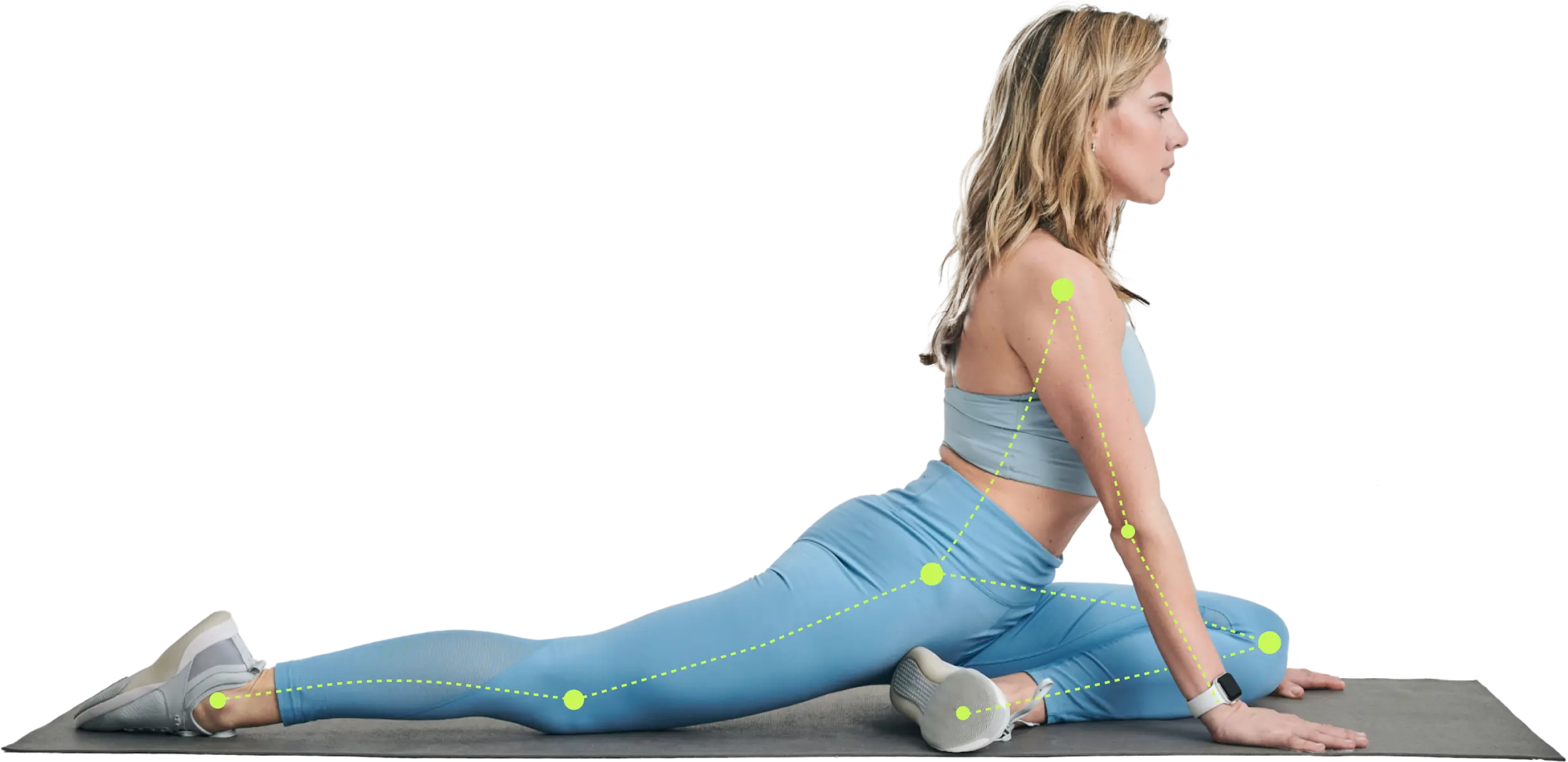
Maybe the coolest feature is the real-time form tracking. Using computer vision, Zing Coach literally watches your movements through your phone’s camera and gives you immediate feedback on your technique.
This screenshot shows the app's real-time computer vision tracking a user's form during an exercise.
This clever feature automatically counts your reps and gives you little cues to fix your posture. It ensures you’re getting the most out of every single rep while keeping your risk of injury low. This is a game-changer on a high-frequency plan, where fatigue can easily cause your form to slip. For lifters who've dealt with injuries, this has resulted in 35% fewer needed modifications to their plans.
Ultimately, these kinds of features turn your workout plan from a static logbook into an intelligent training partner. It’s a smarter way to not only follow a plan but also to actually understand and listen to your body. For a deeper dive into the numbers that count, check out our guide on how to track your fitness progress.
Your 6-Day Split Questions, Answered
Even with the best plan laid out, jumping into a high-frequency routine like a 6-day workout split is bound to bring up some questions. It’s a big commitment, after all. Let's clear the air on some of the most common concerns so you can start with total confidence.
Think of this as turning a potentially complex training style into a simple, straightforward part of your life. Getting these hurdles sorted out now means you're far more likely to stick with it and see the results you’re working for.
Can a Beginner Do a 6-Day Workout Split?
Absolutely, but you have to be smart about it. A beginner can definitely benefit from the powerful habit-building that comes with a six-day routine. Shorter, more frequent sessions often feel way less intimidating and help you avoid the kind of crippling soreness that can kill your motivation right out of the gate.
The real trick is to start with low volume—that means fewer sets per exercise—and make mastering proper form your number one priority, long before you even think about lifting heavy. This is exactly where an app like Zing Coach becomes your best friend. Its AI sets you up with a sensible starting point and progresses you safely, while the form tracking features teach you how to move correctly from day one.
How Long Should a 6-Day Split Workout Be?
One of the biggest perks of a six-day split is that your workouts get shorter and much more focused. You should be aiming for sessions that last somewhere between 45 and 60 minutes.
That’s the sweet spot, giving you just enough time for:
- A solid warm-up to get your body prepped for the work ahead.
- Nailing 4-6 key exercises with proper rest between sets.
- A quick cool-down with some light stretching.
This kind of efficiency is a game-changer for anyone with a packed schedule. It gets rid of the need for those grueling 90-minute marathon sessions, making the whole thing feel way more manageable and sustainable for the long haul.
A huge mistake I see people make is trying to cram way too much into each workout. Remember, the goal here is quality over quantity. Your muscles grow from focused, intense effort, not from endless "junk volume" that just leaves you tired.
What if I Miss a Day on My Split?
First off, don't panic. Life happens. The real goal is consistency over perfection, always. If you miss a scheduled workout, you’ve got two simple, stress-free ways to handle it.
Option 1: Shift Your Schedule Just take the unplanned rest day and pick up right where you left off. So, if you missed your 'Pull' workout on Tuesday, you'd simply do it on Wednesday. The rest of your week just gets pushed back by one day. Easy.
Option 2: Skip and Resume The other way is to just skip the missed workout entirely and jump right back into your regular schedule. If you miss that Tuesday 'Pull' day, you'd just move on to Wednesday's 'Leg' workout as planned and forget about the session you missed.
So, which one is better? It really depends on your energy and your schedule. If you’re feeling rested and have the time, shift the schedule. If you’re feeling worn down or are just short on time, skipping the workout is totally fine. One missed day is not going to derail your progress.
How Do I Know When to Take a Deload Week?
Think of a deload as a planned week of lighter training that lets your body and central nervous system fully recover. For a demanding routine like a 6-day workout split, they are absolutely non-negotiable if you want to make progress long-term.
As a general rule, you should plan to take a deload week every 4-8 weeks of hard, consistent training.
But don't just look at the calendar—your body will give you some pretty clear signals that it’s time for a break. Be on the lookout for:
- That deep-down fatigue that sleep just doesn't seem to fix.
- A noticeable drop in motivation, or even starting to dread your workouts.
- Nagging little aches and pains that just won’t go away.
- Hitting a plateau where you just can't add more weight or reps to your lifts.
During a deload, you still go to the gym, but you just dial back the intensity. You can do this by cutting your working weights by 40-50%, or by keeping the weight the same but cutting your total sets in half. This "active recovery" keeps you in the habit while letting your body heal, ensuring you come back even stronger.
Ready to stop guessing and start progressing? Zing Coach designs your perfect 6-day split based on your goals, experience, and real-time performance. Let our AI build a plan that adapts with you, tracks your form, and ensures you get the results you work for. Start your personalized journey today!
Share this article


Authors