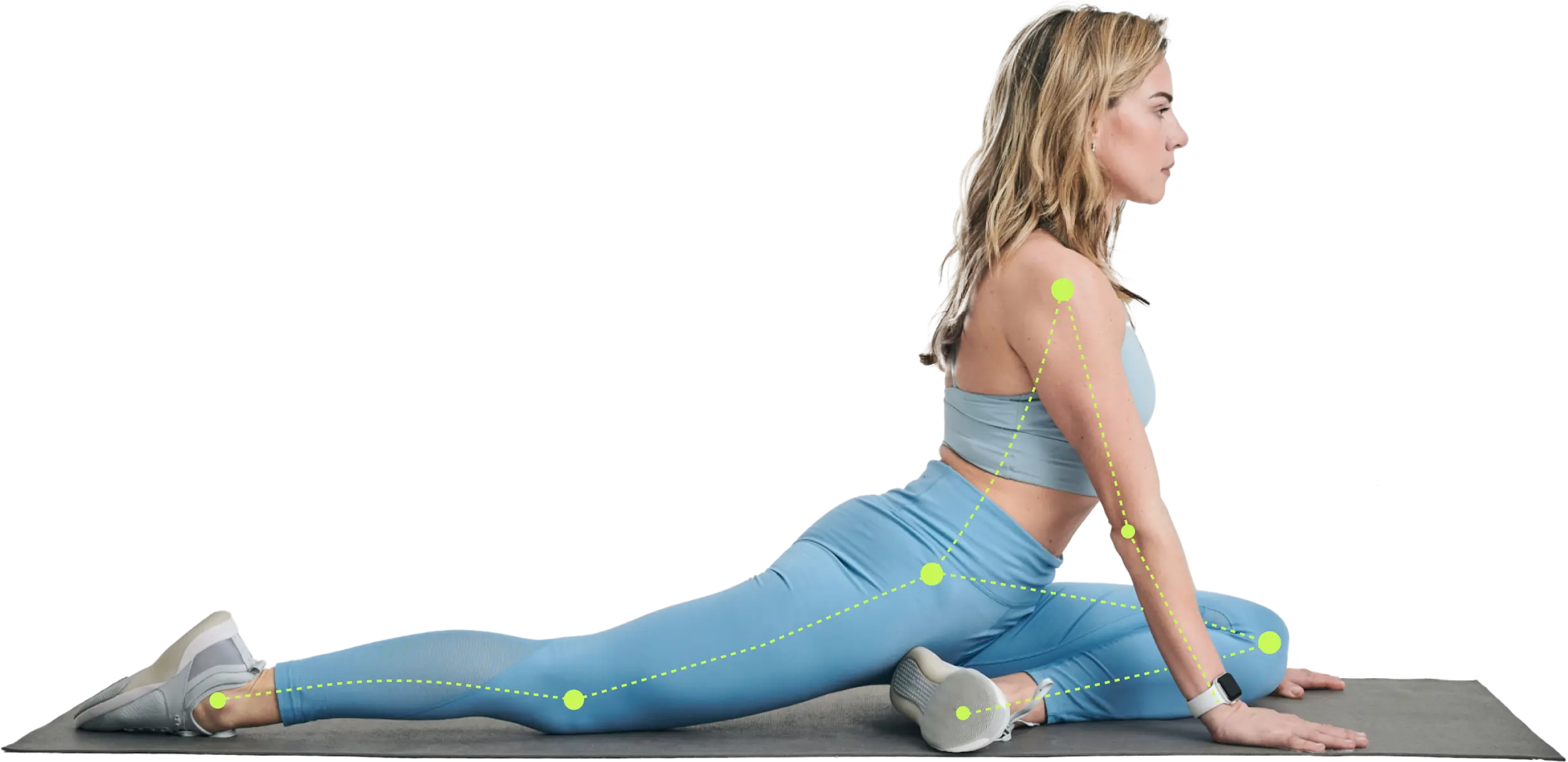
Ready to learn how to lose fat and gain muscle at the same time? Our guide offers a science-backed plan for nutrition, training, and tracking real results.
Most advice about how to lose fat and gain muscle is too rigid. It tells you to pick one lane, either cut or bulk, then stay there until the mirror or the scale says otherwise.
That advice misses two things. First, body recomposition is real. Second, it doesn't work equally well for everyone. The better question isn't “Can you do both at once?” It's “Are you in the right position to do both now, and how will you know if your plan is working?”
A smart plan starts with that decision. If you're a beginner, getting back into training, or carrying more body fat, you often have more room to lose fat and build muscle at the same time. If you're already lean and well-trained, forcing recomposition can turn into months of spinning your wheels. In that case, a focused phase for fat loss or muscle gain usually works better.
The Truth About Body Recomposition
Body recomposition gets oversold because it sounds like the perfect deal. Lose fat. Gain muscle. Stay motivated the whole time.
Sometimes that happens. Sometimes it does not.
The question is whether recomposition fits your current training age, body-fat level, recovery, and performance trend. If it does, it can save you from the usual cycle of hard cuts followed by sloppy bulks. If it does not, a dedicated phase works faster and with less frustration.
One problem with aggressive dieting is that weight loss is not always the same as physique improvement. Research on dieting and body-composition change shows that people can lose lean mass during energy restriction, especially when training and protein intake are poorly managed (overview of body-composition changes during weight loss from the European Society for Clinical Nutrition and Metabolism30312-8/fulltext)). That is why a plan should be judged by strength, measurements, gym performance, and how you look, not scale loss alone.
Practical rule: If your plan is making you lighter but also weaker, flatter, and more drained, you are not getting a good recomposition result.

Who should pursue recomposition
In practice, recomposition works best for a specific group. New lifters. People returning after time off. People carrying enough body fat that they can train hard while eating around maintenance or in a small deficit.
That pattern shows up in both coaching and mainstream summaries like Healthline's body recomposition overview. These groups usually have the most room to improve strength and muscle-building stimulus at the same time they reduce body fat. Already-lean, well-trained lifters usually do not get that same margin for error.
If you want a better starting point than body weight alone, use a guide to body composition analysis. Look at fat mass, lean mass, waist measurements, progress photos, and strength trends together. That gives you a better decision framework than chasing a number on the scale.
When a cut or bulk makes more sense
Recomposition is one option, not the default.
Choose it if your lifts are still climbing, recovery is decent, and you have enough body fat to support a slower rate of change. Choose a cut if health, comfort, or body-fat reduction is the clear priority. Choose a gaining phase if you are already fairly lean, training consistently, and stuck because you have been under-eating for too long.
I tell clients to treat this like a test, not an identity. Run a plan for a few weeks and check the right signals. If waist size is dropping, strength is stable or improving, and photos look better, stay with recomposition. If nothing is changing except fatigue, switch lanes.
Some readers also get distracted by shortcuts. Drinks, supplements, and hacks can support adherence, but they do not replace the decision itself. Pep Tea's weight loss advice can fit into a broader routine, but the bigger win comes from choosing the right phase and adjusting it based on real feedback.
Your Nutrition Blueprint for Recomposition
Nutrition is where recomposition usually succeeds or fails. The goal is not to eat as little as possible. The goal is to create enough of a calorie deficit to lose fat while still giving your body the fuel and protein it needs to train well, recover, and build or keep muscle.
A practical starting point is to estimate maintenance calories, then eat slightly below that level. For many people, that means a small deficit of about 250 to 500 calories per day. The lower end usually works better if performance and muscle retention matter a lot to you. Bigger deficits can speed up scale loss, but they also make workouts feel worse and make muscle gain less likely.
Set calories with room to adapt
Start with what you are already doing. If your body weight has been fairly steady for a couple of weeks, your current intake is a useful estimate of maintenance. From there, reduce calories modestly and track what happens.
Static plans often break down. Two people can start at the same calorie target and get very different results because training volume, step count, sleep, stress, and appetite all change how that target works in real life.
Use a simple decision framework:
- Stay near a small deficit if strength is holding steady, recovery is good, and your waist is slowly coming down.
- Reduce calories a little more if body weight, waist, and photos have been flat for a few weeks and adherence is honest.
- Pull calories back up slightly if training performance drops hard, hunger gets disruptive, or recovery starts dragging.
That last part matters. Recomposition works best when you adjust based on feedback, not when you force the original plan to keep going after it stops working.
Prioritize protein
Protein protects lean mass during fat loss and gives your body the raw material to build muscle. A useful daily target for recomposition is 1.6 to 2.2 grams per kilogram of body weight per day, based on the International Society of Sports Nutrition position stand on protein and exercise.
If that range feels high, simplify it. Get a solid protein serving into each meal first, then fill in carbs and fats around that.
A practical meal setup looks like this:
- Base each meal around protein such as eggs, Greek yogurt, chicken, fish, tofu, lean beef, cottage cheese, or a protein shake.
- Place more carbs around training to support effort, performance, and recovery.
- Include enough dietary fat to keep meals satisfying and easier to stick with.
- Eat fruit and vegetables daily for fiber, fullness, and better food quality overall.
If you like low-calorie habits that support appetite control, hydration, and routine, Pep Tea's weight loss advice is a sensible example of how people use green tea without treating it like a fat-loss shortcut.
If you want help turning protein and calorie targets into actual numbers on your plate, this guide on how to count macros for beginners gives a practical starting point.
Sample daily meal plan
Below is one way a high-protein day can look in practice.
| Meal | Food Item | Notes |
|---|---|---|
| Breakfast | Greek yogurt, oats, berries, and chia seeds | High-protein start with carbs that support training energy |
| Lunch | Chicken breast, rice, mixed vegetables, and olive oil | Easy to batch prep and easy to adjust up or down |
| Snack | Protein shake and a banana | Works well before or after training, or on busy days |
| Dinner | Salmon, potatoes, and broccoli | Balanced whole-food meal with protein, carbs, and satiety |
| Evening snack | Cottage cheese with fruit | Simple way to close any remaining protein gap |
Do not chase perfect eating. Hit your calories often enough, get your protein in consistently, and use your weekly data to adjust. That is what makes a nutrition plan work in practice.
The Right Way to Train for Muscle Gain
Fat loss comes from nutrition. Muscle gain during recomposition comes from training that gives your body a reason to keep and build lean tissue.
That means resistance training has to be more than random effort. You need a plan that asks your muscles to do slightly more over time.

Progressive overload is the engine
Progressive overload sounds technical, but it's simple. You improve the demand on the muscle over time by lifting a bit more weight, doing more reps with the same weight, improving control, or handling the same work with better form.
If you're not tracking that, you're guessing. A guide to progressive overload training helps if you've never used that method deliberately before.
Here's what that looks like in real sessions:
- Week to week load increases on big lifts when form stays solid.
- Rep progression when the weight stays the same.
- Cleaner technique so the target muscles do more of the work.
- More total work across the week once recovery supports it.
A lot of people try to out-cardio a weak lifting plan. That rarely works for recomposition. Cardio can help with calorie expenditure and heart health, but it doesn't replace the muscle-building signal from resistance work.
Two training templates that work
For a beginner, a full-body plan is hard to beat:
- Day 1
Squat pattern, horizontal press, row, hinge, plank - Day 2
Split squat or leg press, overhead press, pulldown, hip hinge variation, loaded carry - Day 3
Goblet squat, incline press or push-up, seated row, Romanian deadlift, core work
For a returner, an upper-lower split usually feels better because you can handle more total work without cramming everything into one session:
- Day 1 Upper
Bench press, row, shoulder press, pulldown, curls, triceps - Day 2 Lower
Squat, Romanian deadlift, leg curl, calf work, abs - Day 3 Upper
Incline press, chest-supported row, lateral raises, pull variation, arms - Day 4 Lower
Deadlift or hinge variation, split squat, leg press, hamstring work, core
Train hard enough to create a reason for change, but not so hard that you can't recover and repeat it next week.
If posture, bracing, or spinal position tend to limit your big lifts, this guide on understanding core strength and posture gives a useful foundation for safer, stronger training.
Cardio belongs in the plan too. Keep it supportive. Walk more. Add a couple of moderate sessions if you enjoy them. Don't pile on so much extra work that your legs are always tired and your lifting performance tanks.
This short demo can help if you want to see training mechanics in action:
Tracking Progress Beyond the Scale
The scale is a noisy tool. It reflects body fat, yes, but also water, food volume, sodium intake, stress, and normal day-to-day fluctuation.
That's why people quit good plans too early. They expect the scale to tell the whole story, then panic when it doesn't.
Use a dashboard, not a single number
You'll make better decisions if you track several signals at once:
- Body weight trends rather than single weigh-ins
- Waist and hip measurements to catch fat-loss progress the scale can hide
- Progress photos in consistent lighting and clothing
- Training log performance such as reps, loads, and exercise quality
- How you feel in recovery including soreness, energy, and motivation
A practical guide to how to measure muscle gain can help you organize those signals into something useful.

If you like using app data, tools can be helpful. Zing Coach is one example. It combines training logs, body-composition tracking, Apple Health data, and recovery feedback so you can adjust based on trends instead of reacting emotionally to one weigh-in.
How to interpret stalls correctly
Most stalls aren't real stalls. They're interpretation problems.
A practical review of fat loss and muscle gain guidance from Anytime Fitness emphasizes modest deficits, regular progress tracking, and avoiding rapid weight loss, and it also notes a useful contrarian point: fasted cardio may increase fat burned during the session, but it does not improve total 24-hour fat loss when calories and protein are matched. That matters because people often fixate on workout timing while ignoring the bigger levers.
Use this checklist before changing your plan:
- Check compliance first. Were calories, protein, and workouts consistent?
- Look at performance. If strength is climbing and waist measurements are moving, the plan may be working even if body weight is stubborn.
- Check recovery signals. Poor sleep, rising fatigue, and irritability can make a deficit look ineffective when recovery is the true issue.
- Change one thing at a time. Don't slash food and add cardio in the same week.
A good plan should be adjusted with evidence, not frustration.
Common Mistakes and Smart Personalization
Recomposition usually breaks down for a simple reason. The plan asks for more precision, recovery, or consistency than the person can sustain.
A common mistake is pushing the deficit too hard. Faster fat loss sounds appealing, but if calories drop so low that training quality falls, muscle gain gets harder and adherence usually gets worse. As noted earlier, aggressive dieting also raises the risk of giving up lean mass along the way. In practice, the better move is often slower progress that you can repeat for months.
Mistakes That Ruin Progress
Some errors are obvious. The expensive ones look reasonable at first.
Program hopping
Switching workouts every week keeps motivation high for a few days, but it wrecks your ability to judge what is working. Keep your main lifts and progression method stable long enough to see trends.Ignoring recovery
Hard sessions only help if you recover from them. If performance is dropping, sleep is poor, and soreness never really clears, read this guide on how to know if you're overtraining before you add more work.Treating one off-plan meal like failure
One big dinner changes very little. Damage comes from turning one imperfect choice into three bad days.Adding cardio to compensate for weak lifting
Cardio can support a fat-loss phase, but it does not replace progressive resistance training. If the lifting stimulus is poor, more calorie burn will not solve the muscle side of the equation.
Personalization matters here, but not in the way people expect. You do not need a highly customized, complicated plan on day one. You need a plan that fits your schedule, equipment, stress level, and recovery capacity, then enough data to adjust it without guessing.
If you are busy, build around compound patterns and keep the session focused. Squat or leg press. Press. Row. Hinge. Carry. That gives you more training effect per minute than chasing novelty.
If you train at home, lighter equipment can still work. Dumbbells, bands, a bench, and bodyweight variations are enough if sets are hard, technique is consistent, and overload is planned through reps, tempo, pauses, or range of motion.
If a movement irritates a joint, replace the pattern, not the whole session. Swap a back squat for a goblet squat or split squat. Swap flat barbell pressing for incline pressing or push-ups. Keep the muscle target and effort level, then use the variation you can train pain-free.
This is also where app data becomes useful. A tool like Zing Coach can help you compare training performance, body metrics, and recovery trends in one place, which makes the cut versus recomp decision much clearer. If lifts are stalling, sleep is poor, and hunger is high, forcing recomposition may be the wrong call. If strength is steady and measurements are improving, you may not need a dedicated cut yet.
Use this filter before you commit to any plan:
- Can I recover from it with my current life stress?
- Can I repeat it for at least the next few weeks?
- Can I measure progress without second-guessing every day?
If the answer is no, the plan is too aggressive, too messy, or built for someone else.
Putting It All Together for Lasting Results
Lasting results usually come from a calmer approach than people expect. The goal is not to force fat loss and muscle gain at all costs. The goal is to choose the phase that matches your body, your recovery, and your current life, then adjust it with real feedback instead of hope.
For some people, recomposition is the right call. For others, it is slower than a dedicated cut or gaining phase needs to be. That is the trade-off. If you have body fat to lose, your training is progressing, and recovery is decent, recomposition often makes sense. If performance is dropping, hunger is high, recovery is poor, or progress has stalled for weeks, a clearer phase may work better.
A good plan should survive normal life.
Keep your decision process grounded in a few practical checks:
- Is training performance holding steady or improving over time?
- Can I recover well enough to repeat quality sessions each week?
- Are waist measurements, photos, gym performance, or other body-composition markers trending in the right direction?
- Does this approach fit my schedule and stress level for the next month, not just the next few days?
If those answers are mostly yes, stay the course and let the plan work. If the answers are mostly no, change the setup. Reduce the deficit, increase calories toward maintenance, simplify training, or choose a dedicated cut or gaining phase on purpose instead of drifting into one.
If you want a clearer structure, a 12-week fitness plan for training, nutrition, and recovery can help you organize one full block and review the results at the end of it.
You do not need a perfect plan. You need one you can repeat, measure, and adjust. That is how people lose fat, build muscle, and keep the results long enough for them to matter.
If you want help turning this into a personalized system, Zing Coach can build a training and nutrition plan around your goal, equipment, schedule, and recovery data, so you can make smarter adjustments while you lose fat and build muscle.
Share this article


Authors