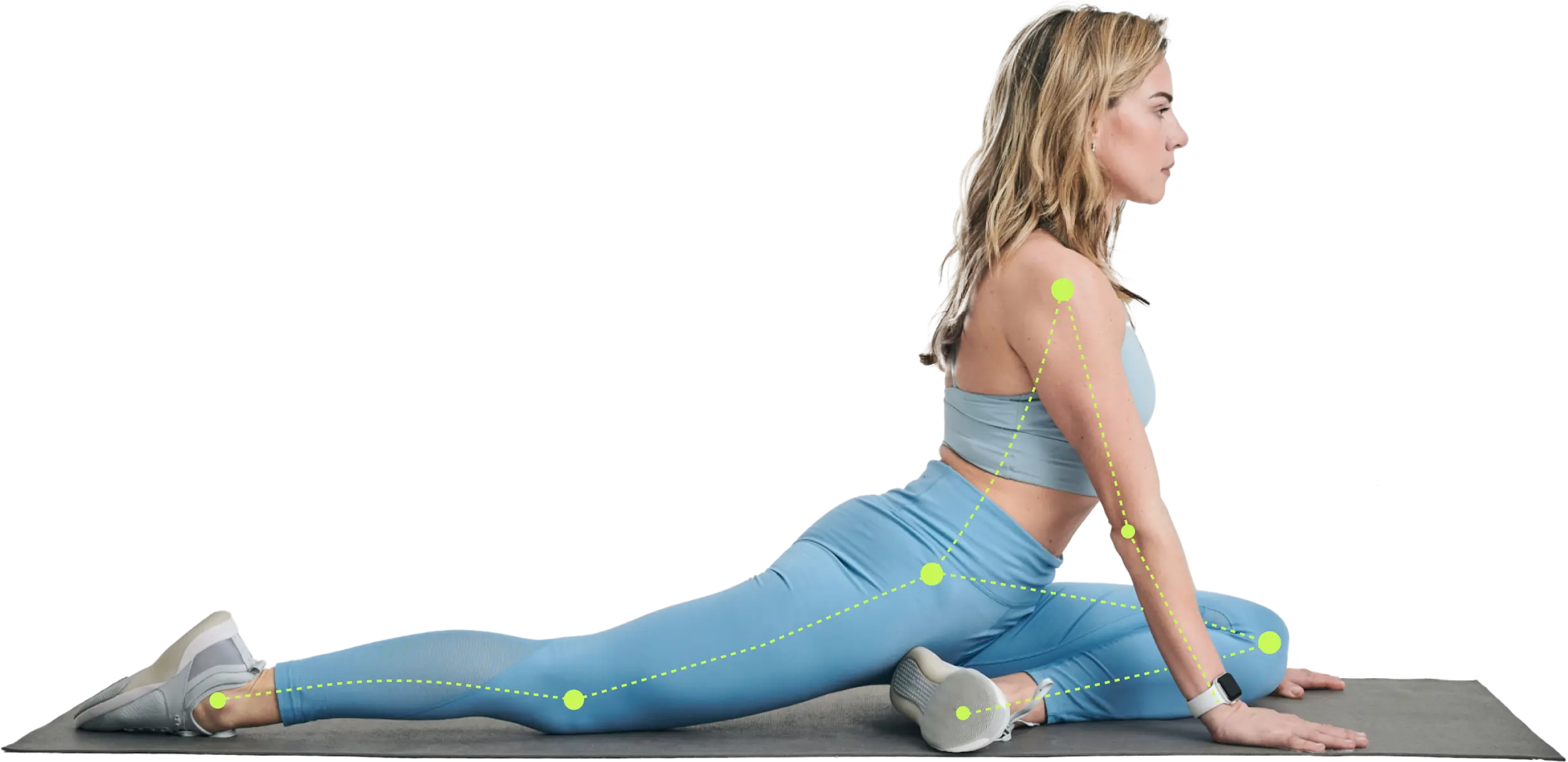
Transform your body with our comprehensive 90 day exercise plan. Get actionable workouts, nutrition tips, and expert advice for lasting, real-world results.

So, you're thinking about a 90 day exercise plan. Good choice. It’s the sweet spot for seeing real, lasting changes—long enough to build serious momentum and new habits, but short enough to keep you fired up and focused on the finish line.
Forget those 21-day "quick fixes" that almost never stick. Giving yourself a full 12 weeks is about more than just working out; it’s a commitment to a process. It’s the perfect amount of time to move past the initial soreness and awkwardness and start seeing meaningful fat loss, muscle definition, and a huge boost in confidence.
Why 90 Days Works
Think of it this way: a 90-day plan gives you a clear runway for change. Instead of a vague goal like "get in shape," you have a finish line in sight. This mental shift from just "exercising" to "training with a purpose" is huge.
Each month has a different feel, which helps you sidestep the boredom that kills so many fitness journeys. You get to build a solid foundation, see your body start to transform, and then really push your limits.
The Phased Approach to Real Results
Your body is incredibly smart. It adapts in stages, and a good plan respects that.
The first month is all about wiring things up. This is where neuromuscular adaptation happens—your brain gets much better at talking to your muscles. You'll feel stronger and more coordinated, even before you see big physical changes.
During the second month, as you start upping the intensity, the visible results kick in. This is when you’ll notice more lean muscle and less body fat. By the final month, you're hitting your stride, consolidating all that hard work and pushing your performance to a new level.
This progression isn’t just about getting stronger; it’s about building habits that last.

As you can see, you start with a strategy, move into focused execution, and finish by achieving the goals you set out for.
The secret is to see this as a phased journey, not a three-month-long sprint. Burnout is the number one reason people quit, which is why a smart plan builds you up gradually instead of breaking you down.
What to Realistically Expect from Your 90 Day Plan
Everyone's starting point is different, so your results will be unique to you. However, with consistent effort, you can expect to hit some key milestones along the way.
| Milestone (Weeks) | Beginner Focus and Potential Results | Intermediate Focus and Potential Results |
|---|---|---|
| Weeks 1-4 | Building a routine, learning form. Expect improved energy, better sleep, and initial strength gains (neuromuscular adaptation). | Re-establishing consistency, breaking plateaus. Focus on increasing intensity. Expect muscle endurance to improve and noticeable strength gains. |
| Weeks 5-8 | Visible changes begin. Noticeable fat loss and muscle toning. Clothes may start to fit differently. Confidence grows. | Pushing performance. Significant strength increases and visible changes in body composition (more muscle, less fat). |
| Weeks 9-12 | Solidifying habits and maximizing results. Major improvements in strength, stamina, and body composition. New habits feel automatic. | Peak performance and new personal records. Advanced techniques can be introduced. You'll have a clear understanding of what your body can do. |
These are just general guidelines, of course. The real magic happens when you show up consistently and put in the work.
Making this journey feel less daunting is where modern tools really shine. For instance, the Zing Coach app can take your starting fitness level and build a personalized plan, automatically adjusting it as you get stronger.
Ultimately, knowing how to track fitness progress is key to staying motivated and making sure your effort is paying off. You’ll also need to know how to balance cardio and strength training to get the best of both worlds.
By the end of these 90 days, you won't just look and feel different. You'll have the tools, habits, and confidence to keep it going for life.
Weeks 1-4 Building Your Foundation
The first month of any 90 day exercise plan isn't about going all-out. It’s about laying the groundwork. Think of this initial phase as building your launchpad—a solid foundation where you master the basic movements and, most importantly, create a routine you can actually stick with. So many people make the mistake of doing too much, too soon, and that's the fastest way to get injured or just burn out completely.

Right now, your focus should be on full-body workouts and consistent cardio. The goal here is simple: teach your body how to move correctly and build the baseline endurance you’ll need for the more intense work ahead. Performance isn't the main event; consistency and proper technique are.
During this time, something cool starts happening. You'll feel your brain and muscles start to connect in new ways. This is called neuromuscular adaptation, and it’s your nervous system getting much more efficient at telling the right muscles to fire at the right time. You'll actually feel stronger and more coordinated well before you see big changes in the mirror.
Your Weekly Foundational Schedule
For the first four weeks, balance is everything. We want to mix strength and cardio without completely wrecking your system. This structure is designed to give you plenty of recovery time, which is when your muscles actually repair and get stronger.
Here’s a good starting point for your week:
- Strength Training: 2-3 days per week, focusing on full-body workouts.
- Cardiovascular Exercise: 2-3 days per week at a moderate intensity.
- Active Recovery & Rest: 2 days per week. This could be a light walk, some stretching, or a full-on rest day on the couch.
This schedule is a template, not a prison sentence. The most important thing you can do is listen to your body. If you're crazy sore, take an extra rest day. Consistency over perfection is the name of the game here.
For beginners, a realistic 90-day journey can bring some really noticeable changes in body composition. A structure like this—combining a couple of full-body strength days with 150 minutes of moderate cardio each week—puts your body in the best position to adapt while keeping the risk of injury low. Back this up with 7-9 hours of sleep and plenty of water, and you're golden.
Core Foundational Exercises
You don't need a hundred different exercises to build a strong base. A handful of classic compound movements that hit multiple muscle groups at once will give you the most bang for your buck. These are the absolute pillars of your first month.
1. Squats (Bodyweight or Goblet Squats)
- Why: Squatting is a fundamental human movement. It strengthens your entire lower body—quads, hamstrings, glutes—and your core.
- Tip: Focus on keeping your chest up and your back straight. It helps to imagine you're sitting back into a chair that's slightly behind you.
2. Push-Ups (or Knee/Incline Push-Ups)
- Why: This is your go-to for building upper-body pushing strength. It nails your chest, shoulders, and triceps all at once.
- Tip: If a standard push-up is too tough right now, no problem. Start with your hands on a raised surface like a bench or even a countertop. The higher the surface, the easier it will be.
3. Rows (Dumbbell or Resistance Band)
- Why: Rows are non-negotiable for building a strong back and fixing your posture. They create balance for all the pushing work you're doing.
- Tip: At the top of the movement, really think about squeezing your shoulder blades together. That's what fully engages all those important back muscles.
Getting the form right on these is essential. If you’re working out alone and feel unsure, using an app with computer vision, like the Zing Coach, can be a game-changer. It gives you real-time feedback and counts your reps for you. You can also get more detailed guidance by checking out a complete beginner strength training program.
By the time you hit the end of week four, you won't just be physically stronger. You'll have built the confidence and, more importantly, the habit of consistency needed to crush the next phase of your 90 day exercise plan.
Weeks 5-8: Ramping Up the Intensity
Alright, you've put in a solid month of work. You’re feeling stronger, more energized, and you’ve built a great foundation. Now it’s time to really turn up the heat.
This middle phase of your 90-day exercise plan is where we push past the basics and start demanding more from your body. We’re going to introduce new stressors that force your muscles and cardiovascular system to adapt, grow, and get significantly stronger. Honestly, this is where the magic really starts to happen.

The plan is to shift from the full-body workouts you’ve been doing to a more focused strategy and begin applying systematic, gradual increases in difficulty. This is what separates a plan that gets you "good" results from one that delivers incredible ones.
Shifting to an Upper and Lower Body Split
So far, we've had your whole body working together in each session. That's been great for building your base, but now we'll split things up to give individual muscle groups the specific attention they need to grow. An upper/lower body split is one of the most effective ways to do this.
You’ll have days dedicated to your upper body and separate days for your lower body. This allows you to increase the total volume and intensity for each muscle group during a workout.
Another huge benefit? Better recovery. While your legs are getting a break, you can hit your upper body hard, and vice-versa. This setup means you can train more frequently without overdoing it.
Your weekly schedule is about to look a bit more specialized:
- Day 1: Upper Body Strength
- Day 2: Lower Body Strength
- Day 3: Active Recovery or Cardio
- Day 4: Upper Body Strength
- Day 5: Lower Body Strength
- Day 6: Cardio
- Day 7: Complete Rest
This four-day-a-week strength schedule is a proven blueprint for serious body recomposition. When a 90-day exercise plan dials up the volume like this in the middle phase, the outcomes can be staggering. You can even see how experts structure these phases for dramatic results on YouTube.
The Art of Progressive Overload
If you want to keep seeing progress, you can't keep doing the same thing. Your body is smart—it adapts. To keep it adapting in the direction you want, you have to consistently give it a reason to change. This principle is called progressive overload.
Put simply, it means you have to gradually increase the demands you place on your muscles. Lift the same weight for the same reps week after week, and you’ll hit a wall.
Here are a few simple ways to apply progressive overload:
- Increase the Weight: This is the most obvious one. Add a little more weight to the bar or grab the next set of dumbbells up.
- Increase the Reps: Try to squeeze out one or two more reps with the same weight you used last week.
- Increase the Sets: Add an extra set to one of your main exercises.
- Decrease Rest Time: Cut your rest periods between sets by 15-30 seconds. This makes the workout denser and more challenging.
The trick is to focus on small, manageable improvements every week. You can learn more about how to apply this concept safely in our guide to progressive overload training.
Expert Tip: Don't try to increase everything at once. That's a recipe for burnout or injury. Pick one variable—like weight—and push that for a couple of weeks. Then, you might shift your focus to adding reps. This controlled approach is the safest and most effective path to long-term gains.
Sample Workouts for the Intensification Phase
Here’s a taste of what your new workouts could look like. For every exercise, pick a weight where the last two reps are tough but you can still finish the set with solid form. That's your sweet spot.
Sample Upper Body Workout (Gym)
- Bench Press: 3 sets of 6-8 reps
- Bent-Over Barbell Rows: 3 sets of 6-8 reps
- Overhead Press: 3 sets of 8-10 reps
- Lat Pulldowns: 3 sets of 10-12 reps
- Bicep Curls & Tricep Pushdowns (Superset): 3 sets of 12 reps each
Sample Lower Body Workout (Home with Dumbbells)
- Dumbbell Goblet Squats: 4 sets of 8-10 reps
- Romanian Deadlifts: 3 sets of 10-12 reps
- Bulgarian Split Squats: 3 sets of 10 reps per leg
- Glute Bridges: 3 sets of 15 reps
- Calf Raises: 3 sets of 20 reps
Right around week six is often when people hit their first real plateau. The "newbie gains" start to slow down, and it gets mentally tougher. Don't panic. This is a completely normal part of the process. It just means your body has caught up and it's time for a smarter challenge.
This is exactly where an adaptive tool like the Zing Coach app becomes invaluable. It analyzes your performance and fatigue, then automatically tweaks your next workout—adjusting the intensity or volume to help you smash through that plateau without guessing. It removes the trial-and-error, ensuring you’re always challenged just enough to keep moving forward in your 90-day exercise plan.
Weeks 9-12 Maximizing Results and Hitting Your Peak
You’re in the home stretch. The final month of your 90 day exercise plan is here, and this is where all the sweat and consistency from the last eight weeks really pays off. You’ve laid the groundwork, and now it’s time to sharpen the tools, crank up the intensity, and hit your peak condition. We’re not reinventing the wheel here; we’re just putting racing slicks on it.

The game plan now shifts to maximum intensity and smart specialization. Your body is primed for a new challenge—one that will push you toward your best-ever shape and deliver the most noticeable changes of the entire program. Think of these last four weeks as the final, exhilarating push to the summit.
Adopting the Push Pull Legs Split
To really dial in on muscle stimulus and fat loss, we're shifting from the upper/lower split to a Push, Pull, Legs (PPL) routine. This training structure is a staple for experienced lifters for one simple reason: it works. It’s incredibly efficient and lets you hammer muscle groups with high intensity while giving them plenty of time to recover.
- Push Day: All about the muscles you use for pushing movements—chest, shoulders, and triceps.
- Pull Day: Targets the muscles used for pulling—your entire back and biceps.
- Leg Day: A session dedicated entirely to your quads, hamstrings, glutes, and calves.
This split allows you to hit each muscle group with more volume and focus than before. Because the muscle groups don't really overlap between sessions (your legs get a break while you train your upper body), you can walk into each workout fresh and ready to go all out.
Introducing Advanced Intensity Techniques
Your form is solid and your strength base is built. It’s time to introduce some advanced techniques to really shock the system. These methods are designed to push your muscles past their usual breaking point, creating a powerful new stimulus for growth and definition. Use them strategically—maybe on the last set of a key exercise to finish strong.
Supersets A superset is simple: perform two different exercises back-to-back with almost zero rest in between.
- Antagonist Superset: Pair up exercises for opposing muscle groups, like bicep curls (a pull) and tricep pushdowns (a push). This is a huge time-saver.
- Agonist Superset: Pair two exercises that hit the same muscle group, like a bench press followed immediately by push-ups. This is a guaranteed way to get an insane muscle pump.
Dropsets This one’s a classic for a reason. You perform a set until you can’t squeeze out another rep, then immediately drop the weight and keep going. For instance, you could do dumbbell shoulder presses with 30s until failure, then instantly grab the 20s and pump out more reps. It’s a fantastic way to completely exhaust every last muscle fiber.
Key Takeaway: The goal of these techniques isn't just to make you tired; it's to increase the metabolic stress on the muscle. This type of stress is a key driver of hypertrophy (muscle growth) and can significantly ramp up calorie burn.
Revving Up Cardio with HIIT
Your cardio is getting a promotion, too. Steady-state has served its purpose, but for this final phase, we’re switching to High-Intensity Interval Training (HIIT). HIIT is all about short, explosive bursts of all-out effort followed by brief recovery periods.
This method is brutally effective for cranking up your metabolic rate. Thanks to the "afterburn effect," or EPOC (Excess Post-exercise Oxygen Consumption), your body keeps burning calories at a higher rate for hours after you've left the gym.
A simple HIIT protocol on a treadmill or bike could look like this:
- Warm-up for 5 minutes.
- Sprint for 30 seconds at your maximum effort.
- Recover with light pedaling or walking for 60 seconds.
- Repeat this cycle 8-10 times for a total of 15-20 minutes.
- Cool down for 5 minutes.
The Critical Role of Recovery
This phase is, without a doubt, the most demanding of your 90 day exercise plan. That makes recovery more critical than ever. Pushing your limits is how you progress, but real growth only happens when you give your body the time and fuel to repair and rebuild. Skipping recovery is the fastest way to hit a wall with overtraining, injury, and burnout.
You have to get serious about sleep, nutrition, and active recovery. To truly get the most out of your efforts, you need to increase deep sleep for optimal recovery. For even more strategies on bouncing back stronger, check out our guide on essential workout recovery tips. Your success in this final month depends just as much on what you do outside the gym as what you do inside it.
Fueling Your Transformation with Smart Nutrition
All the hard work you’re putting into your workouts is fantastic, but let’s be real: you can’t out-train a bad diet. What you do in the kitchen is just as critical for seeing real, lasting changes from your 90-day exercise plan.
Think of your body as a high-performance engine. Your workouts are you putting the pedal to the metal, but your nutrition is the premium fuel that makes it all run smoothly.
Forget about rigid, miserable diets. They rarely work long-term and often set you up for failure. Instead, let's focus on simple, effective principles that will make your food choices amplify your results, not complicate your life. This is about understanding the "why" behind your food so you can support your goals, whether that’s shedding fat or building lean muscle.
Calories: Your Foundational Fuel
Before we get into specific foods, we have to talk about energy. Calories are simply units of energy, and to change your body, you have to get your energy balance right.
- For Fat Loss: You need a modest calorie deficit. This just means you’re consuming slightly fewer calories than your body burns, which encourages it to tap into stored fat for fuel.
- For Muscle Gain: You’ll want a slight calorie surplus. This gives your body the extra resources it needs to repair and build new muscle tissue after your training sessions.
A good starting point is a daily deficit or surplus of around 300–500 calories. It might be tempting to make drastic cuts for faster results, but that approach often backfires, leading to muscle loss and a stalled metabolism. Slow and steady really does win this race. The Zing Coach app can take the guesswork out of this by calculating your specific daily targets based on your goals and activity.
Understanding Your Macronutrients
While calories set the overall stage, macronutrients—protein, carbs, and fats—are the star players. Getting the right balance of these "macros" is what will make your 90-day exercise plan truly click.
Protein: The Builder
Protein is absolutely non-negotiable. It’s made up of amino acids, which are the literal building blocks your body uses to repair the microscopic muscle tears from your workouts. Without enough protein, your muscles simply can't recover and grow stronger.
A solid target is to aim for around 0.7–1.0 grams of protein per pound of your target body weight. This ensures your muscles have a steady supply of what they need to rebuild.
Carbohydrates: The Fuel Source
Carbs have gotten a bad rap over the years, but they are your body's preferred and most efficient energy source. Complex carbs like oats, brown rice, and sweet potatoes provide the sustained fuel you need to power through tough workouts. The key is to be smart about timing and type, focusing on consuming them around your training sessions.
Fats: The Regulator
Healthy fats are essential for your overall health. They play a huge role in hormone production (including the ones involved in muscle growth) and help you absorb crucial nutrients. Don’t fear fats; just choose the right ones.
Here are some excellent sources to include:
- Avocados
- Nuts and seeds (almonds, chia, flax)
- Olive oil
- Fatty fish (like salmon)
Getting the hang of tracking your macros can feel a bit overwhelming at first, but I promise it's a skill that pays off massively. For a step-by-step walkthrough, check out our simple guide on how to count macros for beginners. It breaks the whole process down into easy, manageable steps.
Beyond 90 Days: How to Maintain Your Progress for Life
First off, a huge congratulations are in order. You just crushed a 90-day plan. But the real win isn't just ticking off the last workout—it's figuring out how to make this a permanent part of your life, not just a temporary project.
That intense, structured approach was designed to get you results, fast. It’s not meant to be your forever plan. Now, we shift gears from a rigid program to a flexible, sustainable routine that actually fits into your world long-term.
Set New, Exciting Goals
To keep the fire lit, you need a new target on the horizon. Your next goal doesn't have to be another massive transformation. Think about shifting your focus to what your body can do. This keeps things fresh and a lot more fun.
- Performance Goals: Maybe you want to train for your first 5k race, finally nail 10 unassisted pull-ups, or hit a new personal record on your squat.
- Skill Goals: You could learn a totally new activity like rock climbing, join a yoga studio to seriously improve your flexibility, or master a complex kettlebell flow you saw online.
This shift from purely aesthetic goals to performance-based ones is a massive mental unlock. It reframes exercise as a way to celebrate what your body can achieve, not just a tool to change how it looks.
After spending 90 days in a likely calorie deficit, it’s also time to think about food. You can't just jump back to your old eating habits. This is where "reverse dieting" comes in—a method of slowly and strategically increasing your calorie intake.
This gradual increase helps fire up your metabolism again without the shock that leads to rapid fat regain. It's the bridge that transitions you from a cutting phase to a sustainable, lifelong maintenance phase.
Your 90-Day Plan: Answering Your Top Questions
Starting a 90-day exercise plan is a huge step, and it's totally normal for a few questions—and maybe a few doubts—to creep in. Before you even lift a single dumbbell, let's clear the air and tackle some of the most common things we get asked.
A huge worry I hear all the time is, "What if I miss a workout?" Life happens. Don't panic. Missing one session isn't going to undo all your hard work. Our goal here is consistency over perfection.
Just forget about trying to "double up" on your next session. That's a fast track to burnout or, worse, an injury. Simply pick up where you left off with your next scheduled workout. If you're using an adaptive app, it will do the heavy lifting for you and just adjust the plan to keep you on track.
Can I Do This Plan at Home?
Absolutely. We designed this 90-day exercise plan to be flexible. You don't need a fancy gym membership to see amazing results. All the foundational phases can be done right from your living room.
You'll find sample workouts for both gym-goers and at-home trainees who might just have a set of dumbbells and some resistance bands. This is where AI-powered apps really come in handy, building routines around the gear you actually own and providing real-time form checks.
The best workout plan is the one you actually stick with. Whether that's in a packed gym or your own space, showing up is what gets you results.
How Much Weight Should I Be Lifting?
This is the million-dollar question. You need a weight that feels challenging, but not so heavy that your form falls apart. A good rule of thumb is that the last couple of reps in a set should feel genuinely tough to complete.
We call this "training near failure." It’s always smarter to start lighter, nail your form, and then increase the weight. Lifting too heavy and getting an injury will set you back way more than taking an extra week to perfect your technique. You'll naturally get stronger and add more weight over time.
Finally, a lot of beginners ask if this plan is too intense for them. Not at all—that’s exactly what the phases are for.
- Weeks 1-4 are all about building a solid, safe foundation. You have to learn to walk before you can run.
- Modifications are your best friend. Doing push-ups on your knees or squatting to a chair are fantastic ways to build strength without risking injury.
- Listen to your body. That's the golden rule. Muscle soreness is one thing, but sharp pain is a signal to stop.
Taking an initial fitness test, like the one in the Zing Coach app, is something I always recommend. It gives you a real, honest starting point, making sure your 90-day exercise plan is challenging enough to change you, but not so hard that you quit.
Ready to stop guessing and start transforming? Let the AI-powered Zing Coach build a personalized 90-day plan that adapts to your body, goals, and equipment. Start your journey today at Zing.coach.
Share this article


Authors