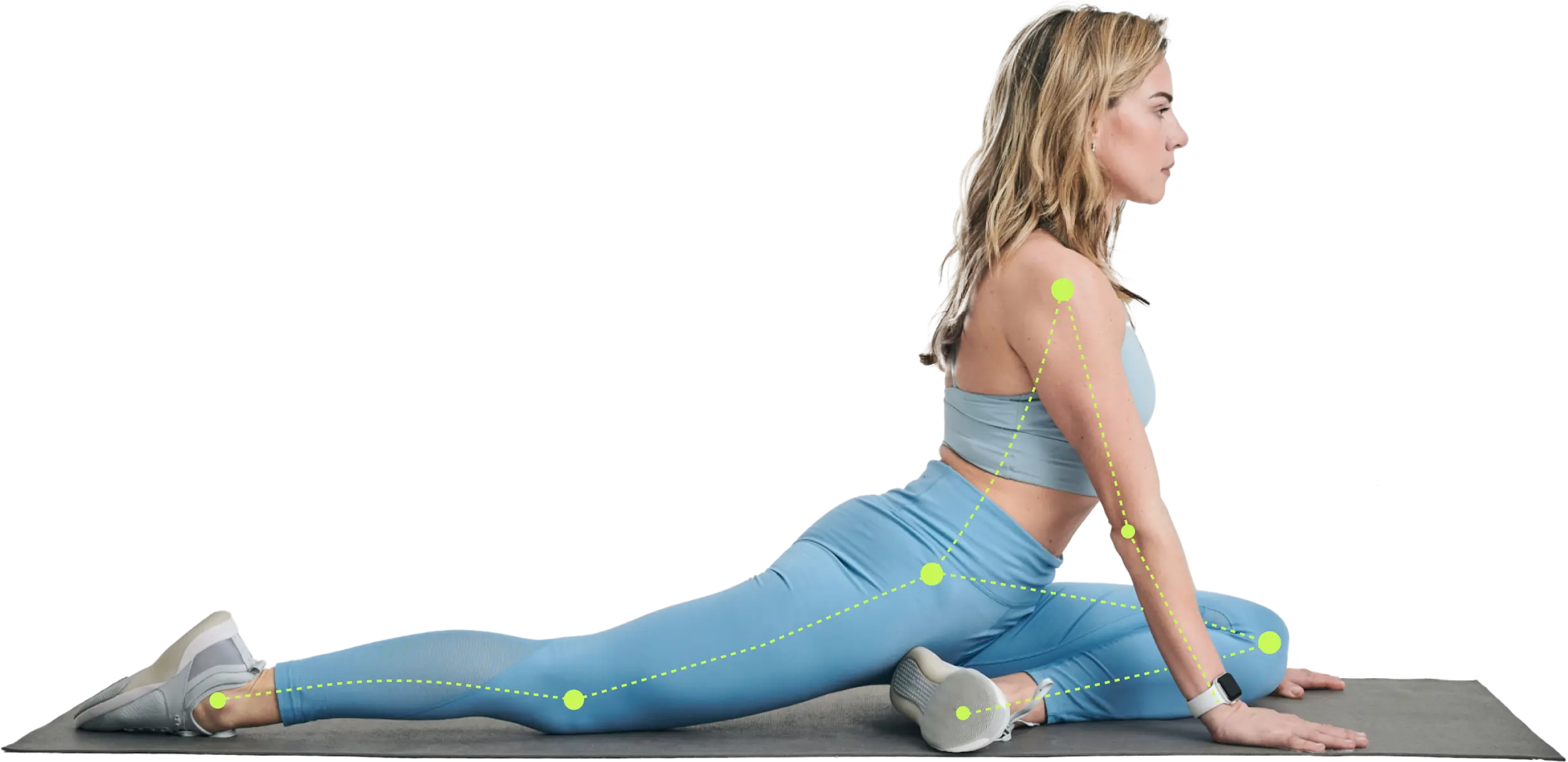
Discover how to create a truly personalized AI workout plan. This guide explains how AI adapts to your goals and progress for smarter, more effective results.

So, you’ve probably heard about AI workout plans, but what are they, really? It’s not just some fancy new term for a fitness app. A true AI workout plan is a fitness program built and run by artificial intelligence, making it completely unique to you. Forget those static PDFs or one-size-fits-all app routines. This is like having a dynamic fitness partner that actually pays attention.
How An AI Workout Plan Changes The Game

Imagine a plan that seems to know you—your good days, your bad days, and your long-term goals. That’s the core idea behind modern AI-driven fitness. It’s not just about spitting out a list of exercises; it’s about creating a living, breathing plan that evolves right along with you.
Think of it as having a personal trainer's intuition backed by a data scientist's obsessive attention to detail. Platforms like Zing Coach use your initial quiz answers—covering your goals, experience, and what equipment you have—to build a starting point that’s actually for you. This is what makes a program feel both doable and challenging from the get-go.
From Static To Dynamic Training
The biggest difference here is adaptability. A traditional workout template you download is a dead-end document. It has no idea you had a terrible night's sleep, that a meeting ran late, or that you’re much stronger than you were last week.
A true AI workout plan is built to react. It adjusts your sets, reps, and even entire workouts based on your feedback and performance, making every single session count.
This kind of smart adjustment is why the technology is taking off. The market for AI-based fitness apps is exploding, and it's projected to hit USD 4.22 billion by 2032. People are tired of generic plans that don't fit their lives. In fact, studies show that AI can increase user retention by up to 30% compared to standard apps because it actually delivers on the promise of personalization.
To give you a clearer picture, let's break down how a dynamic AI plan stacks up against a classic, static one.
Traditional Plan vs AI-Powered Plan
| Feature | Traditional Plan | AI Workout Plan |
|---|---|---|
| Personalization | Generic; based on broad categories like "beginner" or "advanced." | Hyper-personalized; based on specific goals, fitness level, and available equipment. |
| Adaptability | Static; the plan doesn't change unless you manually change it. | Dynamic; adjusts sets, reps, and exercises based on your performance and feedback. |
| Feedback | None; you're on your own to figure out form and progression. | Real-time; can offer form correction and adjusts difficulty on the fly. |
| Progression | Manual; you have to guess when to increase weight or intensity. | Automated; the AI intelligently increases the challenge as you get stronger. |
| Injury/Fatigue | Doesn't account for it; you either skip the workout or push through. | Responsive; can suggest alternative exercises or a recovery day if needed. |
As you can see, the difference isn't just a small upgrade—it's a fundamental shift in how we approach training.
What Makes An AI Plan Different?
So, what’s the secret sauce that separates a real AI-powered plan from the thousands of other fitness apps out there? It comes down to a few key things:
Deep Personalization: It moves past just asking if you're a beginner. It wants to know if your goal is fat loss or muscle gain, then it curates exercises specifically for that outcome.
Real-World Constraints: It builds workouts around the gear you actually own. Whether you have a fully-stocked home gym or just your own bodyweight, the plan works with what you've got.
Constant Adaptation: The system is always learning. If you crush a workout, it'll dial up the intensity next time. If you struggled with an exercise, it might swap it out or reduce the difficulty. If you want to dive deeper, you can check out our guide on how an AI-powered workout app makes these adjustments happen in real-time.
When you first start with an AI workout planner, think of it like commissioning a custom-built car. The more precise you are with the specs—the engine you want, the type of terrain you'll be driving on, the features you need—the better the final vehicle will perform for you. It's the same with your fitness.
This initial setup isn't just a formality. It's your chance to feed the AI the essential details it needs to craft a plan that's actually built for your body, your goals, and your life.
Defining Your Fitness North Star
First things first: what are you training for? Are you looking to drop fat, pack on muscle, or just boost your overall endurance and feel better? Your answer is the single most important piece of the puzzle, as it dictates the entire philosophy of your program.
If you say fat loss is your main objective, the AI will build a routine heavy on metabolic conditioning. Expect to see a lot of high-intensity interval training (HIIT) and big, compound movements that jack up your heart rate and incinerate calories. Think circuits of burpees, kettlebell swings, and maybe even some battle ropes.
On the other hand, if your goal is muscle gain, the AI's logic completely shifts. Now, the focus is on progressive overload. Your plan will be built around cornerstone lifts like squats, deadlifts, and bench presses, complete with specific set and rep schemes engineered to trigger hypertrophy (muscle growth). The AI knows that building muscle mass requires a very different stimulus than just burning fat.
Your primary goal is the lens through which the AI views every decision. It determines not just what exercises you do, but how you do them—from rep ranges and rest periods to the overall weekly volume.
This initial choice is what saves you from a cookie-cutter "get fit" plan. It's the difference between following a detailed map and just wandering around the gym hoping for the best.
Telling the AI What You Have to Work With
Okay, so the AI knows your destination. Now, you need to tell it about the vehicle and the road conditions. This means getting specific about your available equipment and any physical roadblocks like old injuries. This is where the AI’s practical smarts really come into play, helping you build a plan that’s both realistic and safe.
Equipment: Be brutally honest here. If all you have is a yoga mat and a couple of resistance bands, a good AI will create killer workouts using just those tools. If you’re in a fully-stocked commercial gym, it’ll open up the playbook to include everything from the leg press to the cable crossover. Don't tell it you have a squat rack if you don't—you'll just get workouts you can't actually do.
Health and Injuries: This is absolutely non-negotiable for your safety. If you mention a nagging knee injury from your high school basketball days, the algorithm will automatically swap out high-impact movements like jumping lunges for knee-friendly alternatives like goblet squats or glute bridges. It's designed to push you, not push you over the edge into re-injury. You can see this in action by exploring how a truly personalized workout plan app adapts to user input in real-time.
By giving the AI this clear, honest context, you're making sure the program it spits out is more than just a list of exercises. You're getting a roadmap that's effective for your goals, practical for your environment, and, most importantly, safe for your body.
Unlocking the Power of Hyper-Personalized Training
Okay, so you’ve fed the AI your basic info. Now, this is where the magic really happens. Your workout plan starts to evolve from a simple schedule into a dynamic, responsive training partner. It’s not just about what exercises you’re doing, but how your body is actually handling them, moment by moment.
Think of it this way: your AI coach can sync with your wearable devices and health apps. Had a terrible night's sleep with almost no deep REM? The AI sees that data. Instead of forcing you to grind through a brutal HIIT session, it might swap in a lower-intensity workout focused on active recovery and mobility.
Adapting to Your Body in Real Time
This constant feedback loop is what makes AI training so powerful. It’s not guessing—it’s using your body’s own data to decide whether to push for performance or dial it back for recovery. This is a game-changer for preventing overtraining and ensuring you keep making progress safely.
This level of personalization is exactly why the fitness industry is blowing up. The market for this kind of training is expected to climb to a staggering USD 31.1 billion by 2036. With over 60% of the 533.6 million wearables shipped in 2023 sending data to fitness apps, the era of one-size-fits-all plans is over. It’s no surprise that apps offering this kind of dynamic coaching see user retention shoot up by 25-40%.
The infographic below breaks down the simple data flow that gets this whole process started.

It all comes back to these core pillars: your goals, your gear, and your health data. This is the foundation your AI builds upon and adapts from.
Your Virtual Form Coach
Perhaps the biggest leap forward is how AI uses your phone's camera. By giving it access, your device basically becomes a personal trainer watching your every move. It's way beyond just following a video demonstration.
The AI can count your reps, track your range of motion, and give you immediate, actionable feedback on your form. It’ll tell you to sink deeper into your squats or to keep your back from arching during a push-up.
This technology isn’t just a cool feature; it's a critical tool for preventing injury and getting the most out of every single rep. It helps you build solid movement patterns from the start, which is the cornerstone of any long-term success, especially when you start incorporating principles like progressive resistance training.
What an AI-Generated Workout Actually Looks Like

It’s one thing to talk about algorithms and data. But what does an AI workout plan actually look like when you pull it up on a Tuesday evening after a long day? It’s a whole lot more than just a random list of exercises. A good AI plan fits into your life like a key in a lock.
Let's look at two very different people to see this in action. First, think of a busy professional who works from home. They’ve got 30 minutes, a pair of dumbbells, and a goal of fat loss. The AI isn't going to spit out a complex, hour-long gym routine they can’t possibly do.
Instead, it builds a high-intensity interval training (HIIT) session designed for maximum calorie burn in a short window. The workout might feature dumbbell thrusters, renegade rows, and skater lunges, all organized into a fast-paced circuit. It even dictates the perfect work-to-rest ratio, like 40 seconds of work followed by 20 seconds of rest, to keep their heart rate right in the fat-burning zone.
From At-Home HIIT to Gym-Based Strength
Now, let's contrast that with a gym enthusiast aiming to build muscle and strength. This person has a full gym at their disposal and has told the AI that progressive overload is their top priority. As you'd expect, their workout looks completely different.
Their plan is built around heavy compound lifts that are proven to stimulate muscle growth. A leg day might look something like this:
- Main Lift: Barbell Back Squats – 4 sets of 6-8 reps
- Accessory 1: Romanian Deadlifts – 3 sets of 8-10 reps
- Accessory 2: Leg Press – 3 sets of 10-12 reps
- Finisher: Calf Raises – 3 sets to failure
The AI gets specific, assigning set and rep ranges that directly support hypertrophy. It also tracks the weight lifted week-to-week, prompting them to add more weight to ensure they’re constantly challenging their muscles. For anyone focused on getting lean, an AI workout plan can also weave in proven methods like strength training for fat loss by expertly balancing resistance work with total calorie burn.
To show you just how different the outputs can be, here’s a quick look at how the AI might generate specific workout components for two users.
Sample AI Workout Snippets for Different Users
| User Profile | Goal | Equipment | Sample Exercise | AI Personalization Note |
|---|---|---|---|---|
| User A: 45-year-old male, beginner, works from home. | Lose 15 lbs | Bodyweight only | Modified Push-ups (on knees): 3 sets to 80% effort. | Starts with a regression to build foundational strength. Focuses on proper form with a higher rep goal before progressing to standard push-ups. |
| User B: 28-year-old female, intermediate, regular gym-goer. | Increase squat 1-rep max | Full gym access | Pause Squats: 4 sets of 5 reps at 75% of 1RM. | Programs a specific variation (pause squats) to address a weak point—strength out of the bottom of the lift—to directly support the main goal. |
As you can see, the AI goes far beyond just picking an exercise. It considers the user's current ability, their specific goal, and the equipment they have to create a truly personalized instruction.
More Than Just a List of Exercises
A quality AI plan doesn’t just hand you a list and walk away. It’s a complete experience designed to guide you through every single rep. For each movement, you’ll typically get a short video demonstration, often with a digital avatar, that shows you perfect form and even highlights which muscles you should be feeling.
This kind of visual feedback is a game-changer for performing movements safely and getting the most out of them.
The real magic of AI is its ability to understand context. It knows a 30-minute home workout and a 75-minute gym session serve entirely different purposes and demand completely different structures.
On top of that, the AI might integrate smart nutrition tips, suggesting a post-workout meal with a specific macro split—say, 30g of protein and 50g of carbs—to kickstart your recovery and muscle repair. You can see how this works by checking out how Zing provides a personalized exercise plan free to give you a feel for this custom-built approach.
It’s this powerful mix of smart exercise selection, built-in progression, and helpful guidance that makes AI-generated plans so effective. It’s not just a workout; it’s a full-blown fitness strategy built just for you.
Tracking Your Progress and Staying Motivated
An AI workout plan isn't just about what you're doing in today's session; it’s about connecting that effort to the bigger picture. The real magic happens when your daily grind transforms into visible, measurable progress that keeps you fired up to continue. This is where data becomes your most powerful training partner.
Modern AI fitness apps are designed to log every single victory, no matter how small. You get to watch your strength climb as the app records heavier lifts or more reps. You can see your endurance build through charts that show your workout density increasing or your rest periods getting shorter. It’s an incredibly potent feedback loop.
Turning Data Into Motivation
Seeing a line on a graph tick upward isn't just a nice visual—it’s concrete proof that your hard work is actually paying off. This is where the psychology of sticking with a plan comes into play. AI-driven features are specifically built to tap into this, making your fitness journey feel less like a chore and more like a game you want to win.
You’ll start seeing features designed to keep you hooked, like:
- Workout Streaks: Celebrate your consistency by tracking how many days in a row you’ve nailed a session.
- Achievement Badges: Unlock digital awards for hitting milestones, like finishing your first 10 workouts or lifting a specific total weight.
- Personalized Challenges: Get invited to weekly or monthly challenges, such as completing a certain number of push-ups or logging a target number of workout minutes.
This "gamification" isn't just a gimmick. The numbers prove it works. Users with AI-customized plans are a whopping 35% more likely to stick with their program long-term. Features like streaks and challenges can boost engagement by another 25%, and people using these plans often report hitting their goals 15-20% faster.
Interpreting Your Progress Metrics
Beyond simple streaks and badges, your AI plan will give you much deeper insights into how your body is changing. For example, if you use your phone’s camera for a body scan, the app can estimate shifts in your body fat percentage and lean muscle mass over time. This provides a far more accurate picture of your body composition than a simple number on the scale ever could.
You can learn more about the most effective ways to keep tabs on your gains by checking out our complete guide on how to track fitness progress.
The whole point is to create a positive feedback loop: progress fuels motivation, and that motivation drives even more progress. Seeing that you lifted 5% more weight this month than last month gives you a tangible reason to show up again tomorrow.
For those who really want to nerd out on readiness and recovery, understanding advanced metrics is a game-changer. Metrics like Heart Rate Variability (HRV), often pulled from a smartwatch, provide invaluable data for your AI workout plan. This information helps the AI intelligently decide whether you’re ready for a high-intensity day or if you'd get more benefit from an active recovery session instead.
Common Questions About AI Workout Plans
Thinking about letting an AI plan your workouts? It's a big decision, and you've probably got a few questions. You want to make sure you’re putting your health in the right hands (or, in this case, the right algorithm).
Let's walk through some of the most common concerns to help you figure out if an AI-powered plan is the right move for you.
Can AI Truly Replace a Human Trainer?
This is the big one. An AI workout plan is incredible at crunching the numbers. It's available 24/7, processes your performance data instantly, and adapts your next workout on the fly—something a human coach just can't do in real time. It's a seriously powerful and consistent tool.
That said, while it can provide amazing features like real-time form correction through your phone's camera, it won’t give you the hands-on adjustment or personal rapport you get from an in-person coach. For many people, though, an AI trainer like Zing Coach offers a more affordable, flexible, and science-backed path to hitting their fitness goals.
How Does the AI Handle Pre-Existing Injuries?
This is where a quality AI workout plan really shines. During your initial setup, you get to tell the app about any injuries, chronic pain, or physical limits you have. The algorithm doesn't just see this as a side note; it uses this info as a core directive to build your program from the ground up.
For example, if you flag a history of lower back pain, the system will automatically find smarter alternatives for exercises that could cause problems.
- It might swap out barbell back squats for goblet squats to take the load off your spine.
- It could replace high-impact jumping lunges with lower-impact reverse lunges.
This intelligent substitution makes sure your plan challenges you without putting you at risk or aggravating old issues.
Your health disclosures aren't just a formality; they are the foundation of your plan. The AI actively works to build a program around your limitations, not just in spite of them.
This adaptive nature makes it a fantastic option for anyone who might feel left out of traditional fitness programs because of physical concerns.
What Happens if I Miss a Workout or Feel Tired?
Life happens, and a good AI plan gets that. It’s built for real-world flexibility, not rigid perfection. If you have to skip a session, the system will intelligently rejig your weekly schedule to help you get back on track without shoving you into overtraining.
It works the other way, too. If you log that you're feeling tired, or if your wearable tracker shows poor recovery (like low HRV or a rough night's sleep), the AI will dynamically adjust your workout for the day. That could mean dialing back the volume, lowering the intensity, or even suggesting an active recovery session like stretching or a light walk instead of a tough workout.
Is My Personal Health Data Kept Secure?
Any reputable AI fitness company puts data security at the top of its list. Leading apps use strong encryption to protect your personal and health information, both when it's being sent and when it's stored on their servers.
Before you sign up for any AI workout plan, it's always smart to read through the privacy policy. You want to see clear, transparent language about how your data is used to personalize your plan and make sure the company follows data protection regulations. Your fitness journey should never come at the expense of your privacy.
Ready to see how an AI-powered plan can adapt to your unique goals and lifestyle? Download Zing Coach and get a personalized workout that evolves with you. https://zing.coach
Share this article


Authors