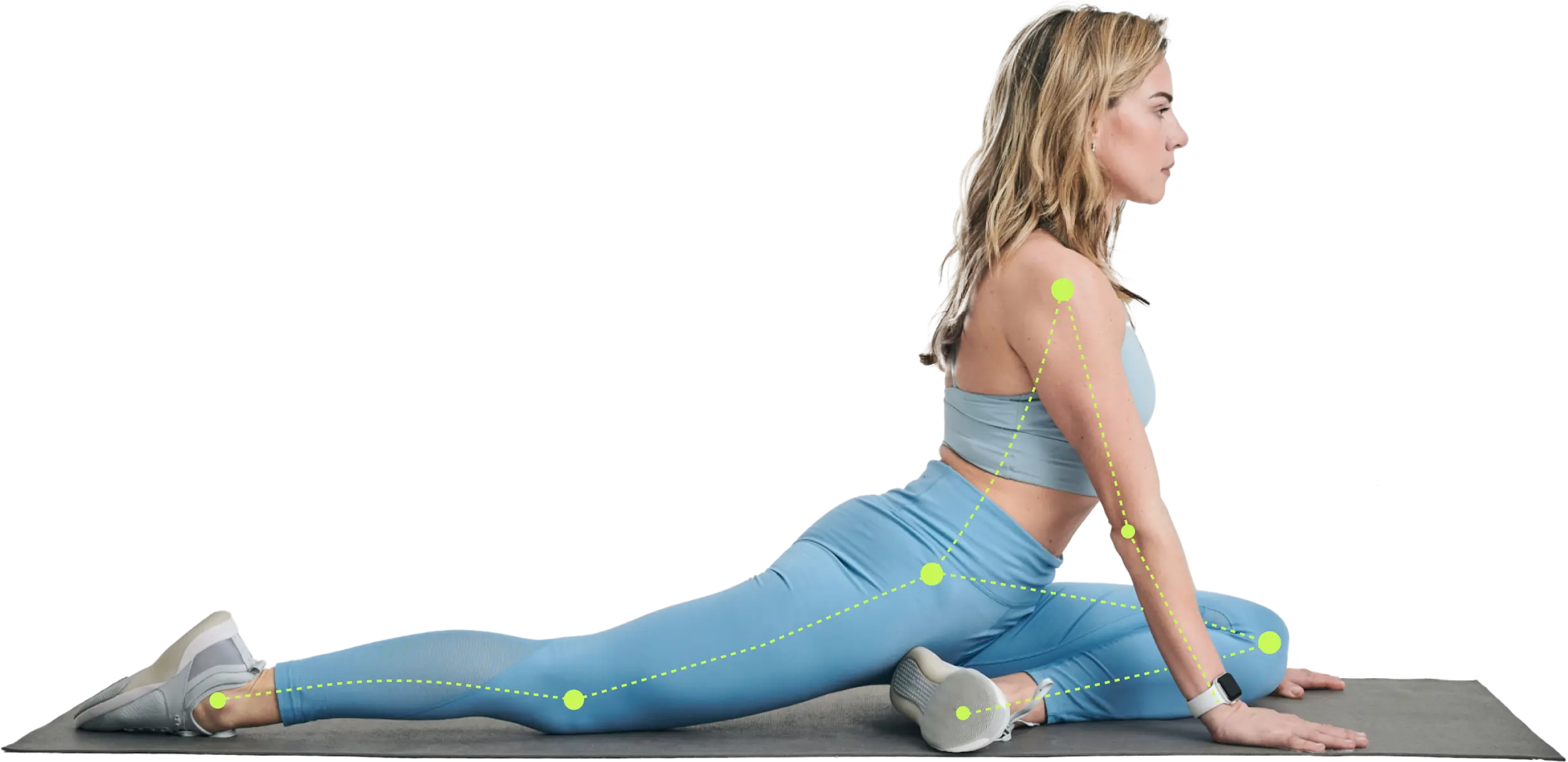
Get a personalized exercise plan free of cost: set goals, pick workouts, track progress, and start your tailored fitness journey today.

Yes, you absolutely can create a truly personalized exercise plan for free, and you don't need a fancy gym or expensive trainer to do it. The secret is building a routine from the ground up based on your goals, your current fitness level, and the real-world constraints of your life—like your schedule and what equipment you actually have.
Why Generic Plans Fail and Personalization Succeeds
If you've ever felt defeated by a cookie-cutter workout you found online or in a magazine, you're not alone. It's a common story. Those generic plans feel like trying to jam a square peg into a round hole because they completely ignore the single most important factor: you.
A random routine from YouTube doesn't know about that nagging shoulder injury you've had for years. It doesn't care that you only have 30 minutes to squeeze in a workout after a long day, or that your main goal is building the functional strength to go on long hikes, not just getting massive biceps. This is exactly why so many people start a new plan with tons of enthusiasm, only to burn out, hit a wall, or worse, get hurt.
The Power of a Tailored Approach
A personalized plan completely flips the script. Instead of forcing you to conform to a rigid program, the program is built to fit your life. This kind of custom approach used to be a luxury reserved for people who could afford a personal trainer, but now anyone can do it.
When you create your own plan, every single exercise has a purpose. It's directly tied to what you want to achieve, whether that’s losing fat, building muscle, or just having more energy. You can even use a personalized workout plan app to automate the whole process if you want a little guidance.
This isn't just about feeling more motivated, either; the results speak for themselves. Personalization in fitness dramatically improves how consistent you are. In fact, studies show that tailored plans can boost workout adherence by up to 40% compared to generic ones. That's a huge deal, especially when you consider that more than half of new gym-goers quit within the first year. You can dig into these trends on Future Market Insights.
The core difference is simple: a generic plan tells you what to do, while a personalized plan is built around who you are, what you want to achieve, and the resources you have.
To really see the difference, let’s put the two approaches side-by-side.
Generic vs Personalized Plan At a Glance
The table below breaks down exactly where generic plans fall short and why a personalized approach is so much more effective for long-term success.
| Feature | Generic Plan | Personalized Plan |
|---|---|---|
| Goal Alignment | Vague goals like "get fit" or "lose weight." | Specific, measurable goals like "lose 10 lbs in 12 weeks." |
| Flexibility | Rigid schedule that's hard to follow. | Adapts to your time, energy, and life events. |
| Exercise Selection | Assumes access to a full gym. | Uses exercises for your specific equipment (even just bodyweight). |
| Progression | No clear path for getting stronger or fitter. | Built-in progression to avoid plateaus and ensure results. |
At the end of the day, creating a personalized exercise plan for free puts you in the driver's seat. It turns working out from a chore you have to suffer through into a smart, effective system designed specifically for you to win.
Establishing Your Personal Fitness Starting Point
Before you can build a truly personalized exercise plan, you have to know where you're starting from. Seriously. Vague goals like "get in shape" sound good, but they don't give you a roadmap. To get anywhere, you need a destination, and that means getting specific about what you want to achieve.
A killer method for this is setting SMART goals. This framework takes a fuzzy wish and turns it into something you can actually work toward. For instance, "I want to get stronger" becomes "I will increase my dumbbell bench press from 50 lbs to 70 lbs in 8 weeks." See the difference? It’s Specific, Measurable, Attainable, Relevant, and Time-bound.
The same goes for weight loss. "I want to lose weight" gets a major upgrade when it becomes "My goal is to lose 10 pounds in 12 weeks by exercising three times per week and tracking my nutrition." That clarity is the foundation of a plan that works.
This whole process is about moving from a generic, one-size-fits-all approach to something built just for you—which is exactly how you get real, measurable results.

Think of it this way: tailoring your plan to your specific starting point is the most direct path to making meaningful progress.
Performing a Simple At-Home Fitness Assessment
Once your goals are locked in, it’s time to gather some intel on your current fitness level. This isn't about judging yourself—it’s about creating a baseline so you can see hard proof of your progress down the line. You can do these simple tests right at home with little to no equipment.
- Cardiovascular Endurance Test: Time yourself walking or running for one mile. Whether you're on a treadmill or a local track, just get that time down. This number is your starting cardio benchmark.
- Muscular Strength Test: Let’s see how many push-ups you can do in 60 seconds with good form. If standard push-ups are a no-go, just drop to your knees. The number you hit is what matters.
- Flexibility Test: The classic sit-and-reach test is perfect for measuring your lower back and hamstring flexibility. Sit on the floor, legs straight out, and reach forward. Measure how many inches you can reach past your toes (or note how far away you are if you can't reach them yet).
These numbers give you a snapshot of your fitness from a few different angles. And if you want to go a step further beyond performance, it's also helpful to get a sense of your body composition. You can learn the ropes by checking out our guide on how to measure body composition at home.
Why This Data Is Crucial for Your Plan
Collecting this initial data is what separates a generic workout from your workout. Knowing you can currently do 10 push-ups helps determine the right starting intensity for your upper body days. Having your one-mile run time helps you set realistic goals for improving your cardio.
Your baseline assessment is your personal fitness blueprint. It removes the guesswork and ensures that every exercise and every goal is perfectly calibrated to you from day one.
This level of personalization is becoming more common, thanks to the boom in fitness apps. In fact, the fitness app market is projected to hit $33.58 billion by 2033, largely because AI-driven features deliver more effective workouts.
Studies show that this kind of personalization is linked to 20-30% faster progress in body composition changes compared to generic programs. For people with physical limitations, it can even slash injury risk by 25-35%. You can dig into these market trends in research from Grand View Research. This data-driven approach isn’t just a trend; it's the future of effective fitness.
Choosing Exercises That Match Your Goals and Gear
Alright, this is where the magic happens. We're moving from abstract goals to an actual list of exercises. This is the exact point where a generic, cookie-cutter plan falls flat and a truly personalized exercise plan free of charge starts to come alive. The exercises you choose should be a direct answer to what you want to accomplish and the tools you have to work with.
Think of it like being a chef. If your goal is to bake a cake (i.e., build muscle), you need specific ingredients like flour and sugar—think compound lifts. If you're making a quick stir-fry (for fat loss), you'll grab different things like fresh veggies and lean protein, which translates to HIIT and cardio. The recipe always changes depending on what you want to eat.

Aligning Movements with Your Mission
The secret to an efficient workout is prioritizing compound exercises. These are the big, multi-joint movements that work several muscle groups at the same time. They are your heavy hitters because they give you the most bang for your buck, whether you're trying to build raw strength, torch calories, or a little bit of both.
Here’s a quick-and-dirty breakdown of how to match exercises to your goals:
- For Muscle Growth (Hypertrophy): You'll want to focus on the big compound lifts that let you progressively add weight over time. Your bread and butter will be moves like squats, deadlifts, bench presses, and overhead presses.
- For Fat Loss: High-Intensity Interval Training (HIIT) is going to be your best friend here. We're talking burpees, mountain climbers, and kettlebell swings, all strung together with minimal rest to keep that heart rate soaring.
- For Functional Strength: Think about movements that mimic things you do in real life. Lunges, farmer's walks, and bodyweight rows build practical, useful strength that you'll feel every single day.
Of course, no workout plan is complete without the right fuel. To really see the changes you're working for, you have to back it up in the kitchen. For instance, you can learn how to meal prep for muscle gain to support your efforts.
Working with What You've Got
The equipment you have access to is a huge piece of the puzzle. But let's be clear: you do not need a fancy, state-of-the-art gym to get incredible results. Your plan just needs to be honest about your reality.
- Full Gym Access: The world is your oyster. You can mix heavy barbell compound lifts with machine-based isolation work to hit every muscle from every angle.
- Dumbbells Only: You can still get a killer full-body workout. Goblet squats, dumbbell rows, and overhead presses are all fantastic choices. Our guide on how to start strength training at home is a great resource if you're working with minimal gear.
- Bodyweight Only: Never, ever underestimate the power of your own body. Progressing from a standard push-up to a diamond push-up, or finally mastering a pistol squat, builds serious, undeniable strength without a single weight.
The best exercises aren't the most complicated ones—they're the ones you can perform correctly and consistently with the gear you have, in service of the goals you've set.
Understanding Sets and Reps
The final piece here is figuring out your sets and reps. This isn't just about picking random numbers; it’s a science that directly influences the outcome of your training.
| Rep Range | Primary Goal | Rest Between Sets |
|---|---|---|
| 3-5 Reps | Pure Strength | 3-5 Minutes |
| 8-12 Reps | Muscle Growth (Hypertrophy) | 60-90 Seconds |
| 12-15+ Reps | Muscular Endurance | 30-60 Seconds |
This strategic, tailored approach is precisely why the fitness app market has exploded into a $10.6 billion industry. The best apps use AI to do exactly what we're doing now: customize workouts to a person's goals, gear, and current fitness level—which is the whole philosophy behind Zing Coach. It's a game-changer; apps that nail this personalization have seen users triple their engagement time. You can dig into the full report on these fitness app market trends on Athletechnews.
By taking the time to carefully select your exercises, you're building a foundation for a plan that is truly, 100% yours.
Building Your Weekly Workout Schedule
So, you've got your exercises picked out. Awesome. But a list of exercises isn't a plan—it's just a list. To get real results, you need to give them a home. That's where a well-built weekly schedule comes in, turning those individual workouts into a cohesive system that actually gets you where you want to go. This is how you map out your training days, rest days, and the overall rhythm of your fitness week.
The backbone of any good schedule is the training split. Don't let the term intimidate you; it's just how you decide to group your workouts. What you work on, and when. The right split for you is all about your current fitness level and, most importantly, how many days you can realistically commit to training.
Finding Your Perfect Training Split
If you're just getting your feet wet, a full-body routine two or three times a week is almost always the best place to start. You hit all the major muscle groups in one go, which is perfect for building a solid foundation of strength and conditioning without totally wrecking your body.
For those with a bit more time under the bar, an upper/lower split might be a better fit. This just means you have dedicated days for your upper body (chest, back, shoulders, arms) and separate days for your lower body (quads, hamstrings, glutes, calves). This approach lets you crank up the intensity and volume for each muscle group, which is a game-changer when you start hitting those frustrating plateaus. If that sounds like you, our guide to the 4-day split breaks down exactly how to set that up.
The Critical Role of Rest and Recovery
Honestly, one of the biggest mistakes I see people make when creating their own personalized exercise plan for free is completely ignoring rest. Here’s the secret: you don't get stronger in the gym. You get stronger when you're recovering from what you did in the gym.
Going all-out, all the time, is a one-way ticket to burnout, injury, and zero progress.
Make sure you schedule at least one full rest day every week. And please, listen to your body. A little muscle soreness is a good sign, but sharp pain or feeling constantly drained means you need to back off and recover.
Progress doesn't happen when you're training; it happens when your body rebuilds itself stronger. Scheduling rest is just as important as scheduling your workouts.
This principle is non-negotiable, whether you're lifting weights or training for a marathon. Endurance athletes meticulously plan their weekly mileage for marathon training to balance stress with adaptation. The exact same logic applies to strength training. Your rest days are where the magic happens.
Introducing Progressive Overload
If there's one principle you need to burn into your brain, it's progressive overload. It sounds fancy, but the idea is dead simple: to keep getting better, you have to consistently make your workouts just a little bit harder over time. That's what forces your body to adapt and change.
Without it, you will hit a wall. Your body is incredibly efficient; once it gets used to a certain challenge, it sees no reason to keep improving.
You can apply progressive overload in a few simple ways:
- Increase the Weight: Add a little more weight to the bar. Even 2.5 or 5 pounds makes a difference.
- Add More Reps: Try to get one more rep than you did last time with the same weight.
- Add Another Set: Instead of three sets, do four.
- Decrease Rest Time: Cut your rest between sets by 15-30 seconds to make the workout more dense.
This isn't about crushing yourself every single session. It's about making small, sustainable steps forward, week after week. This is the engine that will drive your progress and ensure your plan keeps working for you as you get stronger.
Keep Tabs on Your Progress With Free Tools
Let’s be honest: a plan is only as good as the results it gets you. After putting in the effort to build your personalized exercise plan free of charge, the final piece of the puzzle is tracking your progress. This is what keeps the engine running—it turns all that hard work into real, solid data that shows you exactly how far you’ve come.
And no, you don't need some expensive app or fancy software to do it. The simplest tools are often the best because they're the ones you'll actually stick with. A classic notebook and pen, a basic Google Sheets spreadsheet, or even the notes app on your phone can become your single most powerful motivational tool.

What to Log for Maximum Impact
For your log to be genuinely useful, you have to get specific. Vague notes like "good workout today" aren't going to help you apply progressive overload down the line. Instead, you need to focus on the metrics that tell the story of your strength and endurance gains over time.
For every workout, make sure you jot down:
- The specific exercise you did (e.g., Goblet Squats).
- The weight you lifted for that exercise.
- The number of reps you hit in each set.
- The total number of sets you performed.
- A quick note on how it felt—was it easy, challenging, or a real struggle?
This detailed log is your secret weapon. When you can look back and see in black and white that you squatted 5 more pounds than last month or squeezed out one extra rep on your push-ups, that's tangible proof that what you're doing is working. It's the ultimate motivation to keep showing up.
Looking Beyond the Workout Log
Of course, progress isn't just measured in weights and reps. Other metrics can paint a much fuller picture of your success, especially if your goals are tied to body composition or just feeling better overall.
Every few weeks, consider tracking these non-gym numbers, too:
- Body Measurements: Grab a flexible tape measure and track the changes in your waist, hips, chest, and arms. The scale doesn't always tell the whole story, particularly when you're building muscle.
- Progress Photos: Snap a few photos from the front, side, and back. Try to use the same lighting and wear the same outfit each time. These visual records often reveal changes you might not notice just looking in the mirror day to day.
Tracking is about more than just numbers; it’s about creating a feedback loop that validates your hard work and guides your next steps, ensuring your plan evolves with you.
Naturally, modern tech can handle all of this for you. An AI-powered app like Zing Coach basically acts as your digital fitness journal. It logs your workouts, tracks all your performance data, and then uses that information to intelligently adjust your plan as you get stronger. It takes the manual work out of tracking and makes sure your program is always optimized for where you are right now.
For a deeper dive into all the ways you can measure your gains, our article on how to track fitness progress offers even more great strategies.
Common Questions About Building Your Own Plan
Jumping into creating your own fitness plan from scratch is awesome, but it's totally normal for a few questions to pop up. You want to know you're making the right calls. Let's tackle the most common hurdles people run into so you can build your plan with confidence.
How Do I Know Which Exercises Are Right for My Goals?
The secret is to match the movement to your mission.
If you're aiming to build muscle, your best friends are the big compound movements—think squats, deadlifts, and overhead presses. These exercises are superstars because they recruit multiple muscle groups at once, giving you the most bang for your buck.
But if fat loss is the main goal, you'll want to bring in some High-Intensity Interval Training (HIIT) and full-body circuits. These keep your heart rate jacked up and turn your body into a calorie-burning furnace.
When in doubt, remember that bodyweight exercises are a universally safe and surprisingly effective starting point for anyone, at any level.
What if I Hit a Plateau and Stop Seeing Results?
First off, don't panic. Hitting a plateau isn't a sign of failure; it's actually a sign of progress! It just means your body has successfully adapted to what you've been throwing at it. The fix is a simple but powerful concept called progressive overload. All that means is you need to make your workouts just a little bit harder over time.
You can do this in a few ways:
- Add a tiny bit more weight to your lifts.
- Push for one more rep than you managed last week.
- Cut your rest time between sets by a few seconds.
Also, it's a good time for an honest check-in on your sleep and nutrition. All the real growth happens during recovery, and those two pieces are just as critical as the work you put in at the gym.
A plateau is just your body asking for a new challenge. You don't need to scrap your whole plan—just nudge the intensity up a bit. This steady, gradual increase is the real secret to long-term results.
How Often Should I Change My Workout Plan?
Resist the urge to reinvent the wheel every few weeks. In fact, constantly switching up your routine—often called "program-hopping"—is one of the fastest ways to kill your progress. A well-built plan needs time to work its magic.
Stick with a solid program for at least 4-8 weeks. This gives your body enough time to truly adapt, learn the movements, and actually get stronger. During that time, your focus should be on applying progressive overload week after week.
Only think about a major change to your core exercises when you’ve genuinely stalled out despite consistent effort, or if your main fitness goals have shifted.
Ready to skip the guesswork and get a plan that adapts with you? Zing Coach uses AI to build and adjust your workouts based on your goals, equipment, and real-time feedback, ensuring you never hit a plateau. Start your journey with a truly personalized plan at https://zing.coach.
Share this article


Authors