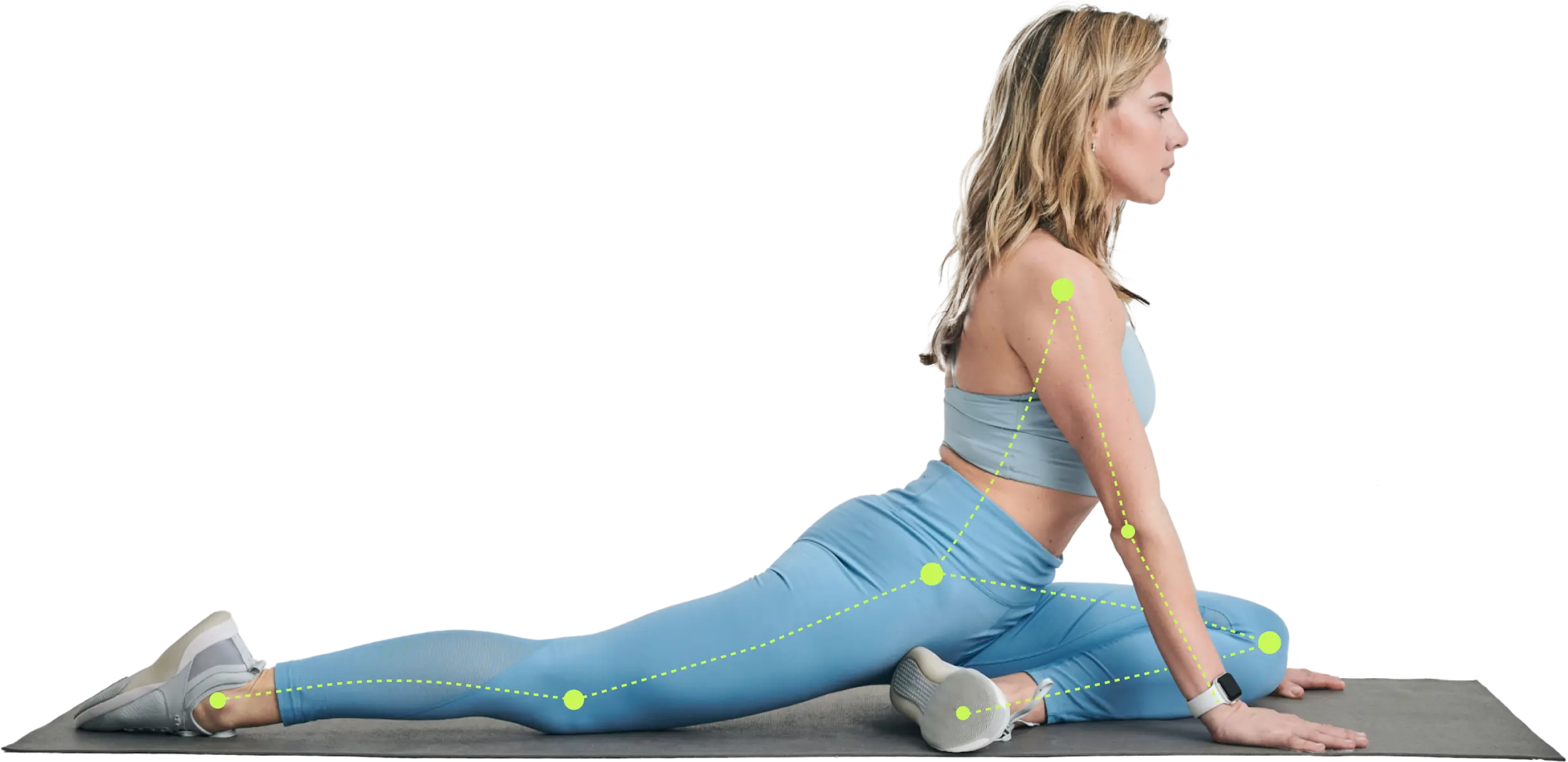
Tired of generic routines? Learn how to build your own workout plan with our practical guide. Achieve your goals with a custom plan tailored to you.

If you want to build a workout plan that actually works, you need to throw out the generic templates. The secret sauce is making sure your exercises, frequency, and intensity are all dialed in for your specific goals, your schedule, and your current fitness level. This is what makes a plan stick, and it's what keeps you from burning out—the main reason most one-size-fits-all programs fail.
Why Generic Workout Plans Fail
Let's be honest—most people quit their workout plan because it wasn't designed for them in the first place. That routine you downloaded online might look great on paper, but it has no idea about your crazy work schedule, that old knee injury that flares up, or the simple fact that you absolutely despise burpees. This disconnect is why so many fitness journeys end in pure frustration.
A successful plan isn't about finding some "perfect" program; it’s about building one that fits into your real life. Your body is unique, so your plan has to be, too.
The Problem with One-Size-Fits-All
Generic plans almost always lead to the same old roadblocks. For a beginner, they can be way too demanding, leading to killer soreness or even an injury. On the flip side, if you've been training for a while, they might be too easy, leaving you stuck on a frustrating plateau where you stop seeing any progress at all.
The single most effective workout plan is the one you can stick to consistently. If a program doesn't mesh with the realities of your life, its "perfect" structure is useless because you won't follow it long-term.
The Building Blocks of a Personal Plan
To really build your own workout plan, you need to pull together a few key pieces that work together. Think of it like putting up a building—every single part is essential if you want a structure that's going to last.
You'll need to lock in on:
- Realistic Goals: Getting past vague wishes like "get fit" and setting specific, measurable targets.
- Smart Scheduling: Picking a workout frequency you know you can actually commit to week after week.
- The Right Exercises: Choosing movements that match your goals and the equipment you have available.
- A Strategy for Progress: Knowing exactly how to make your workouts a little bit harder over time so you keep getting results.
This whole process might sound like a lot, but modern tools have made it surprisingly simple. For example, you can see how an AI workout plan from an app like Zing Coach automates all these steps. It uses your personal data to do the heavy lifting, putting a truly personalized and effective plan right at your fingertips.
First Things First: Set Your Goals and Face Reality
Before you even touch a dumbbell, we need to talk. The most common mistake I see is people jumping straight into workouts without a clear plan, only to burn out a few weeks later. A truly effective workout plan starts with a moment of honest self-reflection.
It’s built on two things: a crystal-clear goal and a realistic look at your life. Vague wishes like “get in shape” are dead ends. They don't give you a map, so you'll just wander aimlessly.
To get results, you need to get specific. This is where the tried-and-true SMART goal framework is your best friend. It’s how you turn a fuzzy dream into a concrete target.
- Specific: Don't just "get stronger." Aim to "increase my squat by 20 pounds."
- Measurable: Instead of "lose fat," your goal becomes "reduce my body fat by 3% in 12 weeks."
- Achievable: Trying to add 100 pounds to your bench in a month? Not happening. But 10–15 pounds? That’s a solid, motivating goal.
- Relevant: Does the goal actually matter to you? If you despise running, signing up for a marathon is just setting yourself up for failure.
- Timely: Give yourself a deadline. For instance, "I will be able to do 10 consecutive push-ups in 8 weeks."
The best goals aren't always about a number on a scale. Sometimes, it’s about having the energy to keep up with your kids or carrying all the groceries inside in one trip without getting winded. That's real-life strength.
If you want to dig deeper into crafting goals that stick, check out our detailed guide on how to set fitness goals.
Know Your Starting Line and Your Limits
Once your goals are locked in, it's time for a reality check. You need to build a plan for the life you actually have, not the one you wish you had.
Get brutally honest about a few things:
- Your Current Fitness: Are you stepping into a gym for the first time? Getting back into it after a long break? Or are you already pretty active?
- Your Real Schedule: How many days a week can you consistently train, and for how long? Three 30-minute sessions you never miss are infinitely better than five hour-long workouts you skip half the time.
- Your Equipment: What do you have to work with? Bodyweight only? A set of resistance bands? A full gym membership? Your plan has to be built around the tools you can actually get your hands on.
This whole process can feel a bit overwhelming, but it boils down to three simple pillars.

A sustainable routine always starts with a clear goal, fits into your schedule, and uses exercises that match your resources.
The table below shows how different goals often pair with workout frequency. Use it as a starting point to see what might work for you.
Goal and Frequency Pairing Examples
| Primary Goal | Recommended Weekly Frequency | Example Scenario |
|---|---|---|
| Muscle Growth | 4–6 days | A person looking to maximize hypertrophy might train chest/triceps, back/biceps, legs, and shoulders on separate days, with an optional fifth or sixth day for weaker areas. |
| Fat Loss | 3–5 days | Someone focused on fat loss could mix 2-3 full-body strength sessions with 2 days of dedicated cardio or HIIT to maximize calorie burn. |
| General Health | 2–3 days | A busy professional aiming to stay healthy and active might do two full-body workouts during the week and go for a long walk or bike ride on the weekend. |
| Strength | 3–4 days | A lifter focused on getting stronger might use an upper/lower split, training upper body twice and lower body twice, allowing for heavy lifting and adequate recovery. |
Remember, these are just examples. The best frequency is always the one you can stick to week after week.
Using Tech to Get Your Baseline
Let's be honest, assessing yourself can be tricky. This is where modern fitness tech has been a game-changer. It's no surprise that the digital fitness market, worth a staggering $16.4 billion in 2022, is booming. People are hungry for data-driven ways to build their workout plans.
Instead of guessing, you can use an app like Zing Coach to do the heavy lifting for you. The initial quiz nails down your goals and preferences, while features like the Body Composition Scan and Fitness Test give you a precise, data-backed picture of your starting point.
This means your plan is calibrated perfectly to you from day one, taking the guesswork out of the entire process.
Choosing Your Workout Split and Selecting Exercises

Alright, you know your why and your when. Now we get to the fun part: figuring out the what. This all starts with picking a workout split, which is just a fancy term for how you organize your training sessions throughout the week. Think of it as your roadmap—it ensures you hit every muscle group while giving them enough time to recover and grow.
There’s no magic, one-size-fits-all split. The best one is the one you’ll actually stick with.
Find Your Ideal Workout Split
Most people, especially when they're first building a plan, fall into one of three tried-and-true splits. Let's see which one fits your life.
- Full-Body (2–3 days/week): This is efficiency at its best. You'll train all your major muscle groups in every single session. It's a game-changer for busy professionals or anyone just getting their feet wet with strength training.
- Upper/Lower (4 days/week): Ready to spend a bit more time in the gym? With this split, you’ll have dedicated days for your upper body (chest, back, shoulders, arms) and lower body (quads, hamstrings, glutes). This lets you dial up the focus on specific areas.
- Push/Pull/Legs (PPL) (3–6 days/week): A favorite among gym veterans, this split organizes workouts by movement pattern. You have "push" days (chest, shoulders, triceps), "pull" days (back, biceps), and, of course, leg days. It's incredibly versatile and great for those who love training frequently.
Remember, it's about matching the split to your schedule, not cramming your schedule around some "perfect" split. A 3-day full-body routine you do consistently will always beat a 5-day plan you only manage to do half the time.
If you're still weighing the options, our guide on the best workout split for beginners can help you make the final call.
Prioritize Compound Movements
Once you've got your split, it's time to choose your exercises. The absolute bedrock of any solid workout plan is compound movements. These are the heavy hitters—multi-joint exercises that work several muscle groups at once. We're talking about squats, deadlifts, bench presses, and rows.
These are your "biggest bang for your buck" exercises. Because they recruit so much muscle, they're phenomenal for building strength, torching calories, and triggering growth. Always put them first in your workout, right after your warm-up, when you have the most energy.
After your main compound lifts are done, you can sprinkle in isolation exercises. These are your detail work—think bicep curls, tricep extensions, and lateral raises. They help you target and sculpt specific muscles you want to bring up. Even runners can benefit from essential strength training exercises to boost performance and prevent injuries.
This focus on getting stronger is more than just a trend. Strength training has actually leapfrogged cardio as the top fitness activity, and for good reason—it's linked to a 23% reduction in all-cause mortality. This shift is happening as the digital fitness world explodes, with a projected 26.72% CAGR that allows apps like Zing Coach to bring AI-powered strength plans to everyone. You can explore more insights into the U.S. fitness industry report to see how the landscape is changing.
This is exactly where Zing Coach shines. It takes your goals and available equipment and does the heavy lifting for you, building a plan with the right mix of compound and isolation work. Plus, every exercise comes with a clear video demo, so you're never left guessing.
Programming for Progress: Sets, Reps, and Intensity
Alright, you've picked your exercises and decided how to split up your week. Now for the fun part—the actual programming that makes the magic happen. Think of your workout plan as a recipe: the exercises are your ingredients, but the sets, reps, and intensity are the real cooking instructions.
Getting these variables right is what separates a plan that gets results from one that just leaves you tired. Let's dial in the details to make sure your efforts are actually building toward your goal.
Rep Ranges for Different Fitness Goals
One of the first questions I always get is, "How many reps should I do?" The answer depends entirely on what you're trying to achieve. The number of repetitions (reps) you do in a set directly tells your body what kind of changes to make.
There's a lot of overlap, of course, but certain ranges are much better suited for specific goals. You wouldn't use a sledgehammer to hang a picture frame, right? Same idea here.
This table is a great starting point for matching your reps to your primary training goal.
| Training Goal | Repetition Range | Intensity Level (RPE) | Primary Outcome |
|---|---|---|---|
| Maximal Strength | 1-6 reps | 8-10 (very heavy) | Increases raw power and neural drive. |
| Muscle Growth (Hypertrophy) | 6-12 reps | 7-9 (challenging) | The classic "bodybuilding" range for size. |
| Muscular Endurance | 12+ reps | 6-7 (moderate) | Improves how long a muscle can work. |
The most effective plans don't live in just one column. You might spend most of your time in the hypertrophy range for muscle growth but throw in some lower-rep strength work on your main lifts to get stronger overall.
Intensity is the key. For any of this to work, especially for strength and growth, you have to push yourself. Aim to finish most of your sets feeling like you only have 1-3 good reps left in the tank. That's the sweet spot for telling your body it needs to adapt.
The Engine of All Progress: Progressive Overload
If you only take one thing away from this guide, let it be this: to keep getting stronger and seeing results, your workouts have to get harder over time. This is the bedrock principle of all strength training, known as progressive overload.
Your body is a master of adaptation. If you do the same thing over and over—same exercises, same weights, same reps—it will quickly get used to it and stop changing. You have to consistently give it a new, slightly bigger challenge to force it to improve.
But "making it harder" doesn't just mean piling on more weight. There are a few different ways to apply progressive overload:
- More Reps: Last week you did squats for 8 reps. This week, you aim for 9 or 10 with the same weight.
- More Weight: You hit your target of 3 sets of 8 reps on the bench press. Next week, you add 5 pounds to the bar.
- More Sets: You’ve been doing 3 sets of pull-ups. This week, try adding a fourth set to increase your total volume.
- Less Rest: Normally rest 90 seconds between sets? Try cutting it to 75. The shorter rest period makes the next set more challenging.
It’s no wonder the global fitness industry hit $257 billion in 2024. People are looking for smarter ways to train, and apps are leading the way because they simplify complex principles like this one. In fact, some studies show data-driven workout plans can boost consistency by up to 40%. You can discover more fitness industry growth statistics on mirrorsdelivered.com to see how tech is changing the game.
To really get this right, check out our complete guide to progressive overload training. Or, you can let an app like Zing Coach do the heavy lifting for you. It automatically adjusts your plan based on your feedback, taking all the guesswork out of getting stronger.
Tracking Progress and Staying Consistent Long Term
 Let's be real: even the best workout plan in the world won't do you any good if you don't stick with it. The secret ingredient to seeing real, lasting results isn't about having perfect workouts every single time. It's about showing up, keeping track of what you're doing, and building momentum.
This is why logging your workouts is a non-negotiable. Seriously. Whether you use a classic notebook or a slick app, writing down your sets, reps, and the weights you lift is the only way to know for sure that you're making progress. It turns your training from a guessing game into a clear path forward.
Look Beyond the Scale
While watching your lift numbers climb is a huge motivator, don't get so focused on performance that you miss the other ways your hard work is paying off. We call these "non-scale victories," and honestly, they're often the most rewarding part of the journey.
These are the wins that actually impact your daily life:
- Suddenly having the energy to power through your workday without needing that 3 p.m. coffee.
- Pulling on your favorite pair of jeans and noticing they fit just a little bit better.
- Hauling all the groceries in from the car in one trip, no problem.
- Waking up before your alarm feeling genuinely rested and ready to go.
These are the real-life upgrades you get when you build a plan and stay consistent. If you want more ways to measure your success, our guide on how to track fitness progress has you covered.
The Power of Smart Recovery
You can't be consistent if you're constantly burned out or sore. Your muscles don't get stronger in the gym—they get stronger when you give them time to recover. Prioritizing your sleep, managing stress, and eating well are just as critical as any set of squats.
A lot of people fall into the trap of thinking rest days are for the weak. The opposite is true. Rest is when the magic happens—it’s when your body actually rebuilds and adapts. That’s why planned breaks, or deloads, every 8-12 weeks are so important for avoiding burnout and injury.
Paying attention to recovery isn't just about feeling less sore; it's about giving your body the fuel and rest it needs to come back stronger for your next session. To give your body an extra edge, you might even look into things like muscle recovery supplements to support the repair process.
Using Tech to Stay on Track
This is where an intelligent app like Zing Coach can be a game-changer. Think of it as your digital accountability partner. It handles all the tedious progress tracking for you, logging your performance automatically so you can focus on your workout.
It even uses your phone's camera to monitor your form in real-time, giving you instant feedback to make sure you're moving safely and getting the most out of every rep.
By combining that detailed tracking with fun features like workout streaks and challenges, the app helps create a powerful sense of momentum. It takes the guesswork out of the equation and gives you the encouragement you need to stay on track, making those big fitness goals feel much more achievable.
Common Questions About Building a Workout Plan
Even with the best plan in hand, you're bound to have questions. I've heard them all over the years, so let's tackle the big ones right now so you can move forward with confidence.
How Often Should I Change My Plan?
I see this all the time: people get antsy and want to jump to a new program every few weeks. This is a classic trap. A good program needs time to work, and consistency is where the real magic happens.
You should stick with your core program for at least 8 to 12 weeks. This gives your body the time it needs to actually adapt and build strength. The only time you should think about a major change sooner is if you've completely stalled for several weeks straight or if your main fitness goals have changed.
Don't mistake boredom for a plateau. It's much smarter to make small, strategic swaps—like trading a dumbbell press for a push-up variation—than to scrap your entire plan. Real progress is the result of sticking with the fundamentals long enough to see them pay off.
What if I Miss a Workout?
First, don't panic. Life gets in the way sometimes, and a single missed workout isn't a disaster. One skipped session won't erase weeks of dedication, and the worst thing you can do is let it throw off your entire week.
Here are a few smart ways to handle it:
- Shift it: If your schedule is flexible, just bump the workout to the next day and adjust the rest of your week from there.
- Shorten it: Strapped for time? A quick, 15-minute session that hits your main exercises is way better than doing nothing at all.
- Skip it: Honestly, sometimes the best option is to just write it off, get some rest, and nail your next scheduled workout.
The key is to ditch the "all-or-nothing" mentality. Progress is about what you do most of the time, not all of the time.
Can I Get Results with Home Workouts?
Absolutely. The rules of effective training don't change just because you're not in a commercial gym. You can build a fantastic, challenging plan with just your bodyweight, some resistance bands, or a basic set of dumbbells.
The focus is always the same: apply progressive overload, pick exercises that challenge your major muscle groups, and be consistent. This is where a good app really shines. Zing Coach, for example, is brilliant at creating tough routines based on whatever equipment you have at home, making sure you can build muscle and get fit without ever needing a gym membership.
Ready to take the guesswork out of building your own workout plan? Let Zing Coach do the heavy lifting for you. Our AI-powered app creates a plan perfectly tailored to your goals, schedule, and equipment, with adaptive adjustments and real-time form feedback to keep you progressing safely. Start your personalized fitness journey with Zing Coach today.
Share this article


Authors