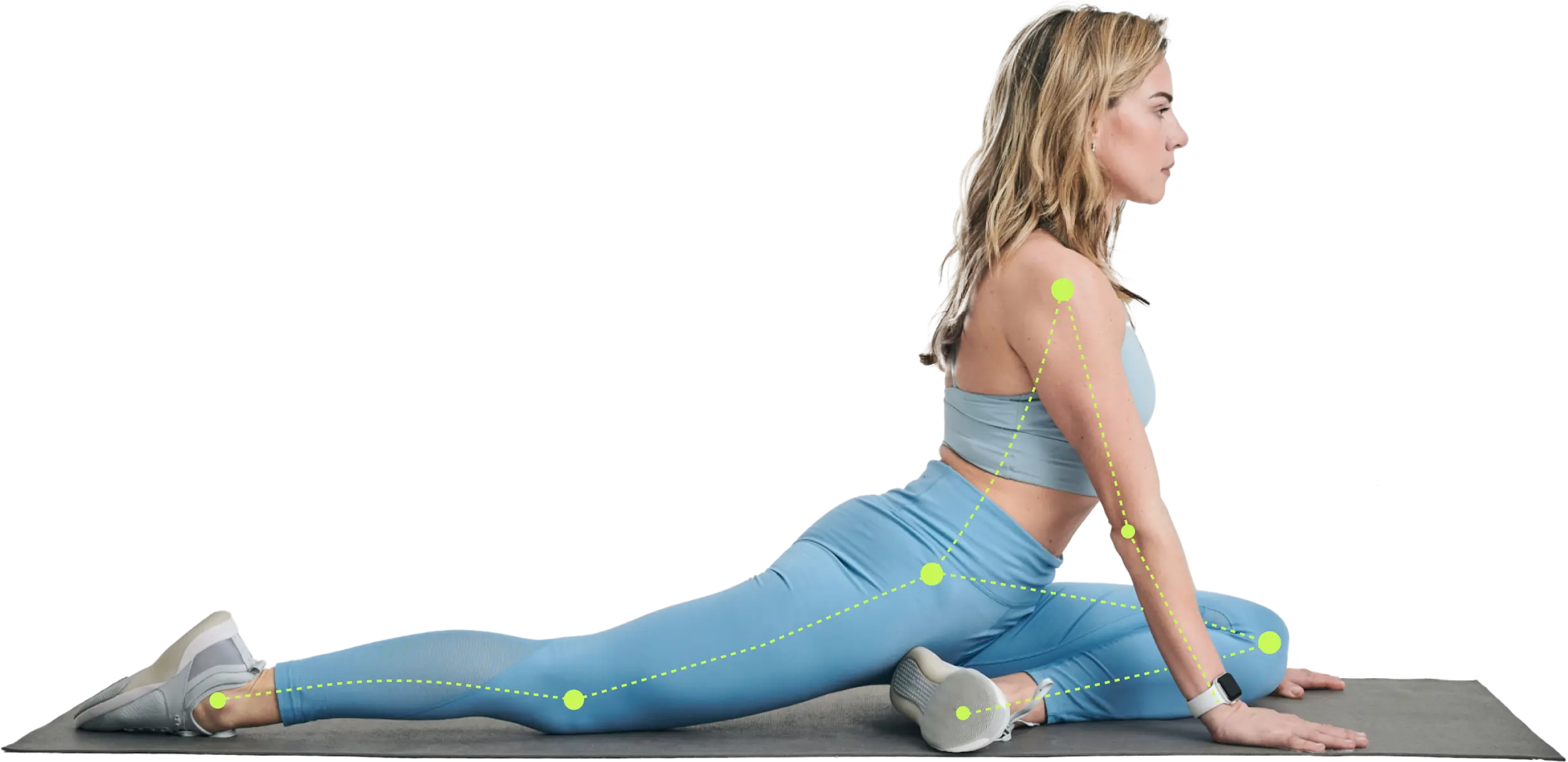
Feeling lost? Learn how to start exercising for beginners with our guide. We'll show you how to build a routine you'll actually stick with and feel great.

If you take one thing away from this guide, let it be this: go for a 10-minute walk today. That’s it. No special equipment, no complicated plan. Just one small action to build momentum and prove to yourself that you can start right now.
Lasting success in fitness isn’t about chasing numbers on a scale. It's about finding a deeper reason to keep going.
Finding Your 'Why' Before You Start
Jumping into a workout routine without a clear purpose is a recipe for burnout. Before you even think about reps and sets, you need to figure out what’s really driving you. This is your 'why'—the personal, powerful reason that will pull you through when the initial excitement wears off.

The reasons people start exercising have changed. While weight loss is still a common goal, the focus has shifted toward overall well-being. Maybe your 'why' is one of these:
- Mental Clarity: Exercise is incredible for cutting through brain fog and sharpening your focus.
- Stress Reduction: A good workout can be the best outlet for all the pressure that builds up during the day.
- Long-Term Health: Moving your body today is a direct investment in your future mobility and independence.
- More Energy: It sounds backward, but regular activity fights fatigue way better than another cup of coffee.
The Power of Small, Achievable Goals
I’ve seen it a thousand times: the biggest mistake beginners make is setting massive, unrealistic goals right out of the gate. It's a fast track to feeling defeated. In fact, this is why about 50% of new gym-goers quit within the first six months.
But here's the good news. Data shows that with personalized plans that start slow, adherence rates can shoot up to 80%. People are also realizing the mental benefits, with motivation for mental well-being up 29% since 2021 and stress reduction up 17%.
The secret isn’t a brutal first week. It’s building a foundation of small wins that boost your confidence. Start with a goal so simple you can’t possibly say no to it, like taking a 10-minute walk after dinner three times this week.
This little table can help you frame your first week. It’s not about intensity; it’s about consistency and building the habit.
Your First Week Mindset and Action Plan
| Day | Mindset Focus | Actionable Goal |
|---|---|---|
| Day 1 | Just Start. | Go for one 10-minute walk. That's a win. |
| Day 2 | Observe. | How did you feel after yesterday? A little better? |
| Day 3 | Repeat the Win. | Go for another 10-minute walk. |
| Day 4 | Rest & Reflect. | Acknowledge that you've kept your promise to yourself. |
| Day 5 | Build On It. | Try a 15-minute walk or add 5 minutes of stretching. |
| Day 6 | Rest. | Active recovery is just as important as the workout. |
| Day 7 | Plan Ahead. | What will you do next week? Same again, or a new challenge? |
Once you nail that first simple goal, you build on it. This step-by-step approach keeps things exciting instead of overwhelming. If you want more help with this, our guide on how to set fitness goals has some great strategies.
This is exactly how apps like Zing Coach work. We use a quick quiz to figure out your 'why' and then build a manageable path forward, so you feel in control from day one.
Creating a Realistic Fitness Baseline
Before you dive headfirst into your first official workout, we need to figure out your starting point. This isn’t a test you can pass or fail. It’s about preventing the most common beginner mistake I see all the time: going way too hard, too soon, and then burning out or getting hurt.
A simple self-assessment gives you a realistic picture of where your body is right now.

Think of it like a musician tuning their guitar before a show. A quick fitness check-in ensures your workout plan is in tune with what your body can actually handle. You can get this done at home in less than 10 minutes.
Your At-Home Fitness Check-In
This short assessment will give you a snapshot of your cardio endurance, strength, and flexibility. Just write down your results without any judgment. This is your personal starting line, and that's all that matters.
- Cardio Endurance: See how far you can walk at a brisk, steady pace in 10 minutes. Go ahead and measure the distance. This number is your simple benchmark for cardio fitness.
- Basic Strength: See how many push-ups you can do with good form. If you can’t do them on your toes, no problem—do them from your knees. Stop the moment your form gets sloppy, and jot down the number of good reps.
- Flexibility: Sit on the floor with your legs straight out. Gently reach for your toes, trying to keep your back from rounding too much. Where do your hands land? Your shins, ankles, or toes? Make a note of it.
This baseline data is incredibly valuable. It helps you pick the right intensity for your first workouts and gives you a clear starting point. To really see your progress stack up over time, you’ll need a good way to log your workouts. For a deeper dive, our guide on how to track fitness progress shows you how all those small gains add up.
The goal isn’t to score high on day one. The goal is to know your starting numbers so you can see tangible proof of your progress in a few weeks, which is a massive motivator.
How Technology Simplifies Your Starting Point
Doing this initial assessment yourself is great, but let's be honest, it can feel a little manual. This is where technology can be a huge help for beginners.
Modern fitness apps like Zing Coach can automate this whole process. It takes the guesswork out of building a plan that’s actually safe and effective for you.
When you first open Zing, it guides you through an initial fitness test and body composition scan. This isn't just for convenience; it's about precision. The app’s AI uses this data to build a workout program perfectly matched to your current abilities. It makes sure your plan is challenging enough to get you results but not so intense that it leads to injury, creating a personalized path from your exact starting point.
Mastering Your First Foundational Movements
Okay, you've got your starting point. Now it's time to learn the actual language of exercise. Think of these fundamental movements as your ABCs—you need to know them before you can start writing sentences, let alone entire workout programs.
Jumping into a workout without understanding how to move properly is a classic rookie mistake. It's also a surefire way to get hurt. The first, non-negotiable rule is to warm up. A dynamic warm-up, one that involves active movement, is way more effective than just holding a few static stretches. It gets blood flowing to your muscles and tells your joints they're about to go to work.
Your 5-Minute Dynamic Warm-Up
Run through this quick sequence before every single workout. Spend about 30 seconds on each movement.
- Arm Circles: Start small and forward, then get bigger. Switch it up and go backward.
- Leg Swings: Grab a wall for balance. Swing one leg forward and back, then side to side. Do the other leg.
- Torso Twists: Stand with your feet about shoulder-width apart and gently twist your upper body from one side to the other.
- High Knees & Butt Kicks: March in place, driving your knees up toward your chest. Then, switch to kicking your heels back toward your glutes.
That's it. This simple routine is all you need to signal to your body that it's go-time.
The Five Bedrock Exercises
Now, let's get into the five essential exercises that are the foundation of pretty much any solid fitness plan. Nailing the correct form from day one is everything. It builds good habits, prevents injury, and is the key to actually seeing results.
1. The Bodyweight Squat: This is the undisputed king of lower-body exercises. Stand with your feet shoulder-width apart, keep your chest up, and lower your hips like you’re sitting back into a chair. Try to get your thighs parallel to the floor, then drive through your heels to stand back up. If this feels awkward, don't worry—it does for most people at first. Check out our detailed guide on how to do squats correctly for a full breakdown.
2. The Push-Up: Don't be intimidated by this one. It's a total-body powerhouse that builds your chest, shoulders, and core. If a full push-up on the floor feels impossible right now, start with your hands on an elevated surface like a kitchen counter or a sturdy table. You can also do them from your knees. The goal is always the same: keep your body in a perfectly straight line from your head to your knees or heels.
A common mistake is letting your hips sag or piking them up too high. Think of your body as a rigid plank of wood. This simple cue helps keep you aligned and makes sure your core is doing its job.
3. The Plank: Speaking of your core, the plank is its best friend. Get into a push-up position, either on your hands or forearms, and just hold it. Keep that straight line, squeeze your glutes and abs, and fight the urge to let your lower back arch. Start with a 15–20 second hold and slowly build up from there.
4. The Glute Bridge: This move is a lifesaver, especially if you spend a lot of time sitting. It wakes up your glutes and hamstrings. Lie on your back with your knees bent and feet flat on the floor. Drive through your heels to lift your hips toward the ceiling, giving your glutes a hard squeeze at the top.
5. The Row: Rows are fantastic for building a strong back and fixing that forward slouch from sitting at a desk. At home, you can use a jug of water, a loaded backpack, or a single dumbbell. Hinge forward at your hips (don't round your back!), and pull the weight up toward your chest, focusing on squeezing your shoulder blades together.
Getting comfortable with these five movements is your first huge win. To really dial in your technique, the avatar trainer and computer vision in an app like Zing Coach can give you real-time feedback on your form. It’s like having a personal trainer in your pocket, making sure every rep is safe and effective from the very start.
Your First Month's Beginner Workout Plan
Alright, this is where it all comes together. You’ve got your motivation and you’ve practiced the basic movements. Now it’s time for a structured plan that will build real, noticeable results without leaving you feeling burnt out.
The golden rule for beginners is simple: consistency over intensity.
Forget the "all or nothing" trap. The only goal for the next four weeks is to show up, give your best effort for that day, and let your body adapt. This is how you build strength and confidence that actually lasts.
The Two Paths to Progress: Home or Gym
We've laid out two different plans for your first month. You can choose whichever one fits your life better, whether that’s the convenience of your living room or the focused atmosphere of a gym.
Both plans are built on the same core principles: gradually asking your body to do a little more over time and giving it the rest it needs to get stronger.
At-Home Workout Plan: This routine uses just your body weight, so there’s zero equipment needed. It's the perfect way to build a solid foundation of strength, stability, and endurance without any financial investment.
Gym Workout Plan: This track introduces you to basic gym machines and free weights. It's ideal if you have a gym membership and want to get comfortable with the equipment in a way that’s not confusing or intimidating.
Mastering new movements is the heart of any effective beginner program. This is a simple, repeatable process.

As you can see, real progress comes from a cycle: warming up the right way, practicing the movements with good form, and then using feedback to get better.
Your 4-Week Progressive Schedule
To give you a clearer picture, here’s a high-level look at how your weeks will be structured.
Sample 4-Week Beginner Workout Schedule Overview
| Week | Focus | Home Workout Days | Gym Workout Days |
|---|---|---|---|
| 1 & 2 | Building a solid foundation and mastering form. | 2 days per week | 2 days per week |
| 3 & 4 | Increasing volume and challenging your muscles. | 3 days per week | 3 days per week |
This schedule is a blueprint. The most important thing is to listen to your body and adjust if you need to. The goal is to end the month feeling stronger and more capable than when you started.
The most effective beginner workout plan isn't the hardest one—it's the one you can stick to. Prioritize showing up for your scheduled days, even if you have to reduce the intensity.
Historically, the dropout rate for beginners was notoriously high—around 80% within the first year. But things have changed. The fitness app market, valued at a massive £3.16 billion in 2024, has given beginners powerful new tools. In fact, a major survey found that beginners who use an app stick with their fitness plans 3 times longer.
This is exactly where an app like Zing Coach makes a difference. It uses a quick quiz to generate a personalized plan that adapts as you get stronger, taking the guesswork out of your progress.
Weeks 1 & 2: Build the Foundation
- Frequency: 2 workouts per week (e.g., Monday and Thursday).
- Focus: Perfecting your form on the foundational movements. It’s all about quality over quantity right now.
- Structure: Do 2 sets of 8–12 reps for each exercise. Give yourself 60–90 seconds of rest between sets.
Weeks 3 & 4: Increase the Challenge
- Frequency: 3 workouts per week (e.g., Monday, Wednesday, and Friday).
- Focus: Increasing the total amount of work you're doing to challenge your muscles.
- Structure: Bump it up to 3 sets of 8–12 reps. If you're feeling good, try to shorten your rest periods to 45–60 seconds.
For a detailed breakdown of the at-home exercises, like bodyweight squats, incline push-ups, glute bridges, and planks, take a look at our complete beginner workout plan at home guide.
The gym plan follows the same structure but incorporates exercises like the machine chest press, lat pulldown, leg press, and dumbbell rows. Whichever path you choose, the formula for success is the same: start smart, focus on great form, and gradually ask for a little more each week.
Fuel Your Progress with Smart Recovery and Nutrition
You can do all the workouts in the world, but the real change—the kind you can see and feel—happens when you’re not in the gym. This is a tough lesson for a lot of beginners, but it's the truth. Your progress is built on a foundation of smart recovery and solid nutrition.

Think of your workouts as tearing down your muscles. It's the rest, recovery, and food that actually rebuild them stronger than they were before. Getting this part right is what prevents you from burning out and keeps you showing up, ready for more.
The Cornerstones of Beginner Recovery
Recovery isn't just about putting your feet up. It's an active process of giving your body what it needs to repair and adapt. For anyone just starting out, a few simple habits can make a huge difference.
Prioritize Sleep: This is, without a doubt, your most powerful recovery tool. You need to be aiming for 7-9 hours a night. When you’re in a deep sleep, your body gets to work releasing growth hormone, which is absolutely essential for repairing muscle tissue.
Try Active Recovery: Don't just sit around on your "off days." Get moving, but gently. A light walk, some easy stretching, or a casual bike ride will get blood flowing to your sore muscles. This helps flush out metabolic byproducts and eases that post-workout stiffness.
Listen to Your Body: This one is critical. You have to learn the difference between the "good" soreness—that dull ache in the muscles you worked—and "bad" pain, which is usually sharp, stabbing, or centered in a joint. Pushing through bad pain is a surefire way to get injured. For managing that expected soreness, check out these powerful workout recovery tips.
Simple Nutrition to Back Up Your Workouts
Forget about complicated, restrictive diets. You don’t need one. Instead, just focus on adding a few simple, powerful nutrition habits that will support your new routine. Food is your fuel for performance and the raw material for rebuilding your body.
Here’s where you should start:
Hit Your Protein Goals: Right after a workout, your muscles are screaming for repair. Protein provides the amino acids they need to patch up those microscopic tears and come back stronger. Make sure you're getting sources like chicken, fish, eggs, or legumes in your meals.
Stay Hydrated: Water is a workhorse. It’s involved in pretty much every metabolic process, including muscle repair. If you're dehydrated, you’ll feel more sore and more tired. The simple fix? Keep a water bottle with you and sip on it all day.
Eat for Energy: Your body runs on carbs. Having a balanced meal 1-2 hours before you train will make sure you have enough gas in the tank to actually perform your best and get the most out of your session.
And it’s not just about what you eat, but when. Understanding which foods that help muscle recovery can be a game-changer for preventing soreness and getting you ready for that next workout.
Your body can’t build something from nothing. Providing it with quality protein, healthy carbs, and plenty of water gives it the resources it needs to adapt to your new exercise routine.
The good news is that technology has made this whole process much easier. One report found that before 2021, only 40% of beginners actually stuck with exercise for three months. Now, with AI personalization, that number has shot up to 70%. It makes sense—apps like Zing Coach can integrate nutrition guidance right alongside your workouts, setting calorie and macro targets that actually support your training. We've seen beginners on these integrated plans gain 15-20% in strength in 12 weeks and lose 5-8kg in three months.
Your Beginner Exercise Questions Answered
Jumping into a fitness routine can feel like you're trying to drink from a firehose. There's so much information out there, and a ton of questions pop up along the way. Let's cut through the noise and tackle some of the most common ones I hear from beginners.
How Many Days a Week Should I Exercise as a Total Beginner?
When you're just starting out, more isn't better. Quality and consistency are what count. Aim for two to three non-consecutive days per week. This could look like Monday and Thursday, or maybe a Tuesday, Thursday, and Saturday schedule.
This approach gives your body crucial time to recover and adapt between workouts. That’s when the real magic happens—you get stronger and avoid the burnout that sinks so many new routines. Keep the sessions short and focused at first, maybe 20–30 minutes. Once you've got a solid four to six weeks under your belt and are feeling more capable, you can think about adding a third or fourth day.
What Is More Important for Weight Loss: Diet or Exercise?
This is the classic chicken-or-the-egg question of fitness. The honest answer? Both are critical, but they play different roles. For pure, initial weight loss, your diet has the edge. It's simply more efficient to create a calorie deficit by adjusting what you eat than it is to try and burn off thousands of extra calories with exercise alone.
But here’s the thing: exercise is what makes the weight loss stick. It builds muscle, which cranks up your metabolism, and completely reshapes your body composition. Plus, the health benefits are massive and go way beyond the number on the scale.
Think of diet and exercise as partners. You can't have one without the other and expect amazing results. A balanced diet and consistent exercise work together to get you where you want to go.
I Feel Really Sore After My Workouts. Is That Normal?
Yes, that post-workout ache is totally normal! It has a name: Delayed Onset Muscle Soreness (DOMS). It usually shows up about 24 to 48 hours after you’ve challenged your muscles in a new way. It’s a good sign, really—it means your muscles are repairing and getting stronger.
The key is learning to tell the difference between the good-sore (a general, dull ache in the muscles you worked) and bad-sore (a sharp, stabbing, or localized pain). Sharp pain is a red flag for injury. To manage DOMS, keep moving with some light activity like walking, do some gentle stretching, and make sure your sleep and protein intake are on point.
Should I Do Cardio or Strength Training First?
For most people, especially beginners who want to get stronger and improve their body composition, the answer is clear: strength training first. You want to hit the weights when you're fresh, both mentally and physically. This allows you to focus on solid form and lift with purpose, which is non-negotiable for getting results safely.
If you do a long cardio session first, you'll go into your lifts pre-fatigued. This can seriously compromise your form and even increase your risk of getting hurt. A much better flow is a quick 5–10 minute cardio warm-up, then your strength work, and if you still have gas in the tank, a longer cardio session at the end.
At Zing Coach, we build your plan with all of this in mind. Our AI starts you off with a safe, effective frequency and intelligently adjusts the plan as you progress. We handle the "what's next?" so you can just focus on your workout. Learn more about how a personalized fitness plan from Zing can take the guesswork out of your training.
Share this article


Authors