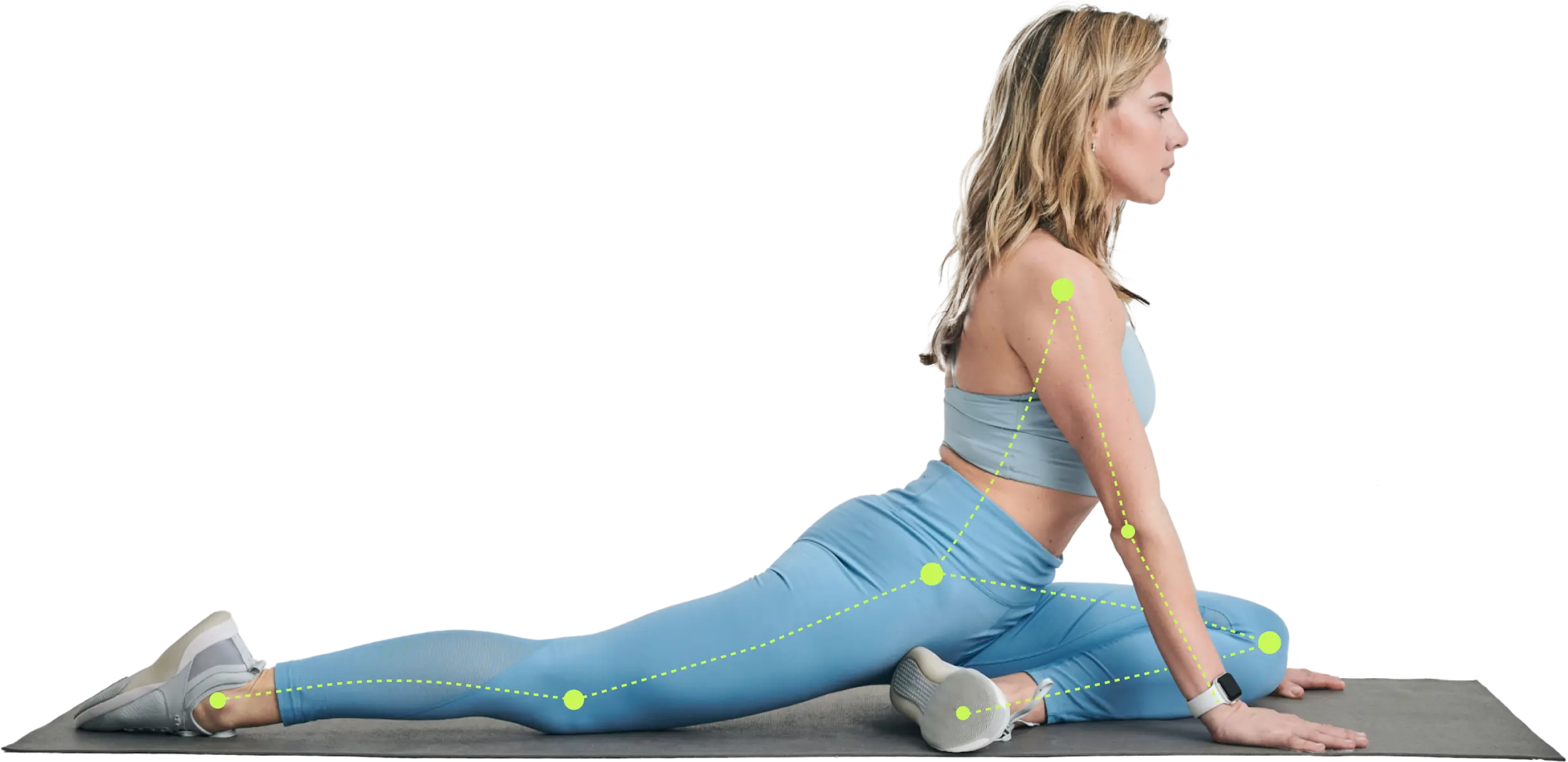
Stop using generic templates. Learn how to create a personalized workout plan for women that fits your goals, body, and lifestyle. A step-by-step guide.
You're probably here because you've tried the usual approach already. You downloaded a workout plan, saved a few routines from social media, maybe even promised yourself you'd start on Monday. Then real life showed up. Work ran late, your energy dipped, your knees didn't love the jump squats, and the plan that looked motivating on paper stopped fitting your actual week.
That's why a personalized workout plan for women needs to do more than organize exercises. It has to match your schedule, your body, your preferences, and your current capacity. If it doesn't, consistency falls apart first. Results usually follow.
A good plan isn't something you set once and obey forever. It's something you build, test, adjust, and keep making more usable. That's the mindset that helps beginners stick with training long enough to feel stronger, move better, and trust themselves in the process.
Start with Your Personal Blueprint
Most generic plans fail for a simple reason. They answer the wrong question. They tell you what to do before they learn anything about you.
That's backward. A personalized plan starts with your why, your current baseline, and the reality of your week. A 2021 review in the European Journal of Sport Science proposed a six-step framework for personalization that starts with defining goals and creating a monitoring strategy, not just picking exercises (European Journal of Sport Science review). That matters because the right plan is built around the individual.

Clarify your why
Start with a goal that means something in your day-to-day life.
You might want to feel stronger carrying groceries, return to the gym without feeling lost, improve your energy, build muscle, or lose weight while keeping your routine realistic. All of those are valid. What matters is choosing a direction that's personal enough to keep you engaged when motivation is low.
If you tend to set vague goals, use a structured approach like this guide on how to set fitness goals. It helps turn “I want to get in shape” into something you can plan around.
Practical rule: If your goal doesn't affect how you plan your week, it's still too vague.
Assess where you are right now
Before choosing exercises, answer a few questions truthfully:
- What hurts or has hurt before. Note old injuries, recurring knee pain, low back tightness, pelvic floor concerns, or movements that usually bother you.
- What equipment you have. Bodyweight only, a pair of dumbbells, resistance bands, gym machines, or a full gym setup all change what makes sense.
- How much time you can repeat. Not your dream schedule. Your repeatable one.
- What kind of training you don't hate. Walking, lifting, yoga, cycling, classes, short circuits, and machine-based sessions all count.
- What your week already demands. If your job is physically tiring or your sleep is inconsistent, your plan should reflect that.
Many women often undershoot or overshoot. They either pick a plan that's too aggressive for their recovery or so cautious that it never builds momentum. The middle ground is where sustainable progress happens.
Build around constraints, not against them
A lot of women think constraints are a problem to solve later. They're fundamental to the design.
If you have two school drop-off windows, one quiet lunch break, and one long workday, that's your training environment. If you love strength training but hate long cardio sessions, that belongs in the plan too. The more honestly you design for your life, the less discipline you need to force yourself through it.
For a relatable example of how plans evolve with the person, not the other way around, Lila's fitness journey is useful because it shows what personalization looks like over time rather than as a one-time setup.
Choose Your Training Modalities and Exercises
Once your blueprint is clear, you can pick training methods that match your goals instead of collecting random exercises. Many beginners often feel overwhelmed at this stage. They assume every workout type should do everything.
It's better to give each modality a job.

Strength training builds muscle, supports long-term body composition goals, and gives structure to measurable progress.
Cardio improves work capacity and stamina. It also helps you recover between harder efforts when it's programmed sensibly.
Mobility and flexibility work keep training more comfortable and sustainable, especially if you sit a lot, feel stiff, or need lower-impact options.
Popular and effective formats often combine strength training, yoga, and HIIT, because that mix helps build lean muscle, improve cardiovascular endurance, and promote flexibility (Nutrisense guidance on workout plans for women).
Match the modality to the goal
If your main goal is strength or body recomposition, strength training should be the anchor of the week. Cardio supports it. Mobility keeps you moving well enough to stay consistent.
If your main goal is endurance, cardio takes a larger role, but strength should still stay in the plan because it supports joint health, posture, and overall resilience.
If stress is high and recovery is shaky, lower-impact cardio and mobility may need to lead for a while. That doesn't mean you're falling behind. It means you're matching the plan to what your body can absorb.
Pick exercises from a small, repeatable menu
You don't need endless variety. You need a short list of movements you can perform safely, progress gradually, and repeat often enough to get better at them.
A practical way to choose is by movement pattern:
- Lower body squat pattern. Goblet squat, bodyweight squat, leg press, box squat
- Lower body hinge pattern. Romanian deadlift, dumbbell deadlift, banded pull-through, hip hinge drill
- Single-leg work. Reverse lunge, split squat, step-up
- Upper body push. Push-up, incline push-up, dumbbell press, machine chest press
- Upper body pull. Row, lat pulldown, band row, cable row
- Core and trunk stability. Dead bug, plank variation, carry, Pallof press
Your equipment decides the version.
A woman training at home with bands might choose banded squats, glute bridges, band rows, overhead presses, and dead bugs. A woman with gym access might use machines, dumbbells, and cables for the same movement categories. The structure stays similar. The tools change.
If you want a practical read on making resistance work more intentional, MedEq's guide to smarter strength is a helpful companion.
Decide between full-body and split sessions
Many beginners do well with full-body training because it gives frequent practice without making any single day too demanding. Splits can work well too, especially once you want more exercise variety or longer gym sessions.
This comparison of full-body vs split workout is useful if you're unsure which setup fits your schedule and recovery better.
A quick demo can also make exercise categories feel less abstract, especially if you're newer to gym training.
Build Your Weekly Workout Schedule
A strong exercise menu still needs a weekly rhythm. Sustainable planning takes precedence. The right schedule should challenge you enough to create progress, but not so much that one rough week knocks you completely off track.
For sustainable progress, beginners are often advised to train 4–5 times per week, combining 2–3 full-body resistance sessions with 2–3 cardio sessions (OPEX guidance on creating a personalized workout plan). That framework works well because it builds recovery into the structure instead of treating recovery like an afterthought.
Choose a weekly structure you can repeat
If you're new, start with the simplest version that still feels purposeful.
Here are a few practical options:
- Three-day full body. Great if your schedule changes often or you want fewer decision points.
- Four-day upper and lower split. Better if you like a little more gym structure and can recover well.
- Mixed week. Strength on a few days, cardio or low-impact conditioning on the others.
If you need help narrowing it down, this guide to the best workout split for beginners gives a useful starting point.
Don't choose a split because it looks advanced. Choose one you can still follow during a stressful month.
A practical beginner template
For many women, this pattern works well:
- Day 1 full-body strength
- Day 2 cardio or brisk walking
- Day 3 full-body strength
- Day 4 mobility, yoga, or rest
- Day 5 full-body strength or light conditioning
- Day 6 cardio
- Day 7 rest
That doesn't mean every week needs all of those sessions. It means your schedule should already have places where effort rises and places where recovery happens.
If you only have short windows, use time-based training. A focused half hour can be enough for a warm-up, a few main lifts, and one finisher. If your days are less predictable, use a “minimum effective version” of each workout so you still know what counts as a successful session.
Sample 4-week beginner split
| Day | Workout Focus | Example Exercises (Weeks 1-2) | Example Exercises (Weeks 3-4) |
|---|---|---|---|
| Day 1 | Full-body strength | Goblet squat, dumbbell row, glute bridge, incline push-up, dead bug | Goblet squat, dumbbell row, Romanian deadlift, incline push-up, dead bug |
| Day 2 | Cardio | Brisk walk or easy cycling | Brisk walk or easy cycling with a slightly longer route |
| Day 3 | Full-body strength | Split squat, dumbbell press, band row, hip hinge drill, plank | Split squat, dumbbell press, band row, Romanian deadlift, plank |
| Day 4 | Recovery | Mobility or yoga | Mobility or yoga |
| Day 5 | Full-body strength | Leg press or bodyweight squat, lat pulldown or band pull, glute bridge, shoulder press, carry | Leg press or squat, lat pulldown or band pull, glute bridge, shoulder press, carry |
| Day 6 | Cardio | Walk, bike, or low-impact machine session | Walk, bike, or low-impact machine session |
| Day 7 | Rest | Full rest | Full rest |
Put recovery and nutrition on the calendar too
Beginners often schedule training and leave recovery to chance. That's a mistake.
Keep recovery simple and visible:
- Sleep routine matters because it affects energy, performance, and appetite.
- Meals around training should be regular enough that you're not lifting on fumes.
- Rest days are part of the plan, not a sign you're slacking.
- Low-intensity movement like walking can support recovery without adding much strain.
The best weekly schedule doesn't look extreme. It looks repeatable.
Design for Progress Not Just Perfection
A workout plan that never changes stops working. Not because you failed, but because your body adapts. Once a session feels normal, it no longer creates the same training effect.
That's where progressive overload comes in. It sounds technical, but the idea is simple. You ask your body to do a little more over time, then you recover well enough to adapt.

What progress actually looks like
Many women assume overload means lifting heavier every week. Sometimes it does. Often it doesn't.
Progress can come from:
- More reps with the same weight and good form
- More control through the movement
- An extra set on a key exercise
- Slightly heavier resistance
- Shorter rest periods when appropriate
- A harder variation of the same movement
Coach's note: Better technique is progress. So is finishing a workout with energy left instead of dragging yourself out of the gym.
Rigid linear progression often breaks down in real life. Stress, sleep, menstrual symptoms, work demands, and recovery all affect performance. The smarter approach is to look for trends, not demand perfect improvement every session.
Use blocks, not endless intensity
A practical way to think about the first few months is in blocks.
Your first block is about learning movement quality, building consistency, and identifying your real starting loads. The next block can add challenge through more volume, slightly more intensity, or a more demanding exercise version. After that, you may need a lighter week or a reset before building again.
If you want a clear explanation of how to apply this without overcomplicating it, this guide to progressive overload training is worth keeping handy.
Support progress outside the workout
Training doesn't happen in isolation. Nutrition and recovery affect whether progress shows up at all.
That doesn't mean your eating has to be strict. It means it should support the work you're doing. Regular meals, enough protein, and enough total food to recover from training make a real difference. For readers who want a practical overview of how eating and training work together, PlateBird's nutrition and workout strategies offer a useful starting point.
The women who make steady progress usually aren't the ones chasing perfect weeks. They're the ones who keep adjusting the plan and continue training through imperfect ones.
Adapt Your Plan for Real Life
The most effective plan is not the one you can follow in an ideal month. It's the one you can keep using when life gets messy.
Many women quit too early because they incorrectly believe modifying a workout means losing momentum. In practice, smart modifications are what protect momentum.

Busy weeks need smaller wins
If your week collapses, don't scrap the plan. Shrink it.
A shorter full-body session often works better than trying to “make up” missed workouts later. You might keep one squat, one push, one pull, one hinge, and one core movement. That gives you structure without turning one missed day into a lost week.
Useful adjustments include:
- Reduce session length instead of skipping entirely
- Drop accessory work and keep main movements
- Choose circuits or paired exercises when time is tight
- Swap a gym day for a home workout if commuting is a barrier
That isn't lowering your standards. It's preserving the habit.
Low motivation needs less friction
Motivation usually drops when the plan asks too much setup.
If that's happening, simplify. Lay out clothes the night before. Keep a bodyweight option ready. Save a short playlist that cues training mode. Use the same warm-up every session. Remove decisions.
A plan should get easier to start over time. If it keeps getting harder to begin, the setup is the problem.
Pregnancy, pain, and flare-ups need flexibility
During pregnancy, or when dealing with pain, discomfort, or a recent flare-up, the plan has to become more conservative and more responsive. That can mean using lower-impact cardio, reducing intensity, shortening range of motion, or replacing exercises that create pressure, instability, or irritation.
Examples of smart swaps:
- Jumping jacks become step jacks or marching in place
- Back-loaded squats become goblet squats or sit-to-stands
- Floor-based core work becomes upright anti-rotation work
- Running becomes incline walking or cycling if impact feels rough
The key is this. Pain is information, not a challenge. If a movement consistently aggravates something, change the movement, reduce the load, or get individual guidance from a qualified professional.
Women often thrive when they stop interpreting every change as a setback. Adaptation is not cheating. It's how long-term training works.
Track What Matters and Leverage Technology
If you don't track anything, personalization turns into guesswork. You're left judging your plan based on mood, scale fluctuations, or whether one workout felt hard. That isn't enough.
The most useful tracking is simple. You want just enough information to make better decisions.
Measure the signals that help you adjust
Start with a few core markers:
- Consistency. Did you complete the sessions you planned?
- Performance. What weight, reps, sets, or exercise versions did you use?
- Recovery. How was your energy, soreness, and readiness?
- Adherence. Did the plan fit your life well enough to repeat?
- General trends. Are workouts feeling more manageable, more stable, or more productive over time?
You do not need an elaborate spreadsheet. A notes app, paper log, smartwatch, or training app can work if you use it.
Let tools reduce the decision load
Technology helps when it removes friction, not when it floods you with extra data.
A solid training app can store your workout history, suggest progressions, guide exercise selection, and help you adapt sessions when your schedule changes. Some tools also use form guidance, rep counting, health data, and readiness indicators to make adjustments more practical. If you want a digital option built specifically around this idea, a personalized workout plan app can help you connect planning, execution, and progress in one place.
Zing Coach is one example. It builds training plans based on your goals, available equipment, workout duration, and fitness level. It also uses Apple Health data, a body composition scan, a fitness test, and workout feedback to adjust volume, intensity, and recovery. Its computer vision features can count reps and give technique feedback during sessions, which is especially useful for beginners who want more structure without constant guesswork.
Use data to keep the plan humane
Tracking's value isn't collecting numbers. It's knowing when to push and when to ease off.
If your logs show steady consistency and stable energy, your plan may be ready for more challenge. If your workouts are getting skipped, loads are stalling, and fatigue is rising, the answer may be less volume, simpler sessions, or more recovery support.
That's the full loop of a personalized plan. You assess, train, track, adapt, and keep going. Not because the original plan was wrong, but because your life keeps changing and your training should change with it.
If you want help turning these ideas into daily workouts, Zing Coach is a practical next step. It can build a personalized plan around your goals, equipment, schedule, and current fitness level, then adjust it as your recovery, activity, and performance change. For beginners, that kind of structure can make the difference between restarting over and over and finally staying consistent.
Share this article


Authors